Golf Umbrella Sourcing: Product Development Capability for United States Procurement
By Vincent Xi, Editorial Author
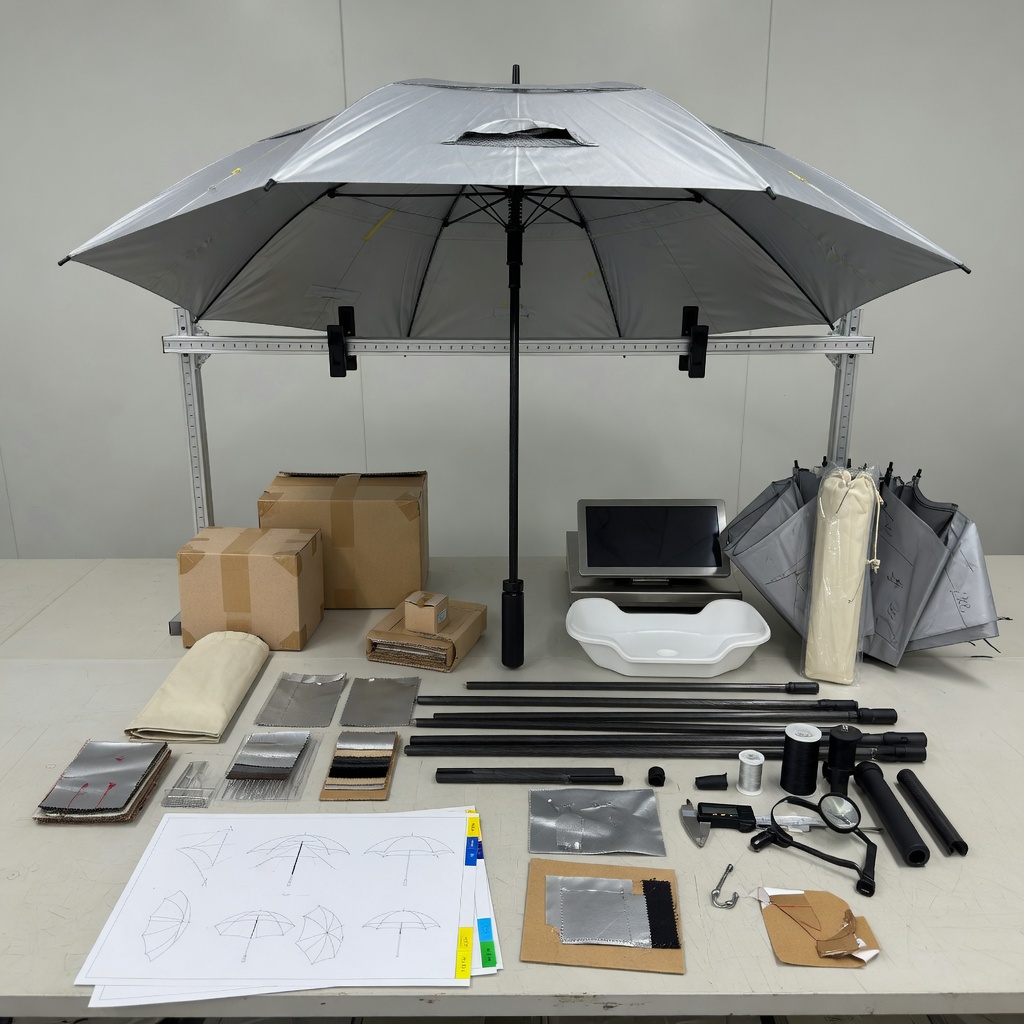
United States business-to-business buyers assessing golf umbrella product development capability need proof that a supplier can convert a controlled RFQ into the same product revision later quoted, sampled, tested, labeled, packed, and produced. A credible approval file links buyer requirements to a revision-controlled drawing, bill of materials, prototype build record, change log, claim-and-test matrix, fully packed reference sample, production-transfer plan, itemized landed-cost assumptions, and event-based delivery schedule.
Procurement decision: Do not approve capability from an OEM or ODM label, catalog page, artwork proof, or report for another construction. Release development, production, and shipment only when specifications, evidence, labeling, price, and timing refer to matching revisions.
Scope: This page addresses the product-development facet of United States golf umbrella procurement. It is not a general country or sourcing guide.
Source-Backed Data Points for the RFQ
The retained pages are supplier-published case-study, guide, and factory-profile sources. The exact figures below are reported claims, not independently verified benchmarks, current quotations, or commitments. Each should become a controlled RFQ question.
| Reported figure and source context | RFQ control | Evidence boundary |
|---|---|---|
| 535 grams. Unit: grams. Scope: reported product-weight target for the carbon-fibre golf umbrella described in the case study. Date/as-of context: no publication date is stated in the retained source context, so current applicability is unverified. Source: HFUmbrella engineering case study. | Define whether finished mass includes the sleeve, labels, decoration, and accessories. Require the specimen condition, scale identification, tolerance, and sample result. | The target does not prove achieved production mass, measurement method, tolerance, or applicability to another revision. |
| 135 centimeters. Unit: centimeters. Scope: reported canopy-size target for the case-study golf umbrella. Date/as-of context: no publication date is stated in the retained source context, so current applicability is unverified. Source: HFUmbrella engineering case study. | Define whether canopy size means span, arc, or another convention. Require measurement points, umbrella condition, setup, tolerance, and sample result. | The target does not establish the measurement convention, achieved production dimension, or suitability for another construction. |
| UPF 50+. Unit: unitless UPF rating. Scope: reported rating target for the umbrella described in the case study. Date/as-of context: no publication date is stated in the retained source context, so current applicability is unverified. Source: HFUmbrella engineering case study. | Require proposed claim wording, applicable fabric, coating, color and model, test method, specimen traceability, complete report, and claim limitations. | The claim does not establish the test method, laboratory status, tested revision, production consistency, or applicability to other materials or colors. |
| 300 pieces. Unit: pieces. Scope: reported starting minimum order quantity for a custom configuration in the sourcing-guide context. Date/as-of context: no publication date is stated in the retained source context, so current commercial applicability is unverified. Source: Blueprint Umbrella sourcing guide. | Request minimum order quantity by fabric, color, frame, handle, decoration, packaging, and tooling configuration. Ask what constraint creates each minimum. | The figure does not establish a current offer, available capacity, universal minimum, or applicability to the requested configuration. |
| 3–4 weeks. Unit: weeks. Scope: reported post-design lead time in the sourcing-guide context. Date/as-of context: no publication date is stated in the retained source context, so current scheduling applicability is unverified. Source: Blueprint Umbrella sourcing guide. | Require defined start and finish events, calendar basis, material dependencies, excluded waiting time, capacity commitment, and shipment point. | The range does not establish current capacity, reserved production time, transport time, customs time, or a purchase-order commitment. |
| 5–7 days. Unit: days. Scope: reported sampling time in the factory-profile context. Date/as-of context: no publication date is stated in the retained source context, so current scheduling applicability is unverified. Source: World Umbrellas factory profile. | Define the sample category, construction, material availability, decoration, packaging, timing clock, included revisions, and dispatch evidence. | The range does not establish the sample scope, current capacity, shipment time, or applicability to another supplier or construction. |
These figures are due-diligence prompts. They do not prove that a proposed supplier can deliver the same specifications, commercial terms, or schedule.
United States Golf Umbrella Product Development Capability Approval Gate
Treat product development capability as a connected evidence chain. The supplier should return each controlled requirement as compliant, a disclosed deviation, a separately identified alternative, or an open question.
| Decision gate | Required supplier return | Hold condition |
|---|---|---|
| Requirements translation | Requirement-review record, clarification list, assumptions, deviation schedule, risk register, and proposed development route | Hold while intended use, delivery point, claims, service conditions, or commercial assumptions remain unresolved. |
| Controlled technical baseline | Revision-controlled drawing, bill of materials, component specifications, artwork register, packaging specification, and substitution restrictions | Hold when critical components are described only as standard, equivalent, or similar. |
| Prototype traceability | Build sheet identifying actual materials, components, processes, tooling, decoration, and packaging; issue log; change log; and sample measurements | Hold when the sample cannot be linked to the quoted drawing, bill of materials, artwork, and packaging revisions. |
| Verification and production transfer | Requirement-to-test matrix, applicable reports, exception records, corrective actions, approved packed sample, control plan, and work instructions | Hold when evidence concerns a different fabric, coating, color, mechanism, packaging configuration, or revision without documented justification. |
| Commercial execution | Configuration-specific quotation, development charges, minimums, tooling terms, milestone schedule, material plan, and capacity-reservation evidence | Hold when price or timing lacks a defined scope, timing event, delivery point, trade basis, or exclusions. |
Engineering, R&D, OEM, and ODM descriptions are not approval evidence by themselves. The returned documents must apply to the exact golf umbrella revision proposed for the United States order.
RFQ Specification and Prototype Controls
Issue the same controlled specification pack to every candidate. Mark each field as buyer-mandated, supplier-proposed, or unresolved. Every measurable requirement should identify the characteristic, controlling unit, target or limit, tolerance, specimen condition, method, required record, and governing revision.
When metric and United States customary units appear together, designate the controlling unit. Treat conversions as reference values unless the RFQ expressly makes them acceptance criteria.
| Specification area | Buyer-controlled fields | Required supplier return |
|---|---|---|
| Document identity and geometry | Buyer item reference, drawing revision, intended use, measurement conventions, open and closed dimensions, measurement points, and tolerances | Attachment register, dimensioned drawing, setup description, sample record, assumptions, and deviations |
| Frame and handle | Shaft, ribs, stretchers, runner, joints, fasteners, tips, ferrule, handle materials, finishes, component controls, and substitution restrictions | Bill of materials, material specifications, component evidence, source responsibility, and incoming-inspection method |
| Canopy, vents, and seams | Fabric construction, basis-weight unit, color reference, coating identity, panel and vent arrangement, seam type, thread, appearance criteria, and relevant performance requirement | Traceable material references, swatches, seam or vent samples, process description, and verification proposal |
| Opening mechanism | Manual or automatic operation, runner and latch behavior, operating method, force requirement where relevant, failure definition, and buyer-identified pinch risks | Functional sample, mechanism description, operating record, failure record, and corrective-action plan |
| Decoration and claims | Controlled artwork, panel orientation, print area, color reference, process, registration and appearance limits, exact claim wording, and claim-use restrictions | Strike-off or decorated panel, assembled sample, production artwork, claim-evidence matrix, and complete applicable reports |
| Packaging and logistics | Sleeve, unit package, protective materials, carton construction, pack method, carton dimensions and weights, pallet configuration where used, and marking fields | Packaging specification, dielines, fully packed sample, carton plan, packing method, and handling-verification proposal where required |
The development file should contain:
- A requirement-review record listing accepted requirements, deviations, assumptions, open questions, owners, and due events.
- A controlled drawing and bill of materials covering the complete quoted construction.
- A prototype build sheet identifying the materials, components, processes, tooling, decoration, and packaging actually used.
- An issue and change log linking each correction to affected documents, sample revision, status, and approval authority.
- A requirement-to-test matrix identifying the method, specimen, conditions, acceptance criterion, record, applicable revision, and responsible party.
- A fully packed reference sample and production-transfer checklist linked to matching technical, artwork, claim, labeling, and packaging revisions.
The sample quotation should define the sample category, included construction, material availability, decoration, packaging, charges, freight responsibility, timing clock, excluded buyer-review time, included revisions, tooling treatment, sample ownership, and approval authority.
Request minimum order quantity by configuration rather than as an isolated headline. Require disclosure of minimum material purchases, unused-material liability, storage responsibility, and the commercial effect of buyer-requested changes. Treat the cited timing statements only as prompts until a current quote defines the sample, material status, timing events, capacity commitment, revision allowance, and exclusions.
United States Labeling and Artwork Controls
Include labeling in development approval so the drawing, packed reference sample, packaging specification, quotation, and production artwork use matching revisions. For the actual product and import route, have a qualified United States customs broker or counsel confirm applicable origin, identity, warning, care, import, and claim requirements before artwork release. This is a procurement control, not a legal determination.
- Product: Control buyer-approved content, placement, substrate, attachment method, permanence requirement, artwork revision, and physical reference sample.
- Sleeve or unit package: Control buyer identifiers, tracking or barcode data where specified, approved claim wording, dieline, print process, placement, and inspection criteria.
- Master carton: Control buyer-specified shipping marks, product reference, pack information, carton dimensions and weights, handling marks, artwork, and packing-list consistency.
- Pallet or routing label where used: Control buyer or carrier content, placement, attachment, pallet configuration, application evidence, and dispatch instructions.
Supplier mockups are proposed manufacturing execution, not legal determinations. Keep UV, wind, weather, material, and durability statements off production artwork until the exact wording is linked to evidence for the approved construction and accepted by the buyer’s qualified reviewer.
QC and Production-Transfer Controls
The quality plan should connect every critical requirement to a checkpoint, method, record, acceptance rule, escalation owner, and corrective action.
| Control area | Required definition and evidence |
|---|---|
| Dimensions, mass, and balance | Define measurement convention, equipment, specimen condition, included accessories, tolerance, and acceptance threshold. Require a drawing-linked record with equipment identification, result, date, revision, and exception status. |
| Frame and mechanism | Define component specifications, joint and runner checks, operating method, failure criteria, and post-check inspection. Require incoming records, functional results, failure evidence, and corrective actions. |
| Canopy, vents, seams, and coating | Define traceable materials, construction, workmanship criteria, seam method, appearance limits, and relevant performance method. Require material, in-process, test, and defect records. |
| Decoration and claims | Define artwork revision, process, color reference, orientation, registration limit, claim wording, test method, specimen, and acceptance threshold. Require approved references and evidence tied to the production revision. |
| Packaging, lot, and shipment | Define the approved pack method, lot, inspection stage, sampling method, defect classes, acceptance and rejection rules, rework, reinspection, and release authority. Require inspection and quantity-reconciliation records. |
A test specification should state the specimen, conditioning, equipment, method, test conditions, failure definition, acceptance threshold, raw-data requirement, report date, issuer, and applicable drawing or bill-of-materials revision. Specify only tests and claims relevant to the purchased construction.
If an external standard is required, identify its full title, current revision, applicable clauses, specimen requirements, and acceptance criteria in the RFQ. A standard requires only what its text states. A supplier’s internal procedure is company practice and should not be presented as an external standard or equivalent without documented justification.
For any certification claim, require a current document identifying the issuer, certified site, scope, and validity. Treat a product test report as test evidence, not as company certification.
Landed-Cost Controls Tied to Product Development
Compare quotations through a cost worksheet tied to the approved golf umbrella revision. Do not compare headline unit prices when construction, packaging, testing, trade basis, or delivery exclusions differ.
Example calculation framework — every scope and input is an assumption to verify in the supplier quote:
landed order cost = product + development + samples + tooling + custom-material liability + packaging and marking + inspection and testing + origin logistics + freight and insurance + broker, duty, tariff, and entry charges + domestic delivery
landed unit cost = landed order cost / accepted delivered quantity
| Cost area | RFQ control |
|---|---|
| Product | Tie currency, quantity basis, unit price, permitted quantity variance, and included packaging to the approved drawing, bill of materials, artwork, and packaging revision. |
| Development, samples, and tooling | Separate requirement review, drawings, prototypes, revisions, decoration setup, retesting, sample freight, tooling ownership, maintenance, storage, and modification approval. |
| Custom materials | Disclose material minimums, color or coating setup, unused inventory, storage, cancellation liability, and any shelf-life concern relevant to the selected material. |
| QC and testing | Assign responsibility for supplier inspection, buyer-appointed inspection, external laboratory work, failure investigation, corrective action, retesting, rework, and reinspection. |
| Packaging and logistics | Quote the packed configuration used for the reference sample. State the named trade term and place, rule edition, origin charges, freight mode, insurance, destination charges, and exclusions. |
| United States import and domestic delivery | State proposed classification, declared origin, customs-value inputs, broker and entry assumptions, final delivery point, inland transport, appointment requirements, and unloading responsibility. |
The quotation should state its issue date, validity period, currency, exact configuration, quantity basis, payment milestones, development and tooling treatment, packaging basis, delivery point, trade basis, freight assumptions, and exclusions. Keep compliant pricing separate from alternative constructions.
Do not hard-code a duty or tariff rate from a generic umbrella listing. Have the buyer’s customs broker verify classification, origin, valuation inputs, and treatment against the final product, shipment facts, and planned entry date.
Delivery Controls for a United States Order
Use an event-based schedule that separates development, production, transport, United States entry, and domestic delivery. Each milestone should identify its start event, output, owner, dependencies, excluded waiting time, evidence, and change impact.
| Milestone | Required output and release control |
|---|---|
| Requirement acceptance and technical freeze | Close critical questions and approve the deviation schedule, risk register, drawing, bill of materials, material references, artwork, packaging specification, and revision history before prototype work proceeds. |
| Prototype dispatch and review | Require the defined sample, build sheet, photographs, measurements, test evidence, dispatch record, consolidated buyer feedback, issue log, and approved corrective actions. |
| Reference-sample approval | Approve a fully packed sample linked to the accepted technical, appearance, claim, labeling, and packaging revisions. Record the retained-sample location and approval authority. |
| Material booking and production | Require material allocation, production-slot confirmation, subcontracted-process plan, approved work instructions, production records, inspection records, and closed critical corrective actions. |
| Final inspection and carrier handover | Require accepted inspection evidence, quantity reconciliation, marking and packing records, commercial documents, and buyer-authorized shipment release. |
| United States entry and domestic delivery | Require complete entry documents, broker-status updates, delivery forecast, proof of delivery, and a record of quantity, damage, or documentation discrepancies. |
Apply release states consistently:
- Clarification hold: A critical specification, cost, evidence item, labeling responsibility, or timing field is blank, ambiguous, or based on an unidentified assumption.
- Development release: The controlled technical proposal, sample definition, charge basis, timing rules, and change-control process are accepted.
- Production release: The drawing, bill of materials, artwork, claim criteria, packaging, labeling, reference sample, quality plan, price, and schedule are approved at matching revisions.
- Shipment release: Final inspection, required reports, quantity reconciliation, packing evidence, markings, commercial documents, and corrective actions are accepted.
A proposal remains noncompliant when a required field is omitted, even if its headline price or stated lead time appears favorable.
Evidence Method, Source Contexts, and Limitations
Source contexts:
- The HFUmbrella engineering case study supplies reported product targets for mass, canopy size, and UPF. Those targets were mapped to RFQ controls for measurement scope, material traceability, test method, sample revision, and claim evidence.
- The Blueprint Umbrella sourcing guide supplies reported minimum-order and post-design timing statements. They were mapped to configuration-specific quantity constraints, timing definitions, exclusions, and current quotation controls.
- The World Umbrellas factory profile supplies a reported sampling-time statement. It was mapped to questions covering sample category, timing clock, material availability, revisions, dispatch, and current capacity.
- The ZheBrella author profile for Vincent Xi supports the author’s name and Editorial Author role only.
Methodology: Exact values were retained only where the cited source context expressly reported them. Units and stated scopes were preserved without averaging, conversion, extrapolation, or treatment as market benchmarks. Product targets were mapped to specification and verification fields. Commercial and timing statements were mapped to quotation definitions, event-based schedules, capacity evidence, and contract controls. Missing definitions became RFQ questions rather than assumptions.
Limitations and what to verify: The retained source contexts do not provide current quotations, controlled drawings, bills of materials, physical samples, complete laboratory reports, current certification documents, material reservations, production-slot commitments, customs determinations, purchase-order records, or shipment outcomes. Verify the final specification, tolerances, minimum order quantity, sample scope, development timing, capacity, test methods, claim wording, labeling, packaging, costs, trade basis, United States import treatment, and delivery obligations in the supplier quote and purchase contract.
Author experience note: Vincent Xi is identified by ZheBrella as Editorial Author. The approved profile does not document first-hand factory visits, product tests, audits, certification reviews, client outcomes, or sourcing results; none are claimed here.
Discuss Your Requirements
Review our manufacturing capabilities, then share your specifications for a supplier-fit review.