Windproof Umbrella Wholesale Supplier Business Continuity Planning for United States Buyers
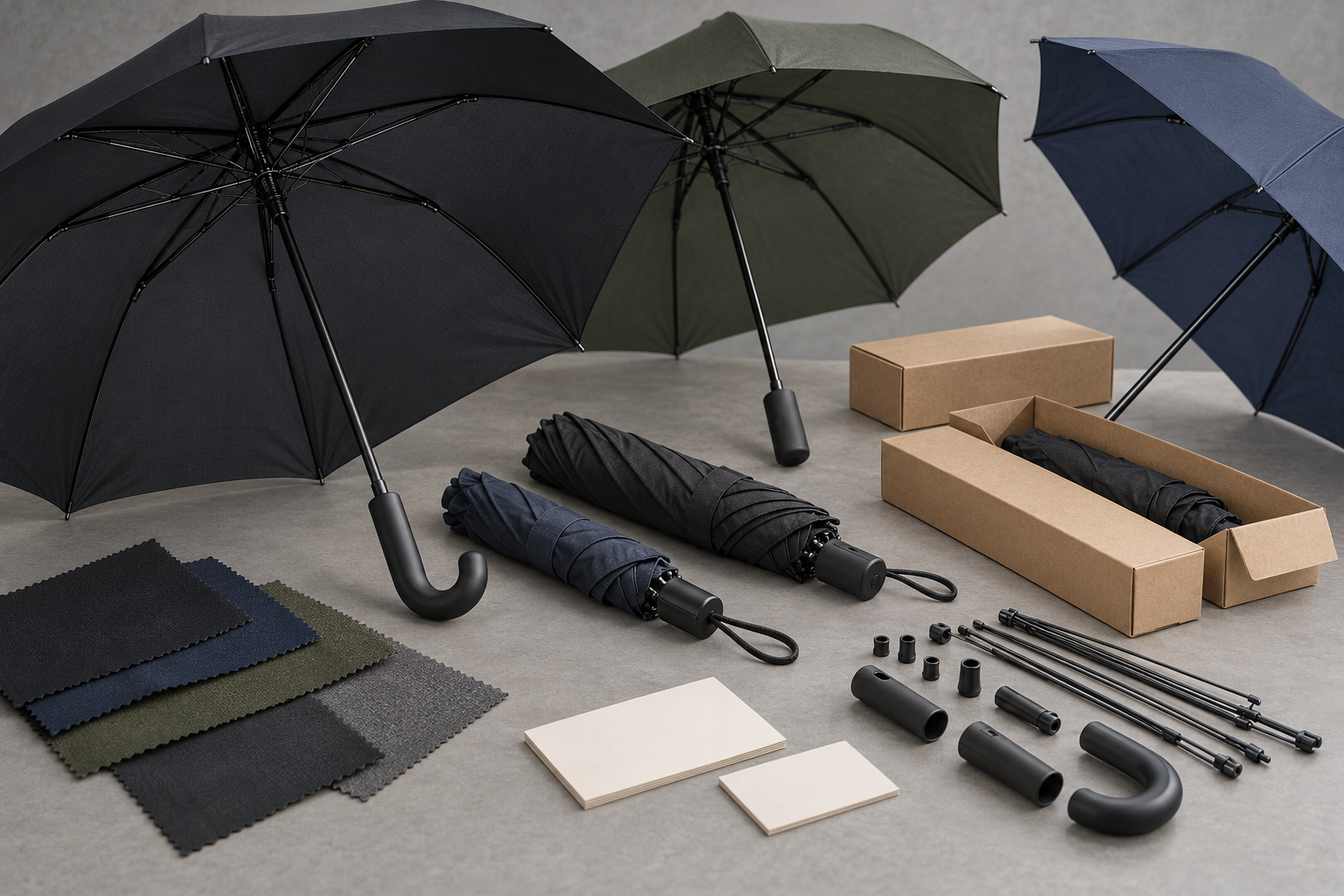
Byline: Vincent Xi | Role: Editorial Author
For United States B2B buyers, a controlled RFQ keeps the windproof umbrella wholesale supplier decision tied to business continuity planning. Define the offered configuration, permitted product wording, labeling and packaging fields, landed-cost responsibilities, delivery events, and acceptance route before comparing supplier responses. Send the same brief and response format to each candidate. Treat each response as a proposal until the buyer matches it to the requested configuration and records assumptions, exclusions, changes, open fields, and approvals.
Treat windproof umbrella as a product-family phrase rather than a complete specification. Ask the supplier to explain what the wording covers across the canopy, ribs, shaft, handle, opening mechanism, and finished package. Ask which records or samples are available for buyer review, and do not infer a performance threshold, included component, or acceptance result from the descriptor alone. If a required field is unanswered, keep it open rather than turning a broad statement into an order requirement.
This framework does not establish a supplier's capability, product performance, or delivery outcome. Buyer and supplier should define and approve those fields.
Business continuity planning for a United States windproof umbrella wholesale supplier
Use business continuity planning as change control around the same approved product record:
- Define the configuration, permitted windproof wording, packaging, labels, destination, delivery events, and acceptance route.
- Compare supplier responses against identical RFQ fields, separating included, optional, excluded, substituted, and pending items.
- Require the supplier to state assumptions, cost responsibilities, requested records, change-notice steps, and proposed alternatives.
- Approve the product, commercial terms, delivery plan, label proof, change process, and acceptance checklist only after required fields are resolved.
- Hold the supplier decision when a required field is undefined, or request a written alternative and buyer reapproval before proceeding.
Keep the product decision focused on the windproof umbrella offer. Use continuity planning to control changes to the configuration, packaging, delivery plan, records, or acceptance route; do not treat an alternative as approved merely because it is available.
United States buyer brief for windproof umbrella wholesale supply
Use the table below to normalize supplier responses against the same product and commercial record.
| Decision area | Put in the RFQ | Compare supplier responses | Buyer approval record |
|---|---|---|---|
| Product identity | SKU or model, configuration, decoration, package format, and intended channel | Does the response describe the same finished offer and options? | Product brief and sample reference, if used |
| Windproof wording | Permitted wording, covered configuration, buyer-defined acceptance fields, and requested records | Is the wording tied to the exact offer, with limits and assumptions stated? | Wording approval and record-linkage note |
| Construction | Canopy, shaft, ribs, stretchers, runner, tips, handle, opening mechanism, and finish fields | Are material and component choices stated rather than implied? | Written specification or buyer decision |
| Packaging and labeling | Unit pack, inner pack, carton data, carton marks, label fields, artwork ownership, and customer marks | Who prepares, approves, and checks each element? | Approved label proof and packaging record |
| Records and versions | Record title, linked SKU or model, configuration, version, owner, approval stage, and shipment linkage | Does each file or statement match the same offer and order stage? | Buyer review note and status |
| Landed cost | Product price, decoration, setup or tooling, packaging, freight, import-related charges where applicable, brokerage, inland delivery, currency, and payment terms | Which costs are included, excluded, variable, or assigned to each party? | Commercial comparison with cost responsibilities |
| Delivery | United States destination, handoff point, shipping method, requested window, milestones, partial shipments, and delivery documents | What event starts each commitment, and how are changes reported? | Accepted order schedule and contacts |
| Change control | Material substitutions, component changes, packaging changes, artwork revisions, route changes, and schedule changes | Which changes require written buyer approval before the next order stage? | Change-control rule attached to the order |
| Continuity response | Proposed alternative inputs, communication path, impact review, and reapproval route | What can the supplier propose if an approved plan cannot proceed? | Buyer-approved contingency record |
| Acceptance | Approved configuration, sample reference if used, visual and operation checkpoints, document review, receipt process, and disposition route | How will the buyer record a mismatch and decide the next action? | Acceptance checklist and response path |
A blank response is an open item, not an included feature. Link each sample, file, label proof, and supplier statement to the relevant SKU, configuration, version, and order stage. If an answer depends on an assumption, record it and decide whether it blocks approval.
Define the windproof umbrella offer before comparing suppliers
Create one product brief so every supplier answers the same fields:
- Product identity: Record the internal SKU or model, intended application, sales channel, decoration area, and package format.
- Canopy: Specify the material description, color reference, finish, panel arrangement, and allowed variation.
- Frame and hardware: List the shaft, ribs, stretchers, runner, tips, handle, opening mechanism, and other included components. Ask the supplier to state the proposed material and construction for each.
- Size and handling: Request open and folded dimensions, weight, measurement method, and any buyer-defined tolerance when these fields affect storage, packing, or channel presentation.
- Appearance and decoration: Define color references, gloss or matte preference, stitching appearance, print placement, artwork ownership, proofing steps, and acceptable visual variation.
- Windproof wording: State the exact wording permitted in product content and link it to the offered canopy, frame, and finished configuration. Ask the supplier to describe what the wording covers and identify any record available for buyer review.
- Packaging: List unit protection, inner pack, master carton data, carton marks, packing-list fields, and handling instructions required by the receiving process.
- Record linkage: Request the record title, linked SKU or model, configuration, version, owner, approval stage, and point at which the buyer needs each record.
Mark every field as required, optional, excluded, or open for supplier proposal. Ask the supplier to return the same status for every field. If a sample is used, attach it to the product brief and record any difference in material, color, decoration, or packaging before approval.
Set United States landed cost, delivery, and business continuity planning controls
Compare landed cost through agreed line items and responsibilities, not through an unexplained total. Give each supplier the same United States destination, packaging brief, delivery assumptions, and cost fields.
- State the receiving location, handoff point, appointment process, and destination assumptions.
- Require a cost breakdown that separates the product from decoration, setup or tooling, packaging, freight, import-related charges where applicable, brokerage, inland delivery, and other agreed fees.
- Record the currency, quote validity, payment timing, inclusions, exclusions, variable-charge triggers, and party responsible for each amount.
- Define the delivery sequence from specification or sample approval, when applicable, and order acceptance through production release, packing confirmation, dispatch, arrival, document review, and acceptance.
- Assign commercial and logistics contacts for changes, holds, partial shipments, address changes, and other order exceptions.
Do not treat a proposed ship or dispatch event as receipt or acceptance. Agree what each delivery event means, what notice is required when an event changes, and which change requires schedule reapproval.
For business continuity planning, ask the supplier to propose an alternative only with its effect on product identity, cost, labeling, delivery, records, and acceptance. Record the buyer decision and the reapproval required before the order moves to the next stage.
Control United States labeling and acceptance for windproof umbrella wholesale supply
Separate supplier-prepared fields from buyer-approved fields. In the RFQ, identify the artwork owner, proof approver, version attached to the order, and point at which the final check occurs.
For the United States order, specify the SKU, carton quantity, destination, customer marks, language, layout, package quantity, and other buyer-controlled fields. If the intended channel or internal review team has additional requirements, identify them before order release rather than asking the supplier to infer them. Keep the approved label proof and packaging record with the purchase record.
Request only the record types required by the buyer's process. State the format, product linkage, owner, version, approval stage, and required delivery point for each. Receipt of a file is a record to review, not confirmation that it covers the offered configuration; match each file to the SKU, configuration, and shipment before approval.
Write acceptance in observable terms. Identify the approved product record, sample reference if used, finish, color reference, decoration placement, opening and closing operation, packaging condition, carton markings, label version, document set, and other attributes that determine whether the shipment can be received. Define how the buyer records a mismatch, who reviews it, and whether the proposed disposition is correction, replacement, credit, rework, or another action agreed with the supplier.
Stage the wholesale supplier decision
Use a staged process to keep the supplier decision focused on the windproof umbrella offer while attaching business continuity planning to the order record.
- Prepare the internal brief. State the product configuration, intended channel, decoration, packaging, United States destination, delivery need, cost fields, requested records, and acceptance requirements. Mark each field as required, optional, excluded, or open for supplier proposal.
- Issue a controlled RFQ. Send the same product brief, table fields, requested record list, and response format to each supplier under review. Ask respondents to identify assumptions, exclusions, unresolved fields, and alternatives.
- Normalize the responses. Compare like with like. Separate included items from optional, excluded, substituted, or pending items; separate supplier proposals from buyer-approved fields; and separate delivery assumptions from an accepted schedule.
- Resolve and approve open fields. Select the configuration, sample reference if used, permitted windproof wording, packaging, label proof, cost responsibilities, and acceptance fields. Assign an owner to every unresolved item.
- Release the order with controls attached. Include the approved specification, commercial offer, delivery milestones, requested records, change rule, label proof, and acceptance process. Require written confirmation of any field changed during negotiation.
- Manage exceptions before substitutions. If a component, material, packaging element, route, destination, or schedule changes, request the effect on product, cost, labels, delivery, records, and acceptance. Reapprove the change before the relevant order stage.
- Close the order against the same record. At receipt, compare the shipment, packaging, labels, records, and product attributes with the approved record. Capture unresolved issues and update the next RFQ only after the buyer decides what should remain fixed or change.
RFQ Checklist
- Define the exact windproof umbrella model or SKU, configuration, canopy, frame, shaft, handle, opening mechanism, decoration, and package format.
- Ask the supplier to define the permitted windproof wording for the offered configuration, state what the wording covers, and identify records or samples for buyer review.
- Require the supplier to link each product statement, sample if used, label proof, and requested record to the relevant SKU, configuration, version, and order stage.
- Require the supplier to identify proposed materials and components and mark each as fixed, optional, substituted, excluded, or pending confirmation.
- Specify color references, finish, stitching appearance, decoration placement, acceptable variation, and any measurement method or tolerance that affects the order.
- Request open dimensions, folded dimensions, weight, and packing configuration as agreed fields when storage, packing, or channel presentation depends on them.
- Compare each response against the same product brief, sample reference if used, destination, packaging fields, and delivery assumptions.
- Require the supplier to separate product price, decoration, setup or tooling, packaging, freight, import-related charges where applicable, brokerage, inland delivery, and other agreed fees.
- Confirm the currency, quote validity, payment timing, inclusions, exclusions, variable-charge triggers, and responsible party for each amount.
- Specify the United States receiving location, handoff point, appointment process, delivery window, milestone definitions, and partial-shipment rules.
- Ask the supplier to identify who prepares and approves labels, carton marks, packing-list fields, artwork, and customer-specific markings.
- Require a label proof and packaging layout linked to the approved product record before order release.
- Ask the supplier to state which records will be provided at sample approval, order release, dispatch, receipt, and acceptance, when applicable.
- Require written notice and buyer approval for material, component, packaging, artwork, route, destination, or schedule changes that affect the order.
- Ask the supplier to describe the information it will provide if an approved input or delivery step cannot proceed, including the proposed alternative and its effects.
- Record the effect of each alternative on product identity, cost, labels, delivery, records, and acceptance.
- Set the receiving review for product attributes, packaging condition, carton markings, labels, and accompanying records.
- Define how the buyer will record a mismatch and which correction, replacement, credit, rework, or other disposition requires supplier agreement.
- Link the purchase order, approved specification, commercial offer, delivery schedule, label proof, requested record list, and acceptance checklist to one product record.
- Review every unresolved field with the supplier and assign an owner for each commercial, technical, labeling, logistics, change, and acceptance decision.
- Order only after the buyer and supplier confirm the final configuration, cost responsibilities, delivery controls, change process, and acceptance route in writing.
Discuss Your Requirements
Review our manufacturing capabilities, then share your specifications for a supplier-fit review.