Custom Umbrellas for Agriculture Co-ops and Farm Supply Brands
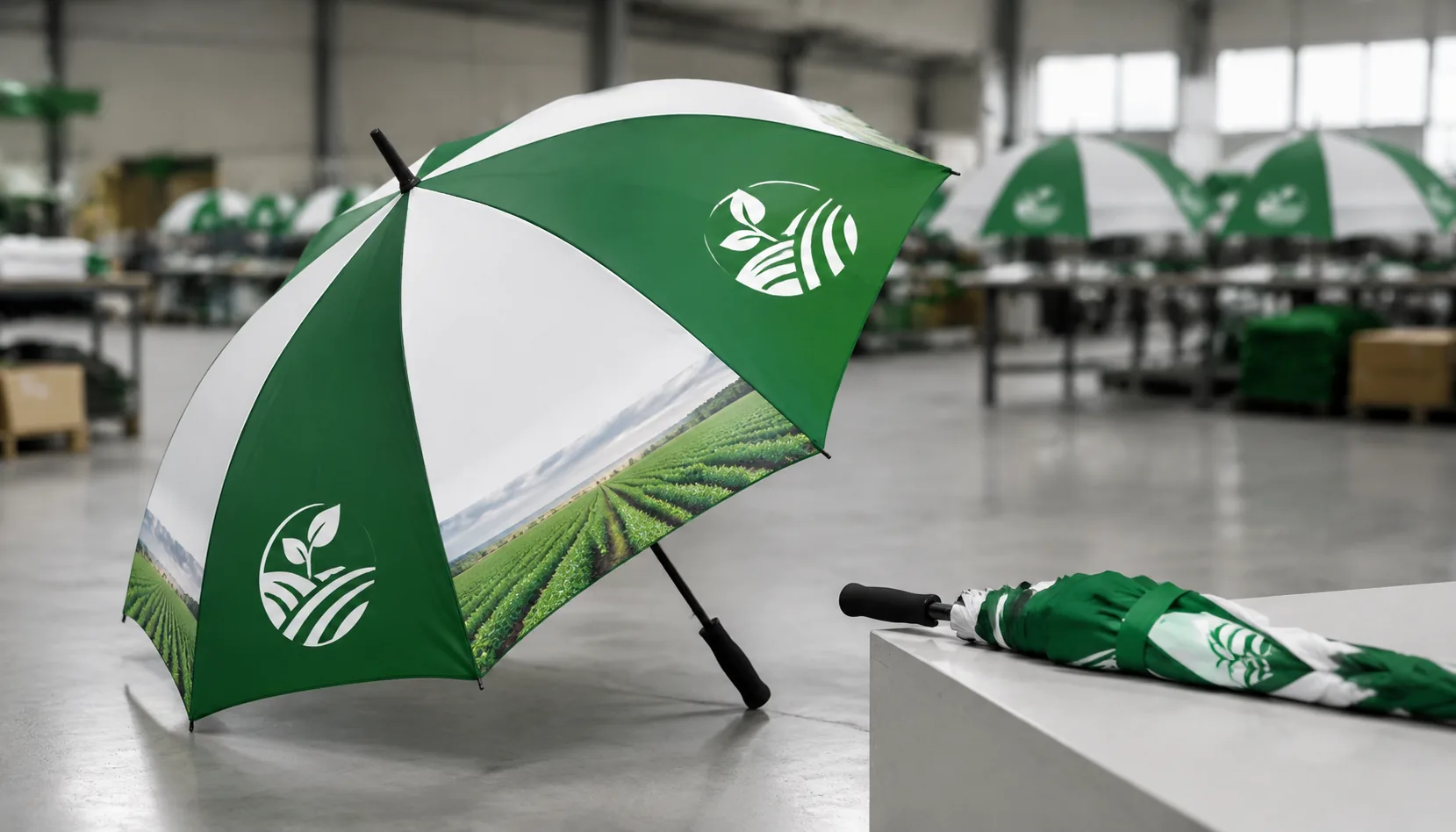
Farm co-ops and supply brands need umbrellas that survive gravel-lot demos, windy field days, and months in pickup cabs—not giveaways that bend after one season. When we build agriculture promotional umbrellas on our Songxia factory floor, we look first at rib gauge, shaft strength, canopy coating, handle grip, and carton specs because those choices decide whether a bulk program is useful in the field or just another branded item in storage.
How Agribusiness Buyers Use Umbrella Programs
Agribusiness buyers usually get the best return when umbrellas are tied to a working season, not treated as generic giveaways. Farm supply branded umbrellas sell well at retail counters in 23" and 27" stick styles because customers can see the logo size before buying, while compact 21" auto-open-close models fit better as checkout add-ons or loyalty gifts. For seed, fertilizer, and crop-protection promotions, I prefer 190T or 210T pongee with fiberglass ribs over painted steel ribs; rural users leave umbrellas in pickups, machinery cabs, and sheds where moisture and vibration punish cheap frames. Agriculture promotional umbrellas should handle both spring rain and harsh summer sun, so UPF 50+ coating and a dark underside are more than decoration—they make the product useful during loading, sampling, and roadside sales calls.
Ag co-op umbrellas work especially well as member gifts because they stay visible in local routines: grain elevator queues, livestock auctions, county fairs, and co-op annual meetings. A 30" golf umbrella with an 8K or 10K fiberglass frame gives enough coverage for two people reviewing field notes or standing beside a tender truck, while a double-canopy vented construction is better for open lots where gusts run across flat ground. For field days and plot tours, outdoor farm event umbrellas need stronger wind performance than city commuter models; our usual target is a vented frame that survives 50+ mph wind-tunnel testing without rib inversion. Screen printing is cost-effective for one- or two-color co-op logos, but heat transfer gives cleaner results on gradient seed-brand marks and machinery dealer graphics.
Dealer incentives and machinery demos need a different umbrella mix because the audience is often sales reps, farm owners, and service technicians rather than walk-in retail shoppers. For these agribusiness promotional products, buyers often choose 27" or 30" umbrellas with EVA or rubberized handles that are easy to grip with wet hands, plus sleeve printing so the brand is visible even when the umbrella is stored in a truck door pocket. POE or clear PVC canopies are useful for equipment walkarounds because they keep sightlines open around loaders, sprayers, and headers, though they require careful packing to avoid crease marks. For reliable delivery, specify AQL 2.5 inspection, carton drop testing, and realistic lead times: about 25–35 days for standard logo orders after artwork approval, longer if custom-dyed fabric, PMS-matched handles, or DDP delivery is required.
Specs That Fit Field Days and Farm Retail
For field days, seed plot tours, machinery demos, and county fair booths, I would not start below a 23 inch stick umbrella. A 23 inch, 8K frame is the practical minimum for one person walking between tents; 27 inch and 30 inch sizes give better shoulder coverage for reps standing beside sprayers, feed displays, or livestock panels. For outdoor farm event umbrellas, specify 190T or 210T pongee with a Teflon water-repellent finish, because cheap polyester wets out fast when rain sits on the canopy during a four-hour demo. If the umbrella will be used around fertilizer, mud, and pickup beds, a straight EVA or rubberized handle is better than glossy plastic. For agriculture promotional umbrellas tied to equipment launches or co-op member meetings, auto-open stick models feel more durable than compact folders and give enough panel area for a readable logo, phone number, and location list without crowding the print.
For store counter promotions, 21 inch or 23 inch 3-fold umbrellas make more sense than long sticks because farm supply retailers need cartons that fit behind the register, not awkward barrels near the seed treatment desk. A 3-fold auto-open-close model with a 190T pongee canopy, black electroplated shaft, and matching sleeve is a good middle tier for farm supply branded umbrellas sold or gifted with seasonal purchases. If the program is a low-cost giveaway with herbicide, fencing, or feed orders, manual-open 3-fold steel frames can hold the MOQ price down, but the buyer should accept more flex fatigue after repeated gusts. For counter units, we usually carton by color or logo version and inspect printing alignment before sleeve packing, because mixed co-op branch logos are where mistakes happen. AQL 2.5 final inspection should include open-close cycling, seam tension, and barcode or hangtag checks, not just canopy appearance.
Rib material is where many ag co-op umbrellas get over-specified or under-specified. Fiberglass ribs cost more than painted steel, but they bend and recover better when a gust rolls over an open lot; for windy demo sites, an 8K or 10K fiberglass frame with a vented double canopy can realistically survive 50+ mph wind-tunnel testing when the runner, tips, and stretchers are matched properly. Steel ribs are acceptable for economy agribusiness promotional products, especially 3-fold handouts, but they deform more easily if a customer tosses the umbrella into a truck toolbox or opens it into a crosswind. For premium member gifts, I would choose fiberglass ribs, a steel or aluminum shaft depending on weight target, reinforced rib tips, and 210T pongee with UPF 50+ coating if the umbrella will double as sun protection during harvest clinics. Our standard practice at ZheBrella is to confirm frame choice before artwork approval, because rib count and canopy arc affect logo placement more than buyers expect.
Fabric, Shade, and Branding Requirements
For agriculture promotional umbrellas, fabric choice should start with how dirty and exposed the umbrella will get, not with the catalog photo. For budget-to-mid programs, 190T pongee is the right baseline: it prints cleanly, dries faster than polyester taffeta, and keeps landed cost sensible for seasonal giveaways at seed days, fertilizer counters, and co-op meetings. For premium dealer gifts, I would move to 210T pongee because the hand feel is tighter, the canopy hangs smoother, and the umbrella looks less like a disposable promo item after six months in a pickup cab. Dark exterior colors such as navy, forest green, charcoal, and black hide dust, mud splash, and grain-bin grime better than white or yellow. If the buyer insists on bright brand colors, use them on panels or piping, not the full canopy, unless they accept visible soil after field use.
UPF 50+ coating is not optional if the umbrella will be used around plot tours, livestock shows, county fairs, and equipment demo days. A standard water-repellent coating handles rain, but UV blocking matters more for outdoor farm event umbrellas because users may stand under them for several hours beside a booth, fuel trailer, or tractor display. For branding, high-contrast logos beat subtle tone-on-tone embroidery every time. White, cream, safety orange, or lime logos on dark pongee are readable from 30 to 50 feet, which is the practical distance at a farm show aisle. Screen printing works well for one- to three-color farm supply branded umbrellas; heat transfer is better when the logo has gradients or small dealer text. Keep logos inside an 8 to 10 inch print width on 23 inch umbrellas, and push larger marks to 27 inch or 30 inch golf models.
Wind resistance should be specified by construction, not by vague words like “stormproof.” For ag co-op umbrellas used at open lots and field days, an 8K steel frame is acceptable for low-cost handouts, but fiberglass ribs with a fiberglass shaft are better for repeated gust loading. A double-canopy vented design is worth the extra cost when the umbrella is expected to survive 40 to 50+ mph gusts in flat, exposed locations. Our standard practice at ZheBrella is to pair vented 190T or 210T pongee with reinforced rib tips and AQL 2.5 inspection on canopy seams, print registration, opening force, and frame flex. Agriculture promotional umbrellas also need practical handles: straight EVA or rubberized golf grips work better with gloves than small plastic crook handles. For agribusiness promotional products, the best specification is usually a 27 inch auto-open golf umbrella, 8K or 10K fiberglass frame, dark UPF 50+ canopy, and bold two-panel logo placement.
SKU Planning for Co-ops and Dealer Networks
SKU planning for co-ops works best when the umbrella line is treated like seed, feed, or fertilizer packaging: one practical good-better-best ladder, not a random mix of handles and colors. For economy agriculture promotional umbrellas, I usually recommend a 23" manual-open 8K model with steel shaft, steel ribs, and 190T pongee canopy, because it keeps cost controlled for field day giveaways, counter promotions, and dealer open houses. A straight plastic J-handle is cheaper than EVA foam, but EVA feels better in wet hands and is worth considering if the umbrella will be used around livestock barns or machinery yards. Keep printing simple: one or two spot colors by screen print on 2 panels, with PMS-matched co-op green, red, or navy. These are not luxury umbrellas; they must open smoothly, pass basic rib alignment checks, and survive normal truck-cab abuse without the logo cracking after a few rain cycles.
The midrange SKU should be the working umbrella for sales reps, branch staff, crop advisors, and merchandisers who stand outside at plot tours or equipment demos. A 27" auto-open 8K or 10K frame with fiberglass ribs, metal shaft, and 210T pongee gives noticeably better wind recovery than an all-steel giveaway model, especially in exposed farm lots where gusts hit from open fields. For farm supply branded umbrellas, this is where I would add a Teflon water-repellent finish, optional UPF 50+ coating, and a larger print area on alternating panels so the brand is visible from a distance. If the buyer runs many dealer networks, assign one core canopy color and change only the branch logo or sponsor panel; that keeps fabric purchasing efficient while allowing localized ag co-op umbrellas for seed brands, fuel divisions, grain elevators, or animal health campaigns.
Premium member gifts should feel different the moment a customer picks them up, otherwise the extra spend is wasted. A 30" golf umbrella with a 16K fiberglass frame, double-canopy vented construction, and 210T pongee is the right top-tier item for board members, large-acreage accounts, harvest appreciation events, and bundled agribusiness promotional products. Properly built, this class can handle 50+ mph wind-tunnel testing better than standard single-canopy models, though buyers should still avoid oversized logos that distort across vent seams. For MOQ planning, assume 500-1,000 pieces per design as the realistic production range, especially if color matching, custom labels, or multiple panel prints are required. Split shipments are normal: 200 pieces to a main warehouse, 150 to northern branches, 150 to southern branches, or staggered FOB/DDP deliveries for spring planting, county fairs, and fall harvest campaigns. Our standard practice is to lock the frame SKU first, then vary print layouts by region to control tooling, inspection, and reorder risk.
QC, Packaging, and Rural Distribution
QC for agriculture promotional umbrellas has to be tougher than normal giveaway work because these units are used in gravel lots, feed-store entrances, field days, and windy county-fair booths. Our standard AQL 2.5 inspection starts with frame checks: rib gauge, runner fit, stretcher rivets, tip security, and whether fiberglass ribs recover cleanly after inversion. For 23" and 27" straight umbrellas, I prefer fiberglass ribs over painted steel when the buyer expects outdoor farm event umbrellas to sit in pickup beds or hang near store doors. We cycle manual, auto-open, and auto-open-close mechanisms 30 to 50 times per sampled unit, then check handle looseness and shaft wobble. On 8K economy frames we watch tip pull-out carefully; on 10K and 16K frames we focus on rib alignment and equal canopy tension so the umbrella does not twist under gusts.
Print and fabric inspection should be written into the purchase order, not argued after production. For farm supply branded umbrellas, we test logo adhesion with tape pull, wet rub, and light scratching around heavy ink areas, especially on dark 190T or 210T pongee where white underbase printing can crack if cured too fast. Heat-transfer marks are checked for edge lifting after open-close cycling, while sublimation panels are checked before sewing so color drift does not spread across a full lot. Water repellency is tested by spray and shake-off, and Teflon-coated pongee should bead evenly without greasy patches. If the order needs UPF 50+ for seed plots, livestock shows, or agribusiness promotional products, the coating and fabric color should be approved from a pre-production sample, because a cheap silver coating can look acceptable indoors but crease badly after folding.
Packaging and routing decide whether ag co-op umbrellas arrive useful or become a warehouse problem. For centralized import programs, FOB Ningbo or Shanghai works well when the buyer already consolidates seasonal goods and can manage customs, insurance, and inland trucking. Cartons should be export-grade five-layer corrugate, usually 24 to 36 pieces per carton for 23" umbrellas, with polybags, handle protection, barcode labels, and carton marks matched to the co-op’s DC requirements. DDP is better for farm-store networks that need predictable landed costs into multiple rural addresses, because freight, duties, customs clearance, and last-mile delivery are built into one quote. The tradeoff is planning: split delivery to 20 stores costs more per piece than one DC drop, so ag co-op umbrellas should be packed by store allocation before loading, not re-sorted after arrival.
Frequently Asked Questions
What umbrella frame is best for outdoor farm events?
A fiberglass rib frame is usually better than steel for field days because it flexes in gusts and resists deformation. For premium programs, 16K ribs and a double canopy add stability in open rural locations.
Can farm supply brands order multiple co-op logos in one run?
Yes, multiple dealer or branch logos can be grouped in one production plan if artwork is finalized early. MOQ and print setup fees may apply per logo, especially for small quantity splits.
What umbrella specs work best for farm field days and outdoor co-op events?
For field days, buyers usually choose 27-inch to 30-inch golf umbrellas with fiberglass ribs, wind-resistant frames, and UV-coated pongee fabric. These specs hold up better in open fields where wind and sun exposure are higher than at typical indoor trade shows.
What is a practical MOQ for farm supply branded umbrellas?
A practical OEM MOQ is typically 500 to 1,000 pieces per design, depending on canopy size, print method, and handle type. For multiple branch locations, many buyers split cartons by store while keeping one shared logo design to control unit cost.
How long should an ag co-op plan ahead for seasonal umbrella programs?
Plan 45 to 60 days for production after artwork approval, plus ocean freight time if shipping by sea. For spring planting events or fall harvest promotions, confirm samples and bulk specs at least 3 months before the event date.
Looking to Launch Your Custom Umbrella Line?
ZheBrella is a Zhejiang-based OEM/ODM umbrella manufacturer with 17 years of export experience. Free design, low MOQ from 100 pieces, windproof construction, full-color print.
Get Free Quote Now »People Also Search For
Related Articles
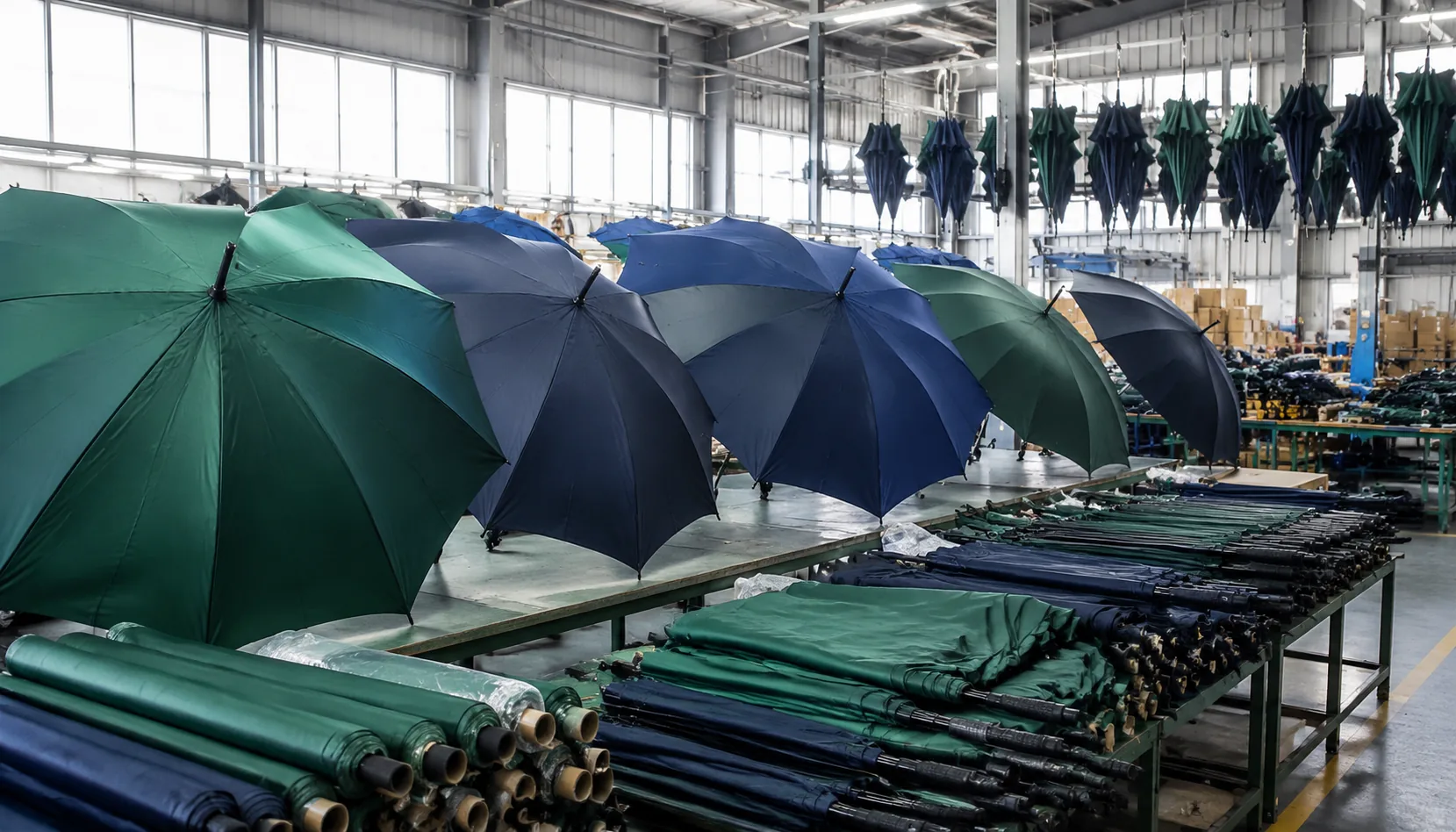
Branded Umbrellas for Agriculture Co-ops and Farm Events
Build farm and co-op umbrella programs with UPF 50+ shade, windproof ribs, 210T pongee, seasonal ordering, MOQ planning,...
Read More »
Custom Umbrellas for Agricultural Co-ops and Farm Retailers
Source farm-ready umbrella programs for co-ops, seed dealers, and rural retailers with durable frames, sun protection, a...
Read More »
Umbrella Programs for Wineries, Breweries, and Outdoor Tastings
Build winery and brewery umbrella programs with canopy specs, wind resistance, UPF options, MOQs, and packaging for tast...
Read More »