Phthalate and PVC Restrictions for Clear Dome Umbrellas
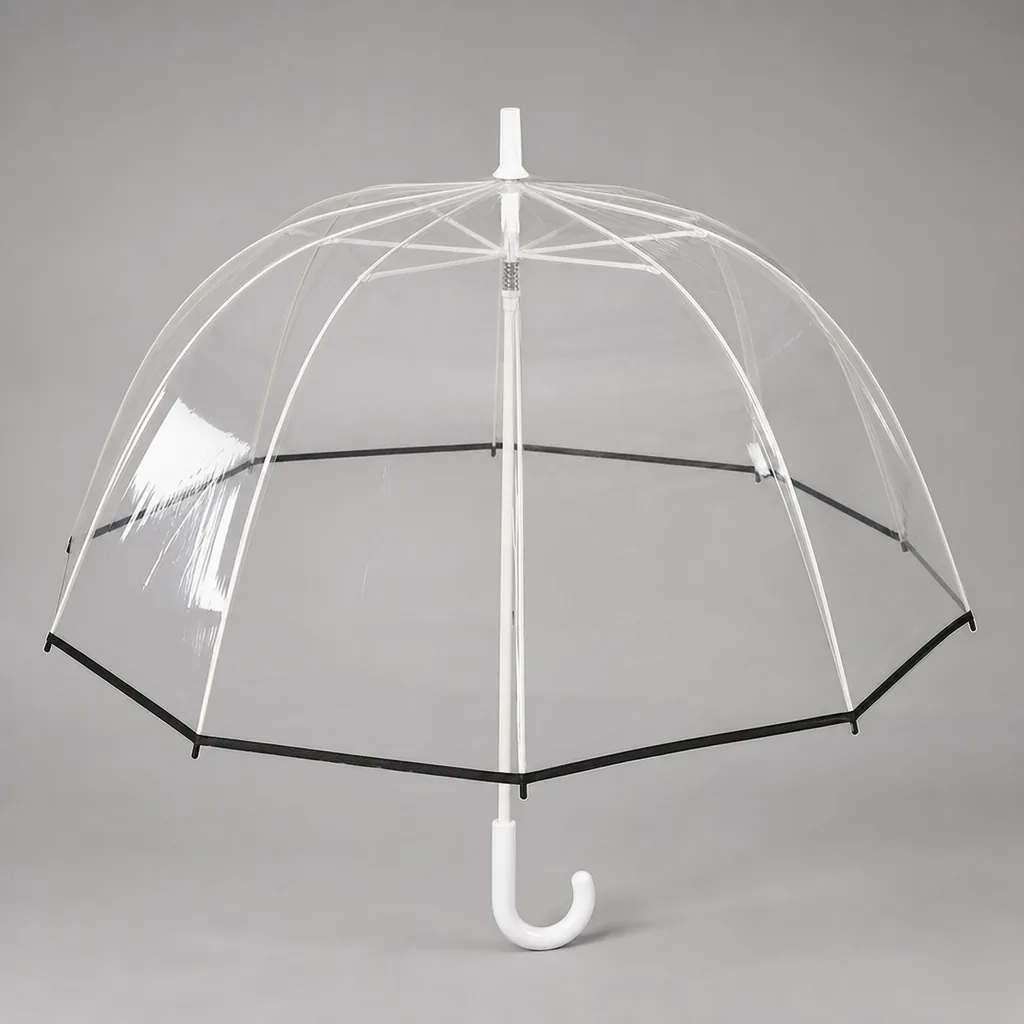
Clear dome umbrellas look simple on a spec sheet, but the material call can trigger real compliance problems when PVC, phthalates, and chemical-restriction limits enter the picture. For buyers sourcing a phthalate free umbrella, the decision is not just about transparency or hand-feel; it affects odor, cold-weather performance, weldability, and whether the factory can document the film and plasticizer system cleanly enough for EU and U.S. requirements.
Why clear dome umbrellas use PVC
PVC is the default film for a clear dome umbrella because it gives you the two things buyers actually want in that shape: real transparency and a soft, draped hand that can wrap into a bubble without cracking at the seams. A rigid film will go cloudy, crease hard, or fight the frame when the canopy is cut deep and stitched around curved panels. In practice, the clear dome umbrella material most factories reach for is soft PVC because it seals cleanly, heat-layers well, and keeps optical clarity better than many low-cost alternatives once it is formed into a full dome.
That softness does not come from the resin alone; it comes from plasticizers blended into the PVC. Those additives lower the glass-transition point, which is why the canopy feels supple instead of board-stiff, but they are also the reason PVC umbrella restriction rules matter in export markets. If the formulation uses restricted phthalates, the umbrella may fail transparent umbrella compliance checks even when the canopy itself looks fine. For buyers who need a phthalate free umbrella, the issue is not the shape or the colorless look — it is the chemistry inside the film and the supplier’s test paperwork.
A POE umbrella is often used as the substitute when the customer wants to avoid PVC entirely, but POE behaves differently on the line: it is usually a bit softer in cold weather, can feel tackier, and may stretch differently under sewing tension. That is why some brands still specify PVC for the best dome clarity and then require verified non-phthalate formulations, especially for retail in regulated markets. The practical decision is always a trade-off between optical finish, seam performance, and compliance documentation, not just a generic preference for "clear" material.
The phthalate problem
The real issue with a clear dome umbrella is not the dome shape, it is the plastic chemistry. In most cases, the PVC umbrella restriction conversation starts with soft, flexible PVC that has been plasticized to stay clear and bendable. That soft PVC is where restricted phthalates show up most often, especially DEHP, DBP, BBP, and DINP. Under REACH, some of these are restricted in articles above very low concentration limits, and in the U.S. you also have CPSIA exposure limits for children’s products plus California Prop 65 warnings when regulated phthalates are present. If a buyer wants a phthalate free umbrella, the first thing to check is whether the clear canopy is actually PVC or a different clear material.
Soft PVC is popular because it is cheap, welds well, and gives that glass-like look people want in a dome canopy, but it is also the usual culprit in transparent umbrella compliance problems. A clear dome umbrella material can be PVC, POE, EVA, or a blended film, and those choices are not equivalent. POE umbrella canopies are typically preferred when the goal is to avoid phthalates because POE does not need the same heavy plasticizer load that soft PVC does. That matters for procurement because compliance is not just about the finished umbrella; it is about the film formulation, the printing inks, the seam welding method, and the test report behind the claim. If the supplier cannot identify the resin system, assume the declaration is weak until proven otherwise.
In practice, buyers should treat a phthalate free umbrella as a materials-control problem, not a label problem. Ask for a written declaration naming the resin and plasticizer status, plus third-party test results for the exact canopy material, not a similar sample from another order. For U.S. and EU shipments, the useful documentation is usually a full restricted-substances report that covers REACH phthalates, CPSIA where applicable, and Prop 65 screening if the product will enter California retail channels. The cleanest route is usually a POE or EVA clear canopy with no phthalate-based softeners, because that reduces the risk of a PVC umbrella restriction issue at customs, during retailer compliance review, or in a marketplace audit. If the dome is PVC, the buyer should expect tighter testing and more failure risk unless the formulation is clearly controlled.
POE and phthalate-free PVC alternatives
POE film is the cleaner answer when a buyer wants a clear dome umbrella without regulatory drama. In the factory, POE usually comes off softer and less plasticky than PVC, with a more elastic hand feel and less of the sharp chemical smell you get from cheap vinyl. For a transparent umbrella compliance discussion, that matters because POE has no phthalate issue by default, and it avoids the most common PVC umbrella restriction conversations in the EU and many retail compliance programs. The tradeoff is clarity: good POE can be very clear, but it still tends to have a slightly softer optical look than premium PVC, and it can haze faster if the formulation is weak or the film is overstretched during heat sealing.
Phthalate-free PVC is still used when a buyer wants the harder, glossier look of traditional vinyl, because PVC usually wins on optical clarity and stiffness. The problem is that “phthalate-free” is not the same thing as “compliance-proof”; you still need the full material declaration, sometimes REACH testing, and if the brand sells into children’s or promotional channels, they may ask for a complete restricted-substances file. A bio-plasticized PVC umbrella can work as a clear dome umbrella material, but it costs more than standard PVC and often less than good POE at the same performance level, because the safer plasticizers and tighter QC raise the resin cost. In practice, I would only specify this route if the customer needs the exact PVC look and is willing to document the chemistry.
For a phthalate free umbrella program, the real decision is not just material name but how the canopy is built and tested. POE handles cold weather cracking better in many cases, while PVC can stay flatter and visually “glassier” if the film thickness is controlled, usually around 0.18 to 0.25 mm for retail clear domes. Either way, the buyer should ask for a test pack that includes phthalate screening, REACH SVHC declaration, and if needed, CPSIA or Prop 65 support depending on market. My blunt view: if the umbrella is for mass retail, event giveaways, or export mixed lots, POE is usually the safer default; if the brand is chasing a specific high-gloss look, phthalate-free PVC can work, but only with disciplined transparent umbrella compliance paperwork and a supplier who actually understands the PVC umbrella restriction landscape.
Odor, clarity, and cold-crack tradeoffs
Buyers usually notice three things first with a clear dome umbrella material: smell, optical clarity, and how the canopy behaves after a few cold mornings. PVC has the most obvious odor, especially when it is freshly packed or stored in a hot warehouse, and that is where a PVC umbrella restriction starts to matter in retail and promotional programs. A phthalate free umbrella spec is not just a compliance line item; it changes the material selection, the feel in hand, and how easily the canopy can be sold into markets that ask for transparent umbrella compliance. In practice, POE umbrella film is the cleaner option for low-odor use, while PVC still shows up where cost is the only driver and the buyer accepts a stronger plastic smell.
Clarity is another tradeoff that buyers underestimate. Fresh PVC can look very clear, but it tends to yellow sooner, especially under UV exposure, heat, and long storage in sealed cartons. That yellowing is often uneven, so the umbrella starts to look tired before the frame fails. POE usually holds a more neutral, glass-like appearance for longer, which is why it is the safer choice for retail packaging and photo-heavy programs. On the factory floor, we also see that print registration and seam visibility are easier to judge on POE because the film is more consistent. ZheBrella treats that as a practical quality issue, not a cosmetic detail, because once the canopy haze or tint shifts, buyers start rejecting lots even if the stitching is fine.
Cold-crack performance is where the material choice becomes obvious in real use. PVC gets stiffer first and is more likely to crack along the fold lines when the umbrella is opened in low temperatures, so a canopy that looked acceptable at room temperature can fail after a night in a truck or unheated container. POE is not magic, but it generally stays more flexible and gives better cold-weather behavior, which matters for city retail and event umbrellas shipped into winter markets. If the end customer needs a phthalate free umbrella with clear visuals and fewer odor complaints, POE is usually the more defensible spec. The tradeoff is that buyers should still ask for low-temperature flex testing and sample multiple film gauges, because thickness, seam sealing, and rib tension can change the real-world result as much as the polymer itself.
Spec language and test evidence
For a clear dome umbrella, the spec language should be written so the material and chemical limits are not ambiguous. I would use wording like: "Clear canopy material: POE or PVC, phthalate-free, REACH compliant, and California Proposition 65 compliant for intended consumer use." If the program is meant to avoid PVC umbrella restriction issues entirely, say "POE transparent canopy preferred; PVC only if customer approves and third-party chemical testing confirms no restricted phthalates." That keeps the purchasing file clean and gives QA a clear pass/fail basis. A phthalate free umbrella spec should also name the exact canopy film thickness, rib material, and whether the dome is single-layer POE or laminated PVC, because buyers often assume all transparent canopies are the same when they are not.
For test evidence, ask for a current test report from a recognized lab such as SGS, Intertek, TÜV, or Bureau Veritas, not just a supplier declaration. The minimum package should include a phthalate screen on the finished canopy film, a REACH SVHC declaration or test summary, and a Prop 65 statement tied to the actual material batch. For PVC umbrella restriction cases, request the specific phthalate list tested, usually DEHP, DBP, BBP, DINP, DIDP, and DNOP, with results reported in mg/kg or percent. If the umbrella is sold into retail or promotional channels, also request a certificate of conformity showing the production lot, test date, sample description, and whether the clear dome umbrella material was POE or PVC. That is the level of paperwork buyers can actually use in a compliance file, not a generic “passed” letter.
Frequently Asked Questions
Are clear PVC umbrellas banned in the EU or US?
Not banned outright, but the phthalate plasticizers commonly used in soft PVC are restricted under REACH, CPSIA (for kids), and California Prop 65. You can sell clear umbrellas by specifying phthalate-free PVC or POE film and holding a current test report.
Is POE better than PVC for clear umbrellas?
POE avoids phthalates entirely and is often the cleaner compliance choice, but it can be slightly less crystal-clear and pricier than PVC. Phthalate-free PVC keeps the classic glass-clear look while meeting restrictions. The right pick depends on market and budget.
What phthalate limit should I ask for on a clear umbrella order?
For EU-bound programs, buyers usually ask for a declaration that restricted phthalates are below 0.1% by weight in the plasticized component, and then back it up with a third-party test report. If the umbrella film is PVC, confirm which plasticizer is used and whether the test scope covers the finished canopy, not just the resin.
Is POE easier to clear than PVC for transparent dome umbrellas?
Yes. POE is commonly specified because it avoids the plasticizer issue that comes with flexible PVC, which simplifies compliance reviews for retail and import programs. It can still require testing for overall material safety, but the phthalate risk is typically lower.
How much extra time should I allow for compliance testing on custom clear umbrellas?
Plan on 7-14 days for sample testing if the lab only needs standard chemical screening, and 2-3 weeks if you need a full document package with supplier declarations and retesting. For a new OEM style, add time for resin confirmation before production so the canopy material does not get changed late in the order.
Looking to Launch Your Custom Umbrella Line?
ZheBrella is a Zhejiang-based OEM/ODM umbrella manufacturer with 17 years of export experience. Free design, low MOQ from 100 pieces, windproof construction, full-color print.
Get Free Quote Now »People Also Search For
Related Articles
Transparent Clear Dome Umbrellas: PVC vs POE Material Guide
PVC vs POE transparent dome umbrellas - which material to choose for fashion-week giveaways, bridal photography, brand a...
Read More »
Rain Umbrella Compliance for REACH and Prop 65 Programs
Learn how buyers source umbrellas for REACH and Prop 65 programs, from material risk points to lab testing, documentatio...
Read More »
Proposition 65 Warnings: Selling Umbrellas Compliantly in California
Why umbrellas with PVC handles, clear domes, or certain coatings can trigger California Prop 65, how the warning rules w...
Read More »