The ROI of Promotional Umbrellas: Why They Outperform Most Swag
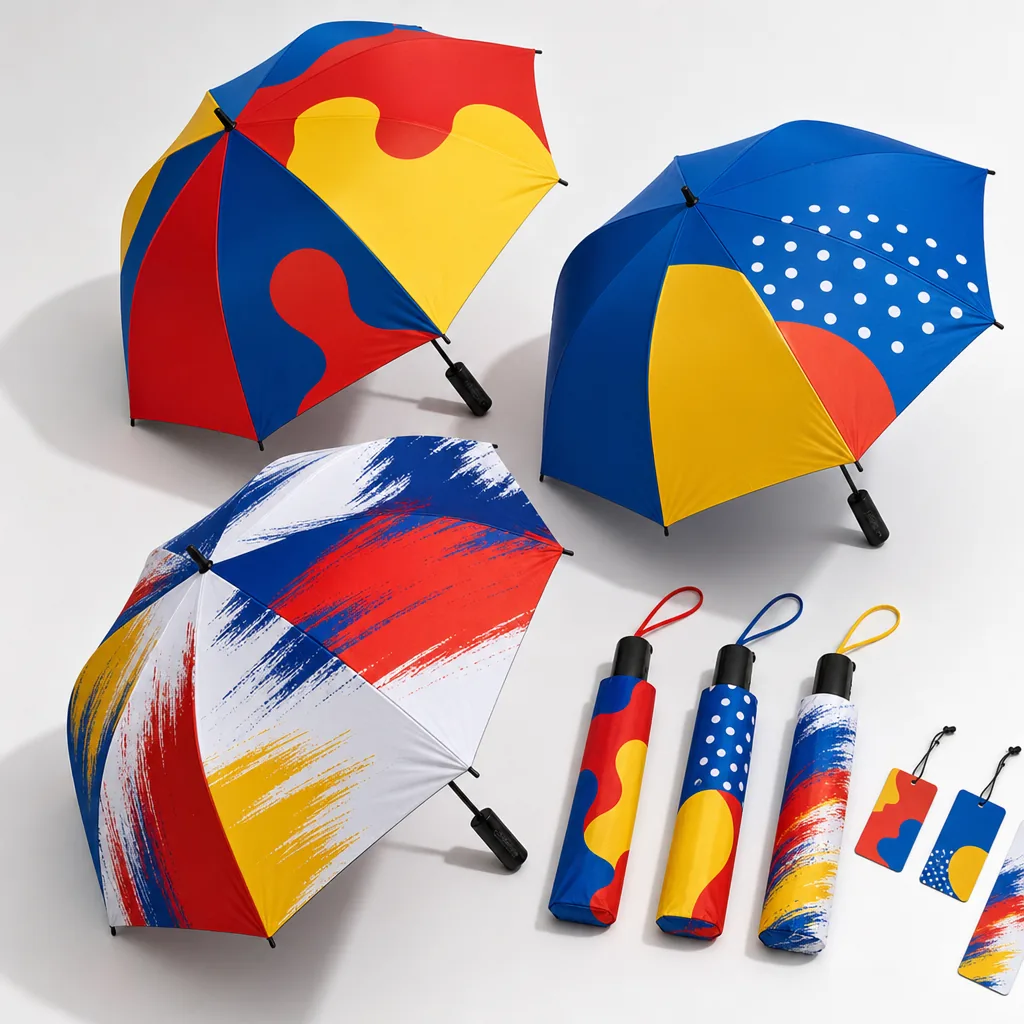
When buyers compare promo items, the real question is not unit price but how long the brand stays visible after the giveaway is forgotten. A well-made umbrella solves that problem better than most swag because it moves through commutes, campuses, job sites, and city streets, putting your logo in public for years, not days. That is why the promotional umbrella roi is often stronger than cheaper items that disappear into a drawer.
Cost-per-impression: umbrellas vs typical swag
A promotional umbrella has a better promotional umbrella roi than most swag because the imprint area is simply larger and the item gets seen in more places. A 21" compact umbrella already gives you multiple panels to print on, and a 23" or 27" golf umbrella gives you a billboard-sized canopy with enough room for a logo, URL, and a message without looking crowded. Pens get pocket time, but they are tiny and disappear. Tote bags are useful, but the print area is often blocked by folds, seams, or someone wearing the bag against a body. Shirts can work, but sizing, fashion preference, and wear frequency make the exposure inconsistent. An umbrella is different: when it rains, it is carried at eye level, opened in public, and moved through traffic, campuses, stadiums, and parking lots where other people can actually read the mark. That is why the advertising umbrella value is usually higher than the unit cost suggests.
The lifespan matters as much as the print area. A cheap pen may be used for a few weeks, then tossed. A promo T-shirt may be worn a handful of times before it becomes sleepwear or a rag. A decent promotional products umbrella, especially one built with fiberglass ribs, a pongee 190T or 210T canopy, and an auto-open or auto-open-close frame, can stay in circulation for years if it is not abused. That long service life spreads the cost over many impressions, which is the core math behind branded umbrella marketing. The buyer pays once, but the umbrella keeps working through multiple rainy seasons, commutes, and business trips. In factory terms, a well-built frame with proper stitching, reinforced tips, and a decent runner does not fail at the first wind gust. If the product survives real weather, it keeps advertising long after the event booth is forgotten.
There is also a practical visibility advantage that other swag cannot match. A bag hangs low and often faces inward; a shirt depends on whether the wearer wants to promote your brand; a pen is only visible when someone is actively using it. An umbrella sits above the crowd, which means the logo is exposed in exactly the moments when people are concentrated and moving together. That is why event planners, distributors, and retail brands keep coming back to umbrellas when they need measurable reach without paying for recurring media. The best results usually come from choosing the right format for the audience: a compact travel model for commuters, a straight-shaft model for corporate gifting, or a large vented golf style for outdoor events. In all three cases, the advertising umbrella value comes from combining utility, visibility, and a lifespan that is hard for typical swag to match.
Why umbrellas get kept and reused
Umbrellas stay in circulation because they solve a real problem every time it rains, and that is the core of promotional umbrella roi. A pen disappears into a drawer; a tote gets forgotten in a car trunk; a water bottle competes with a dozen others. An umbrella gets grabbed the moment the weather turns, and it keeps getting reused because the owner does not need to buy a replacement every season. In practice, a 21" compact auto-open model or a 23" fiberglass frame with a pongee 190T canopy can stay useful for years if the ribs hold and the stitching is decent. That repeated use is what turns a logo into recurring impressions instead of one-time exposure.
From a factory standpoint, the products with the best retention are the ones that feel reliable in hand: fiberglass ribs instead of cheap steel that bends, a smooth auto-open mechanism, and a canopy that dries fast without mildewing. A branded umbrella marketing strategy works when the item is useful enough that people keep it in a car, office, or backpack, not when it looks good in a photo and fails in the first wind gust. Double-canopy vented frames and UV-coated pongee 210T umbrellas get kept because they handle both rain and sun, so the owner has a reason to use them beyond a single bad-weather day. That is why advertising umbrella value is higher than many buyers expect.
ZheBrella’s standard practice on higher-retention programs is to spec the umbrella for the environment, not just the print area: 8K or 10K ribs for lighter compact models, 16K or stronger vented frames for larger golf umbrellas, and AQL 2.5 inspection so the logo is not attached to a weak product. When the umbrella survives 50+ mph gusts, opens cleanly, and dries without staining, it becomes part of the user’s routine. That routine is what matters for ROI. A promotional products umbrella keeps working in offices, cars, and entryways long after other swag has been thrown away, so the logo keeps traveling without any extra spend.
Designing for visibility and shareability
The fastest way to improve promotional umbrella roi is to treat the canopy as a moving billboard, not a small logo placement exercise. A 21" or 23" stick umbrella gives enough flat surface for a bold 1-color imprint, but if you want the branded umbrella marketing to work in photos and street traffic, go larger: 27" and 30" golf frames carry a bigger repeat pattern, a full-panel logo, or a high-contrast block of color that reads from 20 to 30 feet away. In factory terms, 190T pongee is fine for budget work, but 210T pongee gives a cleaner print edge and better ink hold for screen or heat-transfer decoration. Our standard practice is to push clients toward bright panel contrast, oversized wordmarks, and logo placement on alternating gores so the umbrella still reads when half the canopy is hidden by the user’s body.
If you want advertising umbrella value that people actually share, use formats that photograph well in low-effort environments. Clear domes in POE or PVC do this better than most people expect because the face stays visible through the canopy, which is why they show up in social posts, event coverage, and city street photography. Double-canopy vented models with 8K or 10K fiberglass ribs also help, because a canopy that survives wind without inversion keeps the logo intact in real use instead of becoming a broken prop after one storm. For campaigns, I prefer high-saturation panels, matte black frames, and either auto-open or auto-open-close mechanisms, since fast deployment gets the umbrella into the frame quickly and improves shareability. The rule is simple: if the product does not look distinctive from a distance and readable in a phone photo, it will not earn its cost back.
Matching umbrella type to campaign goal
For a campaign aimed at executives, golf events, or premium retail, the 27" and 30" golf umbrella is the safest bet because it gives you real print area and a product people actually keep. A double-canopy vented frame with fiberglass ribs handles wind better than a cheap steel stick umbrella, and 190T or 210T pongee gives a cleaner surface for screen print, heat transfer, or sublimation. On a unit-cost basis, the spend is higher than a compact, but the imprint visibility is stronger and the failure rate is lower, which is where the promotional umbrella roi usually improves. If the audience is trade-show buyers, field sales teams, or country club members, this is the format that supports a higher perceived value without forcing a luxury-level budget.
Compact umbrellas fit a different job: commuter traffic, campus programs, airline giveaways, and mass retail promotions where price discipline matters more than big graphics. A 21" or 23" manual or auto-open compact with aluminum shaft and steel ribs keeps freight down and makes it easier to hit aggressive quantity tiers, especially when you are buying by the carton instead of by the case. The tradeoff is obvious: smaller canopy, shorter handle, and less decoration space, so the branded umbrella marketing value comes from repetition and daily use rather than billboard-sized visibility. For buyers comparing promotional products umbrella options, compact models win when the goal is broad distribution at a controlled landed cost, not when the goal is to impress.
Inverted or reverse-fold umbrellas make sense for urban commuters, rideshare users, and weather-heavy markets where a wet canopy and car interior are the real pain points. The inside-out closing action keeps water contained, which adds practical value and makes the product feel more engineered than a standard stick umbrella, but the mechanism adds cost and some weight, so it should be reserved for audiences that will notice the difference. In my factory experience, this style sells best when you need a mid-tier gift with a useful twist, not a commodity handout. If the campaign budget allows for stronger hardware, UV coating, or an auto-open-close mechanism, the advertising umbrella value rises because the user feels the product solving a specific problem, not just carrying a logo.
Measuring umbrella campaign impact
The cleanest way to judge a promotional umbrella roi is to stop thinking in unit cost and start counting weather-driven impressions. A 23-inch auto-open umbrella carried on a city commute is visible to people at crosswalks, building entrances, ride-hail queues, and transit stops; a realistic range is 8 to 15 third-party views per outing, with much higher counts in dense pedestrian traffic. If the umbrella stays in circulation for 18 to 24 months, even a conservative 40 rainy uses can produce 320 to 600 external impressions, before you count the owner’s own repeated exposure to the logo. That is why a promotional products umbrella usually beats tote bags, pens, or low-end apparel on advertising umbrella value: the print area is large, the item is used publicly, and the useful life is long enough to accumulate real frequency, not just one event handoff.
Tracking should be built into the product and the campaign, not guessed after the fact. For branded umbrella marketing, I would put a unique QR code on the tie band, a short URL on the canopy panel, and a campaign-specific offer code tied to region, event, or distributor batch. Then compare scan rate, redemption rate, and repeat visits against a control group with no umbrella distribution. If you want a harder number, use a simple impression model: units distributed x average rainy-day uses x estimated passersby x retention factor, then benchmark that against CPM for paid media. Our standard practice is to validate print placement and panel size during sampling because a weak logo on a vented canopy or a tiny mark near the ferrule destroys visibility. That is the difference between a souvenir and a measurable media asset, and it is where promotional umbrella roi becomes defensible in procurement reviews.
Frequently Asked Questions
Are promotional umbrellas a good marketing investment?
Yes - they pair a large, highly visible branded surface with long retention, giving one of the lowest cost-per-impression figures in promotional products. A well-made umbrella keeps a logo in public view for years.
Which promotional umbrella gets the most exposure?
Full-size golf and straight umbrellas have the biggest canopy and are used outdoors where many people see them. Clear dome umbrellas are highly photogenic and shareable, boosting organic reach.
What cost-per-impression range do promotional umbrellas usually achieve?
For a typical wholesale umbrella priced around $6 to $14, the cost per impression can drop below $0.01 if the unit gets repeated use over several seasons. The result depends on where it is distributed, how often it is carried, and whether the recipient actually uses it in public.
What MOQ and lead time should a B2B buyer expect for custom umbrellas?
Most OEM/ODM umbrella programs start at about 300 to 500 pieces per design, though larger panels, special handles, or complex packaging can push that higher. Standard production is often 20 to 35 days after sample approval, plus shipping time.
Which decoration method gives the best long-term branding value on umbrellas?
Screen printing on canopy panels is usually the best balance of durability and cost for large logos. If the campaign needs more color detail, ask for heat transfer or digital print, but check wash and abrasion resistance before placing a large order.
Looking to Launch Your Custom Umbrella Line?
ZheBrella is a Zhejiang-based OEM/ODM umbrella manufacturer with 17 years of export experience. Free design, low MOQ from 100 pieces, windproof construction, full-color print.
Get Free Quote Now »People Also Search For
Related Articles

Custom Umbrellas for Property Managers and Leasing Teams
Plan umbrellas for apartment tours, resident loaners, and leasing gifts with specs for wind, print durability, MOQ, lead...
Read More »
Custom Umbrellas for Telecom Retail and Installer Teams
Plan telecom umbrella programs for store launches, fiber rollouts, and installer crews with windproof frames, logo place...
Read More »Branded Umbrellas for Beverage and Alcohol Promotions
Plan beverage and alcohol umbrella programs for bars, retail promos, and festivals with compliant artwork, durable specs...
Read More »