Export Carton and Container Loadability for Umbrellas
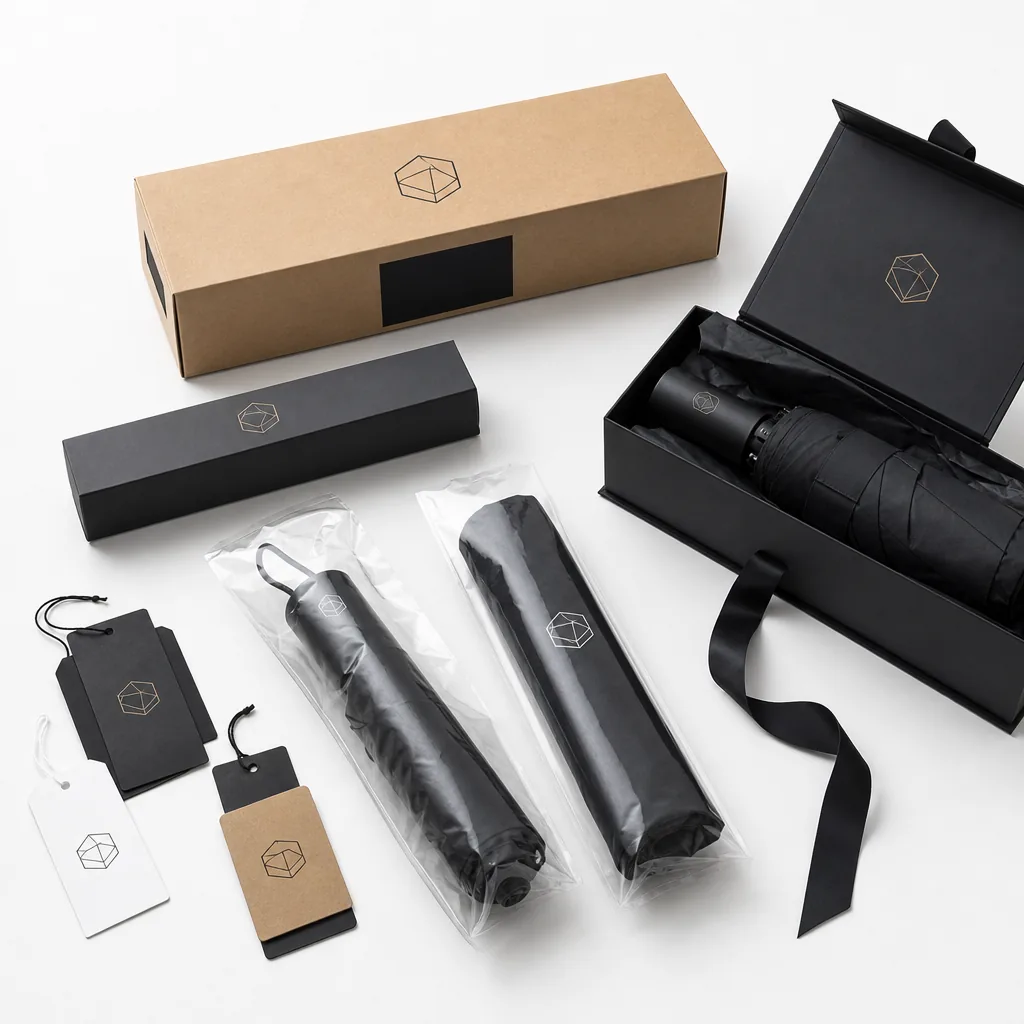
For umbrella importers, freight cost is often decided long before the container leaves the dock, and poor carton sizing can turn a competitive unit price into an expensive shipment. At the factory floor, we look at umbrella carton packing as a loading problem as much as a packaging problem, checking carton dimensions, stack strength, inner protection, and how each case actually builds into a full container. The goal is simple: protect the goods, fill the cube efficiently, and avoid the hidden waste that shows up on the freight invoice.
Why packing density drives umbrella freight
Freight on umbrellas is usually paid by cube, not by gross weight, so the real lever is how tightly the cartons fill the container. A case of 24 folding umbrellas may weigh only 10 to 14 kg gross, but if the carton is oversized or the rib orientation wastes air, you lose container loadability umbrella by umbrella. That is why umbrella carton packing starts with closed length, canopy diameter when folded, and whether the handle nests flat or forces extra headspace. A 40HQ container can carry far more units when the master carton footprint is tuned to the product, and that difference shows up faster than any change in material cost. ZheBrella usually optimizes around the carton outer dimension first, then checks whether the loading pattern keeps the pallet or floor stack stable during transit.
The mistake I see most often is packing for convenience instead of shipping optimization. If you use a fixed carton size for 21 inch, 23 inch, and 27 inch umbrellas, you will leave voids in some SKUs and crush risk in others. Good umbrella export packaging balances carton wall strength, count per inner box, and the way folded umbrellas alternate handle-to-tip so the bundle locks without extra filler. For example, a 12-pack of compact auto-open-close umbrellas can often be packed denser than a 6-pack golf umbrella even when the weight difference is small, because the long shaft and curved handle drive more wasted air. Once the packing scheme is stable, the carton dimensions can be matched to pallet math and container row patterns instead of being guessed after production.
For buyers, the important metric is not just pieces per carton, but pieces per cubic meter and whether the load stays within the carrier’s carton and pallet rules. A small change from a 55 x 30 x 25 cm master carton to a 52 x 28 x 24 cm carton can improve container loadability umbrella enough to save several cubic meters in a full export order, which matters more than shaving 50 grams off the frame. That is also why umbrella carton packing should be tested with actual folded samples, not just spec sheets, because ferrules, runner position, and canopy bulk change the final compressed shape. If the freight mode is FOB or DDP, the packing plan should be checked against the destination warehouse handling method, since a dense carton that is too soft will shift and damage tips even though the theoretical load plan looked efficient on paper.
Designing the master carton
Master carton design starts with the umbrella format, not the freight rate. A 21-inch folding umbrella may fit 40 to 60 pieces per carton if each unit is polybagged and bundled in inner sleeves, while a 23-inch stick umbrella usually lands around 12 to 24 pieces because the shaft length drives the carton depth. For umbrella carton packing, I care more about the finished outer size than the theoretical cube, because a carton that is 5 mm too tight will crush tips, runners, and handle caps during compression. The usual target is a master carton that stays under 60 cm on the longest side for easier pallet stacking and lower damage risk, with enough void control that the umbrellas do not shift and bruise the canopy edge.
Strength matters as much as size. Standard umbrella export packaging should use double-wall corrugated board for most retail orders, and heavy stick umbrellas or mixed assortments often need 5-ply carton stock with an ECT rating that can survive stacking in a humid container. I prefer a packed weight that stays in the 12 to 18 kg range per carton when possible, because cartons above that become harder to handle and more likely to burst at the seams during unloading. Corner compression, tape overlap, and the quality of the glue joint are not minor details; if the carton fails in transit, the canopy fabric and fiberglass ribs usually take the hit first.
Container loadability umbrella planning is where carton dimensions pay off. A few millimeters saved in length or height can change how many master cartons fit on a 20-foot or 40-foot container, especially when the cartons are palletized with standard pallet footprints. On repeat programs, our standard practice is to freeze the carton spec after sample approval and then calculate the loading plan from the confirmed carton outer size, not from the product size alone. That is the practical side of umbrella shipping optimization: fewer wasted gaps, cleaner stacking, and less rework at the port. If the buyer wants mixed SKUs, the carton layout should still respect one carton family per pack size so the warehouse can count, label, and trace the shipment without confusion.
Nesting and orientation tricks
The shape of the umbrella decides how much air you ship. A straight-shaft 21" folding umbrella with an auto-open-close mechanism packs very differently from a 30" golf umbrella with a vented double canopy, and that difference shows up fast in umbrella carton packing. Short folds can be nested handle-to-tip in alternating directions so the package locks flat, while long straight umbrellas usually need side-by-side orientation to avoid rib damage. If the rib set is 8K or 10K fiberglass, the tips are more forgiving; steel ribs and stiff POE canopies hold more memory and create bulge, which wastes carton height unless the layers are staggered correctly. Our standard practice is to match carton length to the actual folded length, not the marketing size, because one extra inch of dead space can cut container loadability umbrella performance by several percent over a full export order.
Canopy material changes the packing geometry as much as frame design. Pongee 190T and 210T collapse cleanly, but PVC, EVA, and thicker UV-coated canopies fight back and spring open if they are not folded with consistent panel alignment. In umbrella export packaging, the best results come from aligning the seams in the same direction, compressing the canopy into a narrow profile, and then reversing the stack on the next layer so the rib nodes do not build a ridge. Double-canopy windproof models need special attention because the vent adds thickness at the crown; if you orient every unit the same way, the carton becomes a triangle instead of a rectangle. That is where umbrella shipping optimization starts paying off, because better nesting reduces carton count without changing the product spec.
The carton plan has to follow the product mix, not force every style into one box size. A batch of compact manual umbrellas can often ship at higher density than auto-open units because the push-button head and reinforced spring section create a hard point that limits overlap. For FOB and DDP shipments, we usually test a few sample cartons first and check whether the bundle stays within AQL 2.5 damage limits after compression and vibration. Small changes matter: rotating alternating rows 180 degrees, placing hook handles against the carton wall, and using inner sleeves only where the canopy finish can scratch. That approach improves umbrella carton packing and gives more predictable container loadability umbrella numbers, especially when the order mixes 23" city umbrellas with larger 27" or 30" frames.
Container fill: FCL planning
Maximizing a 20ft or 40ft container starts with carton geometry, not with the umbrella itself. In umbrella carton packing, the real target is to remove dead space inside the master carton and then remove dead space between cartons on the floor. A compact 21" folding umbrella in a 12 pcs or 24 pcs export carton is far easier to load efficiently than a long-shaft stick umbrella, because the carton footprint stays rectangular and the void ratio stays low. For container loadability umbrella planning, I look at the outer carton size, gross weight, and stacking strength first; if the carton is soft, oversized, or irregular, the container loses cube long before it reaches weight limit. A 20ft container is usually volume-limited for umbrellas, while a 40ft high cube gives more room for better carton layouts and fewer broken stacks.
The best umbrella shipping optimization is usually floor loading, not pallet loading, unless the buyer has strict warehouse rules. Pallets protect cartons, but they also consume cubic space; in many cases you give up 8-12% of usable container volume just to keep pallets in the plan. Our standard practice is to pack master cartons tight, keep the carton face dimensions consistent, and align handle direction so the inner packs nest cleanly. For a compact folding umbrella program, a well-controlled 20ft container can often take roughly 450-550 standard master cartons, while a 40ft high cube can take about 1.7 to 2 times that, depending on carton height and whether the product is manual, auto-open, or auto-open-close. Long umbrellas with 16K frames or vented double-canopy builds need more care because their length drives the carton count down fast.
If you want predictable container fill, lock the export packaging spec before production starts: carton dimensions, pcs per carton, stack limit, moisture protection, and whether mixed SKUs are allowed. One loose SKU mix can destroy the cube plan because different umbrella lengths and handle shapes create gaps that cannot be recovered at loading time. For umbrella carton packing, I prefer a simple rule set: keep master cartons under a manageable gross weight, avoid oversized headspace, and use only enough protective material to survive transit, not warehouse theory. The 20ft/40ft plan should be checked against the final packing list, not against an idealized sample. That is the difference between theoretical capacity and actual container loadability umbrella results, and it is where umbrella shipping optimization either saves money or wastes it.
Confirming packing specs with the factory
The first thing to lock is the packing list, not the product photo. For umbrella carton packing, I want the factory to confirm exact carton size, gross weight, net weight, piece count per inner box, and how many inners per master carton before production is released. If the umbrella is 21", 23", or 30", the folded length, handle shape, and canopy bulk change the carton layout enough to affect container loadability umbrella calculations. A packing list should also state whether the umbrella is packed in an OPP bag, sleeve, or pouch, because that changes carton compression and damage risk. Our standard practice at ZheBrella is to match the carton spec to the final folding length, not to a guess based on sample photos. That avoids the common mistake where the factory uses a generic carton and the pallets look fine on paper but waste cubic space in the container.
Pre-shipment checks need to be written, not implied. Before booking space, confirm that every carton has the correct SKU, color, export mark, carton number, and quantity, and that the umbrella export packaging matches the approved packing list line by line. I also insist on a check for opening and closing function on a defined AQL 2.5 basis, plus a quick audit of ribs, tips, ferrule, and canopy print alignment so a carton does not contain mixed defect levels. If the order includes auto-open-close umbrellas or vented double-canopy styles, the folding sequence should be tested in packed form, because a canopy that looks fine open can still rub or deform inside the carton. This is where umbrella shipping optimization becomes practical: a few millimeters of wasted headspace per piece can cost real money when you scale to a full 20GP or 40HQ.
For export shipments, ask the factory to provide a carton loading plan and not just a finished packing list. A proper container loadability umbrella check should show carton dimensions, estimated cartons per pallet, pallet height if used, and the total carton count by container type, with a simple cube calculation you can verify against the cargo volume. If the order is going FOB, this also helps the forwarder avoid last-minute rework at the port when the cartons do not fit the booking plan. I prefer a pre-shipment photo set that shows closed cartons, carton labels, stacking pattern, and one opened carton with the actual packed umbrella sample inside. That is the fastest way to catch mistakes in umbrella shipping optimization before cargo leaves the factory. If the numbers do not line up, stop the shipment and correct the packing spec first, because fixing loadability at the warehouse is cheaper than fixing it on the vessel schedule.
Frequently Asked Questions
Why does carton packing affect umbrella shipping cost?
Umbrellas are bulky, so ocean freight is priced largely by volume. Tighter carton design and better container fill mean more units per container and a lower freight cost per piece - often a bigger saving than haggling on unit price.
How many umbrellas fit in a shipping container?
It depends entirely on the umbrella size and carton design, but optimizing units-per-carton and carton-per-container is where the savings are. Ask the factory for the loading plan and units per 20ft and 40ft container before you ship.
How do I estimate how many umbrellas fit in one 40HQ container?
Start with the outer carton dimensions and the umbrella pieces per carton, then calculate total CBM. A 40HQ usually holds about 68 to 76 CBM usable space, but the actual carton pattern, pallet use, and headspace loss can change the final loading quantity by 5% to 15%.
What carton details should I confirm before approving production?
Confirm the outer carton size, gross weight, carton strength, inner packing method, and whether the umbrellas are packed wet or dry. For export, buyers should also verify master carton marks, barcodes, and whether the packing matches the agreed loading plan for the target container size.
Does changing carton design really lower freight cost per piece?
Yes. Even a small reduction in carton height or dead space can improve container utilization and lower freight cost per umbrella. In practice, improving carton efficiency by 5% can create room for several hundred more pieces in a full container, depending on the umbrella style and pack count.
Looking to Launch Your Custom Umbrella Line?
ZheBrella is a Zhejiang-based OEM/ODM umbrella manufacturer with 17 years of export experience. Free design, low MOQ from 100 pieces, windproof construction, full-color print.
Get Free Quote Now »People Also Search For
Related Articles

Umbrella Carton Packing and Load Plans for Importers
Reduce freight surprises with umbrella carton specs, load planning, gross weight checks, AQL packing inspection, and FOB...
Read More »
Umbrella Carton Packing and Container Load Planning Guide
Plan carton sizes, CBM, pallet use, and loading methods so bulk umbrella orders ship with fewer delays, lower damage ris...
Read More »
Umbrella Carton Packing Specs to Lower Landed Cost
Plan umbrella carton size, unit packing, pallet loads, and FOB/DDP choices to cut freight waste, damage risk, and surpri...
Read More »