Umbrella Programs for Luxury Retail and Shopping Centers

For luxury retailers and malls, an umbrella is not a giveaway; it is a service touchpoint that customers handle at the door, valet stand, and concierge desk. A shopping center umbrella program has to look consistent across locations, survive wet-floor traffic and repeated borrowing, and still match the brand standards buyers promised internally. On the factory floor, that means controlling frame strength, canopy tension, fabric finish, handle feel, logo placement, and final inspection before cartons ever leave Songxia.
Define Where Retail Properties Actually Use Umbrellas
Define the shopping center umbrella program by service point, not by one generic umbrella SKU. Valet lanes and porte-cocheres need speed, reach, and low breakage: specify 27" or 30" golf umbrellas, 8K or 10K fiberglass frames, double-canopy venting for exposed entrances, and straight or ergonomic handles staff can control while opening vehicle doors. Keep branding restrained on valet umbrellas bulk: black, navy, or deep green pongee with a logo on one or two panels reads premium without turning the arrival lane into advertising. A high-traffic luxury property usually needs 80 to 200 valet units across two or three entrances, plus a 10% reserve for wet swaps, rain-day loss, and misplaced stock. Auto-open improves handoff speed; auto-open-close adds cost with little valet benefit. Set the frame target around low inversion and low rib breakage in 50+ mph gust conditions.
Concierge desks and security posts use fewer umbrellas, but the specification must be tighter. Mall concierge umbrellas are typically 23" or 27" models for escorting shoppers to parking, taxis, hotels, or nearby offices, so close-range finish matters: a pongee 210T umbrella with Teflon coating looks cleaner and sheds water better after repeated drying than thin 190T polyester. For luxury retail branded umbrellas, one-panel or alternating-panel logos work for permanent property service, while all-over print is better reserved for short-term events. Security teams need plainer units, with optional reflective tape or a small SECURITY mark on the lower panel, because visibility, loss control, and chain of custody matter more than retail styling. Plan 20 to 60 units per property based on patrol routes, loading docks, vehicle posts, and desk coverage, then assign storage by location to prevent umbrellas drifting between teams during peak rain.
Tenant lending and VIP gifting should be separate SKUs. Lending programs need durable, trackable, cost-controlled units: 21" to 23" compact auto-open-close umbrellas for boutique counters, or 23" stick umbrellas for restaurants and cinemas, usually 100 to 500 pieces depending on tenant count and replacement policy. Premium gifting is closer to product development: fiberglass ribs, clean stitch tension, UPF 50+ or Teflon coating, color-matched sleeve, hangtag, and carton packing strong enough for FOB or DDP distribution without crushed handles. Apply AQL 2.5 inspection by use case; a loose runner on a staff loaner is an operating nuisance, while a scratched metal shaft on a VIP gift becomes a brand complaint. For a shopping center umbrella program, budget 25 to 35 days after artwork approval for solid-color pongee, with longer lead times for sublimation or custom-dyed fabric.
Select Premium Materials That Match Brand Positioning
For a shopping center umbrella program, choose the format before the fabric because it defines how guests encounter the service. Straight-stick umbrellas in 23", 27", or 30" sizes fit valet lanes, hotel-style entries, and luxury retail doorways because they open smoothly, look formal in staff hands, and give enough coverage when escorting shoppers to vehicles. Folding umbrellas, typically 21" or 23" arc with auto-open or auto-open-close frames, work better for gifting, resale, or mall concierge umbrellas stored in drawers or service desks. Avoid tiny 5-fold pocket frames for premium service unless compact carry is the main requirement; they save space but reduce canopy presence and perceived value. For valet umbrellas bulk orders, a full-length fiberglass shaft with a matte handle usually reads more controlled and premium than a lightweight folding frame with a glossy plastic grip.
Rib choice controls durability, weight, and how the umbrella looks after repeated weekend use. Steel ribs reduce unit cost and hold a crisp canopy shape, but they can bend permanently when guests push into wind or staff close umbrellas quickly during busy service. Fiberglass ribs cost more, yet flex back more reliably and cut warranty risk, especially on 8K and 10K straight-stick frames. Wind-exposed shopping centers should compare fiberglass ribs with steel center shafts against full fiberglass frames based on budget and handling needs. A 16K frame looks substantial but adds weight, so it is better for doorman-controlled service than broad guest lending. At open-air malls, double-canopy vented construction with a stated 50+ mph wind-tunnel rating is more useful than an undefined “windproof” claim.
Fabric should match the property’s price point, not just pass a basic rain test. A pongee 210T umbrella has a denser hand, smoother logo surface, and cleaner drape than 190T pongee, so it usually suits luxury retail branded umbrellas better for black, navy, champagne, or deep green canopies. Screen printing and heat-transfer logos also hold sharper edges on 210T, while a Teflon coating improves water shedding without giving the canopy a plastic POE or PVC look. UV-focused properties, resort retail streets, and outdoor luxury villages may specify UPF 50+ fabric for 27" and 30" guest-walk umbrellas used in sun as well as rain. ZheBrella confirms coating, colorfastness, rib torque, and opening force before mass production, then inspects finished goods to AQL 2.5 so the delivered umbrellas support the property’s positioning.
Balance Visual Impact With Daily Handling
A shopping center umbrella program starts to look promotional when the logo is scaled for distance instead of guest use. For luxury retail branded umbrellas, keep the primary mark to 45-70 mm on one or two panels, use tone-on-tone ink, or place a small repeat mark near the panel edge. Full-panel printing should read like interior architecture: charcoal monogram on black, a single ivory stripe, or a muted concierge crest on bottle green. Specify pongee 210T umbrella fabric rather than 190T for units that are opened, folded wet, and returned to stands throughout the day; the tighter cloth gives a denser hand feel, cleaner print edge, and better canopy recovery. Black, graphite, navy, ivory, taupe, and deep green reduce visual noise in marble lobbies, valet lanes, and retail corridors while hiding light water spotting.
Handle finish sets the quality signal before the canopy opens. For mall concierge umbrellas and valet umbrellas bulk orders, avoid glossy plastic crook handles unless cost is the deciding factor; they can make a well-printed canopy feel low grade. Use matte rubberized crook handles for wet grip, satin ABS straight handles for a cleaner profile, PU leather wraps for VIP handoff, or wood-look EVA when weight matters. On 23 inch and 27 inch models, auto-open is practical for staff who are holding doors, bags, tickets, or radios. Compact VIP giveaways can use auto-open-close, but the spring, runner, and lock should be tested more tightly because failure is obvious to the guest. Match metal tips and ferrules to the frame or use gunmetal; bright chrome pulls attention away from the service experience. If the handle carries branding, choose laser marking or a small debossed plate instead of a large pad-printed white logo that will scratch in umbrella stands.
Rib count changes silhouette, weight, durability risk, and perceived grade. An 8K frame is lighter, dries faster, and costs less, which suits a shopping center umbrella program where units move between valet, concierge, and security desks all day. A 16K frame creates a rounder canopy and more formal profile, but it adds weight and more assembly points; weak production shows up as uneven panel tension, misaligned tips, and runner friction. For luxury sites, specify 8K fiberglass ribs on 23 inch guest umbrellas and 16K fiberglass or fiberglass-plus-steel ribs on 27 inch doorman umbrellas where presence matters. Steel ribs look slim but can bend permanently after wind abuse, while fiberglass flexes back better at exterior entrances. A double-canopy vented build can pass 50+ mph wind-tunnel testing only when the vent seam allowance, top cap, and rib attachments are engineered for load, not copied for appearance.
Control Quality Across Multi-Site Rollouts
For a multi-site shopping center umbrella program, treat the approved sample as the production contract, not a mood-board reference. Keep one signed golden sample per SKU: 23-inch auto-open guest umbrellas for concierge desks, 27-inch golf umbrellas for valet stations, and compact auto-open-close models for VIP lounges. The spec sheet must freeze rib count, such as 8K or 10K, shaft material, canopy fabric, logo size, Pantone code, handle finish, tip color, sleeve construction, and carton pack method. For luxury retail branded umbrellas, color drift is a rollout risk, especially when black pongee reads brown under warm lobby lighting or metallic logo transfers shift between lots. If the program moves to a pongee 210T umbrella for a denser hand feel than 190T, require lot-to-lot shade approval under both D65 daylight and warm indoor light before bulk cutting starts.
Check auto-open mechanisms at incoming frame inspection, final assembly, and packed-goods audit. For mall concierge umbrellas and valet umbrellas bulk orders, a 23-inch auto-open frame should deploy cleanly without a harsh snap, loose runner movement, handle vibration, button sticking, or uneven spring release. Weak springs often show after 50 to 100 open-close cycles, so cycle testing belongs in the QC file, not in an informal showroom click test. For vented double-canopy valet umbrellas, inspect vent alignment after opening; a crooked vent weakens the premium presentation even when the frame functions. Use AQL 2.5 for major defects, with zero tolerance for critical defects such as broken ribs, unsafe tips, jammed buttons, sharp burrs, severe logo misplacement, and cracked handles.
Factory QC only works when receiving, storage, and replacement rules are controlled by site. Mark every carton with site code, model, color, PO number, quantity, and receiving location; avoid mixed-site cartons because mall docks and back offices rarely have time to sort umbrellas during rain. Store stock dry, vertical or flat-packed, away from HVAC condensation. Never leave wet returns tied inside sleeves overnight; mildew on 210T pongee can appear within a few days in humid storage rooms. For a daily-loan shopping center umbrella program, budget monthly replacement at 3% to 8%, depending on traffic, weather exposure, and whether returns move through valet, concierge, or store counters. Each property should hold about 10% buffer stock so units with bent steel ribs, cracked handles, peeling logos, or damaged sleeves are pulled immediately.
Plan MOQ, Lead Times, and Delivered Cost
For a shopping center umbrella program, MOQ is driven less by canopy printing than by component changes. A standard 23" or 27" auto-open stick umbrella with fiberglass ribs, steel shaft, 190T polyester or pongee 210T umbrella fabric, and one-color screen printing typically starts at 300-500 pieces per color. That level fits mall concierge umbrellas staged at entrances, valet desks, VIP lounges, and reserve closets. Costs and MOQ rise when luxury retail branded umbrellas require molded handles, plated logo badges, jacquard sleeves, custom tips, rubberized grips, or exact Pantone fabric. Those changes usually push orders to 1,000-3,000 pieces because tooling, sleeve cutting, hardware plating, and dyed fabric lots need scale. For valet umbrellas bulk orders, specify 27" or 30" vented double-canopy frames with 8K or 10K fiberglass ribs; curbside wind exposure of 35-50 mph makes low-cost steel-rib frames a replacement-cost risk.
Plan production from the first heavy rain period, not the opening event. Repeat orders using approved artwork and existing parts usually need 20-30 days after deposit and final proof approval. New development with custom handles, engraved metal plates, printed sleeves, lab dips, or rubberized grips is closer to 35-50 days; sampling alone can take 7-12 days before the purchase order is production-ready. Before mass cutting, lock fabric, rib count, frame spec, logo method, sleeve style, carton marks, and AQL 2.5 inspection criteria. Changes after cutting create scrap, add cost, and can miss the seasonal window. Regional mall operators should place replenishment orders 60-75 days before rainy season for sea freight, or 30-40 days ahead when air freight is needed for a smaller emergency batch.
FOB and DDP solve different buying problems. FOB Ningbo or Shanghai gives the cleanest factory price: umbrellas packed in export cartons, usually 12 or 24 pieces per carton depending on 23", 27", or 30" size, with the buyer controlling freight forwarding, customs clearance, duties, trucking, and warehouse receiving after port handoff. DDP gives regional operators a clearer delivered budget because the quote includes ocean or air freight, duty, brokerage, and final delivery to one warehouse or multiple properties. The risk is quote accuracy: delivery addresses, pallet rules, receiving hours, and tax details must be confirmed early, or the supplier will price in a buffer. For a shopping center umbrella program across several cities, compare one FOB benchmark with one DDP landed-cost quote, keep at least 20% reserve stock before wet season, and reorder when usable inventory falls below 45 days of expected consumption.
Frequently Asked Questions
Are 16K umbrellas better for luxury retail programs than 8K umbrellas?
They can be, if the goal is a more refined, premium look on concierge or valet stands. Buyers should still check weight, frame strength, and replacement cost, because 8K models are often more economical for high-use loan programs.
What fabric is usually chosen for a premium shopping center umbrella?
Pongee 210T is a common upgrade because it has a smoother hand feel and cleaner print appearance than many entry-level canopies. It is often paired with fiberglass ribs for a better balance of durability and presentation.
What umbrella sizes work best for valet and mall concierge use?
Most valet and concierge programs use 27-inch to 30-inch golf umbrellas because they cover one guest plus a staff member. For luxury retail entrances, 23-inch automatic straight umbrellas are also common when storage space is limited.
What specs should a luxury retail umbrella program require for brand consistency?
Use the same Pantone-matched canopy color, logo size, handle material, and packaging standard across all locations. A common spec is 210T pongee fabric, fiberglass ribs, a straight EVA or wood handle, and carton labeling by store or region.
What is a realistic MOQ and lead time for branded mall umbrellas?
For OEM branded umbrellas, MOQ is usually 500 to 1,000 pieces per design, depending on frame and fabric. Production typically takes 30 to 45 days after artwork approval and sample confirmation, with extra time needed for custom colors or premium packaging.
Looking to Launch Your Custom Umbrella Line?
ZheBrella is a Zhejiang-based OEM/ODM umbrella manufacturer with 17 years of export experience. Free design, low MOQ from 100 pieces, windproof construction, full-color print.
Get Free Quote Now »People Also Search For
Related Articles

Custom Umbrellas for Retail Mall Operations and Tenant Programs
Build umbrella programs for malls, valet teams, and tenant campaigns with durable specs, practical SKU tiers, QC control...
Read More »Umbrella Programs for Luxury Retail Concierge and Valet
Build a premium umbrella program for luxury retail concierge and valet teams with upscale materials, branding, QC, and d...
Read More »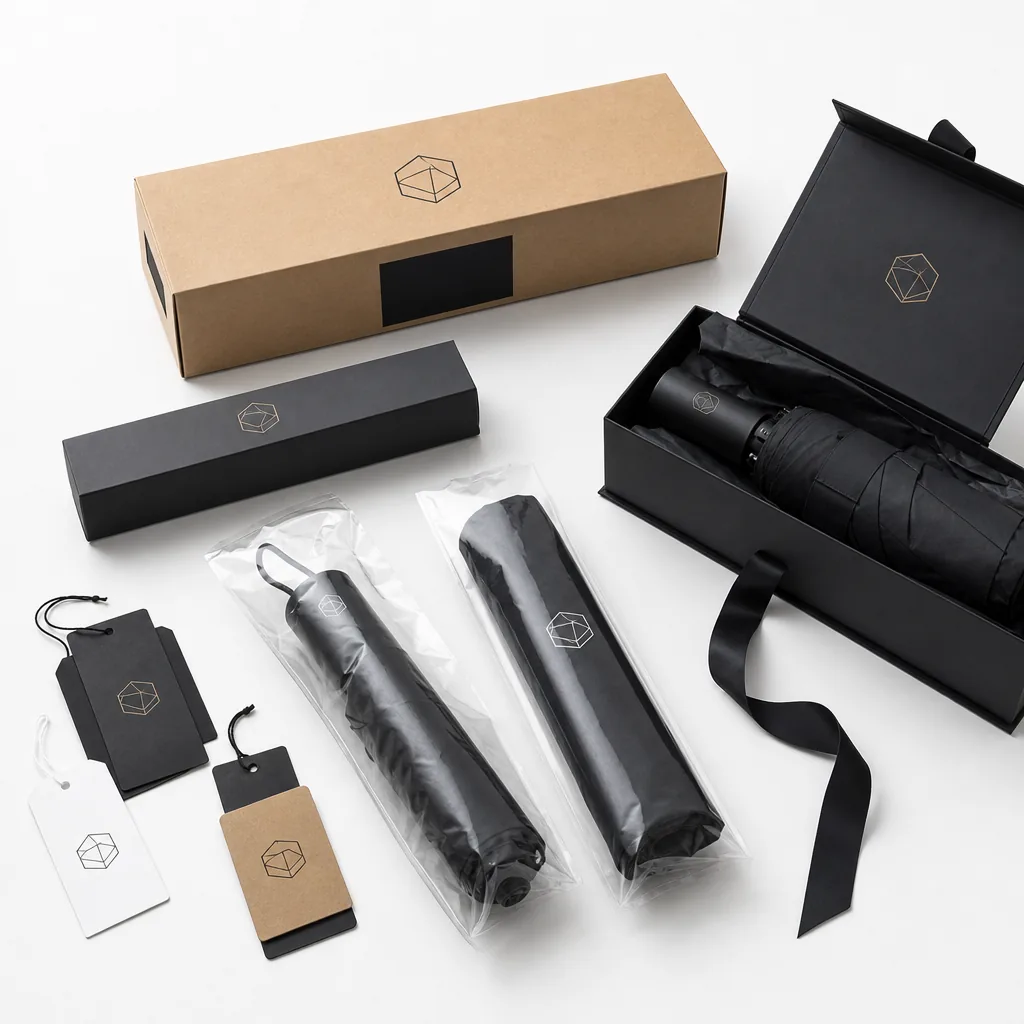
Custom Umbrellas for Luxury Retail Clienteling Programs
Source premium umbrellas for luxury retail gifting and VIP clienteling with elevated materials, packaging, QC, MOQ, and ...
Read More »