Branded Umbrellas for Universities and Schools
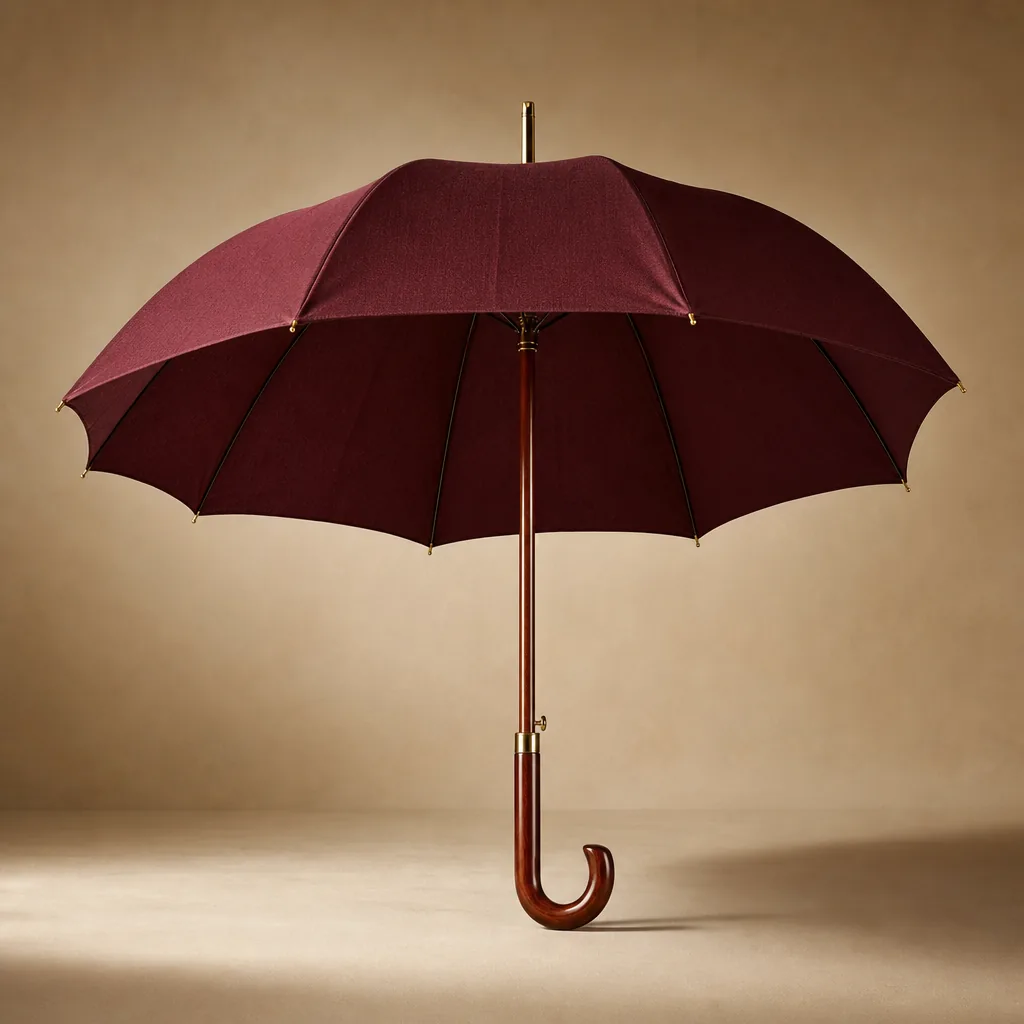
For universities and schools, a branded umbrella has to do more than carry a logo: it needs to match institutional colors, hold up in daily campus use, and look consistent across bookstore inventory, alumni programs, and event giveaways. A well-made university umbrella starts with the right canopy fabric, print method, and frame spec, because small sourcing errors show up fast when you are ordering at scale. From the factory floor, the difference is in color control, wind testing, and repeatable production.
Where campus umbrella programs fit
A university umbrella program makes sense first as a bookstore SKU, not as a giveaway. The product has to survive real retail handling: hang tags, barcode labels, polybagging, and enough margin for a campus store to carry dead stock without regret. For that channel, a 21" or 23" automatic open model with a pongee 190T canopy is usually the cleanest entry point, because it balances cost, weight, and perceived value. A school branded umbrella should also be boring in the right way: sturdy steel or fiberglass ribs, a solid logo placement, and a color palette that matches the institution instead of chasing trends. As a campus umbrella supplier, our standard practice is to keep the decoration area predictable so the bookstore can reorder the same item across semesters without redesign work.
Alumni gifting is a different job. Here, the umbrella has to feel like a premium object, even if the construction is still practical. A 23" or 27" auto-open-close frame with fiberglass ribs, a matte rubber handle, and a double-canopy vented windproof build tends to land well because it looks less like commodity merchandise and more like an anniversary or donor item. For a university umbrella used in alumni relations, the decoration should stay crisp under screen print or heat transfer, and the canopy fabric should be 210T pongee or better if the school wants a sharper hand feel. Buyers usually underestimate how much packaging matters in this category: a sleeve, insert card, and retailer-ready carton can move the item from low-end promo to something a development office can send without embarrassment.
Event handouts are where quantity and lead time take over. Orientation, homecoming, parent weekends, and outdoor ceremonies need a school branded umbrella that can be produced fast, counted accurately, and passed through AQL 2.5 without surprises. In those programs, a cheaper manual-open 21" umbrella with a polyester or pongee canopy is often the right choice because the unit economics work at scale and the item is easy to stack by case pack. If the event is outside and weather risk is real, a vented frame with fiberglass ribs is worth the extra cost, because it reduces failure in gusts and keeps the giveaway from becoming trash after one storm. For colleges comparing options, the practical question is not whether the logo looks good on a sample; it is whether the campus umbrella supplier can hold color consistency, meet a 30 to 45 day lead time, and ship the right mix of cartons for retail, alumni, and event channels without rework.
Matching school colors precisely
The first mistake schools make is approving an umbrella from a screen image instead of a physical color target. For a university umbrella, the only reliable starting point is the school’s official Pantone reference, then matching the canopy fabric, ink, and trim against that standard under controlled light. Pongee 190T and 210T take color differently from POE or PVC, so the same Pantone number can look slightly duller or deeper depending on the base material and coating. On the factory floor, we check strike-offs against a Pantone book, not a monitor, because campus lighting, weathered logos, and older spirit merchandise often drift from the original specification. A school branded umbrella should be approved with one master sample, not with a vague “close enough” instruction that turns into a production dispute later.
Pantone matching also has to account for the printing method. Screen print gives a solid, opaque hit on darker fabrics, while sublimation is better on white or light panels but can shift a shade if the heat and dwell time are off. For a college bookstore umbrella or event giveaway, the safest approach is to lock the color target before production starts, then run a pre-production strike-off and compare it against the official swatch under D65 light. ZheBrella’s standard practice is to separate canopy color approval from logo approval, because a navy panel and a navy logo can fail for different reasons. If the school wants exact institutional colors, we also note whether the match must hold on matte, glossy, or UV-coated fabric, since Teflon and UPF 50+ finishes can change how the color reads in daylight.
A campus umbrella supplier should be able to explain the tolerance, not hide it. In practice, a Pantone match on polyester canopy fabric usually needs a reasonable delta-E allowance, especially when the order is split across multiple sizes like 21-inch, 23-inch, and 27-inch frames or mixed mechanisms such as manual and auto-open-close. If the order includes a large run for a university store, we also keep dye lot consistency tight so the first carton and the last carton do not drift. The right way to handle a university umbrella order is to approve the color on the actual substrate, confirm whether the institution wants matte, saturated, or slightly subdued tones, and then protect that approval through production photos and final AQL inspection. That is what prevents a school branded umbrella from looking correct in the mockup and wrong in the hands of students.
Durability for student daily use
For a university umbrella that has to survive real student abuse, start with the frame, not the print. A 10K or 16K fiberglass rib structure is the safer choice than thin steel wire because it flexes in gusts instead of taking a permanent bend when a student turns a corner into the wind. For 21" compact styles, a double-rivet or reinforced stretcher joint matters more than people think; that is where cheap umbrellas fail after a few weeks in a backpack. A 190T pongee canopy is acceptable for basic giveaways, but 210T pongee with a DWR or Teflon coating holds up better against daily rain, coffee spills, and repeated opening in crowded campus walkways. If the umbrella is going to live in a dorm room, bus, or bookstore bag, auto-open-close is practical, but the button and shaft lock need to be tested for at least several thousand cycles.
For a school branded umbrella sold through a bookstore or handed out at orientation, I would avoid ultra-light frames that save a few grams but fail under routine student use. A straight or compact shaft with a 10 mm fiberglass center pole is a better baseline, and a vented double-canopy design is worth it if the campus sees strong seasonal wind. In factory testing, we look for survival in 50+ mph gust conditions without rib inversion, because once a canopy flips inside out, students stop using it. Handle choice matters too: EVA is comfortable for daily carry, while a rubberized grip is less likely to slip when wet. If the school expects heavy resale volume, the artwork should be screen printed or heat transferred on a canopy panel that does not sit on a seam, because cracked graphics make the product look cheap long before the frame actually fails.
As a campus umbrella supplier, our standard recommendation is to match the spec to the distribution channel. For a college bookstore umbrella, 23" or 27" sizes with 8K or 10K fiberglass ribs give a better balance of cost and durability; for commuter-heavy schools, a 30" stick umbrella with windproof venting is often the better long-term buy. Ask for AQL 2.5 inspection on seam strength, tip bonding, shaft straightness, and open-close function, not just visual print checks. MOQ usually starts around 500 to 1,000 pieces per design, and lead time is commonly 25 to 35 days after artwork approval, depending on canopy fabric and handle sourcing. The real test is simple: if the university umbrella can survive a semester of backpacks, bus stops, and repeated wet-dry cycles without loose ribs or a wobbly shaft, the spec is right.
Bookstore retail vs gift programs
The first mistake schools make is treating a university umbrella like one product when it usually serves two different jobs: sellable merchandise and giveaway inventory. A college bookstore umbrella has to earn shelf space, which means clean graphics, barcode labeling, hang tags, and a price point that makes sense next to sweatshirts and mugs. Retail buyers usually prefer a 21" or 23" compact auto-open style in pongee 190T or 210T, because it fits backpacks and moves well at checkout. If the piece is meant to sell, the build has to survive handling, not just look good in a photo. That means decent frame tension, fiberglass ribs over cheap steel where possible, and packaging that protects the canopy from creases, scuffing, and broken tips during freight and stocking.
Gift programs follow a different logic. A school branded umbrella for alumni events, admissions, donor mailers, or staff welcome kits is judged by perceived value per unit, not by store margin. In those cases, a larger 30" golf format or a vented double-canopy design often works better because it reads as premium even without retail packaging. Buyers can strip out the hang tag, simplify the print, and ship in bulk cartons to keep landed cost down. Our standard practice at ZheBrella is to separate retail SKUs from gift SKUs early, because the same decoration method, whether screen print or heat transfer, does not perform the same way on a shelf-ready product versus a packed distribution order.
A campus umbrella supplier should also think about how the merchandise will be replenished. Retail programs need clearer MOQ planning, tighter color consistency, and AQL 2.5 inspection on visible defects because bookstore returns are expensive and slow. Gift orders can tolerate simpler packaging and shorter decision cycles, but they often need harder deadlines tied to homecoming, orientation, or fundraising mail dates. That changes how you choose canopy material, coating, and carton count. If the university wants one item to do both jobs, the safest compromise is usually a mid-price 23" auto-open model with a clean dome shape, subdued branding, and a neutral retail-ready sleeve that can also be removed for bulk distribution.
Quantity and reorder planning
The biggest mistake schools make is ordering umbrellas like a one-time giveaway instead of a replenished stock item. A university umbrella sells on a weather cycle, not a calendar cycle, so demand spikes at freshman orientation, homecoming, open house, alumni weekend, and the first wet month of each semester. If the design is for bookstore retail, the buy should be planned around 8 to 12 weeks before those peaks, because a campus umbrella supplier cannot recover from a late approval if the fabric, frame, and print slot are already committed. For most programs, I recommend separating the first order into a launch quantity and a planned reorder quantity. That keeps the design live without overcommitting cash to slow-moving inventory.
For a school branded umbrella, the right quantity depends on how it is sold. Promotional handouts usually justify a larger one-time run, often 500 to 2,000 pieces, because the unit cost drops once you cross the sewing and printing setup thresholds. Retail programs are different. A college bookstore umbrella should be treated as a replenishable SKU with weekly or monthly top-ups, not a seasonal gamble. The practical rule is to keep at least 30 to 45 days of stock on hand during rainy season and 60 to 90 days before peak enrollment periods. That gives room for AQL 2.5 inspection, packing, and ocean or domestic transit without forcing rush freight, which usually eats the margin that made the program attractive in the first place.
Consistent reorders work best when the school keeps the specification frozen. Changing the canopy size from 21 inch to 23 inch, or switching from manual open to auto-open-close, resets the production assumptions and delays the next batch. The same applies to color matching, logo placement, and whether the frame is fiberglass or steel. If the university umbrella performs well, reorder on the same PO structure, same artwork, and same carton count so the factory can reserve material and keep the line stable. Our standard practice is to build a reorder calendar around the academic year: initial launch before fall, a smaller replenishment before spring rains, and a final restock if bookstore sales justify it. That is how you avoid stockouts without carrying dead inventory through the summer.
Frequently Asked Questions
How do schools match their colors on umbrellas?
Official school colors are matched to Pantone references via an approved lab dip, so canopies align with brand standards across bookstore stock and alumni gifts. Supplying the exact Pantone codes up front keeps the colors consistent on every reorder.
What umbrellas work for a campus bookstore?
A good-better-best range works well: an affordable folding umbrella for students, a mid windproof model, and a premium alumni-gift umbrella with packaging. Durability matters because student umbrellas see heavy daily use.
What umbrella styles work best for university bookstores?
Auto-open stick umbrellas and compact folding umbrellas are the most common choices because they fit different price points and shelf space. Many buyers order 24- to 30-inch canopies for campus visibility, then add a smaller foldable option for alumni gift sets.
Can school umbrella colors be matched to official brand colors?
Yes. Most OEM suppliers can match to Pantone references for the canopy, handle accents, or printed logo panels. For best consistency, provide the school's brand guide and approve a physical sample before mass production.
What is a typical MOQ and lead time for custom school umbrellas?
A common MOQ is 300 to 500 pieces per design, depending on style and print method. Standard production is usually 25 to 40 days after sample approval, with longer timelines if you need specialty fabric, multi-color panels, or gift packaging.
Looking to Launch Your Custom Umbrella Line?
ZheBrella is a Zhejiang-based OEM/ODM umbrella manufacturer with 17 years of export experience. Free design, low MOQ from 100 pieces, windproof construction, full-color print.
Get Free Quote Now »People Also Search For
Related Articles

Umbrella Programs for Universities and Campus Bookstores
Plan campus umbrella programs with durable specs, seasonal timing, and private-label options for bookstores, alumni shop...
Read More »
Custom Umbrellas for University Bookstores and Campus Shops
Plan umbrella assortments for campus shops with durable specs, license-ready branding, realistic MOQ, and import terms t...
Read More »
Custom Umbrellas for Universities and Campus Stores
Source licensed campus umbrellas with durable frames, school-color matching, retail packaging, and MOQ planning for book...
Read More »