Anti-Rust Umbrella Frames: Plating, Coatings, and Longevity
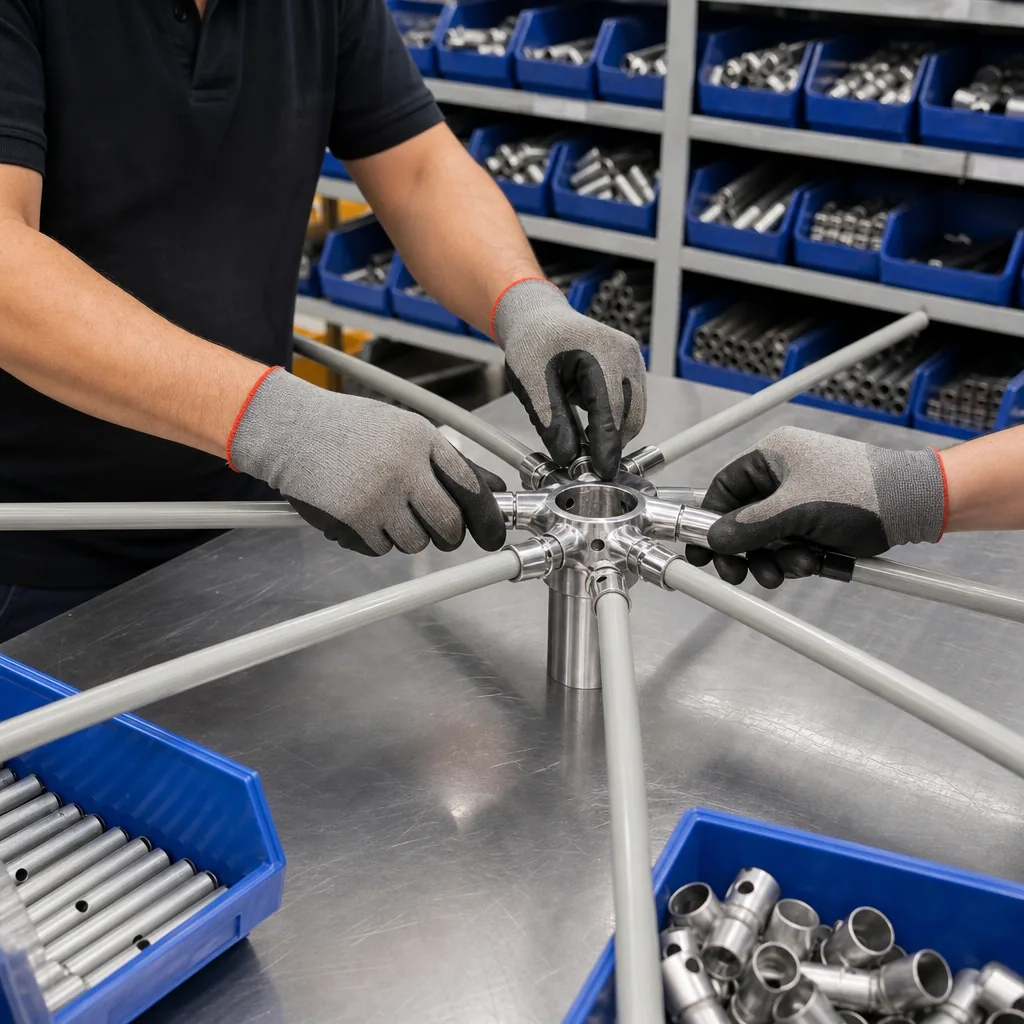
An anti rust umbrella frame has to survive more than rain: it faces humid storage, salty air, repeated opening cycles, and the thin margins where low-cost metal treatment usually fails. On the factory floor, we see corrosion start at welds, hinge points, and cut edges long before a sample looks bad in a showroom. The real question for buyers is not whether a frame has plating or coating, but whether those layers are specified and applied well enough to last.
Why umbrella frames rust
Umbrella rust starts where bare steel meets water and air, usually at cut edges, rivet holes, springs, and folded joints. Once the zinc or paint layer is thin, moisture gets under it and oxidation moves fast, especially on low-carbon steel used in ribs, stretchers, and runners. On a standard anti rust umbrella frame, the weak points are not the straight members; it is the stamped ends, weld spots, and small hardware that hold water after rain. If the umbrella is left closed while wet, trapped humidity and oxygen keep feeding corrosion for hours or days, which is enough to stain the frame and weaken moving parts.
Salt makes the problem worse. Coastal storage, sweaty hands, road spray, and even damp warehouse air can accelerate rust on an otherwise normal rust proof umbrella. Bare steel does not need standing water to corrode; repeated wet-dry cycles are enough to break down the surface film and expose fresh metal. Once corrosion starts, it spreads under the coating and lifts it from the substrate, which is why a cheap umbrella frame coating often looks fine on day one but fails after a few storms. The failure mode is predictable: springs lose tension, joints bind, and the frame starts to feel gritty or stiff before visible red rust shows up.
The real issue is that corrosion changes the mechanics of the frame, not just the appearance. Rust expands as it forms, so a thin layer in a hinge or ferrule can create drag, loosen tolerances, and make a manual or auto-open mechanism unreliable. That matters on a corrosion resistant umbrella because the user notices the failure in operation long before the frame breaks outright. If the steel was not plated properly or the coating was too thin around drilled holes, moisture will reach the base metal first and the damage will spread from there. This is why good frame design focuses on full coverage, sealed joints, and durable finishes instead of relying on paint alone.
Plating and coating methods
On an anti rust umbrella frame, nickel and chrome plating are still the baseline when the buyer wants a bright finish plus basic corrosion resistance, but they are not the same thing. Nickel gives the better barrier and adhesion layer; chrome mainly adds surface hardness and a cleaner look. On steel ribs, I look for consistent coverage on the joints, rivet heads, and the slider track, because rust starts where the coating thins out first. For a rust proof umbrella used in humid coastal markets or in constant commuter use, plating alone is not enough if the underlying steel is low grade or if the welds are porous. The real test is whether the frame survives salt spray, condensation, and repeated flexing without blistering or red rust at the cut edges.
E-coating is stronger as an umbrella frame coating when the priority is complete coverage, especially on hidden surfaces that spray plating can miss. The part is dipped, electrically charged, and coated evenly, so ferrules, springs, and internal tube surfaces get protection that is much more uniform than dip-and-spray methods. In production, that matters because a corrosion resistant umbrella usually fails at the small steel parts nobody sees: the runner, the spring seat, the rivet line, and the tip connectors. ZheBrella’s standard practice is to use e-coat as a base layer on carbon steel parts before assembly when the target market expects long storage life, sea freight exposure, or rainy-season retail stocking.
Powder coat is useful when the buyer wants thicker film build and color, but it should be treated as a topcoat, not a substitute for proper metal prep. A good powder coat can handle abrasion better than thin plating, and it is less likely to chip during packing if the cure is controlled and the edges are rounded. The problem is that powder can bridge over sharp corners and still leave weak points at hinge holes and screw threads, so a rust proof umbrella frame needs pretreatment, phosphate wash, and clean curing temperature control. For outdoor promotion pieces, I usually prefer powder over decorative chrome when the frame is black or color-matched, because the finish hides handling marks and gives better long-term field appearance.
Material choices that avoid rust entirely
If you want an anti rust umbrella frame that actually stays clean in service, aluminum and fiberglass are the two materials that avoid rust by design. Aluminum does not oxidize into red rust the way steel does, so it is the obvious choice for commuter umbrellas, golf umbrellas, and promotional programs that see rain, humidity, and salty air. In the factory, we usually pair aluminum shafts with aluminum ribs when weight matters, because the finished umbrella feels noticeably lighter in hand and carries better in wind. The tradeoff is rigidity: thin aluminum can bend if the wall thickness is too low, so gauge control matters more than with steel. For a rust proof umbrella, aluminum also simplifies the supply chain because there is no plating layer to fail later, which means you are not depending on a surface finish to protect the base metal.
Fiberglass solves the corrosion problem differently. It is a true corrosion resistant umbrella material because it does not rust, and it also does not need electroplating or paint to survive wet storage. For 8K, 10K, or 16K windproof frames, fiberglass ribs are the better call when the goal is flex rather than stiffness; they can bend under load and spring back instead of taking a permanent set. That is why you see them used in double-canopy vented structures and in larger 23-inch or 27-inch frames that have to handle gusts without snapping. The downside is that fiberglass quality varies a lot. Cheap blends splinter, while properly cured rods with consistent glass fiber content hold up much better in repeated open-close cycles and shipping abuse.
An umbrella frame coating still has a place, but only when the base metal is steel or when cost forces a hybrid build. Coatings can slow corrosion, yet they do not make a steel frame equal to aluminum or fiberglass once the finish is scratched at the ferrule, rivet, or joint. That is why the better long-term answer for humid markets is to specify a rust free umbrella construction at the material level instead of trying to rescue a steel frame with plating alone. In procurement terms, I would treat aluminum as the lighter all-round option and fiberglass as the stronger corrosion resistant umbrella choice for wind and salt exposure. For buyers comparing samples, ask for salt-spray data, rib wall thickness, and joint cycle testing, not just a glossy finish, because those numbers tell you whether the frame will survive storage in a warehouse, a car trunk, or a coastal delivery route.
Where corrosion shows up first
Corrosion on an anti rust umbrella frame starts where people actually stress the product, not on the straight members. The first failures show up at joints, rivet holes, slider interfaces, and the crown where the stretcher meets the runner. Those are the places where plating gets scraped off during opening and closing, then sweat, rainwater, and salt air sit in the damaged area. Springs are another weak point because the steel is thin, highly stressed, and often left with uneven coverage after stamping and heat treatment. If the plating stack is poor, you get red rust at the hinge line long before the main shaft looks bad. A rust proof umbrella is only as good as the smallest exposed edge, which is why we inspect these contact points first under salt-spray and bend-cycle testing.
Tips are the second failure point because they take impact, rub against canopy fabric, and often pierce through coatings after repeated use. On a corrosion resistant umbrella, I want the tips, ferrules, and exposed wire ends treated as separate risk zones, not lumped into one generic finish spec. Nickel-chrome plating over properly cleaned steel helps, but the real difference comes from surface prep, zinc content, and whether cut edges are sealed after punching. For an umbrella frame coating, powder coat alone is not enough if the substrate is not protected underneath; once a chip forms, rust migrates quickly along the edge. In production, the practical check is simple: look at the joints, springs, and tips after humidity cycling, salt spray, and flex testing. If those areas stay clean, the frame will usually survive ordinary retail use; if they fail there, the rest of the assembly will follow soon after.
Spec'ing corrosion resistance
For humid and coastal markets, the finish matters as much as the base metal. An anti rust umbrella frame should start with the right substrate: high-carbon steel needs a proper pretreatment and plating stack, while fiberglass ribs or fiberglass-reinforced joints reduce the number of exposed steel points that actually start to corrode. In practice, I would specify electro-galvanized or nickel-plated steel for shafts, runners, and springs, then add an e-coat or powder top layer where rubbing is likely. A bare chrome look is usually cosmetic, not a corrosion strategy. If the buyer wants a rust proof umbrella for seaside retail, hotel amenities, or long storage in humid warehouses, ask for salt-spray test data, not just a finish description. A corrosion resistant umbrella also needs attention at the ferrule, rivet heads, and tip crimps, because those small cuts in the coating are where rust usually begins after a few wet-dry cycles.
For coastal programs, I usually separate three finish tiers: indoor promotional use, rainy-city daily carry, and true marine exposure. The first can work with standard plating if the canopy dries fast; the second should have a thicker umbrella frame coating and better sealing at joints; the third needs stronger plating thickness, UV-stable coatings, and fewer exposed steel edges. On folding models, auto-open-close mechanisms create more wear at the slider and spring, so the plating there has to survive friction, not just moisture. For golf and stick styles in 23" to 30" sizes, double-canopy vented construction helps the canopy dry faster and reduces trapped humidity around the frame. Our standard practice is to match finish to market, then verify with AQL 2.5 checks plus a simple salt mist and flex test, because a finish that looks clean on day one can still fail after a few weeks in a dockside climate if the plating is too thin or the coating chips at the joints.
Frequently Asked Questions
How do you stop an umbrella frame from rusting?
Use plated or coated steel (nickel, chrome, or e-coat), or switch to inherently rust-free aluminum and fiberglass components. Joints, springs, and tips corrode first, so those areas especially benefit from quality finishing or non-ferrous materials.
Are aluminum umbrella frames rust-proof?
Aluminum does not rust the way steel does, which is why it is favored for travel umbrellas and humid climates. For large frames that need steel's strength, specify quality plating or coating to resist corrosion.
What salt spray test result should a buyer ask for on an umbrella frame?
For outdoor or coastal programs, ask suppliers for a neutral salt spray result of at least 72 hours, and preferably 96 to 120 hours for improved corrosion resistance. The exact pass/fail criteria should match the finish system, because plating thickness and topcoat type change the result.
Is zinc plating enough for a rust resistant umbrella frame?
Zinc plating helps, but it is usually better as part of a system with a clear coat or powder coat. For higher-humidity markets, many buyers spec a plated frame plus a topcoat on exposed steel parts to slow red rust at cut edges and joints.
How does frame finish affect MOQ and lead time for OEM umbrellas?
Special finishes such as double plating, powder coating, or custom color topcoats can add 7 to 15 days to production depending on the line setup. MOQ often stays tied to the umbrella style, but custom corrosion-resistant specs may require a higher frame-component purchase volume.
Looking to Launch Your Custom Umbrella Line?
ZheBrella is a Zhejiang-based OEM/ODM umbrella manufacturer with 17 years of export experience. Free design, low MOQ from 100 pieces, windproof construction, full-color print.
Get Free Quote Now »People Also Search For
Related Articles

How Umbrella Salt Spray Testing Supports Coastal Use Programs
Learn how salt spray testing helps buyers specify corrosion-resistant umbrellas for resorts, marine retail, and humid ma...
Read More »
Salt Spray and Corrosion Testing for Coastal Umbrella Orders
Specify corrosion-resistant umbrellas for coastal markets with smarter frame materials, coatings, salt spray tests, insp...
Read More »How Umbrella Frame Salt Spray Testing Reduces Rust Claims
Learn how salt spray testing, coatings, and frame-material choices cut rust complaints on custom umbrellas shipped throu...
Read More »