Salt Spray and Corrosion Testing for Coastal Umbrella Orders
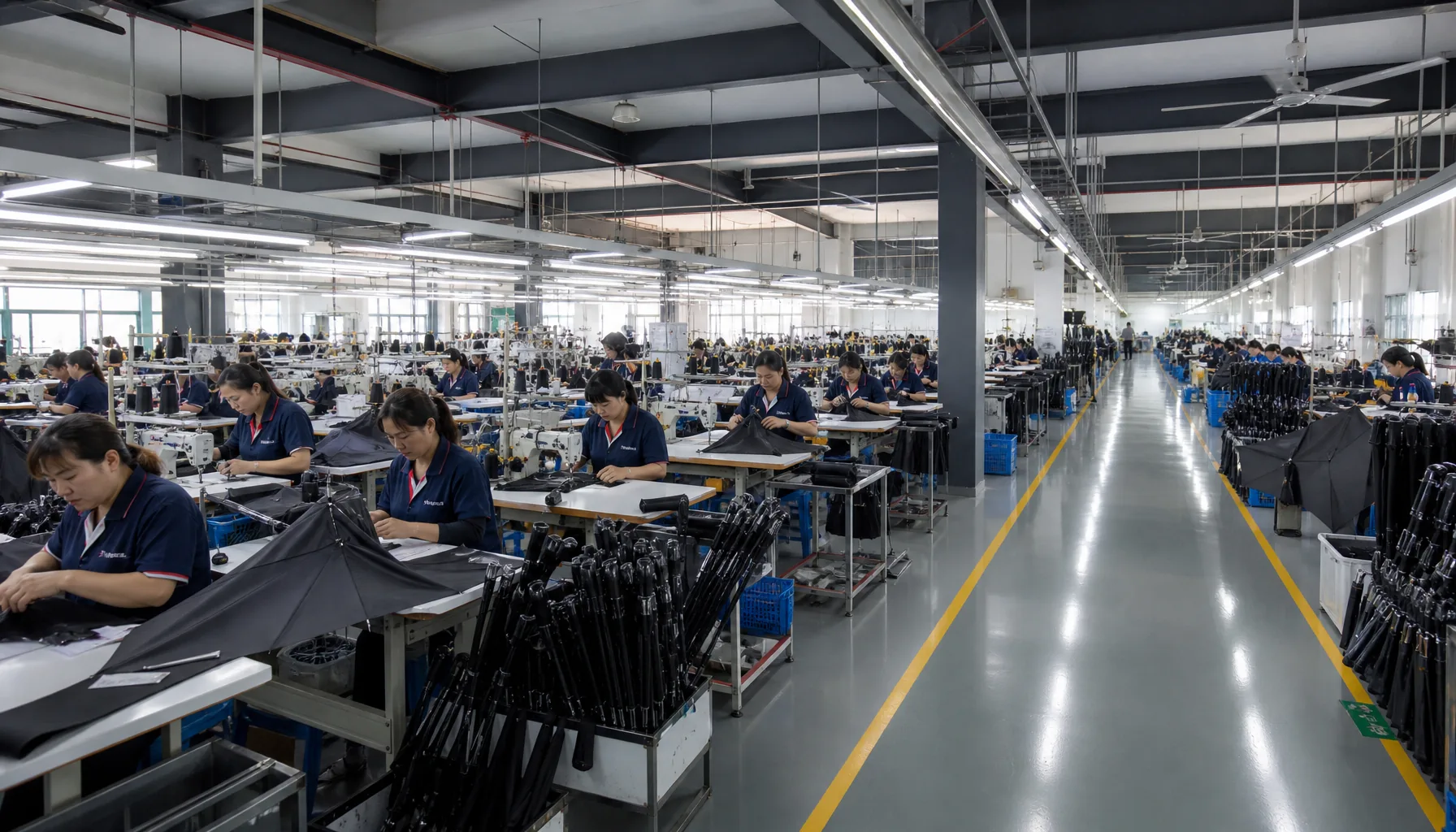
Coastal umbrella orders fail differently than inland orders: rust starts at rivets, spring buttons, tube seams, and scratched coating edges long before the canopy looks worn. On our Songxia production floor, specifying corrosion resistant umbrellas means matching frame material, plating or powder coating, hardware selection, and salt spray test hours to the buyer’s real exposure conditions. Clear inspection limits and earlier lead-time planning help prevent last-minute rework, shipment delays, and warranty claims after the first season by the sea.
Why Coastal Markets Need Different Umbrella Specs
Coastal orders fail faster because salt does not behave like ordinary rainwater. In marine air, chloride ions sit on the shaft, ribs, springs, rivets, runner, top notch, and metal tips, then pull moisture from the air even after the umbrella looks dry. That creates a thin electrolyte layer, so painted steel, nickel-plated rivets, and low-grade screws start pitting at cut edges and punched holes first. I have seen 8K steel frames that passed indoor opening tests but showed orange rust at the rib joints after one seaside season. For marine climate umbrellas, the weak points are usually not the canopy fabric but the small metal parts: spring buttons, stretcher rivets, ferrules, and the inside wall of a steel shaft where coating coverage is poor.
Resorts, cruise suppliers, seaside retailers, beach clubs, and outdoor event companies should not buy the same spec used for inland promotional giveaways. A 21-inch folding umbrella with a chrome-plated steel shaft may be acceptable for a city campaign, but it is a bad choice for hotel poolside retail in Florida, the Caribbean, or Southeast Asia. Coastal umbrella sourcing should start with rust proof umbrella frames: fiberglass ribs or fiberglass-reinforced ribs, aluminum or epoxy-coated steel shafts, stainless or brass-plated hardware where practical, and better rivet finishing. For canopies, 190T or 210T pongee with Teflon water-repellent treatment helps water roll off quickly, but it does not protect exposed metal by itself. The frame specification must do the real corrosion work.
Salt spray umbrella testing is useful because it exposes bad metal finishing before the buyer receives a container of returns. For corrosion resistant umbrellas, we normally look at 24, 48, or 72 hours of neutral salt spray depending on price level and use case, then inspect rust creep around rivets, shaft seams, spring holes, and tips. A beach resort order may only need a clean AQL 2.5 shipment with no visible rust after 48 hours, while a cruise supplier may require tighter hardware control because umbrellas are stored near sea air for months. Buyers should also ask for opened-and-closed samples after salt exposure, not just photos of static parts. Corrosion can make auto-open springs sluggish, lock buttons stick, and manual runners scrape the shaft long before the canopy looks worn.
Frame Materials and Components Most at Risk
The parts that fail first in coastal orders are not the canopy fabric or even the ribs; they are usually the small metal interfaces that trap salt water: runner springs, rivets, tips, notch, stretcher joints, and the exposed edge of a plated shaft. Steel ribs and steel shafts give good stiffness at low cost, especially on 23" and 27" stick umbrellas, but bare or poorly plated steel will show red rust quickly after repeated sea air exposure. For rust proof umbrella frames, we specify zinc plating, electrophoretic paint, powder coating, or chrome/nickel plating depending on the price level, then check adhesion and coverage at cut edges and drilled holes. A glossy black shaft means very little if the inside wall, button slot, and rivet holes were not protected before assembly.
Aluminum shafts are better than painted steel in many marine climate umbrellas because they form a natural oxide layer and do not develop red rust, but aluminum is not automatically trouble-free. Low-grade aluminum tubing can pit under chloride exposure, especially where stainless or carbon-steel rivets create galvanic corrosion. We prefer thicker-wall aluminum for 27" and 30" golf umbrellas, with anodizing or quality spray coating for orders going to beach resorts, cruise suppliers, and coastal retailers. In salt spray umbrella testing, aluminum usually looks cleaner after 24 to 48 hours than plated steel, but the test must include the assembled frame, not just raw tube samples, because mixed-metal contact points are where real failures start.
Fiberglass ribs reduce rust risk the most because the rib itself does not corrode, which is why they are standard on many windproof 8K and 10K frames and nearly mandatory for higher-grade coastal umbrella sourcing. Fiberglass also flexes better than steel in gusts, so it pairs well with double-canopy vented designs rated around 50+ mph when the joint design is sound. The mistake is assuming a fiberglass umbrella has no corrosion exposure. The shaft may still be steel, the runner may use a steel spring, and the rivets, screws, end caps, and ferrule can still rust if plating is thin or scratched during assembly. For corrosion resistant umbrellas, the bill of materials must list every metal component, not just the rib material, and incoming QC should verify coating thickness, surface coverage, and obvious salt-trap gaps before mass production.
Salt Spray Testing and Practical Benchmarks
Salt spray umbrella testing is useful because it gives buyers a controlled way to compare plated, painted, or coated metal parts before committing to a coastal order. It is not a magic certificate that predicts exactly how many months an umbrella will survive beside the ocean. In the lab, parts are exposed to a sodium chloride mist, commonly around 5% concentration, under controlled temperature and humidity. The value is comparison: a powder-coated steel shaft that shows red rust after 24 hours is not in the same class as a nickel-chrome plated runner or electrophoretic-coated rib set that stays clean for 48 or 72 hours. For corrosion resistant umbrellas, we still separate cosmetic white rust on zinc-plated parts from red rust on base steel, because red rust is the real structural warning sign.
Practical benchmarks depend on the product level. For promotional 21" or 23" manual umbrellas with steel ribs, a 24-hour salt spray check may be acceptable if the order is for short-term event use. For marine climate umbrellas, beach resorts, cruise promotions, or retail programs in Florida, the Gulf Coast, or Southeast Asia, I would push for 48 to 72 hours on exposed metal components and stricter visual checks at joints, rivets, springs, and cut edges. Rust proof umbrella frames usually need more than one feature: fiberglass ribs, aluminum or coated steel shafts, stainless or plated rivets, and good drainage design so water does not sit inside the runner. A canopy made from 190T or 210T pongee with Teflon coating will shed water, but it will not save a poorly plated rib from salt air.
Buyers should confirm the factory’s test method in writing instead of accepting the phrase “passed salt spray” on a quotation. Ask which standard is used, such as ASTM B117 or ISO 9227, the test duration, sample quantity, inspection interval, and pass/fail definition. Require photos before testing, during removal, after rinsing and drying, and close-ups of high-risk points like rib tips, stretchers, rivets, notch, runner spring, and shaft joint. Our standard practice at ZheBrella is to keep a retained sample from pre-production and compare it with bulk components during AQL 2.5 inspection, because material substitution is where many coastal umbrella sourcing problems start. For serious corrosion resistant umbrellas, the purchase order should state the required hours, acceptable rust level, and whether failure means rework, replacement, or rejection before FOB or DDP shipment.
Design Choices That Improve Corrosion Resistance
For coastal umbrella sourcing, the first place I look is the hardware stack, because the canopy fabric is rarely what fails first. Corrosion resistant umbrellas need stainless or heavily coated rivets, not bare carbon-steel fasteners that start blooming rust after a few weeks near salt air. The same logic applies to tips: plastic tips are acceptable for light-duty work, but fiberglass tips hold up better when the umbrella is dragged, dropped, or left standing in humid conditions. If the frame is steel, I want a real anti-rust coating on every exposed contact point, including joints and ferrules, not just a painted finish that chips during assembly. ZheBrella’s standard practice for marine climate umbrellas is to separate salt-exposed metal from the canopy wherever possible, because once corrosion starts at a rivet or tip, it spreads into the frame hardware and shortens the service life fast.
Springs and runners deserve more attention than buyers usually give them, especially on auto-open and auto-open-close models. Those mechanisms add multiple metal contact points, so salt spray umbrella testing should focus on the release latch, compression spring, and sliding runner, not just the ribs. I have seen supposedly rust proof umbrella frames fail because the spring pocket held moisture and the coating was too thin at the stamped edges. For coastal use, protected springs with plated or stainless components are safer, and the runner should have enough clearance to avoid scraping off its own finish during repeated opening cycles. Double-canopy vented construction also helps indirectly: air moves through the vent, drying the frame faster after rain or sea mist, which reduces the time corrosion has to start. That matters more than buyers think in marine climate umbrellas.
Canopy material matters because trapped moisture drives corrosion around the frame head and rib tips. Quick-dry 190T or 210T pongee is usually the right call for corrosion resistant umbrellas, since it sheds water faster than heavier, slower-drying fabrics and does not hold salty residue as long. In practice, I prefer 210T when the order is for retail or hospitality use, because the denser weave resists abrasion better around the seam and tip pockets, while 190T is fine for lower-cost programs. The important point is not just the fabric spec but how fast the umbrella dries after use; a wet folded umbrella sealed in a bag becomes a corrosion chamber. For coastal umbrella sourcing, I would rather spend a little more on faster-drying pongee, stainless or coated rivets, and a vented top than chase a cheap frame with a heavy paint finish that cannot survive salt spray umbrella testing for long.
Inspection, Packing, and Logistics Controls
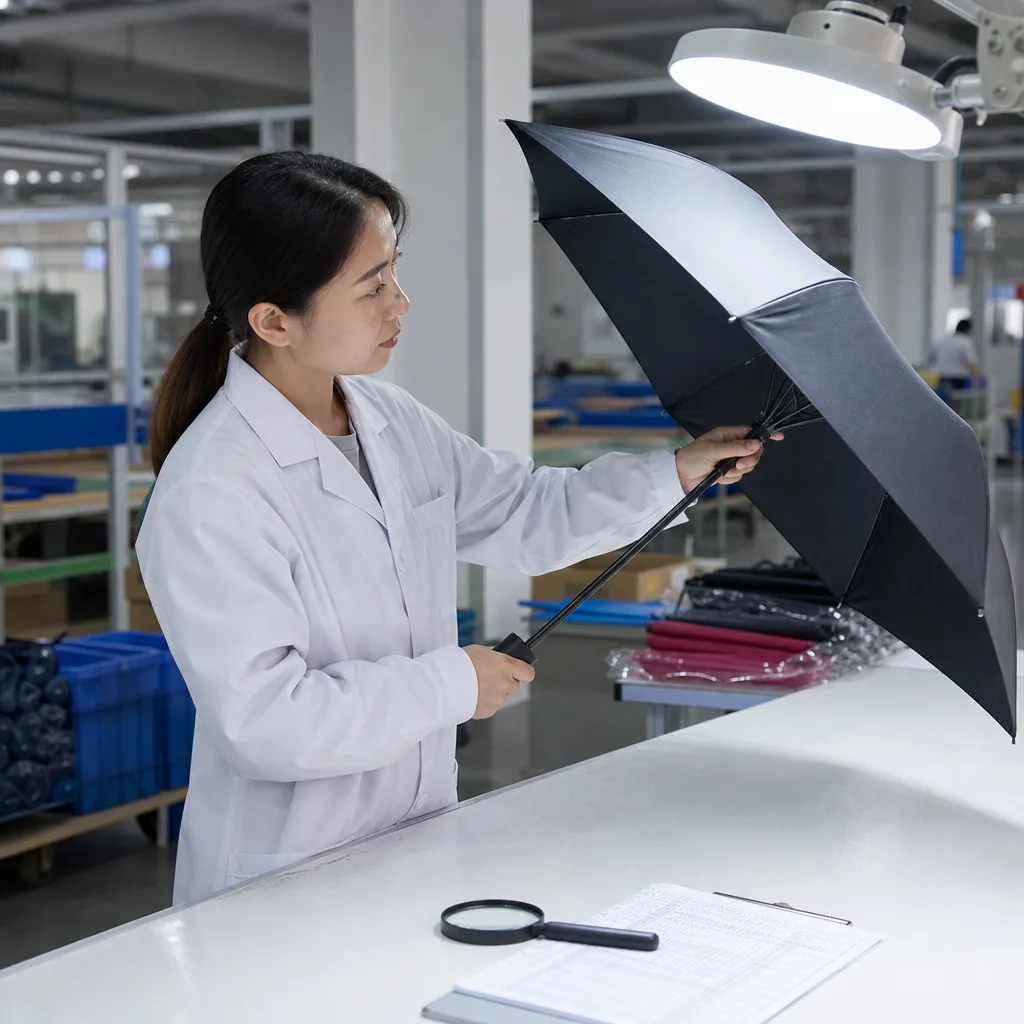
For coastal umbrella sourcing, the last gate is not the sewing line; it is inspection under AQL 2.5. On corrosion resistant umbrellas, we check rust spots on ferrules, tips, stretchers, shafts, and rivet heads because a tiny breakthrough in plating usually shows up after the first week of salt air. Salt spray umbrella testing is useful earlier in development, but production lots still need hands-on inspection for plating defects, pinholes, uneven chrome, black oxide contamination, and runner smoothness. A sticky runner or rough release button is a warning sign that the frame finish or spring is already compromised. We also pull samples for fabric stains, oil marks, needle holes, and seam puckering, since damp fabric plus metal dust is where coastal claims start.
AQL 2.5 is also where wet-carton risk gets managed instead of guessed at. Cartons should leave the packing room dry, with canopies fully cured, no residual steam from heat-transfer work, and no umbrellas packed straight off a humid assembly floor. For marine climate umbrellas, a few trapped grams of moisture are enough to create rust bloom on steel parts during a three-week ocean leg. Desiccants inside inner bags and master cartons help, but only if the packing area is controlled and cartons are sealed before night humidity climbs. ZheBrella’s standard practice is to reject cartons showing condensation, warped board, or water spotting on polybags, because once cartons sweat in transit, the damage spreads quietly across the whole lot.
FOB and DDP planning matters because long ocean shipments punish weak packing assumptions. Under FOB, the buyer controls the freight leg and must account for dwell time, transshipment, and port delays that can turn a normal lane into a moisture test for rust proof umbrella frames. Under DDP, the supplier has to build in more margin for carton strength, pallet wrap, and route timing, because the last mile can be as risky as the first mile. For corrosion resistant umbrellas, I would rather specify dry packing conditions, lined master cartons, and desiccant placement by carton size than try to fix corrosion after arrival. If the schedule runs through summer monsoon or coastal warehouse storage, the logistics plan should treat humidity as a cost line, not an afterthought.
Frequently Asked Questions
Are fiberglass ribs enough to make an umbrella rust proof?
No. Fiberglass ribs reduce corrosion risk, but shafts, springs, rivets, notches, and ferrules may still contain metal. A coastal umbrella spec should define coatings and inspection standards for all exposed parts.
Should every coastal umbrella order require salt spray testing?
It is recommended for resort, marine, cruise, and seaside retail programs, especially when steel components are used. For low-cost promotional orders, buyers can at least require plated component samples and AQL checks for visible rust or coating defects.
What salt spray test duration should buyers request for umbrellas sold near the ocean?
For coastal programs, buyers commonly ask for 48 to 96 hours of neutral salt spray testing on metal frame parts, then compare results by component. Critical parts such as ribs, stretchers, springs, and exposed fasteners should be listed separately in the report rather than passed as one combined frame result.
Which umbrella parts usually fail first in marine environments even if the main frame looks acceptable?
The first corrosion points are usually rivets, springs, hinge pins, runner hardware, and screw heads because coatings are thinner at edges and moving joints. Many buyers upgrade these small parts to stainless steel or specify additional plating to avoid early field complaints.
How does corrosion testing affect production lead time for OEM umbrella orders?
If a factory must prepare new material combinations or custom coatings, corrosion verification can add about 7 to 14 days before bulk production approval. For repeat constructions with existing test data, buyers can often approve from prior reports plus a pre-shipment inspection focused on coating thickness and hardware consistency.
Looking to Launch Your Custom Umbrella Line?
ZheBrella is a Zhejiang-based OEM/ODM umbrella manufacturer with 17 years of export experience. Free design, low MOQ from 100 pieces, windproof construction, full-color print.
Get Free Quote Now »People Also Search For
Related Articles
How Umbrella Salt Spray Testing Supports Coastal Use Programs
Learn how salt spray testing helps buyers specify corrosion-resistant umbrellas for resorts, marine retail, and humid ma...
Read More »Umbrella Salt Spray Testing for Coastal and Marine Programs
Learn how salt spray testing, plating choices, and frame specs help buyers source umbrellas that resist rust in coastal,...
Read More »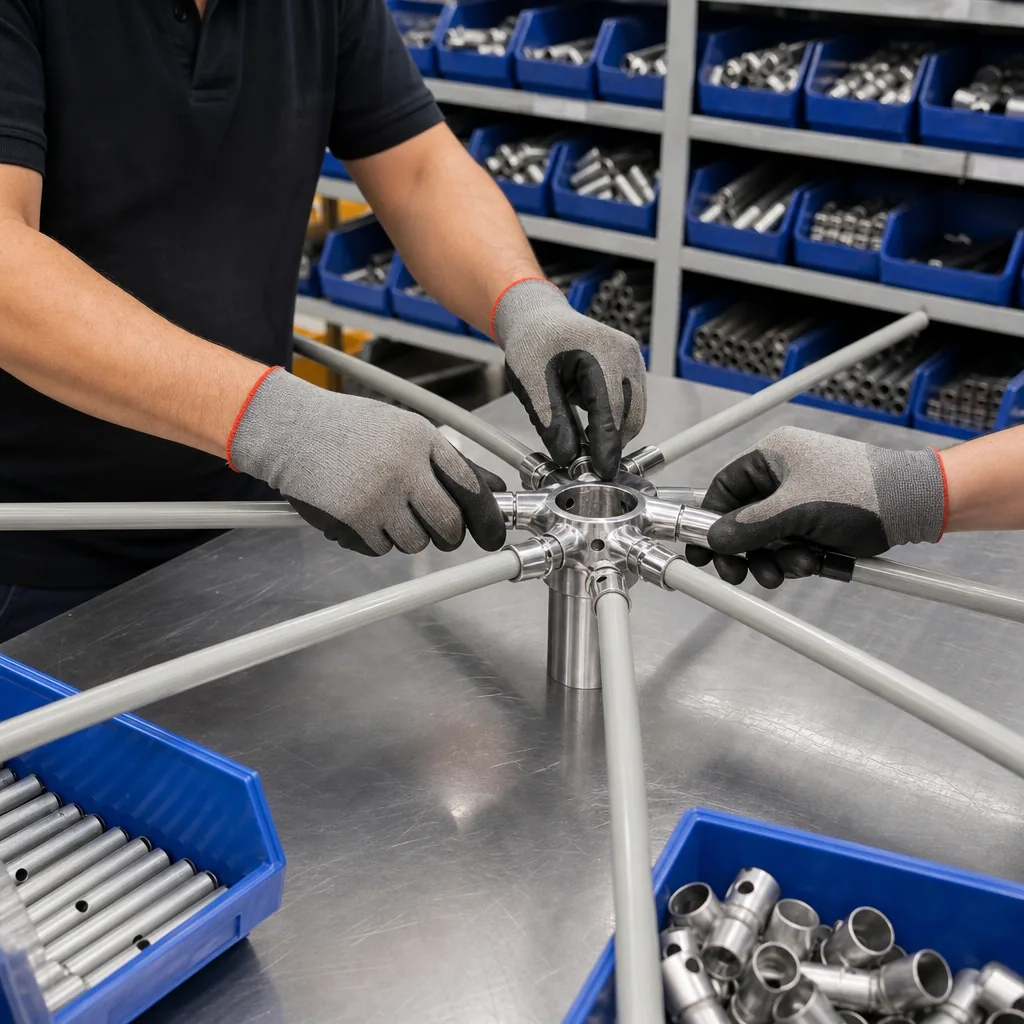
Umbrella Hardware Plating and Salt-Air Corrosion Control
Compare plating and coating choices for umbrella hardware, with salt-air testing methods, corrosion failure points, and ...
Read More »