Auto-Open vs Manual Umbrella Mechanisms: Buyer Guide
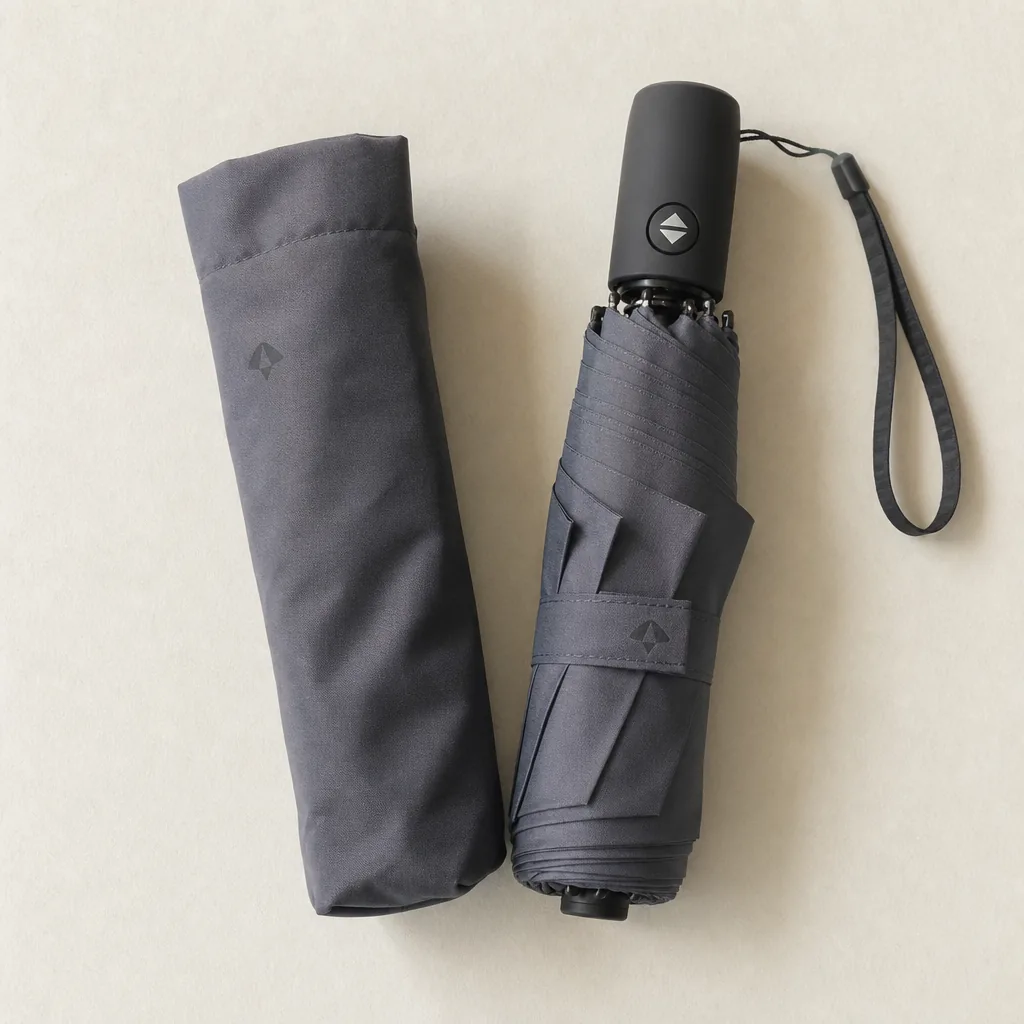
Choosing between auto-open and manual umbrellas is not just a feature decision; it changes how the product performs on the shelf, in the field, and over repeated use. From the factory floor, the auto-open umbrella mechanism usually offers faster deployment and better perceived convenience, while manual builds can reduce failure points and simplify repairs. Buyers have to balance speed, durability, unit cost, and the end use before they lock in a mechanism for retail, promo, or travel programs.
How Auto-Open and Manual Mechanisms Work
In an auto-open umbrella mechanism, the button does not open the canopy by itself; it releases a preloaded spring inside the shaft. When the user presses the push-button, the latch disengages, the spring drives the runner upward, and the stretched rib set snaps the canopy open in one motion. That sequence adds parts and machining steps compared with a manual umbrella mechanism, because the button, trigger, spring, latch, and reinforced runner all have to work together cleanly. On a good build, the action feels fast and controlled. On a sloppy build, the runner can jam, the release can feel sticky, or the canopy can open unevenly, especially on larger 23" and 27" frames.
A manual build is mechanically simpler. The user pushes the runner up by hand until the latch seats, then the ribs lock in place. There is no release spring to compress, so the parts count drops and the failure points drop with it. That usually means lower cost, lighter weight, and easier repair at the factory level. For a buyer, the tradeoff is obvious: a manual umbrella asks for two hands and a little more effort, while a push-button umbrella gives faster deployment in rain, at a hotel entrance, or in a promotional giveaway where convenience matters more than absolute simplicity. In an OEM umbrella factory, that difference also affects assembly time and inspection load, because auto-open builds need more functional checks on the button action and latch engagement.
The buyer impact is not just convenience; it is also product positioning. A standard compact with manual opening is easier to sell at a low price point, but the auto-open umbrella mechanism is usually preferred when the end user wants one-hand operation, especially for commuters, drivers, and retail gift programs. The added mechanism can be paired with a double-canopy umbrella or windproof frame, but the spring-loaded system still needs a well-set runner and a reliable lock to avoid accidental pop-open or weak closure. Our standard practice at ZheBrella is to test the trigger feel, open speed, and latch retention together, because a fast opening umbrella that binds after 200 cycles is not a usable product, no matter how good the canopy fabric looks.
Durability and Failure-Rate Considerations
The main failure pattern on an auto-open umbrella mechanism is not the canopy fabric, it is the hardware. The launch spring takes a repeated shock load every cycle, so cheap coils lose force, trigger late, or stop firing cleanly after a few dozen uses. On a push-button umbrella, the button itself is another weak point: dust, poor molding, or loose tolerances can cause a jam or a sticky return, especially when the frame is packed tight. Runner wear is the third issue. If the slider track is thin stamped metal or soft plastic, it starts to wobble, and that wobble turns into incomplete opening, uneven tension, and premature breakage in the ribs or stretcher links. A manual umbrella mechanism avoids most of that because the user is doing the lifting directly, with fewer moving parts and no release spring to fatigue. In practice, that means fewer mechanical failures, especially in humid storage, rough transit, and long warehouse dwell times.
For low-cost promotional programs, the auto-open umbrella mechanism usually wins on convenience, not on lifespan. If the buyer wants a quick giveaway, event handout, or mass mailing piece, the one-hand opening is useful enough that a slightly higher failure rate is acceptable, especially when the umbrella is used only a few times. That is where a simple 23" or 27" stick umbrella with basic steel ribs can make sense, because the frame is already budget-driven and the user expectation is low. Once the product is meant for repeat retail use, the calculation changes. A manual umbrella mechanism gives you a lower-mechanic-risk platform, better tolerance to abuse, and fewer warranty complaints. The difference becomes obvious after the first season: manual frames may feel less premium at checkout, but they usually hold alignment better when customers open and close them every day.
A double-canopy umbrella can mask some of the stress by improving wind performance, but it does not fix weak internal hardware. If the spring, button, or runner is underbuilt, the vented top will not save the mechanism from fatigue. That is why a serious OEM umbrella factory will separate use cases instead of pushing one mechanism for everything: promo orders often tolerate shorter service life, while retail buyers should ask for cycle testing, stronger rivets, and a larger runner profile. In our standard practice, we judge the mechanism against the real duty cycle, not the catalog description. For a giveaway umbrella, 1,000-2,000 openings may be enough. For retail, the target should be much higher, and the frame should be specified accordingly, with the mechanism matched to rib count, material gauge, and expected return rate rather than just the lowest unit price.
Best Use Cases by Market Segment
For commuter retail, the auto-open umbrella mechanism is the cleanest fit because the buyer is paying for speed, one-handed use, and a visible step up from the cheapest rack umbrella. In practice, that means 23" or 27" models with fiberglass ribs, 190T or 210T pongee, and a frame that opens reliably without a hard snap or weak latch. On shelf, an auto-open umbrella mechanism reads as a more finished product than a basic manual shaft, especially when the canopy print is tight and the handle has some weight. Buyers in pharmacy chains, convenience stores, airport shops, and corporate gift programs usually want that perceived value more than they want the lowest landed cost. If the program needs a promotional logo but still has to feel retail-ready, this is the category that usually clears both requirements without forcing a jump to premium materials. For travel and budget promotions, the manual umbrella mechanism still makes sense because it keeps the BOM down and avoids adding failure points. A manual umbrella is easier to pack into a small sleeve, lighter in hand, and more tolerant of aggressive price targets for mass giveaways, conference kits, and seasonal mailers. Here the right answer is usually a compact 21" or 23" frame, often with steel ribs or mixed steel/fiberglass depending on the target cost. The shelf signal is different: manual models look simpler and cheaper, which is exactly what some programs want when the buyer is optimizing for quantity over feature story. In an OEM umbrella factory, this is where we pay attention to friction in the runner and the feel of the shaft lock, because a low-cost manual umbrella that feels sloppy will get rejected faster than one with modest materials but clean operation. For harsher weather, the right answer is usually a double-canopy umbrella with a vented windproof structure, not just a stronger button or thicker shaft. That design matters more than mechanism type because wind failure usually starts with canopy inversion, not with the open/close system itself. A double-canopy umbrella with fiberglass ribs, venting, and a tighter frame geometry can survive gusts that flatten a basic straight umbrella, which is why it sells better in regions with heavy rain, coastal wind, or winter storms. On shelf, this category carries a much higher value signal: consumers see engineering, not just color or branding. If the retail story is durability, then the mechanism should support that story rather than dominate it. In those cases, we usually recommend a sturdier auto-open or auto-open-close build only if the spring and rib geometry have already been validated under real wind testing, because a flashy mechanism cannot compensate for a weak frame.
Specification Details Buyers Should Lock Down
Buyers should lock down the mechanism dimensions, not just the headline style. For an auto-open umbrella mechanism, confirm the button size, travel, and return feel in millimeters and Newtons, because a push-button umbrella that feels smooth on a sample can become hard to actuate after 5,000 cycles if the spring force is too high or the button sits too flush with the handle. Specify handle style at the same time: straight EVA for retail, TPR for better grip, or wood-look for a promotional line. Also call out shaft finish, since black nickel, chrome, and powder-coated steel all change corrosion resistance and the way the ferrule fits. If the program needs a manual umbrella mechanism instead, keep the same discipline on ferrule fit, collar thickness, and release latch geometry so the factory is not guessing. An OEM umbrella factory should be able to quote these details up front and show a cycle-test target, not just a catalog photo.
The mechanism also has to match the frame, or the product will fail in use even if the button works perfectly. Pair fiberglass ribs with an 8K or 16K layout when you want better flex and lower breakage risk in wind, especially on a double-canopy umbrella with a vented top panel. The clearance at the tip matters: leave enough space for safe opening so the runner does not pinch the canopy edge or expose the tip cap, usually with a controlled gap and a reinforced top pocket. On vented canopies, check that the canopy tension does not fight the opening stroke, because too much preload makes the auto-open umbrella mechanism feel stiff and can shorten spring life. ZheBrella’s standard practice is to confirm rib geometry, shaft stroke, and top-tip clearance together before sampling, then verify them again in production against the approved spec sheet.
Sampling, MOQ, and Shipping Terms
For samples, I do not trust a one-time open-and-close check. A proper verification runs the auto-open umbrella mechanism or manual umbrella mechanism through repeated cycles, then checks for spring lag, latch rebound, tip alignment, and whether the runner stops consistently at full lock. On a push-button umbrella, the button should release cleanly without sticking, and the shaft should not twist after repeated cycles. If it is a double-canopy umbrella, I also check that the vent stays open evenly and does not collapse the frame under load. In our standard practice at ZheBrella, sample approval is based on function first, then appearance, because a mechanism that feels fine on day one can fail after 30 to 50 cycles if the spring rate or rivet tension is off.
For production inspection, AQL 2.5 is the right filter for most buyer programs, but only if the defect checklist is specific. I look for misfire on opening, incomplete lock engagement, broken or loose ribs, canopy skew, exposed sharp ends, and seam or printing defects that affect use. For OEM umbrella factory orders, the sample should also confirm the exact mechanism build: auto-open, auto-open-close, or manual, because a changed trigger unit or spring pack can shift the whole feel of the product. Customizing the mechanism usually adds 7 to 15 days to lead time if the parts are standard-sized, and longer if the button housing, shaft profile, or spring spec has to be tooled or requalified. A minor color or handle change is fast; a true mechanism change is not.
MOQ is usually lower for stock mechanisms and higher when the buyer wants a custom auto-open umbrella mechanism matched to a specific shaft, runner, or button assembly. For a simple branded order, the minimum can stay relatively low if you accept existing frame parts; once the mechanism changes, the factory has to lock component supply, test assembly fit, and sometimes hold extra spares for yield control. FOB is easier when your freight team already books ocean or air and you want control over routing, customs brokerage, and insurance. DDP is easier when the buyer wants one landed price and does not want to manage import paperwork, but it is usually less flexible on timing and cost transparency. For umbrellas, especially mixed SKUs, FOB is often the cleaner choice unless the destination market has simple import rules and the buyer wants a turnkey delivery plan.
Frequently Asked Questions
Is an auto-open umbrella always more durable than a manual one?
No. Auto-open improves convenience, but the spring and button add parts that can fail if the build quality is weak. A well-made manual umbrella can outlast a cheap auto-open model.
When should a buyer choose a double-canopy windproof design?
Choose it when the umbrella will be used in gusty cities, coastal markets, or outdoor events where inversion is a common complaint. Pair it with fiberglass ribs and a vented top if wind performance is a priority.
What is the typical MOQ difference between auto-open and manual umbrellas in OEM production?
The MOQ is usually the same at the factory level, but auto-open models often require tighter component control and more testing. For many programs, 500 to 1,000 pieces per style is a common starting point, while manual umbrellas may be easier to mix across colors or handle types within the same order.
Is the repair rate lower on manual umbrellas than auto-open umbrellas?
Yes, manual umbrellas typically have fewer moving parts, so the failure rate is usually lower and field repairs are simpler. Auto-open models are still reliable when properly spec'd, but the spring and trigger assembly add more potential wear points.
How much does mechanism choice affect unit cost in a bulk order?
Auto-open construction usually adds a small but real cost premium because of the push-button assembly and extra testing. In large OEM runs, the difference is often a few cents to more than $1 per unit depending on frame grade, shaft material, and canopy size.
Looking to Launch Your Custom Umbrella Line?
ZheBrella is a Zhejiang-based OEM/ODM umbrella manufacturer with 17 years of export experience. Free design, low MOQ from 100 pieces, windproof construction, full-color print.
Get Free Quote Now »People Also Search For
Related Articles
Auto-Open and Double-Canopy Umbrellas: Buyer Spec Guide
Specify auto-open and double-canopy umbrellas with the right spring strength, venting, AQL 2.5 checks, and freight terms...
Read More »
Auto-Open Umbrella Mechanisms: What Buyers Should Specify
Specify the right auto-open mechanism for retail, promo, or travel umbrellas. Learn what to ask for on spring force, but...
Read More »
Double-Canopy Windproof Umbrellas: Buyer Selection Guide
Compare double-canopy builds, vent vents, rib materials, and MOQ so buyers can source windproof umbrellas that match ret...
Read More »