Branded Umbrellas for Apartment and HOA Amenity Programs
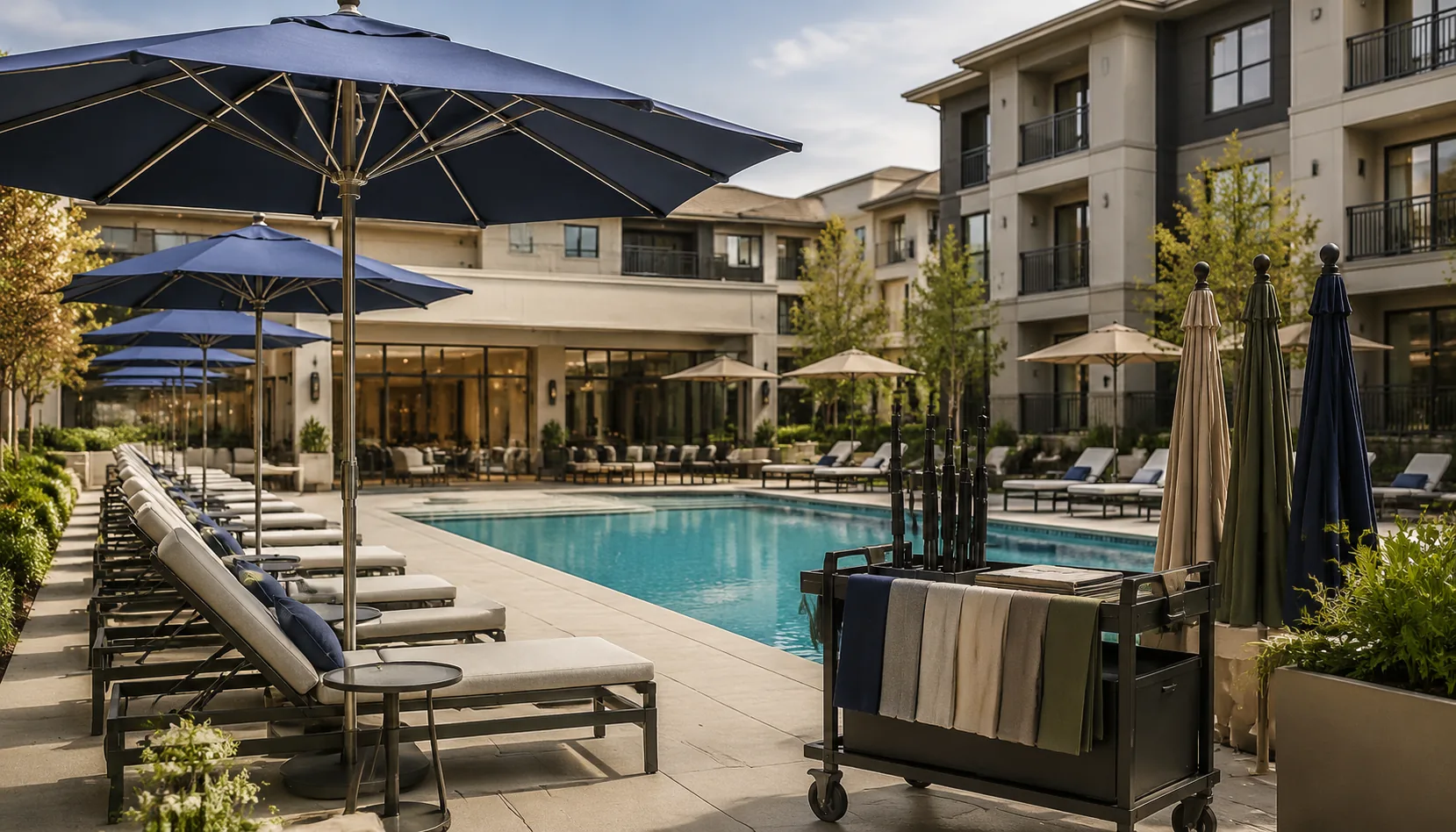
For apartment managers and HOA boards, an umbrella amenity only works if it survives daily borrowing, lobby storage, and rainy-season rush orders without turning into a maintenance headache. On our Songxia factory floor, branded apartment umbrellas are specified around frame strength, fabric coating, logo durability, carton packing, and realistic FOB or DDP lead times—not just a nice mockup. Getting those choices right early helps leasing teams control cost, avoid weak giveaways, and keep residents covered when the weather turns.
Resident Amenity Use Cases That Drive Repeat Visibility
The strongest resident amenity umbrellas are not the cheap “lost-and-found” type; they are controlled-use items that residents see at exactly the right moment. Leasing-office loaners work well in 23" or 27" straight umbrellas with fiberglass ribs, 190T or 210T pongee, and an auto-open shaft because staff can hand them out quickly during tours. For rainy-day concierge service, I prefer 8K fiberglass frames over painted steel ribs; steel saves maybe $0.40–$0.70 per unit, but bent ribs make the program look careless after one windy weekend. A double-canopy vented model rated around 50+ mph is worth considering for coastal or high-rise properties where gusts funnel between buildings. Branded apartment umbrellas should carry the property logo on one or two panels, not all eight, because understated branding gets used more often by residents and prospects.
Move-in gifts need a different build than loaners because they leave the property and become walking impressions in grocery lots, train stations, dog parks, and school pickup lanes. For resident amenity umbrellas, a 21" auto-open-close compact with 8K fiberglass ribs and Teflon-coated 210T pongee fits into a welcome bag without feeling like a throwaway promo item. If the community has a wellness or poolside positioning, UPF 50+ coating can make the same umbrella useful for sun as well as rain, especially in senior living, garden-style apartments, and mixed-use developments. Bulk logo umbrellas for move-ins usually need tighter carton labeling by building, phase, or leasing batch; otherwise the front desk opens random cartons and loses inventory control. Our standard practice at ZheBrella is to mark master cartons with project name, PO number, color, and quantity so property teams can track distribution without opening every box.
For an HOA umbrella program, the use case is usually clubhouse, pool house, golf cart path, mailbox cluster, or community-event lending rather than daily commuting. Single-property pilots commonly start at 100–300 pieces, enough for leasing offices, concierge desks, model units, and a first move-in cycle without overcommitting budget. Multi-site property management umbrellas are usually ordered in 1,000–5,000 pieces across several communities, with logo panels held constant and canopy color adjusted by property. That scale is where AQL 2.5 inspection, consistent Pantone matching, and spare-rib failure checks matter, because a small defect rate becomes visible fast when the same amenity rolls out across 20 locations. Typical custom lead time is 25–35 days after artwork approval for standard pongee models, with FOB Ningbo or Shanghai for importers and DDP options when management groups want cartons delivered directly to regional warehouses or site offices.
Frame and Fabric Specs for Daily Shared Use
For shared resident use, fiberglass ribs are the safer default than steel because they cut weight, resist rust, and recover better when a tenant walks into a gust between the garage and lobby. Steel ribs can be cheaper, but in an amenity cart they show their weakness quickly: paint chips at the joints, rust starts near the rivets, and bent ribs do not spring back. For compact branded apartment umbrellas used as move-in gifts or emergency front-desk stock, an 8K fiberglass frame on a 21" or 23" canopy is usually enough. For premium full-size loaners, especially at high-rise lobbies, HOA clubhouses, and leasing offices, I would spec 16K fiberglass ribs on a 27" or 30" canopy. The higher rib count spreads wind load more evenly and gives the umbrella a more stable shape after repeated opening, closing, and being shoved into bins.
Fabric choice matters just as much as the frame. 190T pongee is acceptable for resident giveaway umbrellas where budget and quantity matter, but 210T pongee is the better fabric for resident amenity umbrellas that will be checked out daily. The tighter weave prints cleaner, sheds rain faster with a Teflon-style water-repellent coating, and feels less flimsy when wet. If the property wants UV protection for pool decks, dog parks, or shuttle stops, add a black-coated or silver-coated UPF 50+ layer, but confirm whether the darker underside matches the brand design. For an HOA umbrella program, I would avoid cheap polyester with loose yarn density because it stretches at the seams after a few wet-dry cycles. Bulk logo umbrellas should also use double-stitched canopy seams and bar-tacked stress points near the rib pockets, not just a logo printed on a retail-grade shell.
The mechanism should match how the umbrellas are used, not just how they look in a catalog. Auto-open is practical for property management umbrellas because residents often carry keys, packages, or a phone, and a one-button shaft reduces fumbling at the door. Auto-open-close is better for compact gifts, but I do not recommend it for every loaner program because spring cartridges and telescopic shafts take more abuse when users force them shut. Full-size lobby loaners should use a straight shaft with a reliable auto-open runner, reinforced plastic or metal tips, and stronger end caps so the canopy does not tear after repeated checkouts. Our standard practice at ZheBrella is to test the runner, tips, and rib joints after simulated open-close cycles before production approval. For branded apartment umbrellas, ask for AQL 2.5 inspection on frame alignment, canopy tension, logo placement, and open-close function, not just a visual carton check.
Branding Choices for Premium Property Positioning
For luxury apartment positioning, I usually steer buyers away from oversized all-panel logos unless the property is built around a loud lifestyle brand. A clean one-panel logo on a 23" or 27" umbrella reads more premium at the front desk, valet stand, leasing office, or pool exit because it gives residents a useful item without making them look like walking signage. For branded apartment umbrellas, the safest setup is a 190T or 210T pongee canopy in black, navy, charcoal, forest green, or deep burgundy, with a white, metallic silver, or PMS-matched logo on one panel. Dark canopies also hide hand grime, rain splash, and parking-lot dirt better than ivory or light beige, which matters when the umbrellas are shared by dozens of residents every week. On production files, we ask for vector art and Pantone PMS references, then run a strike-off because coated pongee absorbs ink differently than paper or vinyl signage.
Alternating-panel patterns work when the apartment brand has strong architectural or hospitality cues, but they need restraint. A black-and-cream repeat, a two-tone stripe, or a muted geometric pattern across 8K or 10K panels can look like a boutique hotel amenity, while full-color artwork on every panel can quickly feel like a trade-show giveaway. For an HOA umbrella program, alternating panels are useful when multiple clubhouses, golf carts, pool stations, and security desks need the same visual system without relying on a large logo. Screen printing is practical for simple 1–2 color layouts, while heat transfer gives sharper detail on gradients or small text. Sublimation can cover the whole canopy, but only on white polyester before finishing, so it is less forgiving for dark, dirt-hiding shared-use umbrellas. For property management umbrellas, I would test the pattern on an opened sample from 10 feet away, not just approve a flat digital mockup.
Sleeve printing is underrated for premium resident amenity umbrellas because it keeps the open canopy elegant while still branding the item during storage, handoff, and return. A printed sleeve with the property name, building icon, or short return message helps staff track bulk logo umbrellas at concierge desks without turning the canopy into an advertisement. Tone-on-tone marks are even more discreet: black ink on charcoal pongee, navy on navy, or a deboss-style transfer can suit Class A apartments where the umbrella should feel like part of the hospitality package, not a promotional product. Our standard practice at ZheBrella is to confirm PMS targets under D65 light, check logo placement against rib seams, and approve a pre-production sample before cutting bulk fabric. For shared programs, I also recommend a matching dark sleeve with a woven label or small printed unit code, because sleeves disappear faster than umbrellas if they look generic.
Procurement Planning Across Multiple Properties
For multi-property procurement, the first mistake is treating the umbrella order as one big quantity instead of planning MOQ by model and colorway. A factory MOQ of 500 pieces may apply to one 23" auto-open stick umbrella in navy 190T pongee, not to a mixed basket of black, gray, and green across folding and golf sizes. If a management group wants branded apartment umbrellas for leasing offices, pool decks, shuttle stops, and resident loaner stations, I usually separate the program into two SKUs: a 23" auto-open stick umbrella for daily resident use and a 27" or 30" golf umbrella for concierge, valet, or maintenance teams. Keep the frame consistent where possible: fiberglass ribs for wind resistance, steel shaft where cost matters, and 8K or 10K construction unless the property is in a coastal wind zone. Printing also affects MOQ; one-color screen print on pongee is simpler than heat-transfer logos on dark panels or full sublimation canopy artwork.
Carton allocation should be locked before production starts, not during warehouse loading. A normal export carton may hold 24 to 36 stick umbrellas or 48 to 60 compact 21" models, depending on handle and sleeve size. For an HOA umbrella program, we mark cartons by property code, building name, or amenity location so the receiving team does not need to break down a 2,000-piece shipment in a clubhouse lobby. If 12 properties are sharing one PO, each property should have its own carton count, overage allowance, and packing list line. Bulk logo umbrellas can ship with mixed carton labels, but mixed contents inside one carton slow receiving and create disputes when the front desk in Property A gets 180 units and Property B gets 72. Our standard practice at ZheBrella is to confirm a carton allocation sheet with the buyer before logo screens, heat-transfer films, or woven labels are approved for mass production.
FOB Ningbo or Shanghai usually gives the buyer better freight control for centralized warehouse delivery, while DDP makes sense when umbrellas need to land directly at 10, 20, or 50 properties with no internal distribution team. FOB pricing looks cheaper, but it excludes ocean freight, duty, customs clearance, drayage, and last-mile delivery; DDP rolls those into one landed cost, which is cleaner for property management umbrellas going straight to site. Typical lead time is 25 to 35 days for standard resident amenity umbrellas after artwork approval, or 40 to 55 days for custom color fabric, special handles, UPF 50+ coating, or vented double-canopy windproof frames rated around 50+ mph. Reorder triggers should sit 90 to 120 days before local rainy seasons, especially for branded apartment umbrellas in markets like Florida, Texas, the Pacific Northwest, and the Northeast spring season. Do not wait until inventory hits zero; set a reorder point at 30% remaining stock by property.
Quality Control for Amenity Umbrella Programs
AQL 2.5 is the right inspection level for branded apartment umbrellas because the failure mode is public and repetitive: one bad logo print or jammed auto-open unit gets seen by residents every rainy morning. For amenity programs, we inspect four points before release: canopy printing, opening mechanism function, rib alignment, and packaging labels. On printed 190T or 210T pongee canopies, the logo is checked for registration, ink density, curing, color match against the approved Pantone reference, and placement tolerance, usually within ±5 mm from the approved artwork position. For screen printing, we rub-test the print after curing; for heat transfer or sublimation, we check edge lift, ghosting, and color migration, especially on navy, black, and red panels. Mechanisms are opened and closed repeatedly, not just once for show. Manual, auto-open, and auto-open-close frames each need smooth release, secure runner lock, and no sharp resistance at the shaft joint.
Sampling should happen before bulk production, not after 2,000 property management umbrellas are already packed. The clean process is: approve a digital mockup, produce one physical pre-production sample, confirm logo size and handle tag details, then run a small pilot lot of 20 to 50 umbrellas using the actual canopy fabric, ribs, tips, sleeve, carton label, and printing method. For an HOA umbrella program, I prefer testing the pilot lot like real use: open each umbrella fully, shake it, close it, sleeve it, and check whether the logo still sits straight when the canopy is tensioned. Steel ribs can be acceptable for budget resident amenity umbrellas, but fiberglass ribs are better where wind exposure is common around parking lots and clubhouse entrances. For 23 inch and 27 inch models, rib alignment is checked panel by panel so an 8K or 10K frame does not twist the printed logo off-center.
When cartons arrive, property managers do not need a factory lab, but they do need a receiving checklist. First, count cartons against the packing list and confirm the carton label shows project name, SKU, color, quantity, and PO number. Second, open at least 10 percent of cartons, or a minimum of three cartons, and pull units from the top, middle, and bottom instead of only the cleanest-looking layer. Third, check that bulk logo umbrellas match the approved sample: canopy color, logo position, sleeve print, handle type, and any resident checkout tag or barcode. Fourth, open and close several units to catch bent ribs, weak runner locks, loose tips, and cracked handles caused by transit compression. Finally, photograph any defect with the carton mark visible before distributing units to leasing offices, clubhouses, concierge desks, or HOA pool areas; claims are much easier when packaging evidence is still intact.
Frequently Asked Questions
What umbrella size works best for apartment amenity programs?
A 42-46 inch auto-open straight umbrella works well for leasing offices and concierge loaners, while 21-23 inch folding umbrellas are better for move-in gift kits. For premium properties, 16K fiberglass ribs and 210T pongee improve perceived value.
Can each property receive different logos or delivery labels?
Yes, but separate logos, sleeve art, or carton marks may affect MOQ and setup costs. Multi-property orders are usually easiest when the frame and canopy color stay consistent while print plates or labels vary.
What MOQ is realistic for an apartment or HOA umbrella program?
For a standard logo umbrella, many factories can start around 500 pieces per design, while custom fabric colors, upgraded frames, or private-label packaging may require 1,000 pieces or more. Smaller trial runs may be possible using stock umbrella models with one-color logo printing.
Which umbrella specs are best for resident amenity use?
A 23-inch or 27-inch auto-open umbrella with a fiberglass frame, pongee fabric, and reinforced ribs is a practical choice for daily resident use. For coastal or windy communities, a vented canopy and fiberglass shaft can reduce breakage and returns.
How long does it take to deliver branded umbrellas for a leasing season or HOA event?
Typical production is about 30–45 days after artwork approval and deposit, plus ocean freight time if shipping FOB from China. For DDP delivery to the U.S., many buyers should plan roughly 60–80 days total depending on destination, quantity, and customs clearance.
Looking to Launch Your Custom Umbrella Line?
ZheBrella is a Zhejiang-based OEM/ODM umbrella manufacturer with 17 years of export experience. Free design, low MOQ from 100 pieces, windproof construction, full-color print.
Get Free Quote Now »People Also Search For
Related Articles
Umbrella Programs for Multifamily Properties and HOAs
Create resident amenity and loaner umbrella programs with durable ribs, UPF 50+ options, logo rules, MOQ planning, and r...
Read More »
Custom Umbrellas for Property Managers and Leasing Offices
Source branded umbrellas for leasing tours, resident amenities, and multifamily events with durable frames, clear MOQs, ...
Read More »
Branded Umbrellas for Apartment Communities and Leasing Teams
Build umbrella programs for leasing offices, resident gifts, and property tours with durable specs, smart order quantiti...
Read More »