Umbrella Sourcing for Outdoor Retail and Gear Brands
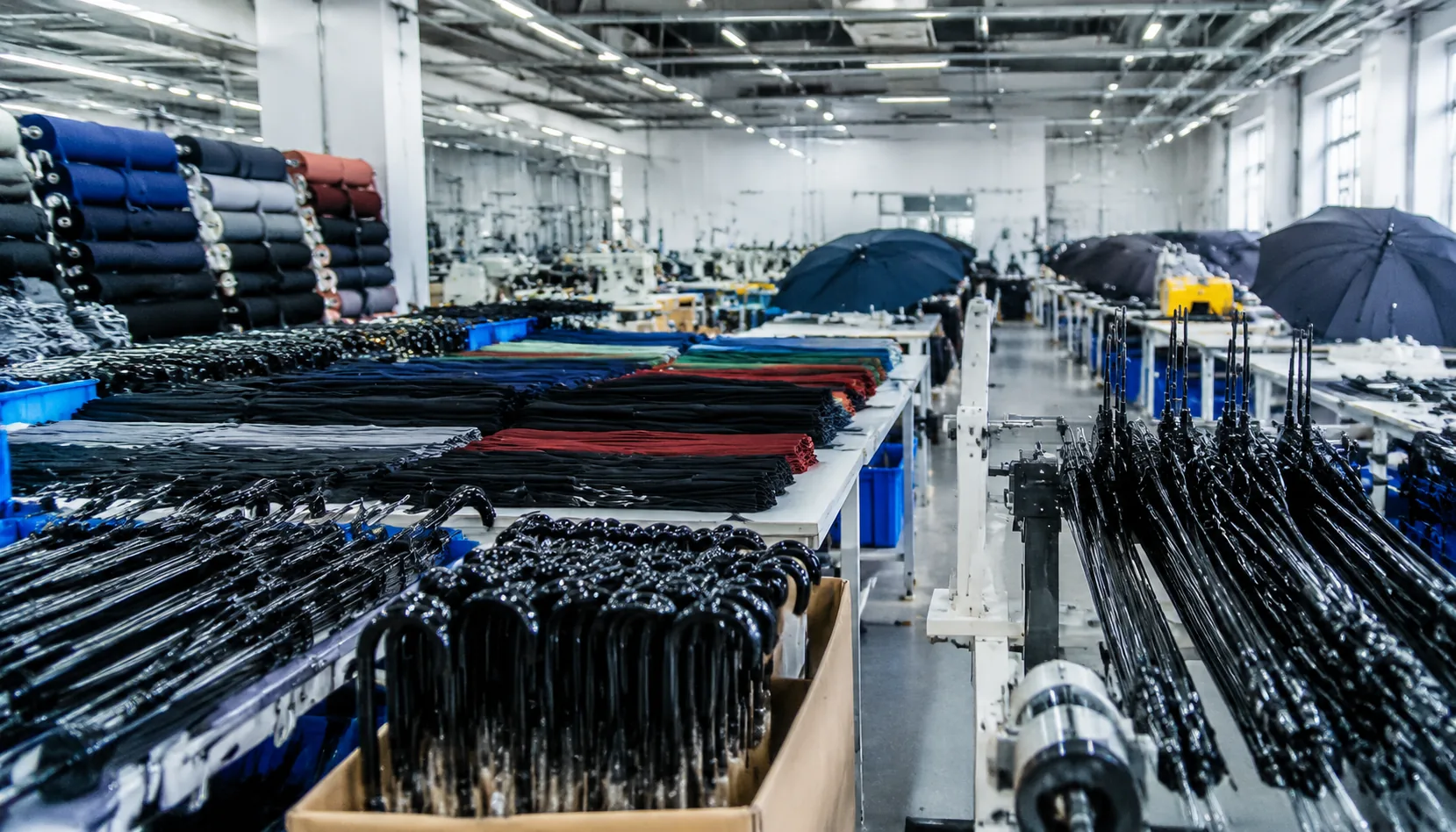
For outdoor retail umbrella sourcing, the real challenge is balancing UV protection, wind resistance, margin, and pack-out consistency without turning every SKU into a custom engineering project. At the factory floor, that means choosing UPF 50+ fabric, fiberglass frames, and 210T pongee that hold up in production, then validating packaging and order terms before a private label program scales. Buyers who skip those details usually discover the failures after the first shipment.
Where Umbrellas Fit in Outdoor Retail Ranges
Umbrellas earn their place in an outdoor range when they solve a specific field problem, not when they sit beside keychains as a generic accessory. For outdoor retail umbrella sourcing, I would separate the line into rain defense, packable travel, trail use, fishing shelter, golf-size coverage, and sun protection. A 21" or 23" compact auto-open-close model with 190T or 210T pongee works well near travel packs and rain shells because it gives commuters and weekend hikers a low-bulk backup. For trekking-friendly SKUs, keep the frame simple: 8K fiberglass ribs, steel shaft or aluminum shaft depending on weight target, manual open to reduce mechanism failures, and a rubberized straight handle that can be gripped with wet gloves. These are not fashion umbrellas first; they are low-ticket technical add-ons that increase basket value when merchandised with waterproof bags, ponchos, gaiters, and quick-dry apparel.
Golf-size and fishing umbrellas fill a different role: portable shelter. A 27" or 30" canopy, 8K or 10K fiberglass frame, and double-canopy vented windproof construction can cover a chair, tackle box, camera bag, or two people waiting out a shower. If the buyer wants gear brand rain umbrellas that survive rougher weather, I push for fiberglass ribs over cheap black steel ribs because fiberglass recovers after inversion instead of staying bent. A properly tuned vented model can pass a 50+ mph wind-tunnel test, but only if the runner, tips, and rib joints are matched; oversized canopies with weak stretchers fail quickly. For private label outdoor umbrellas, the print position also matters: small reflective logos on a panel edge often look more technical than a huge center logo, especially for outdoor specialty retail.
UPF sun models should be treated as summer protection equipment, not rainy-day leftovers. UPF travel umbrellas usually need silver or black UV coating, UPF 50+ test reports, and preferably a 210T pongee canopy rather than thin promotional polyester that leaks light at the stitch holes. For beach, festival, hiking, and fishing customers, a 23" compact sun umbrella or 27" manual-open shelter model can sit beside sun hats, cooling towels, and hydration gear. If you are working with an OEM umbrella manufacturer, define the SKU role before asking for price: rib count, canopy fabric, coating, open diameter, packed length, weight target, and AQL 2.5 inspection standard all change the result. In our factory practice at ZheBrella, outdoor retail umbrella sourcing starts with use case and failure mode, then moves to logo method, MOQ, FOB/DDP terms, and realistic lead times of 30–45 days after sample approval.
Spec Decisions for Outdoor Performance
For outdoor retail umbrella sourcing, I would not start with colorways; I would lock the frame spec first. Steel ribs are cheaper and give a solid hand feel, but they bend permanently when a hiker drops a loaded pack on the canopy or a gust flips the umbrella at a trailhead. Fiberglass ribs cost more, usually adding $0.35-$0.90 depending on size and rib count, but they flex back better and are the safer choice for gear brand rain umbrellas that claim wind resistance. An 8K frame is fine for a 21" compact travel model or a basic 23" stick umbrella, but 10K or 16K gives noticeably better canopy tension and load distribution. For a 27" or 30" golf-style outdoor umbrella, 16K fiberglass ribs with a reinforced runner and thicker shaft are worth the weight penalty, especially if the brand wants a realistic 40-50+ mph wind-tunnel claim instead of a catalog fantasy.
Fabric choice affects both retail perception and packing behavior. 190T pongee is the common value spec: light, printable, and adequate after a proper water-repellent finish, but it can feel thin on larger panels and may show more light through dark colors. 210T pongee has a denser hand, cleaner drape, and better perceived quality for private label outdoor umbrellas, especially when paired with Teflon-style water repellency or a PU silver/black coating for UPF 50+. For UPF travel umbrellas, the coating must be tested after printing and sewing, not just on raw fabric, because needle holes, heat-transfer logos, and seam tension can weaken coverage. Our standard practice at ZheBrella is to check fabric weight, spray rating, colorfastness, and coating adhesion before canopy cutting, then inspect finished units under AQL 2.5 so performance claims are tied to production goods, not sample-room fabric.
Small components decide whether an outdoor umbrella feels like equipment or a giveaway. Ergonomic EVA or rubberized ABS handles grip better with wet hands than glossy plastic J-hooks, and a straight handle with a textured thumb rest packs more cleanly into side pockets on backpacks. Wrist straps should be bar-tacked or anchored through the handle cap, not just looped through a weak plastic eyelet; I have seen those fail during simple shake testing. Sleeve construction also matters for outdoor retail umbrella sourcing: a tight flat sleeve looks neat in a showroom but frustrates users after the canopy is wet and swollen. A wider sleeve with a pull tab, mesh vent panel, drain eyelet, or adjustable opening is more practical. If working with an OEM umbrella manufacturer, specify sleeve fabric, logo method, seam allowance, and closure type in the tech pack, because factories will otherwise default to the cheapest matching pongee sleeve.
Private Label Design and Packaging Requirements
Private label design starts with a controlled color system, not a loose Pantone wish list. For outdoor retail umbrella sourcing, I usually ask buyers to lock 3 to 6 canopy colorways by line: one core black or navy, two seasonal trail colors, and one high-visibility option like safety orange or lime for hiking and cycling channels. Pongee 190T works for value 21" and 23" travel umbrellas, while 210T with Teflon coating feels more credible for gear brand rain umbrellas sold next to packs and shells. Logo placement should be decided before cutting markers are made: one-panel screen print is economical, two opposite panels improve shelf visibility, and full-panel heat transfer or sublimation is better for topographic patterns, camo, or gradient artwork. On double-canopy vented windproof models, keep large artwork off the vent overlap or it will distort after sewing and fail visual inspection under AQL 2.5.
Retail packaging needs to survive both the store shelf and the export carton, so I do not treat it as decoration. Hang tags should state size, rib count, canopy fabric, mechanism, and claims such as UPF 50+ only when the fabric coating has test support; this matters especially for UPF travel umbrellas. Barcode labels need clear EAN/UPC placement on the sleeve, hang tag, or recycled kraft box, with SKU, color, PO number, and country-of-origin text aligned to the retailer’s routing guide. Recycled kraft boxes are popular for private label outdoor umbrellas because they look less promotional than glossy white boxes and ship better than fabric sleeves alone. For retail-ready master cartons, specify inner quantity, carton markings on two sides, scannable carton labels, and drop-test expectations. A common configuration is 12 pieces per inner carton and 48 pieces per master carton for compact 21" auto-open-close models, but 27" golf umbrellas often need 24 pieces or less due to carton compression.
ODM molds and handle choices are where a gear brand can look different without paying for a completely new umbrella platform. Existing handle molds in EVA foam, rubberized ABS, bamboo, or carabiner-style plastic can be paired with 8K fiberglass ribs, 10K reinforced ribs, or a 16K premium frame to create good-better-best tiers. A matte rubber hook handle feels right for commuter rain, while a short textured straight handle with wrist loop fits packable trail use. If the MOQ supports it, custom end caps, color-matched tips, molded logo badges, and branded sleeve pull tabs give more differentiation than oversizing the canopy logo. An OEM umbrella manufacturer should confirm which parts are open tooling, which require mold fees, and which changes affect lead time. Our standard practice at ZheBrella is to freeze packaging dielines and handle color chips before pre-production samples, because late changes often add 7 to 10 days and can push FOB or DDP delivery windows.
Testing Standards Buyers Should Request
For outdoor retail umbrella sourcing, I would not accept a supplier’s “windproof” claim unless it is tied to a repeatable test. Ask for wind simulation on the exact production frame: 23" and 27" stick umbrellas usually need different thresholds than 21" compact travel models. A serious test should record rib material, runner type, shaft diameter, canopy size, and failure point. Fiberglass ribs with a double-canopy vented design can survive 50+ mph in controlled wind-tunnel testing, while thin steel ribs may invert earlier and permanently deform. For gear brand rain umbrellas, also require open-close cycling: 500 cycles for basic manual-open models, 1,000 cycles for auto-open, and 1,500 cycles for auto-open-close mechanisms if the item will sit in retail at a higher price point. Inspectors should check spring force, button response, runner locking, cap looseness, rib tip alignment, and handle bonding after cycling, not just whether the umbrella still opens once at the end.
Fabric testing matters as much as frame testing, especially for private label outdoor umbrellas sold beside tents, packs, and technical apparel. For 190T or 210T pongee, request colorfastness to rubbing and water, because dark navy, black, and red can stain hands or transfer onto a white logo panel if dyeing is weak. UPF travel umbrellas should have third-party UPF verification, preferably UPF 50+, on the finished coated fabric, not on a supplier’s generic swatch from last year. If the canopy uses silver, black glue, or Teflon water-repellent coating, confirm the test sample matches bulk production. For printed canopies, run tape-pull and wet-rub checks on screen print, heat-transfer, and sublimation artwork. Large solid logos on coated fabric are the highest risk; poor curing shows as edge lifting, cracking over fold lines, or ink softening after rain exposure.
Before shipment, finished-goods inspection should be done to AQL 2.5 for major defects, with a clear defect list agreed before production starts. In our standard practice at ZheBrella, major defects include frame inversion, broken ribs, failed auto mechanism, open seams, visible print defects, leaking stitch lines, wrong Pantone color, and incorrect retail labeling or barcode placement. Seam leakage should be checked by spraying or pouring water over crown seams, panel seams, and tie-wrap stitching for several minutes, then inspecting the inner canopy for drips. For an OEM umbrella manufacturer, this is also the point to confirm carton drop strength, polybag warning text, hangtag accuracy, spare parts count, and mixed-color packing ratios. Good QC is not just laboratory paperwork; it protects FOB and DDP shipments from chargebacks, late rework, and retail returns that cost more than the umbrella itself.
MOQ, Lead Time, and Launch Calendar Planning
A launch calendar should work backward from the retailer warehouse date, not from the purchase order date. For FOB Ningbo or Shanghai, allow 35–50 days for production, 3–7 days for factory consolidation and customs paperwork, then ocean transit and domestic trucking based on the destination; U.S. West Coast programs often need 25–35 days after vessel departure, while East Coast and EU inland delivery can run longer. DDP is useful when the buyer wants landed cost certainty into a retailer DC, Amazon prep warehouse, or 3PL, but the factory needs final carton dimensions, HS code treatment, importer requirements, and delivery appointment rules before quoting. For outdoor retail umbrella sourcing tied to spring rain sets, hiking season, or back-to-campus planograms, freeze specs at least 90–120 days before the in-warehouse deadline. An OEM umbrella manufacturer can compress parts of the schedule with stock frames and fabric, but cannot safely compress wet print curing, fabric inspection, final assembly aging, carton conditioning, or export booking without raising defect risk.
Frequently Asked Questions
Should outdoor brands choose 190T or 210T pongee?
190T pongee works for value and promo tiers, while 210T offers a smoother hand feel and stronger retail positioning. For premium outdoor lines, pair 210T with fiberglass ribs and UPF 50+ coating.
Can one umbrella model serve both rain and sun protection?
Yes, if the canopy uses a tested UPF 50+ coating and water-repellent finish. Buyers should confirm coating durability and request UPF test reports for retail compliance files.
What canopy fabric is best for outdoor retail umbrella programs?
For outdoor retail programs, 210T pongee is a common choice because it balances hand feel, water resistance, and print quality. If UV protection is a requirement, specify UPF 50+ fabric and confirm the test standard before ordering.
Are fiberglass frames suitable for gear brand rain umbrellas?
Yes. Fiberglass ribs and shafts are widely used for better wind flexibility and lower breakage risk than basic steel constructions. For retail programs, ask for flex-cycle or wind-resistance test data if the umbrellas will be sold in exposed outdoor markets.
What should a private label buyer confirm before placing an order?
Confirm MOQ, print method, packaging spec, and lead time before approval. Many OEM programs require a finalized artwork file, sample sign-off, and a production lead time of about 30 to 45 days after deposit, depending on order size and customization level.
Looking to Launch Your Custom Umbrella Line?
ZheBrella is a Zhejiang-based OEM/ODM umbrella manufacturer with 17 years of export experience. Free design, low MOQ from 100 pieces, windproof construction, full-color print.
Get Free Quote Now »People Also Search For
Related Articles
Custom Umbrellas for Outdoor Retail and Adventure Brands
Develop private-label umbrellas for outdoor retail with windproof frames, UPF 50+ fabrics, quality checks, and sourcing ...
Read More »
Custom Umbrellas for Luxury Retail and Fashion Brands
Build premium umbrella lines for fashion retail with fabric, frame, packaging, and QC specs that support brand perceptio...
Read More »
Retail Umbrella Line Planning: Good-Better-Best Specs
Build a retail umbrella range with clear good-better-best specs, target costs, MOQs, AQL checks, and packaging choices f...
Read More »