Custom Umbrellas for Outdoor Retail and Adventure Brands
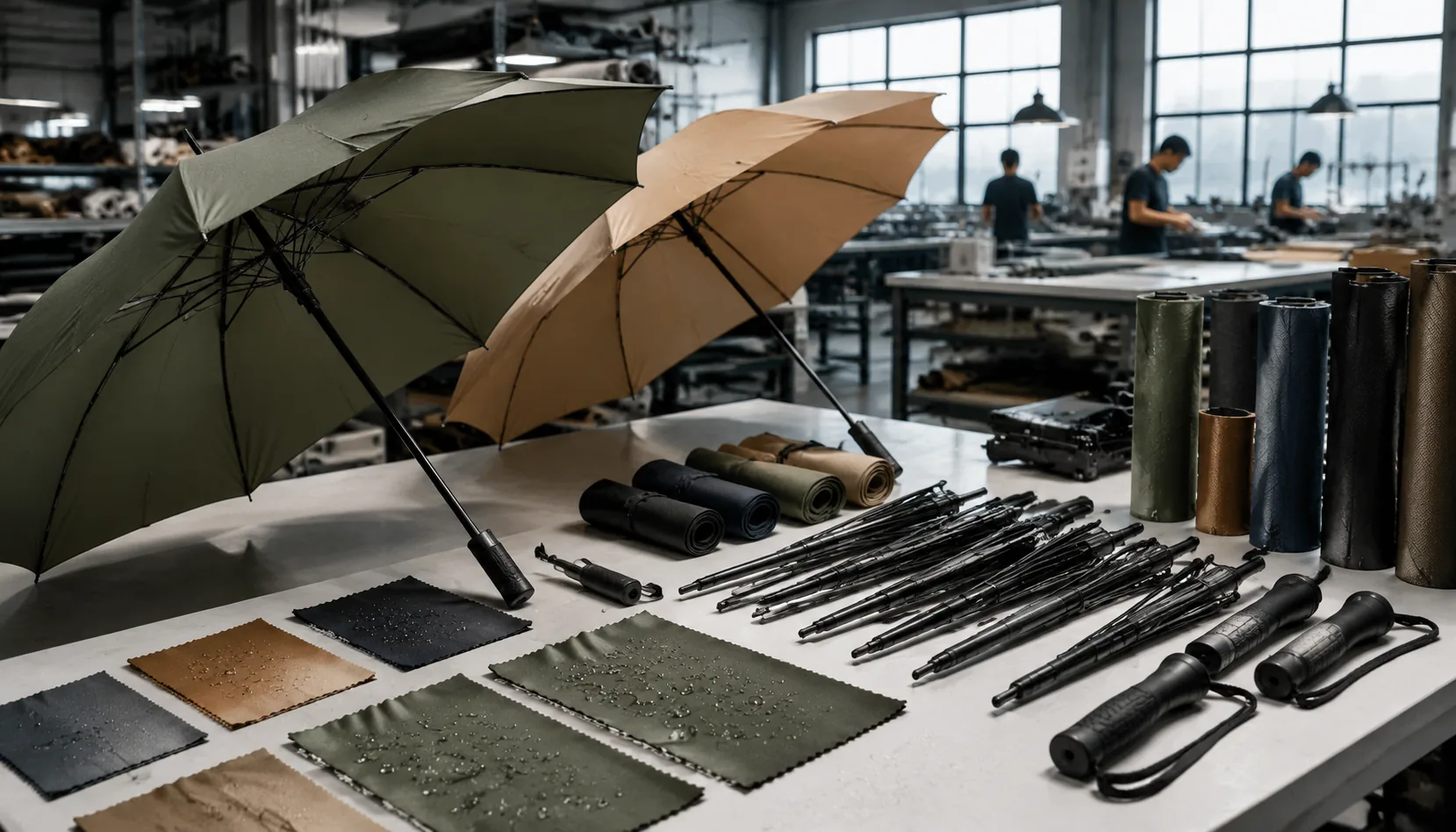
Outdoor retailers do not need another catalog umbrella that fails after one gust, fades in one season, or arrives with inconsistent logo placement across cartons. On our Songxia production floor, we build outdoor brand custom umbrellas around the same details buyers end up defending in the field: rib gauge, runner fit, fabric coating, seam tension, carton strength, and inspection points before packing.
Why Outdoor Brands Add Umbrellas to Gear Lines
Outdoor brand custom umbrellas make sense because they solve the wet-weather gap between a technical shell and a full shelter. A hiker on a humid 70°F trail often hates wearing a waterproof jacket because the inside gets as wet from sweat as the outside gets from rain. A 23" or 27" trekking umbrella with a fiberglass shaft, fiberglass ribs, and 190T or 210T pongee canopy gives moving ventilation while keeping the upper body, pack straps, camera, and map dry. For anglers, birders, guides, festival campers, and overland travelers, the umbrella is not a fashion item; it is a quick-deploy weather tool. I prefer fiberglass ribs over steel for this category because the weight saving and corrosion resistance matter more than saving a few cents. For adventure retail umbrellas, the useful specs are simple: 8K or 10K frame, manual or auto-open depending on use case, Teflon water-repellent finish, and a windproof frame that can survive 40–50+ mph gust testing without permanent rib deformation.
Sun protection is the second reason outdoor brands add umbrellas, especially for desert hiking, fly fishing, beach camping, golf travel, and long walking tours. UV protection umbrellas with silver-coated, black-coated, or purpose-built UPF 50+ canopy fabric can block over 98% of UV radiation when the coating and seam construction are done correctly. For this market, canopy color is not only branding; it affects heat feel, glare, and photo consistency at retail. A light exterior with dark underside reduces heat absorption and reflected glare better than a full black canopy. Branded trekking umbrellas can also carry technical details that shoppers understand: vented double-canopy construction for wind release, EVA foam or cork-look handles for wet grip, reflective binding for low-light trail use, and a sleeve that clips to a pack side pocket. Our standard practice at ZheBrella is to confirm coating hand-feel, colorfastness, and print adhesion before mass cutting, because UV coatings and logo inks can fight each other if the process order is wrong.
Umbrellas should support an outdoor gear private label program without pretending to replace rain jackets, tarps, or tents. The smartest buyers treat them as seasonal add-ons: spring rain displays, summer sun-protection bundles, fishing tournament merchandise, national park travel sets, or emergency items near checkout. MOQs can usually be structured from 500–1,000 pieces per color for standard 23" and 27" models, while custom molded handles, special ribs, or unusual canopy shapes push MOQ and lead time higher. For retail, I would rather see two well-specified SKUs than six weak ones: one compact travel umbrella around 21" for daypacks, and one full-size 27" or 30" model for guides, anglers, and campsite use. Production lead times commonly run 25–35 days after artwork approval for standard printing, and 35–50 days for custom frames or sublimation panels. Final inspection should follow AQL 2.5, with special attention to opening force, rib alignment, seam leakage, print registration, and sleeve fit before FOB or DDP shipment.
Product Formats for Trail, Travel, and Retail Shelves
For outdoor brand custom umbrellas, the first product decision is not color or logo placement; it is packed size versus rib strength. A 21" compact travel umbrella usually lands at 280–360 g with a folded length of 9.5–11.5", using a 3-fold steel shaft, fiberglass rib tips, and 190T pongee canopy with Teflon water repellency. It fits daypacks, glove compartments, and travel retail displays, but it is not the format I recommend for exposed ridgelines unless the frame is upgraded to full fiberglass ribs and a reinforced runner. Auto-open-close is convenient for commuters, while manual open is lighter and has fewer failure points after mud, sand, or cold-weather use. For retail presentation, a tight matching sleeve with woven logo label looks clean, but adventure retail umbrellas sell better when the sleeve has a pull tab, drain eyelet, and enough tolerance that customers can re-pack the wet canopy without fighting it in the store aisle.
Trekking-compatible models need to work with a pack system, not just survive a rain test. Most branded trekking umbrellas are 23" or 25" arc, 360–480 g, and 24–28" long if straight-shaft, or 11–13" if 3-fold. I prefer fiberglass ribs over steel ribs here because fiberglass bends and recovers when the user brushes branches or gets a side gust; a good 8K fiberglass frame can survive 40–50 mph wind in controlled tunnel testing when the canopy is properly tensioned. EVA handles matter more than buyers expect: a straight EVA grip with a flat side clips better to shoulder straps, while a short hiking-style handle works with gloves. Add an adjustable wrist strap, not a decorative cord, because trail users actually load it. For UV protection umbrellas, specify 210T pongee with black PU or silver UV coating and test to UPF 50+; cheap coatings crack after repeated folding if curing and lamination are rushed.
For 27"–30" outdoor umbrellas, the use case shifts from pack carry to basecamp, fishing, beach approach, event crews, and outdoor gear private label retail shelves. A 27" golf-style umbrella with 8K or 10K fiberglass ribs typically weighs 560–720 g and folds to 34–38" in stick format; a 30" double-canopy vented windproof version can reach 760–950 g but gives real coverage for two people or bulky backpacks. These are the better canvas for outdoor brand custom umbrellas because the canopy panels have enough uninterrupted print area for reflective logos, topo graphics, or heat-transfer badges without distorting across seam allowances. Our standard practice at ZheBrella is to spec EVA foam handles for wet grip, a wide woven wrist strap, and a retail sleeve with a reinforced mouth, hang loop, barcode patch, and drainage mesh. If the product is meant for retail shelves, do not use a thin polybag as the primary presentation; use a shaped sleeve that communicates durability before the customer opens the umbrella.
Technical Specs That Matter in the Field
For outdoor brand custom umbrellas, the frame is where field performance is won or lost. I would avoid thin painted steel ribs for trekking, fishing, trail retail, or campground programs unless price is the only target. Fiberglass shafts and ribs cost more, but they flex instead of permanently bending when a gust hits from the side. A standard 8K frame is lighter, cheaper, and suitable for compact 21" or 23" models carried in a daypack. A 16K frame spreads wind load across more ribs and gives a rounder canopy profile, but it adds weight and sewing complexity. For branded trekking umbrellas, we usually pair a fiberglass shaft with fiberglass ribs or a hybrid aluminum shaft plus fiberglass ribs when the buyer wants lower packed weight. The practical question is not just “windproof” on a spec sheet; it is whether the umbrella can survive repeated inversion testing and a 50+ mph wind-tunnel rating without rib socket cracking.
Double-canopy construction matters more than many retail buyers realize. A vented top canopy lets pressure escape instead of turning the umbrella into a sail, which is why adventure retail umbrellas should not copy the same single-canopy build used for city giveaways. The cleaner build uses 210T pongee, not loose 170T polyester, because the yarn density gives better hand feel, tighter print edges, and stronger resistance after waterproof coating. For rain programs, specify a water-repellent finish such as Teflon or a high-grade PU coating, then check spray rating after opening and closing cycles, not only on fresh fabric. For UV protection umbrellas, ask for UPF 50+ test data on the actual coated canopy color, because dark navy, black, silver-coated, and digital sublimation panels do not always perform the same. Our standard practice at ZheBrella is to confirm coating adhesion before bulk cutting, since delamination after heat-transfer logos is expensive to catch late.
The main tradeoff is simple: ultralight umbrellas sell well on weight, but durability is built with material you can feel. A 21" compact model under 220 g may be attractive for outdoor gear private label assortments, but it usually needs a smaller canopy, fewer ribs, thinner shaft sections, and lighter runner parts. That is acceptable for thru-hiker sun shade or emergency rain use, but not for a retail brand promising storm reliability. A 23" or 27" model with 8K fiberglass ribs gives a better balance for most trail, golf, and camping customers; a 30" stick umbrella with 16K fiberglass ribs is stronger and more stable, but less packable. Mechanism choice also affects lifespan: manual open is lighter and easier to repair, auto-open is convenient for retail, and auto-open-close adds stress points that need cycle testing. For serious outdoor brand custom umbrellas, I would prioritize verified UPF 50+, venting, rib material, and AQL 2.5 inspection over chasing the lowest gram count.
Private-Label Branding and Packaging Options
Private-label work for outdoor brand custom umbrellas should start with the canopy, not the carton. For adventure retail umbrellas, the safest brand execution is often tone-on-tone printing on 190T or 210T pongee: a dark charcoal logo on black, forest green on olive, or navy on midnight blue. It looks premium, hides trail dirt better than high-contrast white ink, and avoids the “giveaway umbrella” look. For bolder seasonal drops, screen printing gives strong opacity on coated pongee, while heat transfer is cleaner for small logos on curved panels; sublimation is best when the whole canopy carries terrain maps, gradient graphics, or camo. Color matching needs a physical Pantone chip, not just a PDF. Fabric lot, PU/Teflon water-repellent coating, and UV silver coating can shift color 3–8%, so we normally approve a lab dip and one printed strike-off before bulk cutting.
Hardware branding matters because customers handle the sleeve, strap, and hang tag before they ever open the umbrella. Branded trekking umbrellas usually use a woven label on the sleeve seam, a rubber patch on the closure strap, or a small debossed logo on the EVA handle; these hold up better than oversized canopy logos for serious outdoor gear private label programs. Printed sleeves should match the umbrella size precisely: a 21" compact auto-open-close sleeve needs tighter tolerance than a 27" stick umbrella sleeve, otherwise retail staff struggle to repack returns. Hang tags should state real claims only: UPF 50+ for tested UV protection umbrellas, rib material such as fiberglass or steel, canopy fabric, open diameter, packed length, and wind rating if verified, such as 50+ mph on a double-canopy vented model. Barcode stickers can go on the sleeve polybag, hang tag, or recycled-card belly band depending on the retailer’s scan process.
Retail assortment planning by SKU is where many nice umbrella programs become messy. A clean launch might carry three colors in one 23" auto-open model, two trail colors in a 21" compact, and one 30" golf or shelter umbrella for guide shops and basecamp use. Each SKU needs its own UPC/EAN, inner carton mark, master carton mark, and photo reference, especially when black, graphite, and navy look similar under warehouse lighting. Recycled-card packaging works well for outdoor brands, but the board weight should be tested; 300–350 gsm kraft is usually stiff enough for hang holes, while thin card curls after ocean freight humidity. Our standard practice at ZheBrella is to build a retail packing matrix before mass production: canopy Pantone, handle color, sleeve artwork, tag version, barcode, carton quantity, and AQL 2.5 inspection points are locked together so FOB or DDP shipments arrive shelf-ready instead of needing rework in the destination warehouse.
Testing, MOQ, and Production Planning for Retail Launches
Retail buyers should test outdoor brand custom umbrellas harder than city promotional umbrellas because returns happen after real trail abuse, not showroom handling. For wind, I recommend a double-canopy vented sample with fiberglass ribs tested at 40 mph minimum, and 50+ mph if the line is positioned as adventure retail umbrellas for hiking, fishing, or mountain resort shops. A 23" compact trekking model usually runs 8K or 10K ribs; a 27" golf or guide umbrella can justify 16K fiberglass ribs if the retail price supports it. Open-close cycle testing should match the mechanism: manual shafts need smooth runner lock checks, auto-open needs spring fatigue checks, and auto-open-close should pass at least 500 cycles before bulk approval. For canopy fabric, 190T pongee is acceptable for entry retail, but 210T pongee with Teflon water-repellent finish feels better and dries faster on shelf demos.
Coating and color tests are where many private-label launches get sloppy. UV protection umbrellas should be verified to UPF 50+ after coating, not just claimed from fabric weight; silver UV, black glue, or specialized UV coating all change hand feel and folding bulk. For branded trekking umbrellas, I would also run colorfastness to rubbing, water, and light, especially on dark navy, forest green, safety orange, and full sublimation canopy panels. Screen printing is durable for simple logos, heat transfer works for small multi-color marks, and sublimation is best when the artwork covers full panels, but each decoration method needs adhesion checks after wet folding. Bulk inspection should use AQL 2.5 for major defects, with special attention to rib alignment, shaft wobble, loose tips, crooked logo placement, canopy seam leakage, and auto-open button reliability.
For production planning, do not treat every color as free variation. A practical MOQ is usually 500–1,000 pieces per SKU color for 23" folding umbrellas, higher for custom molded handles, special POE/PVC/EVA canopies, or nonstandard frame colors. Prototype sampling normally takes 7–12 days for stock-frame outdoor gear private label projects and 20–30 days if tooling is needed for a handle, shaft finish, or custom rib configuration. Seasonal buys should lock artwork, lab dips, and pre-production samples at least 60–90 days before the retail delivery window, longer before spring camping season or Q4 gift sets. FOB Ningbo or Shanghai pricing keeps freight under the buyer’s control, while DDP is cleaner for smaller retailers that need landed cost clarity. At ZheBrella, our standard practice is to quote both when carton size, HS code, and destination ZIP are confirmed.
Frequently Asked Questions
Are trekking umbrellas different from standard promotional umbrellas?
Yes. Trekking umbrellas usually prioritize lower weight, fiberglass components, secure grips, and stronger wind resistance. Many also use UPF 50+ fabric for sun protection on exposed trails.
What fabric is best for outdoor retail umbrellas?
210T pongee is a strong choice for private-label outdoor umbrellas because it offers a tighter hand feel and better durability than many basic 190T options. Add waterproof coating and UPF 50+ treatment when sun protection is part of the product claim.
What specifications should an outdoor retail brand request for a trekking umbrella?
Common specs include a fiberglass or aluminum shaft, reinforced ribs, vented canopy, UPF 50+ coated fabric, anti-slip EVA handle, and a packed weight target of 180–350 g depending on compact or full-size design.
Can private-label hiking umbrellas be tested for wind resistance before production?
Yes. Buyers can request pre-production testing such as frame flex checks, opening and closing cycle tests, fabric water repellency tests, and wind tunnel or simulated wind testing at defined speeds, typically 30–60 km/h depending on the design.
What is a typical MOQ and lead time for custom outdoor umbrellas?
For OEM outdoor umbrellas, MOQs often start around 500–1,000 pieces per style, with sampling taking about 7–15 days and bulk production usually 30–45 days after artwork, materials, and packaging are approved.
Looking to Launch Your Custom Umbrella Line?
ZheBrella is a Zhejiang-based OEM/ODM umbrella manufacturer with 17 years of export experience. Free design, low MOQ from 100 pieces, windproof construction, full-color print.
Get Free Quote Now »People Also Search For
Related Articles
Umbrella Sourcing for Outdoor Retail and Gear Brands
Build outdoor retail umbrella ranges with UPF 50+ fabric, fiberglass frames, 210T pongee, tested packaging, and order te...
Read More »
Custom Umbrellas for Luxury Retail and Fashion Brands
Build premium umbrella lines for fashion retail with fabric, frame, packaging, and QC specs that support brand perceptio...
Read More »
Umbrella Sourcing for Luxury Fashion and Beauty Launches
Build premium umbrella programs for fashion and beauty launches with materials, branding, QC, packaging, and timelines a...
Read More »