Branded Umbrellas for Drive-Thru and Curbside Service Teams
Drive-thru and curbside teams need shade that holds up to constant opening, closing, wind, and quick handoffs without slowing service. For buyers managing drive-thru umbrella programs, the real challenge is balancing branding, durability, and repeat replenishment at factory scale, which is why materials like fiberglass ribs and UPF 50+ fabric matter as much as print quality and lead time.
Why curbside and drive-thru teams need umbrellas
Curbside service umbrellas are not a decoration item; they are an operational control for teams that stand outside through rain, summer heat, and long queue shifts. In a drive-thru lane, a worker without proper overhead coverage slows down the handoff because they have to manage wet packaging, protect receipts, and keep their own clothing from becoming soaked or overheated. The result is slower service and more stress at the point where the customer is judging the store most closely. Good drive-thru umbrella programs reduce those interruptions by keeping the interaction zone dry and usable, which matters when a store is processing hundreds of handoffs in a day.
Weather protection also affects how the site looks from the street. A clean, well-positioned umbrella at the curb signals that the location is organized and ready for service, while a crew standing exposed in the sun or rain looks improvised. That matters for branded chains where store presentation is part of the customer experience. For hot climates, UPF 50+ umbrellas are more than comfort gear because they cut direct UV exposure during 4 to 8 hour outdoor shifts. In wet markets, the same coverage keeps tablets, order slips, and takeout bags from getting damaged before the customer even reaches the car.
The right build spec matters because these umbrellas take abuse, especially when they are opened and closed repeatedly across multiple shifts. Fiberglass rib umbrellas are usually the better choice than steel for curbside use because fiberglass flexes under gusts instead of bending permanently, which reduces maintenance and replacement frequency. For procurement teams doing FOB umbrella sourcing, the real comparison is not just canopy size but durability, mounting method, and whether the pole and frame can survive daily handling without loosening. In practice, a better umbrella lowers labor friction, protects the service lane, and keeps the site looking controlled even when the weather is not.
Best specs for staff mobility and brand visibility
For drive-thru umbrella programs, the default mistake is ordering a golf umbrella because it looks bigger on paper. In tight lanes, beside POS windows, or between curb stops and parked cars, a 21" or 23" stick umbrella usually works better than a 30" canopy because staff can move fast without clipping mirrors or service counters. Manual-open models are simpler and cheaper, but auto-open is the better call when an employee needs one hand for food, scanners, or payment devices. Auto-open-close is usually too much mechanism for this use case; it adds cost and more failure points without solving a real mobility problem. For curbside service umbrellas, I push teams toward compact, straight-handle sticks with a clean logo panel and enough canopy depth to keep rain off the shoulders and order pads.
On construction, 8K fiberglass ribs are the practical baseline because they flex instead of bending permanently when a staff member twists the frame in wind or jams it into a vehicle bay. Steel ribs are stiffer and can feel cheaper at first, but they are more likely to deform in repeated daily use, which matters in drive-thru umbrella programs where the umbrella is opened and closed dozens of times per shift. A 190T pongee canopy is acceptable for short-term promotional use, but 210T pongee holds shape better, sheds water more cleanly, and gives you a flatter print surface for branding. If the operation wants UPF 50+ umbrellas for daylight exposure at curbside, the canopy should be specified with UV coating rather than assumed from the fabric alone; that is where the real protection comes from.
For branding and sourcing, a smaller stick umbrella also gives better logo visibility because the canopy stays upright and readable instead of flaring over cars and signage like an oversized golf style. In FOB umbrella sourcing, that matters because the cheapest large canopy is not usually the lowest-risk spec once you factor in shipping volume, handling damage, and replacement rate. If the program is for daily retail or QSR staff, I would specify 8K fiberglass ribs, 210T pongee, auto-open, and a 21" to 23" frame, then sample it under real lane conditions before placing the full order. That combination is not glamorous, but it is the one that survives parking stalls, wet concrete, and constant opening cycles without turning into a nuisance item.
Durability choices for windy lots and long shifts
For drive-thru umbrella programs, fiberglass ribs are usually the better default than steel ribs when the canopy will sit in wind, be opened all day, and get handled by different staff every shift. Fiberglass flexes instead of staying rigid, so it tolerates gusts and repetitive opening cycles better, especially in 8K or 10K frames built for 21" to 30" canopies. Steel is cheaper and can feel sturdier in hand, but once a tube or rib starts bending, it stays bent and the umbrella loses its shape fast. For curbside service umbrellas, I usually only spec steel when the application is low-wind, short-term, or price is the only decision point. In a lot with constant traffic and staff moving between cars, the better frame pays back in fewer replacements, fewer return claims, and less time spent fighting broken runners or twisted spokes.
A double-canopy vented top is worth the extra cost when the site has crosswind, tall buildings, or long heat exposure. The vent lets pressure escape instead of lifting the whole umbrella like a sail, which is exactly what you want in exposed parking lots and pickup lanes. Reinforced shafts matter when the umbrella is mounted in a fixed base, used by multiple employees, or left outdoors for full shifts; a thicker shaft and stronger hub do more for service life than cosmetic upgrades. On FOB umbrella sourcing, I would rather pay for a better shaft, a better rib joint, and a proper vented crown than overbuy on print area or handle style. That is the practical way to build curbside service umbrellas that survive daily abuse instead of looking good for the first week.
UPF 50+ umbrellas matter in sun-heavy markets because the real failure mode is not just heat, it is staff fatigue and canopy fade. A dense pongee 190T or 210T fabric with UV coating blocks more direct radiation, keeps the shade cooler, and holds color better under constant outdoor use. For branded umbrellas used in drive-thru umbrella programs, I would treat UPF 50+ as a functional spec, not a marketing line, because employees standing under the canopy for hours feel the difference immediately. If the location also sees afternoon wind, combine UV fabric with fiberglass ribs and a vented top; if the site is more sheltered, a standard single-canopy frame may be enough. The right setup depends on exposure, shift length, and replacement tolerance, not just unit price.
How to source by chain size and replenishment cadence
For small chains, the mistake is ordering like every store will open on the same week and then sitting on excess inventory. For drive-thru umbrella programs, I usually break the order into pilot, launch, and replenish buckets: 1 to 2 sample rounds, then a first production lot sized to 30% to 50% of the network, then monthly or quarterly top-ups based on breakage and weather exposure. A practical MOQ for curbside service umbrellas is usually 300 to 500 units per print version, but that changes if you are using fiberglass rib umbrellas with a custom handle or special canopy fabric. ZheBrella’s standard practice is to lock the sample against the production BOM before approval, because a color-only signoff is not enough when you are comparing 190T pongee, 210T pongee, or UPF 50+ umbrellas with different coatings and weight.
Sample approval should be treated as a gate, not a courtesy. The buyer should check open/close force, canopy fit, logo placement, stitching density, ferrule finish, and whether the wind frame is actually built with fiberglass ribs rather than a cheaper mixed-spec substitute. For multi-store rollouts, I would allow 7 to 10 days for samples, 3 to 5 days for customer review, and then 25 to 35 days for bulk production after the approved sample and artwork are final. Add 5 to 7 days if you need special packing, kitting, or store-level labeling. AQL 2.5 is the right inspection level for these programs because you care about both visual defects and functional failures such as broken tips, crooked shaft assembly, and canopy misalignment. That inspection should be done on the exact carton configuration you will ship, not on loose umbrellas pulled from a bench test.
FOB umbrella sourcing usually works better than DDP when the chain has its own distribution network, import broker, or regional freight contract, because it keeps control of customs, inland routing, and landed-cost optimization on your side. DDP can be useful for very small programs or one-off events, but it often hides freight variability and leaves less room to consolidate shipments by region. For larger drive-thru umbrella programs, I prefer FOB because it lets the buyer decide whether to ship by sea for replenishment or by air for urgent store openings. The cadence should match the store count: 20 stores can run on a quarterly replenishment model, 100 stores usually need monthly review, and anything above that should be forecasted by loss rate, not by gut feel. If the program uses curbside service umbrellas year-round, expect replacement rates to spike after the first strong wind season, even with double-canopy or vented frames.
Packaging and deployment by location
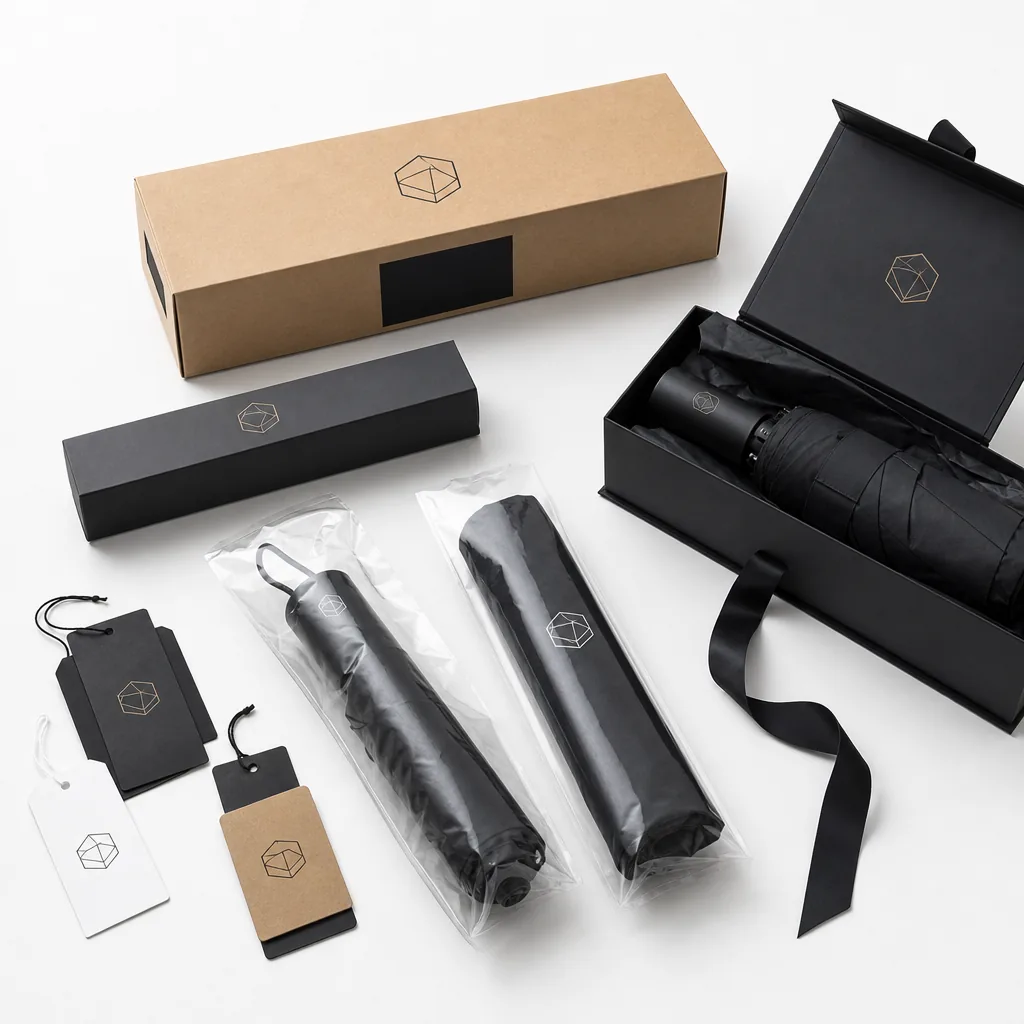
For drive-thru umbrella programs, packaging has to be store-friendly before it is warehouse-friendly. The cleanest setup is one master carton per location with the working inventory packed in smaller inner bundles, so a manager can issue umbrellas by shift without tearing down the whole shipment. We usually separate curbside service umbrellas from customer-facing giveaway stock, because the handling pattern is different and the loss rate is not the same. If the order includes fiberglass rib umbrellas or UPF 50+ umbrellas, label the outer carton with size, canopy material, rib construction, and opening mechanism so the receiving team is not guessing on arrival. The point is to make every unit immediately usable at the store level, not to save three cents on packing and create an hour of labor at the back door.
Spare stock targets should be set by location, not by the chain as a single average. A high-volume drive-thru store in a rainy market may need a 15 to 20 percent safety buffer on top of active deployment, while a seasonal curbside pickup site may only need 8 to 10 percent if turnover is predictable. The right trigger is not just calendar time; it is unit loss, weather, and expansion plans. If loss rate climbs above 5 percent in a quarter, reorder sooner. If the store is entering monsoon season, hurricane season, or back-to-school traffic, pull the trigger before the first weekly spike, because replenishment after the fact always lags. For FOB umbrella sourcing, that means building lead time into the reorder point so shipping, customs, and local distribution do not collide with the weather.
Labeling should be done by location, department, and use case, because mixed cartons create mistakes on site. A simple code such as store number, department, and service lane is enough to keep drive-thru teams, curbside teams, and marketing teams from pulling from the wrong inventory pool. ZheBrella’s standard practice is to print carton labels that identify the destination location and the intended department, then keep the same code on the inner polybag or sleeve so returns and spare stock can be reissued cleanly. If a chain is adding new stores, treat expansion as a separate demand bucket and reserve stock before the opening date; do not drain the operating stores to cover grand openings. That keeps replacement cycles stable and avoids a false shortage caused by growth rather than actual consumption.
Frequently Asked Questions
What umbrella spec works best for curbside staff who move between cars quickly?
A lightweight auto-open model with fiberglass ribs and a compact 23- to 27-inch canopy is usually the best fit. It is fast to deploy, easier to carry, and less likely to snag in tight pickup lanes.
Should a chain buy one umbrella SKU or two?
Most programs work better with two SKUs: a compact staff umbrella and a larger backup model for exposed lanes or managers. That keeps the program simple while covering different lot conditions and role needs.
What MOQ is typical for branded umbrellas used at drive-thru or curbside stations?
Most factories quote MOQs of 300 to 500 units per design, depending on canopy size, print method, and frame spec. If you need multiple store colors or logo versions, the MOQ is usually calculated per colorway rather than per total order.
How fast can FOB replenishment usually be shipped after sample approval?
For repeat orders, production is often 25 to 35 days after artwork approval and deposit, with FOB shipment from Ningbo or Shanghai. If the frame and canopy are already standardized, some suppliers can shorten replenishment to about 20 to 25 days.
What specs matter most for umbrellas used by service teams outdoors?
Buyers usually ask for fiberglass ribs, a UV-blocking canopy such as UPF 50+, and a vented top for better wind release. For high-traffic pickup areas, many importers also request reinforced tips, automatic open/close, and coated fabric for easier cleaning.
Looking to Launch Your Custom Umbrella Line?
ZheBrella is a Zhejiang-based OEM/ODM umbrella manufacturer with 17 years of export experience. Free design, low MOQ from 100 pieces, windproof construction, full-color print.
Get Free Quote Now »People Also Search For
Related Articles
Umbrella Sourcing for Automotive Dealerships and Showrooms
How dealerships use branded umbrellas in service lanes, delivery bays, and customer gifts, with specs, MOQ, lead times, ...
Read More »Custom Umbrellas for Bank Branches and Financial Offices
Learn which umbrella specs fit bank branches, investor events, and client visits, including rib choices, branding method...
Read More »
Umbrella Sourcing for Security Teams and Venue Operations
Choose umbrellas for security teams and venue operations with fast deployment, durable frames, sensible MOQs, and QC sta...
Read More »