Branded Umbrellas for Insurance Agencies and Claims Teams
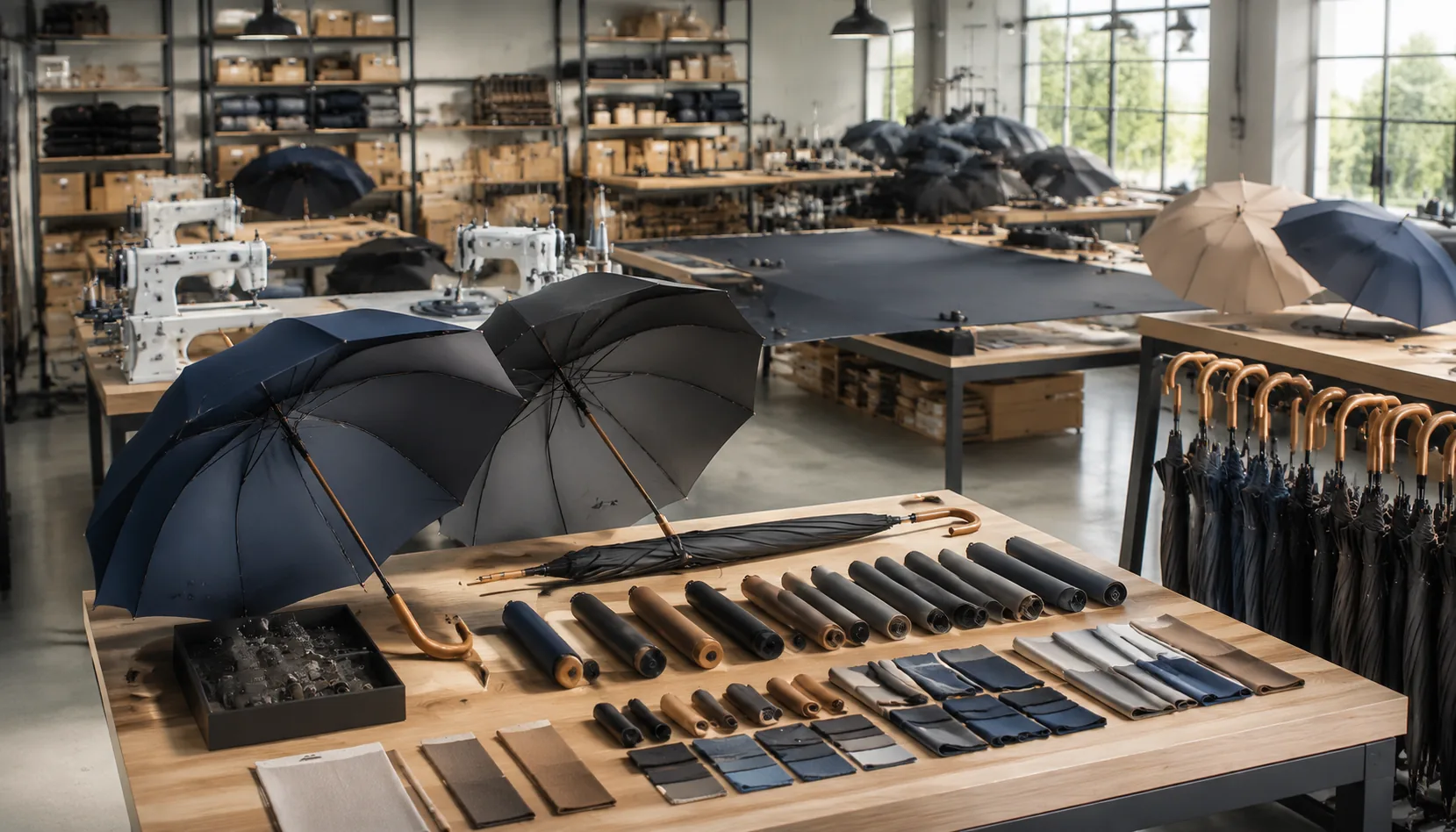
Storm season puts insurance teams in front of policyholders when the weather is already bad, and a weak giveaway umbrella can work against the trust you are trying to build. For insurance agency branded umbrellas, the real planning starts with frame strength, canopy fabric, print durability, carton packing, and reorder control—not just logo placement. On our Songxia factory floor, we see which specs survive repeated field use by adjusters and which ones only look good in a sample photo.
Why Insurance Teams Use Umbrellas Year-Round
Insurance teams use umbrellas year-round because rain is tied directly to the moments when clients think about risk, property, cars, and claims. A 23" auto-open straight umbrella with 190T or 210T pongee is not a throwaway item; it sits in a car trunk, agency lobby, or office coat rack for years. For local agents, insurance agency branded umbrellas work better than cheap pens because the client actually needs them during school pickup, home inspections, open houses, and stormy commutes. For claims teams, umbrellas are also field equipment: adjusters walking roofs, checking siding, photographing vehicles, or meeting policyholders after hail and wind events need reliable coverage, not a flimsy 6K frame that turns inside out at the first gust.
For branded adjuster gear, I usually steer buyers toward 8K or 10K fiberglass ribs, a steel or aluminum shaft depending on budget, and a vented double-canopy if the team works coastal or high-wind regions. A 27" golf umbrella gives better coverage for clipboard work and policyholder conversations, while a 21" auto-open-close folding umbrella is easier for claim reps who drive all day and need compact storage. If the program is positioned as storm season promotional gifts, add a Teflon water-repellent coating and consider UPF 50+ fabric for summer catastrophe response. Claims team umbrellas should be specified more like work tools than event giveaways: handle grip, runner strength, rib flexibility, and print durability matter more than saving a few cents per unit.
Order size depends on how the insurance brand plans to distribute them. A single independent agency may order 300–500 pieces for renewals, referral thank-you gifts, and community events. A regional branch network usually runs 1,000–3,000 pieces split by office, with carton labeling by location to reduce sorting work after arrival. Policyholder mailer campaigns are more complicated because 23" straight umbrellas are bulky; many buyers choose 21" folding models with individual sleeves for easier fulfillment. For insurance client retention gifts, our standard practice at ZheBrella is to quote FOB and DDP separately, confirm AQL 2.5 inspection, and allow 25–35 days for production after artwork approval, longer if PMS color matching or heat-transfer panel printing is required.
Choosing Specs for Field Adjusters and Client Gifts
For client handouts, I would not overbuild the umbrella. A 21-inch or 23-inch compact auto-open model with an 8K frame is usually the right balance: small enough for a glove box, briefcase, or reception-desk giveaway, but still useful in a real rain. For insurance agency branded umbrellas used as client retention gifts, 190T pongee is acceptable if the budget is tight, though 210T pongee feels denser, takes screen printing cleaner, and has better water shedding after Teflon treatment. I would avoid cheap polyester on agency programs because it wrinkles badly after folding and makes the logo look low-grade. For a compact gift umbrella, steel shaft with fiberglass ribs is a sensible middle ground; all-steel ribs save cost but bend more permanently when a client opens the umbrella against wind.
Claims team umbrellas need a different spec because adjusters stand outside in bad weather, often with one hand on a phone, tablet, or clipboard. A 23-inch double-canopy vented umbrella is easy to carry in a vehicle, while a 27-inch model gives better coverage over inspection tools and paperwork. For branded adjuster gear, I prefer fiberglass ribs and a fiberglass or reinforced steel shaft, not basic painted steel ribs. Fiberglass flexes under gust load and returns closer to shape; steel is stronger in static load but kinks when a sudden side gust catches the canopy. An 8K frame is fine for light field use, but 16K is noticeably more stable on a 27-inch canopy and spreads stress more evenly along the fabric edge. For storm season promotional gifts, that frame upgrade is more meaningful than adding a fancy handle.
Fabric choice matters because field umbrellas get opened wet, closed dirty, and thrown into trucks. 190T pongee is lighter and cheaper, but on 27-inch claims team umbrellas it can flutter and show seam tension if the sewing is not controlled. 210T pongee gives a tighter hand feel, better color depth for navy, black, and agency blue, and stronger logo edges for heat-transfer or screen print. If the umbrella will be used during hurricane or hail-claim season, specify reinforced tips, bar-tacked tie straps, rust-resistant hardware, and AQL 2.5 inspection on frame function and canopy seams. For insurance agency branded umbrellas ordered as both client gifts and adjuster equipment, split the PO: compact auto-open 21-inch units for insurance client retention gifts, and 23-inch or 27-inch double-canopy windproof models for the field team.
Branding Options for Trust and Local Visibility
Brand-color disputes usually start before production, not after delivery, so PMS matching and pre-production samples are not optional on serious programs. Digital proofs are useful for layout approval, but they do not show how PMS 2945 C changes on coated 210T pongee versus translucent POE or how a white underbase affects a red logo on a dark canopy. Our standard practice at ZheBrella is to confirm artwork as vector files, specify PMS numbers, print a strike-off or full pre-production sample, and photograph it under neutral light before bulk cutting begins. For insurance agency branded umbrellas ordered under FOB or DDP terms, that extra 5–7 days can prevent thousands of pieces from being rejected over “almost right” blue or a logo that sits too close to the panel seam. It also gives the buyer one final chance to check logo scale, reflective trim placement, sleeve branding, and carton marks before AQL 2.5 inspection locks the shipment for export.
Procurement Controls for Multi-Branch Programs
Procurement control starts with colorway discipline, not with the total umbrella count. For insurance agency branded umbrellas, I usually recommend locking one corporate body color, one logo print method, and no more than two accent colors across all branches unless the annual volume is high enough to support separate production lots. A practical MOQ is often 500–1,000 pieces per colorway for 23" auto-open straight umbrellas with 190T or 210T pongee, and 1,000+ pieces if you want custom-dyed fabric, double-canopy vented construction, or fiberglass 8K/10K frames. If each branch chooses its own navy, gray, or red, you create small-lot fabric waste, extra screen setups, and mismatched brand appearance. For claims team umbrellas, standardizing the shaft, handle, ribs, and canopy material while allowing office-level carton labels gives better cost control than customizing the product itself.
Carton allocation should be written into the purchase order before production, not solved after goods reach the warehouse. A common export carton holds 24 or 36 straight umbrellas depending on size and handle, while compact auto-open-close models may pack 48 pieces per carton. For a 20-branch program, the cleanest method is to assign full cartons by office, add branch codes to shipping marks, and reserve 3–5% overage at headquarters for replacements, new hires, and event requests. Reorder triggers should be tied to storm season promotional gifts and actual claim volume: when inventory drops below 60 days of forecast usage, or 90 days before hurricane, hail, or monsoon season, issue the repeat PO. Typical lead time is 25–35 days after artwork approval for stock-fabric umbrellas, 40–55 days for custom color fabric or UPF 50+ coatings, plus ocean or air transit.
FOB Ningbo or Shanghai is cheaper on paper when the buyer has a strong freight forwarder and can handle import clearance, duties, inland trucking, and split delivery. DDP is usually better for distributed insurance client retention gifts because the landed cost is fixed and cartons can move directly to regional offices without surprises from customs exams or local drayage. The tradeoff is visibility: with FOB, you control the forwarder; with DDP, the supplier controls routing and must provide branch-level packing lists. Our standard practice at ZheBrella is AQL 2.5 final inspection before shipment, checking frame opening cycles, rib alignment, canopy sewing, logo registration, water repellency, carton drop condition, and barcode or office-label accuracy. That matters because one failed carton in a single-warehouse order is manageable; one wrong logo color or weak auto-open spring spread across 30 offices becomes an expensive field problem.
Building a Tiered Umbrella Program
A tiered program works better than one “universal” umbrella because insurance audiences use umbrellas in very different ways. For compact giveaways, I would spec a 21" 3-fold auto-open or manual-open umbrella with a steel shaft, 8K steel ribs, 190T pongee canopy, and one-color screen print on one panel. This is the right level for storm season promotional gifts handed out at renewal meetings, community events, or agency lobbies. A practical starting SKU count is 2 body colors, 1 logo version, and 500-1,000 pieces per reorder, because too many colorways create slow-moving inventory. Keep this tier price-led, but do not drop below decent pongee and a passable runner; cheap loose sliders are what make buyers regret saving $0.30.
The better tier should feel like a real insurance client retention gift, not a disposable item. A 23" or 27" straight umbrella with 190T or 210T pongee, fiberglass ribs, EVA or rubberized handle, auto-open mechanism, and Teflon water-repellent coating is usually the cleanest corporate-gift build. For insurance agency branded umbrellas, I would separate these into 3-4 SKUs: executive black, navy, a women’s color if the brand allows it, and one golf-size option for higher-value commercial clients. Price-band logic should follow use case: compact giveaways protect reach, standard corporate gifts protect perceived value, and print cost should be controlled with one or two panels unless the campaign truly needs full-canopy branding.
The best tier is for field use: claims team umbrellas and branded adjuster gear need wind performance before decoration. A 27" or 30" double-canopy vented model with 8K or 10K fiberglass ribs, reinforced tips, 210T pongee, auto-open frame, and tested survival around 50+ mph is a sensible minimum for adjusters walking roofs, driveways, and storm-damaged properties. Plan replacement stock from the start: after major hail or hurricane periods, assume 8-15% annual replenishment for field umbrellas and keep at least 5% extra canopies or finished units for new hires, lost items, and damaged samples. Our standard practice at ZheBrella is to quote these tiers separately by MOQ, print method, FOB/DDP terms, and lead time, so procurement can approve the full program without mixing giveaway math with professional equipment math.
Frequently Asked Questions
What umbrella size works best for insurance adjusters?
Most adjuster teams choose 23-inch or 27-inch windproof umbrellas with fiberglass ribs and a double canopy. A larger canopy protects clipboards, tablets, and claim documents during site visits.
Can agencies ship umbrellas directly to branch offices?
Yes. A factory can pack by branch, apply carton labels, and quote DDP delivery for easier landed-cost control. Confirm the branch allocation file before mass packing to avoid split-shipment errors.
What umbrella specs work best for claims adjusters in storm season?
For field adjusters, use 58 to 62 inch golf umbrellas with fiberglass ribs, a vented canopy, and pongee fabric for better wind resistance. A straight EVA or rubberized handle is easier to grip during site inspections.
Can an insurance agency order different umbrella tiers for staff, clients, and VIP accounts?
Yes. A typical program can include compact umbrellas for general client gifts, mid-range auto-open umbrellas for agents, and premium golf umbrellas for adjusters or VIP policyholders, with shared logo artwork to control setup costs.
How should agencies plan reorder quantities before hurricane or storm season?
Many buyers place a preseason bulk order 60 to 90 days ahead, then keep artwork and fabric colors standardized for lower-cost reorders. For OEM production, practical MOQs often start around 500 to 1,000 pieces per style depending on printing, frame, and packaging.
Looking to Launch Your Custom Umbrella Line?
ZheBrella is a Zhejiang-based OEM/ODM umbrella manufacturer with 17 years of export experience. Free design, low MOQ from 100 pieces, windproof construction, full-color print.
Get Free Quote Now »People Also Search For
Related Articles
Branded Umbrellas for Insurance Claims and Agent Teams
Plan storm-season umbrella specs for adjusters and agents, from 190T pongee and fiberglass ribs to MOQ, AQL checks, and ...
Read More »
Branded Umbrellas for Insurance Agencies and Broker Networks
Plan broker-network umbrella gifts with practical specs, order timing, and quality controls that improve retention witho...
Read More »
Custom Umbrellas for Insurance Agencies and Claims Teams
Source insurance-agency umbrellas for storm claims, branch giveaways, and adjuster kits with durable specs, AQL checks, ...
Read More »