Branded Umbrellas for Outdoor Recreation Tour Operators
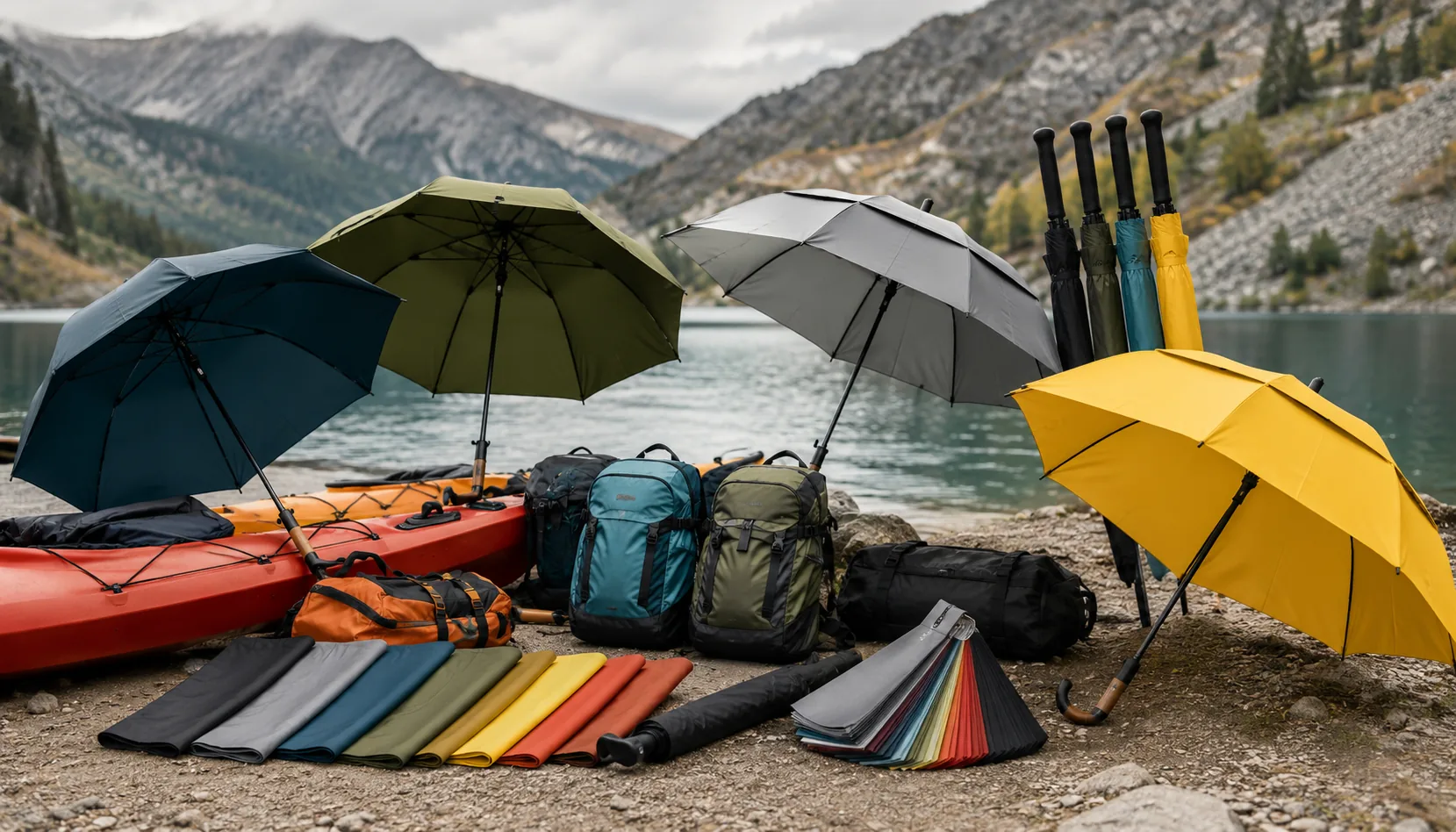
For outdoor recreation tour operators, an umbrella is not just a logo item; it has to survive wind off the water, midday UV, wet packing, and repeated handling by guides and guests. When we build branded umbrellas for tour operators on our Songxia factory floor, the real decisions start with frame strength, UPF 50+ fabric, folded length, carton efficiency, and production lead time, because a late or weak umbrella becomes an operational problem in the field.
Tour Operator Use Cases Beyond Simple Rain Cover
For walking tours and city excursions, the umbrella is not just rain cover; it is a moving flag that keeps the group organized in crowded streets. I would spec branded umbrellas for tour operators with a 23" or 27" canopy, 8K fiberglass ribs, and a bright edge panel or top logo so guests can spot the guide from 30–50 yards away. A black umbrella with a small logo looks “premium” in a catalog but disappears in a wet plaza. For tour guide rain gear, contrast matters more than elegance: yellow, red, royal blue, or lime panels photograph well and reduce the number of guests drifting off at crosswalks, museum exits, and transit stops.
Boat docks, eco-lodges, winery routes, and shuttle pickup points need tougher outdoor recreation umbrellas because the failure mode is usually wind, not rain. A double-canopy vented design with fiberglass shaft and ribs will outperform cheap steel 8K frames when gusts come across open water or hillside vineyards; for most operators I would target windproof branded umbrellas rated around 50+ mph in controlled testing, not the flimsy giveaway type used at indoor trade shows. Canopy choice also changes by use: 190T pongee is a solid all-around option, while 210T with Teflon coating sheds rain faster when umbrellas are being opened and closed between tastings, docks, trailheads, and vans.
Rental counters and lodge reception desks can turn umbrellas into both contingency equipment and retail add-ons. A manual-open 27" golf umbrella is easy for staff to inspect and issue, while compact 21" auto-open-close models work better as travel company promotional umbrellas sold beside ponchos, maps, sunscreen, and reusable bottles. If the umbrella is part of a deposit-based rental program, print a large logo plus property name on two panels and add a woven label or QR tag near the runner for tracking. Our standard practice at ZheBrella is to separate guide-use stock from guest-sale stock, then inspect logo placement, frame function, and canopy leakage under AQL 2.5 before packing for FOB Ningbo or DDP delivery.
Matching Umbrella Specs to Terrain and Guest Flow
For shared coverage, the 30" golf umbrella is the workhorse, but it should be assigned deliberately. One 30" double-canopy unit can cover a guide plus two guests during a safety briefing, a ticket scan, or a wildlife-viewing stop, but it is too wide for narrow forest trails, crowded old-town alleys, or boarding lines where ribs hit people at eye level. A mixed kit works better: compact folders for guests, 23" or 27" stick umbrellas as tour guide rain gear, and 30" golf umbrellas for staging areas, boat ramps, shuttle doors, and photo stops. If the brand wants windproof branded umbrellas, specify fiberglass shaft and ribs, reinforced tips, 8K minimum for personal units, 16K for exposed guide units, and a vented canopy before discussing handle shape. EVA foam handles are practical in cold rain; rubberized straight handles look cleaner for retail brands; wood handles photograph well but need better drying discipline after use. This is where the spec protects both the logo and the tour schedule.
Sun, Rain, and Wind Performance Requirements
For heavy daily dispatch, I would not spec anything lighter than 210T pongee for outdoor recreation umbrellas. Compared with 190T, 210T gives a tighter weave, better color depth after screen or heat-transfer printing, and less sag after repeated wet-dry cycles in a van or gear room. The canopy should carry a durable water-repellent finish, not just a cheap one-pass coating that beads nicely in a showroom and fails after two storms. For branded umbrellas for tour operators, we normally test water beading, seam leakage, and fabric tension after opening/closing cycles because the real abuse comes from guides handing umbrellas to guests 20 times per day. A 23" auto-open stick umbrella works for walking tours, while 27" or 30" golf sizes are better for fishing docks, safari vehicles, shuttle queues, and resort pickup points where one umbrella may cover two guests plus bags.
Sunny destinations need a different canopy spec: UPF 50+ black-coated pongee or polyester is the practical choice for desert walks, vineyards, beaches, archaeological sites, and island excursions. Silver coatings look bright but scratch and wrinkle more visibly; black coating gives stronger shade, better glare reduction, and a more premium underside when guests look up. For travel company promotional umbrellas, the logo should sit on the outside panel while the underside coating stays clean, because heavy ink on the coated side can crack or reduce UV performance. If the program is mainly tour guide rain gear, use high-visibility edge piping or alternate color panels so the group can follow the guide in crowds. For retail-style branding, keep the print to one or two panels and avoid oversized ink coverage near rib tips, where fabric flex is highest.
Coastal wind is where cheap umbrellas embarrass a tour brand. For exposed piers, whale-watching ramps, golf resorts, and beach transfers, I prefer vented double-canopy construction with fiberglass ribs and a fiberglass shaft, not thin steel ribs that bend once and stay bent. An 8K frame is acceptable for compact guest handouts, but 10K or 16K layouts distribute load better on 27" and 30" windproof branded umbrellas. We usually target stable performance around 50+ mph in controlled wind-tunnel checks, but field performance still depends on canopy diameter, rib thickness, runner strength, and whether guests face the umbrella into the gust. Marine and humid environments also need corrosion-resistant components: nickel-plated or epoxy-coated steel where metal is unavoidable, stainless rivets on higher specs, plastic tips that do not bleed rust, and handles that tolerate salt spray and sunscreen residue.
Branding for Visibility, Photos, and Retail Sales
High-contrast panels matter more than clever artwork when umbrellas are moving through rain, glare, and crowded trailheads. For branded umbrellas for tour operators, I usually push navy/white, black/yellow, forest green/white, or red/white layouts on 190T or 210T pongee because the logo still reads in guest photos taken from 20–30 feet away. Keep the main logo inside a safe print area of about 180–220 mm wide on a 23" stick umbrella panel, or 220–260 mm on a 27" golf umbrella; anything larger starts fighting the panel seam and rib curvature. On 8K and 10K frames, each printed panel must be registered to the seam line, not just centered visually on the flat fabric, or the logo will twist after sewing and look cheap in group photos.
Guide-number marking is a practical branding tool, not decoration. A bold “Guide 03” or route code printed on one alternate panel helps guests regroup fast at zipline bases, kayak launches, ski-lift exits, and bus pickup points. For outdoor recreation umbrellas, I recommend placing the guide number opposite the main logo so it is visible from the rear while the brand faces forward. If the umbrella is part of tour guide rain gear, use fiberglass ribs and a double-canopy vented structure for exposed sites; a 23" auto-open model is enough for walking tours, while 27" or 30" windproof branded umbrellas are better for rafting outfitters, golf tours, and resort shuttles. We typically test panel alignment before bulk cutting because one wrong screen angle can multiply into 1,000 crooked umbrellas.
QR codes work if they are treated like functional print, not a tiny afterthought. Use at least 30 x 30 mm for review links, 40 x 40 mm if the canopy is dark or coated, and keep a quiet zone around the code so water droplets and fabric texture do not break scanning. Retail hang tags are worth adding when tour companies sell umbrellas at the lodge, hotel desk, marina shop, or visitor center; include UPF 50+ if the canopy has a verified UV coating, wind-rating language only if tested, and care instructions for POE/PVC/EVA or pongee fabrics. For travel company promotional umbrellas across multiple tour locations, lock Pantone references before production, approve one pre-production sample per colorway, and hold AQL 2.5 inspection against shade variation, print position, barcode readability, and hang-tag SKU accuracy.
Procurement Planning for Peak Travel Seasons
Order branded umbrellas for tour operators 60–90 days before the first peak departure date, not before the first rainy week on the calendar. That window is realistic because a proper pre-production sample takes 7–10 days after artwork confirmation, and buyers usually lose another 3–5 days on logo position, Pantone matching, or handle tag revisions. Bulk production for outdoor recreation umbrellas is commonly 25–35 days for 1,000–5,000 pieces, longer if you specify 10K fiberglass ribs, double-canopy venting, UPF 50+ coating, or multiple canopy colors. Add 3–7 days for final inspection and carton marking, then freight: roughly 25–35 days by ocean to the U.S. West Coast, 35–45 days to inland warehouses, or 7–12 days by air when the margin can support it. Tour operators running May–September hiking, rafting, vineyard, golf, or city-walking programs should lock specs in February or March, especially if umbrellas are part of paid guest kits rather than disposable giveaways.
MOQ planning should start with the number of guides, vehicles, welcome desks, and guest-facing retail points, then add 8–12% spare stock for breakage, lost umbrellas, and last-minute group size changes. A basic 23-inch auto-open steel-shaft model may start around 300–500 pieces per color, but windproof branded umbrellas with fiberglass ribs, vented 190T or 210T pongee canopy, custom sleeve, and PMS logo printing usually make better cost sense from 1,000 pieces upward. For tour guide rain gear, I would avoid ultra-light 21-inch compact frames unless the activity is mostly urban; on exposed coastal walks, fishing docks, or mountain viewpoints, a 27-inch golf umbrella with fiberglass ribs survives guest handling much better. Travel company promotional umbrellas also need clear brand hierarchy: a one-panel logo is cheaper and cleaner, while alternating panels or edge-to-edge sublimation gives stronger visibility but increases sampling risk and print approval time.
Inspection should be written into the purchase order, not treated as a favor after production. Our standard practice at ZheBrella is AQL 2.5 for major defects, with checks on open-close cycling, rib alignment, runner locking, tip stitching, shaft straightness, waterproofing, and logo adhesion after rub testing. For frame durability, specify whether the umbrella must survive 40 mph casual use or 50+ mph wind-tunnel testing; those are not the same build. Print quality checks should include color tolerance under D65 lighting, registration on multi-panel logos, heat-transfer edge lifting, and ink bleed on dark pongee. FOB works when one logistics team consolidates shipments into a central warehouse or cruise-port depot. DDP is cleaner for multi-destination operators shipping to several trailheads, resorts, or regional offices, but confirm duties, carton labels, and delivery appointments early, because split DDP shipments can erase the savings from a low unit price if addresses change late.
Frequently Asked Questions
Are folding umbrellas durable enough for daily tour operations?
They can work for guest resale or light use, but guides usually need stronger stick umbrellas. Fiberglass ribs and a 210T pongee canopy improve durability for repeated opening, closing, and outdoor handling.
What umbrella design helps guests identify a tour guide quickly?
Use a bright canopy color, large logo panels, and a consistent guide umbrella size across locations. For crowded areas, a 23–27 inch stick umbrella is often more visible than a compact folding model.
What umbrella sizes work best for tour guides and rental programs?
For guides, 23-inch to 27-inch stick umbrellas offer better group visibility and rain coverage. For rentals or guest retail, compact 21-inch to 23-inch folding umbrellas are easier to store in vans, hotel desks, and tour check-in areas.
Can tour operator umbrellas include both rain protection and sun protection?
Yes. Buyers can specify windproof fiberglass frames with pongee or polyester canopy fabric plus a silver, black, or UV-coated layer rated UPF 50+ for sun-heavy destinations such as beach tours, safaris, cruises, and city walking tours.
How far in advance should a travel company order branded umbrellas for peak season?
For OEM logo umbrellas, plan 45 to 75 days before the start of the season, including artwork confirmation, sampling, bulk production, and sea freight. If you need custom colors, retail packaging, or multiple destination logos, allow additional time for approvals.
Looking to Launch Your Custom Umbrella Line?
ZheBrella is a Zhejiang-based OEM/ODM umbrella manufacturer with 17 years of export experience. Free design, low MOQ from 100 pieces, windproof construction, full-color print.
Get Free Quote Now »People Also Search For
Related Articles
Custom Umbrellas for Telecom Retail and Installer Teams
Plan telecom umbrella programs for store launches, fiber rollouts, and installer crews with windproof frames, logo place...
Read More »
Umbrella Sourcing for Outdoor Retail and Gear Brands
Build outdoor retail umbrella ranges with UPF 50+ fabric, fiberglass frames, 210T pongee, tested packaging, and order te...
Read More »
Branded Umbrellas for Telecom Retail and Field Sales
Build telecom umbrella programs for retail stores, street sales, and installer handoffs with durable specs, packaging, a...
Read More »