Branded Umbrellas for Senior Living Community Programs

Senior living programs need umbrellas that are easy to carry, quick to open, and reliable in wind, because residents, staff, and visiting families notice every small failure. When buyers source senior living branded umbrellas, the real challenge is balancing low weight, safe edges, clear branding, and consistent packing without creating a product that looks good on paper but fails on the floor.
Where Umbrellas Fit in Senior Living Operations
Senior living branded umbrellas make sense anywhere a community needs a controlled, low-friction handoff: resident welcome kits, sales tours, shuttle escorts, and family open-house events. In practice, the best retirement community umbrellas are not oversized golf models but lightweight logo umbrellas in 21" to 23" sizes, usually with auto-open or simple manual mechanisms that older residents and staff can operate without fighting the frame. For resident move-in packets, custom umbrellas for residents work better when they are compact enough for a walker basket or car door pocket, with fiberglass ribs instead of heavy steel so the weight stays manageable.
Accessibility matters more than flash. A calm, low-contrast print on pongee 190T or 210T canopy fabric looks more dignified than loud full-surface graphics, and a straight rubber handle is usually easier to grip than a hard curved one. For assisted living promotional gifts, I would avoid tiny foldable styles with weak sliders; they pinch fingers and fail fast. A vented double-canopy build helps in wind at curbside drop-off, and a Teflon or UV coating is worth specifying if residents will use the umbrella daily rather than treating it as a one-time giveaway.
Operationally, these umbrellas are useful because they solve practical visibility and wayfinding problems. Staff uniforms can include matching umbrellas for rainy shuttle runs or outdoor escort duty, which keeps the team looking organized during tours and family events. ZheBrella’s standard practice on these programs is to keep the branding restrained, use AQL 2.5 inspection on shipment lots, and match the construction to the actual use case instead of overselling a 30" windproof frame for people who mainly need light rain coverage. That approach reduces returns, keeps the appearance calm, and avoids handing out something that feels more like a promo trinket than a useful community tool.
Safety-First Product Specifications
For senior living branded umbrellas, the safest spec starts with a light frame and a predictable opening action. I would choose aluminum or fiberglass over steel because residents feel the weight immediately when they carry it across a parking lot or from dining hall to bus stop. An 8K rib setup is the practical floor for this use case: enough structure for daily handling without making the canopy stiff and awkward. Rounded tips matter more than buyers usually admit, because sharp ferrules and exposed points create avoidable snag and impact risks in crowded corridors, elevator lobbies, and shared transportation areas.
The handle should be ergonomic, with a straight grip or soft curved J-handle that older hands can hold without squeezing hard. For retirement community umbrellas, I prefer smooth manual-open or controlled auto-open mechanisms instead of aggressive spring-loaded systems; they reduce pinch risk and are easier to train staff on when handing out assisted living promotional gifts. A 190T pongee canopy is the right everyday fabric because it dries fast, packs small, and holds print cleanly for custom umbrellas for residents, while a UPF 50+ coating becomes worth the added cost on campuses with long outdoor walks, shuttle stops, or pool decks where shade exposure is constant.
If the umbrella is intended to live in a resident’s tote bag or walker basket, keep the build lean: lightweight logo umbrellas should stay close to 300-350 grams in a 21-inch to 23-inch format, not the heavier 27-inch promotional size that looks good on paper but gets left in a closet. In practice, the best product decisions here are boring ones—simple construction, clear manual operation, and materials that do not feel fragile or cheap after a few weeks of use.
Design Details for Residents and Staff
For senior living branded umbrellas, the first design decision is legibility, not decoration. High-contrast canopy colors matter more than clever artwork: white on navy, black on yellow, or deep red on silver read quickly at a distance and help staff identify residents during escorted walks. Keep logos large and simple, because tiny text disappears once the canopy is moving in wind. On retirement community umbrellas, I also recommend a dedicated name-label area inside the canopy or on the tie strap; that solves the common problem of identical units getting mixed up in dining rooms, activity buses, and reception closets.
Older users notice hardware before graphics, so the handling features have to be practical. Sleeve pull tabs should be oversized and easy to grasp with limited finger strength, and the closure strap should fasten cleanly without fine motor work. For assisted living promotional gifts, lightweight logo umbrellas are usually the safer choice, but weight alone is not enough; the shaft diameter, grip shape, and open/close force matter just as much. If the umbrella is meant for residents, skip anything that requires a hard snap or a tight twist.
Compact umbrellas are convenient for bags and walkers, but stick umbrellas are often easier to manage on escorted walks because they hang straight, are less fiddly to deploy, and give staff a better handhold in bad weather. That is why custom umbrellas for residents often work best in two versions: a compact model for daily carry and a straight-handle model for building-to-vehicle transfers. ZheBrella’s standard approach is to match the handle style to the actual mobility of the user group, not just to the marketing brief, because the wrong format gets left in a drawer no matter how good the print looks.
Ordering, Packaging, and Distribution Needs
For senior living branded umbrellas, the real work starts with MOQ planning across multiple communities. If one network wants 300 units split across five campuses, you need to decide whether each facility gets its own logo run or whether the art stays shared and only the name line changes. We usually treat retirement community umbrellas as a pooled production order, then break the shipment into facility-level counts so procurement is not stuck doing manual redistribution after arrival. That matters even more for assisted living promotional gifts, where the budget is often tied to resident events, family days, or seasonal safety programs rather than one large central purchase.
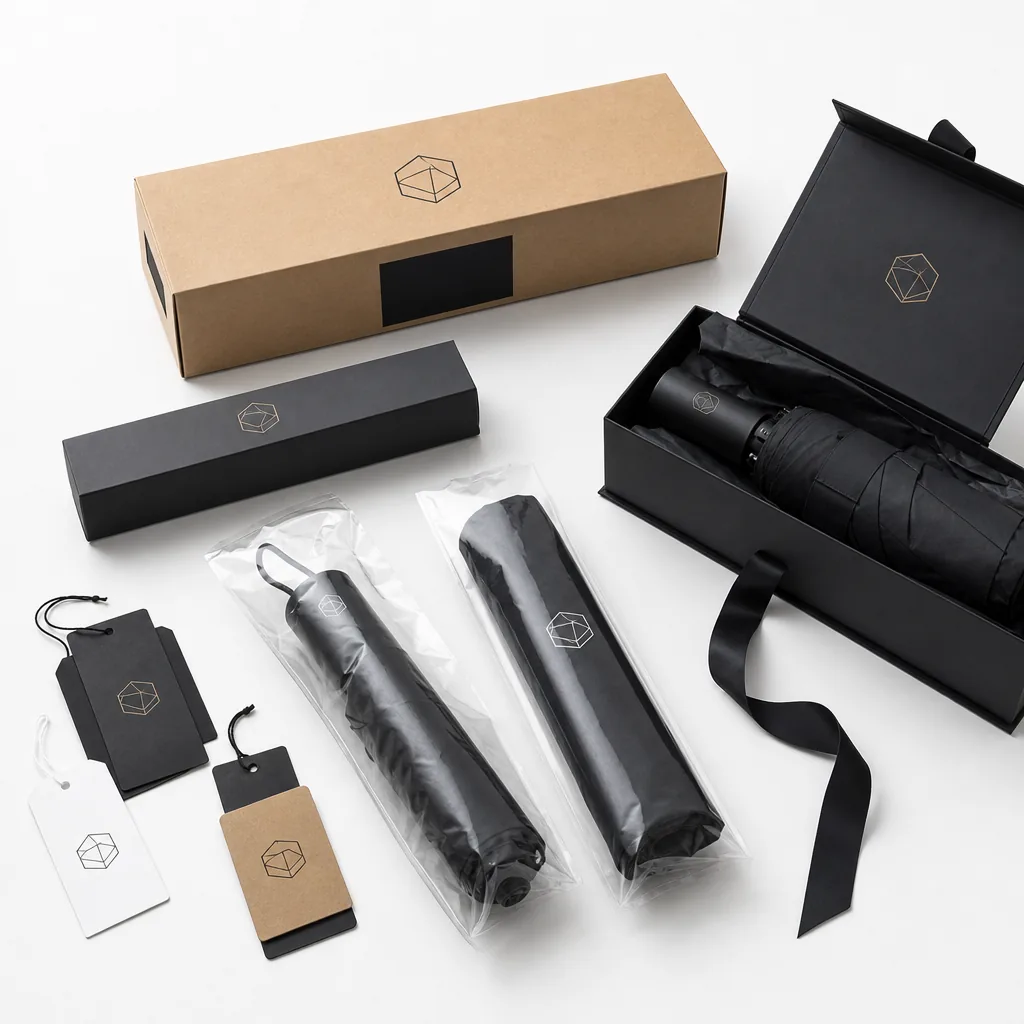
Packaging should match the delivery model, not just look neat on paper. Individual polybags are the lowest-cost option and work fine for lightweight logo umbrellas headed to different buildings, but gift boxes make more sense when the umbrellas are presented as custom umbrellas for residents during welcome kits or holiday campaigns. Carton sorting by facility is worth the extra labor if each campus needs its own count, size mix, or insert card; otherwise, one mixed master carton just creates receiving errors. If the order includes custom colors, printed sleeves, or multiple logos, 30 to 45 days is the normal lead time because each extra variable adds sampling, print setup, and packing checks.
The packing spec should be written before production starts, not after goods are finished. I’d spell out polybag or box type, carton mark format, and whether each inner pack is for one resident or one department, because that is where senior living branded umbrellas get delayed in transit or miscounted at the dock. ZheBrella’s standard practice is to label cartons by facility name and PO line so distribution teams can unload straight to the right building without reopening cases. For large rollouts, ask for a packing list that shows item count per campus, export carton weight, and any logo variation by location; that keeps receiving clean and avoids the common mistake of shipping one mixed lot to a central warehouse and hoping someone has time to sort it later.
Inspection Standards for a Low-Risk Rollout
For senior living branded umbrellas, the inspection plan should be simple but strict: AQL 2.5 on appearance and function, with every sample checked for handle security, tip attachment, fabric seams, and open-close consistency. In practice, that means testing the shaft-to-handle fit for wobble, pulling on the ferrule and top cap to confirm they are locked, and running the canopy through several cycles to make sure the runner does not stick or jump. If those points are loose on a 21" or 23" umbrella, they will fail fast in daily use, especially for residents with limited grip strength.
I would also treat seam quality as a functional issue, not just cosmetics. On retirement community umbrellas, weak stitching at the panel joins, crown, and edge binding shows up after the first wet use, so the inspection should include light tension checks and a quick shake test after opening. For lightweight logo umbrellas, I prefer a sample pull on the rib ends and a visual check for skipped stitches, thread breakage, or puckering around printed areas; those defects usually signal poor sewing control before they become returns.
Before any bulk approval, actual staff should handle the sample set in normal use conditions, not just in a conference room. Have caregivers, activities staff, or maintenance staff open and close each sample, carry it one-handed, and judge whether the release button, slide mechanism, and grip size make sense for your residents. That field test is especially useful for assisted living promotional gifts and custom umbrellas for residents, because what passes on paper can still be awkward in real use; a low-risk rollout depends on catching that mismatch before the order scales up.
Frequently Asked Questions
Are auto-open umbrellas suitable for senior living residents?
They can be suitable if the mechanism is smooth and not overly forceful. Many communities choose lightweight manual-open stick umbrellas for resident gifts and auto-open models for staff escort use.
What fabric is best for senior living campus umbrellas?
190T pongee is a cost-effective choice for daily rain coverage. For communities with courtyards, walking paths, or shuttle waiting areas, 210T pongee with UPF 50+ coating is a better premium option.
What umbrella specs work best for senior living residents?
Most buyers choose a lightweight 21-23 inch folding umbrella with an automatic open button and a soft, non-slip handle. A weight target under 1 lb is common for resident use, while a 8-rib fiberglass frame improves durability without adding much weight.
Can umbrellas for senior living programs be packed individually for welcome kits?
Yes. Many factories offer individual poly bags, hang tags, or printed sleeves, and can carton-pack by building or community name. If the umbrellas are going into resident welcome kits, ask for separate inner boxes or barcode labels for easier distribution.
What is a typical MOQ and lead time for custom umbrellas for community programs?
For OEM/ODM umbrella orders, MOQ is often 300-500 pieces per color or design, depending on the canopy print and handle customization. Lead time is usually 25-40 days after artwork approval, with faster production possible for simpler logo prints.
Looking to Launch Your Custom Umbrella Line?
ZheBrella is a Zhejiang-based OEM/ODM umbrella manufacturer with 17 years of export experience. Free design, low MOQ from 100 pieces, windproof construction, full-color print.
Get Free Quote Now »People Also Search For
Related Articles
Branded Umbrellas for Senior Living Communities
Build senior living umbrella programs for tours, resident outings, and family gifts with safer handles, lighter frames, ...
Read More »
Umbrella Programs for Senior Living and Assisted Care Communities
Source mobility-friendly umbrellas for senior living communities with safe handles, lightweight frames, UPF 50+ shade, l...
Read More »
Umbrella Programs for Senior Living and Care Communities
Build safer senior-living umbrella programs with lightweight frames, easy-open mechanisms, high-visibility branding, QC ...
Read More »