Umbrella Programs for Senior Living and Care Communities
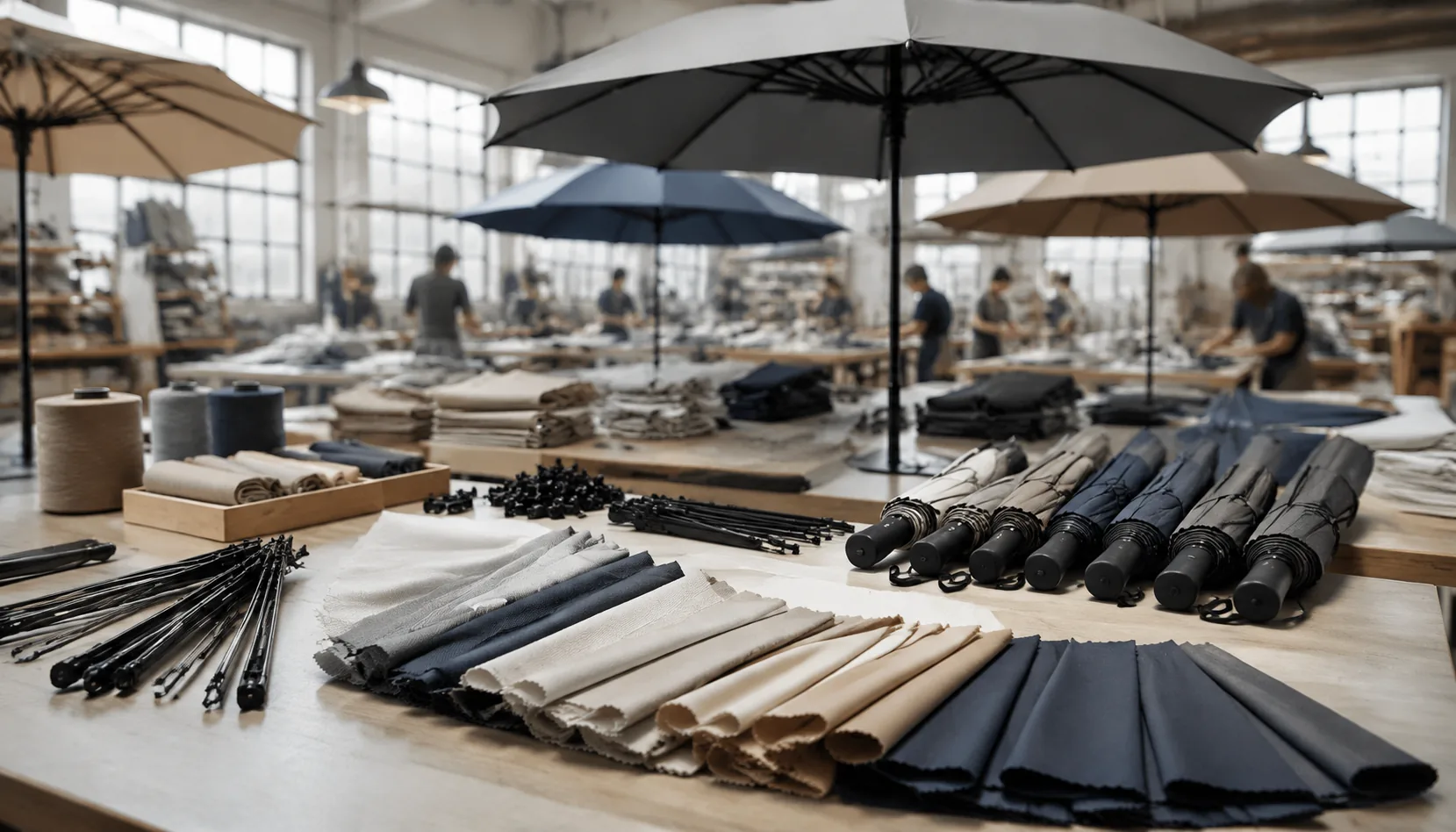
For care communities, an umbrella program is not just a giveaway; it has to work for residents with weaker grip strength, staff moving between buildings, and weather that exposes every weak rib, stitch, and handle choice. When we build senior living umbrellas on our Songxia factory floor, we look first at lightweight frames, easy-open hardware, visible logo placement, and QC points that prevent returns before the next reorder window arrives.
Common Use Cases in Senior Living Campuses
The highest-volume use case on a senior living campus is not resale; it is controlled staff use at the front entrance, porte cochere, clinic door, and shuttle loading zone. For resident escorts, I prefer 27" or 30" straight umbrellas with fiberglass ribs, 8K or 10K frames, and auto-open buttons that work with one hand while the other hand stays on a wheelchair handle, walker, or resident elbow. These senior living umbrellas should use 190T or 210T pongee with a water-repellent coating, not cheap polyester that wets out after a few storms. For patient escort umbrellas, oversized golf-style models with a vented double canopy are worth the extra cost because staff are often standing in crosswind beside vans and curb ramps. A properly built fiberglass frame can survive 50+ mph wind-tunnel testing; a low-grade steel rib frame may look fine in the sample room but twist after one bad afternoon at the loading area.
Family visits and outdoor therapy walks need a different specification because the umbrella becomes part of the resident experience, not just a maintenance tool. In assisted living branded umbrellas, the logo should be visible but not loud: a one-panel screen print or heat transfer on navy, burgundy, forest green, or gray usually looks more appropriate than full-canopy advertising. For memory-care courtyards, I advise blunt tips, smooth manual-open or controlled auto-open mechanisms, and simple color coding so staff can identify which department owns the umbrella. Care community rain gear used for walking groups may also need UV protection; a silver or black inner coating with UPF 50+ helps during summer therapy sessions when shade is limited. If the campus has narrow walkways or garden gates, a 23" straight umbrella is often safer than a 30" golf umbrella, even if the larger size photographs better in a catalog.
Resident retail, move-in gifts, and welcome gifts should be separated from staff-use umbrellas in both design and packing. Retirement home umbrellas given to new residents can be lighter 21" or 23" compact auto-open models with a sleeve, gift box, and softer branding, while operations umbrellas should ship bulk-packed with stronger shafts, larger canopies, and replacement inventory by department. Our standard practice at ZheBrella is to quote these as two SKUs: one durable staff escort model and one resident-facing gift model, so purchasing does not overpay for gift packaging on equipment that will live in a reception closet. For larger communities, MOQ commonly starts around 300–500 pieces per style, with 25–35 days for production after artwork approval, plus FOB Ningbo/Shanghai or DDP delivery depending on the buyer’s import setup. AQL 2.5 inspection should check opening force, rib alignment, print adhesion, seam leakage, and carton labeling before shipment.
Safety Specs for Older Adults and Care Staff
For senior living umbrellas, the first safety choice is not logo placement; it is weight and control in the hand. I recommend fiberglass ribs over painted steel ribs for most assisted living branded umbrellas because fiberglass bends instead of kinking, cuts overall frame weight, and reduces sharp deformation after a gust. A 23" canopy works well for one resident walking with a cane or rollator, while 27" is the upper practical size for staff escorting someone from a shuttle, clinic entrance, or dining hall. Once you move into 30" golf umbrellas, the coverage improves but wrist torque and hallway handling get worse. For rib count, 8K fiberglass is enough for daily campus use; 10K adds stability without making the umbrella feel like event equipment. Rounded plastic tips, capped rib ends, and a blunt ferrule are non-negotiable around wheelchairs, oxygen tubing, and crowded vestibules.
Handles deserve more attention than buyers usually give them. A straight EVA foam grip or rubberized crook handle is safer than glossy ABS plastic, especially when staff are moving between rain, tile flooring, and vehicle doors. For retirement home umbrellas, I avoid narrow metal shafts paired with tiny push buttons because older users with arthritis or reduced grip strength struggle to seat the runner cleanly. A 190T or 210T pongee canopy with Teflon water-repellent coating dries faster than basic polyester, which matters because wet umbrellas parked near reception become slip hazards. If the community wants clear visibility for escorts, POE panels can be added, but full POE canopies are heavier and may crack in cold weather; a partial window is usually the better compromise for care community rain gear.
Auto-open frames are useful for staff who have one hand on a resident, walker, or van door, but the spring force creates a real pinch-point risk at the runner and button. My rule is simple: patient escort umbrellas can use auto-open if the button is large, recessed, and tested through at least 500 open-close cycles without runner slippage; resident-issued umbrellas should often stay manual-open with a low-force runner and smooth lock. Auto-open-close compact umbrellas look convenient on paper, but the closing force is too high for many older adults and the telescopic shaft can snap back if not fully reset. Our standard practice at ZheBrella is to check these models under AQL 2.5 for sharp edges, loose tips, weak top caps, and inconsistent lock engagement before FOB or DDP shipment, because a safety umbrella program fails fastest on small hardware defects.
Fabric, Visibility, and Weather Protection Choices
For senior living umbrellas, fabric choice should start with how staff actually use them: short patient escorts between buildings, courtyard activities, van loading, and emergency rain coverage at the entrance. For standard programs, 190T pongee is the practical baseline because it dries faster than polyester taffeta, accepts screen or heat-transfer logos cleanly, and keeps a 23" or 27" umbrella light enough for caregivers to carry all shift. For premium retirement home umbrellas, I prefer 210T pongee with a tighter hand feel and better tear resistance around rib tips, especially on 8K and 10K frames that get opened dozens of times per week. If the community has gardens, memory-care walking paths, or outdoor dining, specify a silver or black UV coating with UPF 50+; it reduces sun exposure without forcing residents under heavy golf umbrellas. Our standard practice at ZheBrella is to test coated canopy panels after printing, because some low-temperature transfers can weaken water repellency if the press settings are wrong.
Visibility matters more in care community rain gear than most buyers expect. Dark navy looks formal in a catalog, but it disappears beside wet asphalt and black vehicles during van pickup. I usually recommend high-contrast canopy colors such as safety yellow, royal blue, white, orange, or alternating panels, with logo placement kept away from reflective trim. Reflective edging or a 10 mm reflective tape band is useful on patient escort umbrellas used at dusk, in parking lots, or near ambulance bays; it adds a small cost but gives drivers a clear moving outline. For assisted living branded umbrellas, avoid tiny tone-on-tone logos and choose one-color screen printing in white, black, or PMS-matched contrast. Name-label options also deserve attention: woven ID labels, write-on interior labels, or heat-transfer property tags help prevent umbrellas from migrating between reception, therapy rooms, dining areas, and resident apartments.
Weather protection should be matched to the umbrella size and the user, not just the budget. A 21" compact auto-open model works for family visitors or welcome kits, but staff escorting residents usually need 23" stick umbrellas or 27" golf umbrellas for better shoulder coverage. If wheelchairs are common, a 30" double-canopy vented model with fiberglass ribs gives more coverage and handles gusts better than a cheap steel-rib stick umbrella; a proper windproof build should survive 50+ mph wind-tunnel testing without rib inversion or runner failure. For senior living umbrellas ordered as a facility program, I would specify water-repellent pongee, fiberglass or mixed fiberglass-steel frames, rounded tips, smooth manual or auto-open mechanisms, and AQL 2.5 inspection on printing, seam tension, open-close function, and reflective trim alignment. Typical MOQ is 300-500 pieces per design, with 25-35 day production after artwork approval and FOB Ningbo or DDP delivery options.
Branding for Trust, Navigation, and Gifting
For senior living umbrellas, branding should first solve identification, not decoration. On a campus with independent living, assisted living, memory care, rehab, and visitor parking spread across several entrances, the logo needs to be readable from 20–30 feet in rain. I prefer one clean panel print on a 23" or 27" umbrella rather than small repeats around all 8 panels; it keeps the mark legible and reduces registration problems during screen printing. For assisted living branded umbrellas used by reception or concierge teams, a second placement on the sleeve is useful because the umbrella spends most of its life folded in a stand or operations closet. On darker 190T pongee, white or light gray ink holds contrast better than metallic ink, which looks good in samples but often loses clarity after wet folding and abrasion.
Color coding is where retirement home umbrellas become operational equipment. A navy canopy for assisted living, burgundy for memory care, forest green for skilled nursing, and light gray for visitor escort service lets staff grab the right umbrella without reading a label. We have made sets with matching sleeve tags and handle stickers, which helps when units share a central lobby. For care community rain gear, I would avoid loud medical wording across the canopy; residents should not feel labeled while being walked to a shuttle, therapy wing, or family car. Discreet branding can mean a 3" logo near the lower panel edge, tone-on-tone printing, or a small woven label on the sleeve. Patient escort umbrellas also benefit from a larger 30" arc, fiberglass ribs, and an auto-open mechanism so staff can deploy them one-handed while supporting a resident.
Packaging should be split between gifting and daily operations because the users are different. For move-in kits, a gift box with the community logo, a thank-you card, and a folded 21" or 23" umbrella feels intentional and keeps the item clean inside an apartment welcome package. For back-of-house use, gift boxes are wasted space; bulk carton packing is better, usually 24 or 36 pieces per export carton with sleeves on, handles aligned, and carton labels sorted by building color or care unit. Our standard practice at ZheBrella is to confirm carton marks before mass packing because mixed-color cartons create headaches for facilities teams. A practical program might ship 200 gift-boxed units for residents and families, plus 100 bulk-packed escort umbrellas for reception desks, transport bays, and operations closets, with AQL 2.5 inspection before FOB or DDP shipment.
Ordering, Inspection, and Replenishment Rhythm
For senior living umbrellas, the right ordering rhythm is boring on purpose: lock the specification first, sample fast, then buy enough to cover residents, escorts, front-desk loaners, and event inventory without creating a storage problem. For most custom programs, realistic MOQ starts around 300–500 pieces per style for stock-color 190T pongee canopies with one- or two-position logo printing; fully custom canopy colors, molded handles, or retail packaging usually push MOQ toward 1,000 pieces. Sampling should take 7–10 days when artwork is clean and the frame is standard, such as a 23" auto-open stick umbrella or 21" compact auto-open-close model. Bulk production normally runs 30–40 days after sample approval and deposit, not including sea freight or DDP last-mile delivery. Assisted living branded umbrellas should not be ordered like one-time event giveaways; treat them as operating supplies with a defined annual quantity and a replacement buffer.
Inspection matters more in care environments because the umbrella is often handled by staff while guiding residents, wheelchair users, or visitors through wet entrances. I recommend AQL 2.5 final inspection for patient escort umbrellas, with added checkpoints beyond normal promotional-product review. Inspectors should check rib tips and runner edges for burrs or sharp metal, confirm handle pull strength and screw security, measure opening force so frail users are not fighting a stiff spring, and cycle manual, auto-open, or auto-open-close mechanisms at least several times per sample. Canopy defects need a practical standard: no open seams, skipped stitches, coating pinholes, loose Velcro straps, or print transfer that flakes after rubbing. For retirement home umbrellas, fiberglass ribs are safer and more forgiving than thin steel ribs in wind, especially on 8K or 10K frames used around parking lots and covered drop-off lanes. Our standard practice is to separate functional defects from cosmetic defects so safety failures do not get averaged away.
Replenishment should be triggered before the weather calendar, not after the lobby rack is empty. For most U.S. and European care communities, place spring rainy-season reorders 60–75 days before expected demand if shipping by sea, or 35–45 days ahead if using air or courier for a small top-up. A simple trigger works: reorder when inventory falls below 30% of the annual forecast, or when loss and breakage exceed 8–10% after a quarter. Care community rain gear also changes with usage patterns; compact umbrellas disappear faster because visitors take them home, while 27" or 30" golf-style escort umbrellas break more often if stored wet in crowded utility rooms. Keep one approved gold sample, one Pantone logo reference, and one packaging photo on file so repeat orders do not drift. Senior living umbrellas should be reviewed after each rainy season for frame returns, canopy leakage, and staff complaints before the next PO is released.
Frequently Asked Questions
Are auto-open umbrellas suitable for senior living communities?
Auto-open umbrellas can help staff operate one-handed during escorts, but the push button and shaft should be tested for smooth action and controlled opening force. For resident gifts, lightweight manual-open models may be safer for some communities.
What canopy size is practical for resident escort use?
A 27 inch straight umbrella gives better coverage for a staff member assisting a resident, while a 23 inch folding umbrella is easier to store in shuttle vehicles. Many facilities standardize one operations model and one gift model.
What umbrella features are most important for senior living staff escorts?
For patient escorts, buyers usually specify lightweight fiberglass frames, 42-48 inch canopies, automatic open buttons, rounded tips, and non-slip handles. Bright canopy colors or reflective printing can also improve visibility near parking lots and drop-off zones.
What MOQ should a senior living group expect for branded umbrellas?
Typical OEM orders start around 500-1,000 units per design, depending on canopy size, fabric, and print method. Multi-location senior living groups can often split the same branded order across facilities if packaging labels are confirmed before production.
How far ahead should care communities reorder umbrellas before rainy season?
Plan reorders 60-90 days before peak rainy months to allow sampling, production, QC, and sea freight. If the artwork and frame are unchanged, repeat orders can usually move faster than first-time development.
Looking to Launch Your Custom Umbrella Line?
ZheBrella is a Zhejiang-based OEM/ODM umbrella manufacturer with 17 years of export experience. Free design, low MOQ from 100 pieces, windproof construction, full-color print.
Get Free Quote Now »People Also Search For
Related Articles
Umbrella Programs for Senior Living and Assisted Care Communities
Source mobility-friendly umbrellas for senior living communities with safe handles, lightweight frames, UPF 50+ shade, l...
Read More »
Umbrella Programs for Logistics Yards and Warehouses
Source umbrella programs for logistics yards, warehouses, and dock teams with windproof specs, safety colors, QA checks,...
Read More »
Branded Umbrellas for Telecom Retail and Field Sales
Build telecom umbrella programs for retail stores, street sales, and installer handoffs with durable specs, packaging, a...
Read More »