Umbrella Programs for Logistics Yards and Warehouses
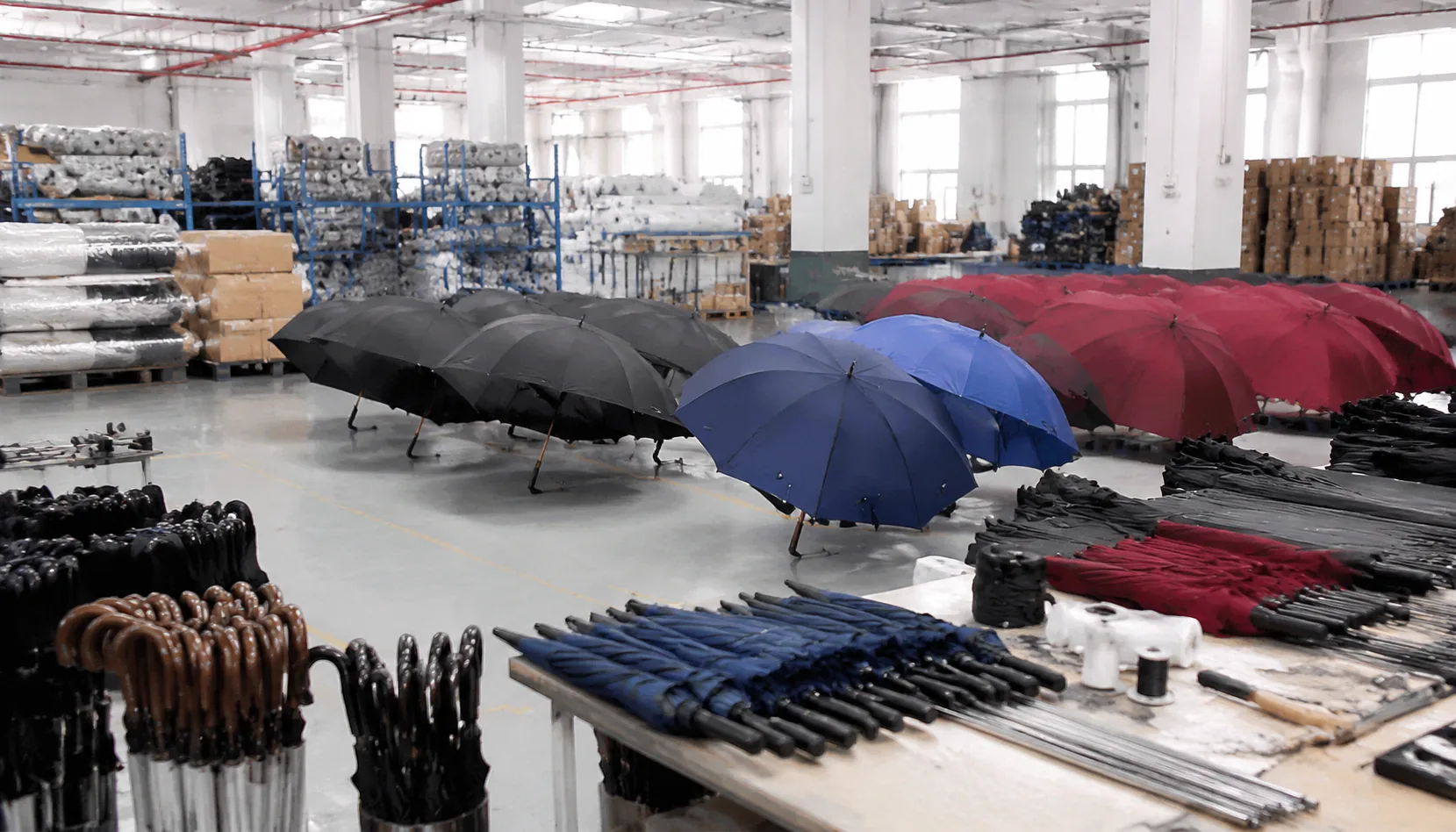
In logistics yards and warehouses, an umbrella program fails when the canopy flips in crosswinds, colors miss safety requirements, or cartons arrive after the rainy season has already started. On our Songxia factory floor, we treat warehouse staff umbrellas as work gear: reinforced ribs, high-visibility fabric, grip-friendly handles, and QC checks that match dock-team use, not just showroom samples. The right sourcing plan ties those specs to sampling, packing, and delivery windows before production starts.
Operational Use Cases in Logistics Facilities
Visitor escort programs need a different specification because the umbrella is part safety tool and part site-control marker. Custom worksite umbrellas printed with “Visitor,” “Escort,” or a zone color help security identify who belongs near dock doors, fuel islands, maintenance shops, or bonded warehouse areas. I recommend POE or PVC clear-panel umbrellas only when visibility is more important than branding, such as pedestrian crossings near blind corners; otherwise, 190T pongee with UPF 50+ coating gives better hand feel and longer service life. Heat-transfer logos look clean for small batches, while screen printing is more economical once quantities pass a few hundred units. For warehouse staff umbrellas ordered alongside seasonal PPE, typical production is 20–35 days after artwork approval, with FOB Ningbo or Shanghai as the cleanest export route and DDP available when distributors need delivered-cost pricing. The program works best when umbrellas are treated like shared tools: numbered, assigned to stations, inspected monthly, and replaced before broken ribs create a new hazard.
Specs for Yard Durability and Visibility
For logistics yards, the sweet spot is usually a 23–27 inch stick umbrella, not a compact folding model. A 23 inch canopy is easier for drivers moving between dock doors, guard booths, and trailer lanes, while 27 inch gives better shoulder coverage for forklift spotters and supervisors carrying radios or scanners. I would specify fiberglass ribs over painted steel ribs for most logistics yard umbrellas because fiberglass flexes under gusts instead of taking a permanent bend. For normal yards, an 8K frame is enough if the shaft is steel or reinforced fiberglass and the runner locks cleanly. For open container yards, cross-dock sites, or coastal warehouses where wind funnels between buildings, step up to a 16K frame with double-rib reinforcement and reinforced tips stitched into the canopy seam, not just glued caps.
Visibility matters as much as rain protection because most umbrella failures in warehouses are not fabric failures; they are safety failures. Use high-visibility yellow, orange, or lime panels on at least two canopy segments, then add reflective piping around the lower edge so pedestrians show up in headlights and CCTV at 5 a.m. or during storm loading. Bright brand colors can work, but avoid dark navy or black as the dominant color unless reflective tape is wide enough to compensate. For warehouse staff umbrellas, I prefer 190T or 210T pongee with a water-repellent coating rather than cheap polyester that wets out after a few shifts. If the site has outdoor staging under sun exposure, add UV coating rated UPF 50+, but do not let that replace reflective detailing for night yard work.
For employee rain gear sourcing, keep the construction simple and repair-resistant: straight stick shaft, J-handle or EVA straight handle, manual-open or auto-open mechanism, and a vented double canopy only where wind exposure justifies the extra cost. Auto-open is useful when staff step out of vans or security kiosks with one hand occupied, but auto-open-close compact umbrellas are the wrong choice for most yards because the smaller ribs and telescopic shafts loosen faster. Branded safety umbrellas should use screen printing on solid panels for logos and heat transfer only when artwork has gradients or small text. Our standard practice at ZheBrella is to check frame opening force, rib symmetry, tip pull strength, and canopy stitching under AQL 2.5 before packing, because custom worksite umbrellas get abused harder than retail umbrellas.
Mechanisms and Materials for Daily Handling
For daily gatehouse and warehouse circulation, I usually separate umbrellas by job role before talking about logo size. Manual-open frames are still the more durable choice for guards, loaders, and anyone who throws an umbrella into a forklift cab or hooks it on a pallet rack. The mechanism is simple: fewer springs, fewer release buttons, less chance of jamming after grit, rainwater, and glove handling. A 23" or 27" manual stick umbrella with 8K fiberglass ribs and a steel shaft will take rougher use than a cheap auto-open unit with thin iron ribs. Auto-open makes sense for supervisors, dispatchers, and security leads who step in and out of vehicles while carrying radios, tablets, or paperwork. For warehouse staff umbrellas, I would not specify auto-open unless the runner, button, and spring are tested through repeated cycling, because convenience is only useful if the frame still locks cleanly after 500 to 1,000 openings.
Fabric choice should match replacement expectations. 190T pongee is the practical standard for staff issue because it dries faster than polyester taffeta, accepts screen printing or heat-transfer logos cleanly, and keeps FOB cost controlled when the MOQ is 500 to 1,000 pieces per color. For higher-wear logistics yard umbrellas, 210T pongee gives a tighter hand feel and better tear resistance around the rib tips, especially on 27" and 30" umbrellas used by dock marshals or inventory teams. I would avoid very thin promotional-grade fabric for employee rain gear sourcing, because the canopy often fails before the frame does. If the umbrella is used near truck bays, reflective piping, a safety-color panel, or branded safety umbrellas with high-contrast print can matter more than a large decorative logo. Our standard practice at ZheBrella is to check fabric tension after sewing, because loose canopy panels flap early and make even good ribs look weak.
Open dock areas need windproof construction, not just heavier parts. A double-canopy vented design lets gusts escape between the upper and lower canopy, which reduces inversion when wind comes across loading bays or container lanes. For custom worksite umbrellas, I prefer fiberglass ribs and stretchers over all-steel frames in these zones because fiberglass flexes back after a gust instead of taking a permanent bend. A good 8K or 10K vented umbrella can be built to survive 50+ mph wind-tunnel testing, but only if the rib length, runner travel, and canopy vent overlap are engineered together. Oversizing is another mistake: a 30" umbrella gives better coverage for a guard at a fixed post, while a 23" or 27" size is easier for walking between warehouse doors and yard offices. Before shipment, specify AQL 2.5 inspection for opening force, lock engagement, rib-tip stitching, print adhesion, and water repellency, because these failures show up fast in daily handling.
Branding, Allocation, and Loss Control
Put the logo where it survives handling, not where it only looks good in a mockup. For logistics yard umbrellas, I prefer a 180–220 mm one-color logo on one or two canopy panels, positioned opposite the seam that gets folded inward first; that keeps the print visible when staff walk between dock doors and trailers. On 23" and 27" straight umbrellas, screen printing on 190T or 210T pongee is the most stable choice, while heat transfer works better for small multi-color safety marks. Handles can take a small molded or pad-printed logo, but I would not rely on handle branding alone because mud, gloves, and shared use wear it down fast. For warehouse staff umbrellas, the best practical spec is usually auto-open, fiberglass ribs, 8K or 10K frame, reflective edge tape if the yard has night dispatch, and one bold logo panel rather than full-canopy decoration.
Numbered sleeves are the cheapest loss-control tool I have seen work consistently. Print or sew a 25–40 mm number patch on the sleeve, match it to a rack slot, and list it by department: inbound, outbound, maintenance, security, QC, and visitor control. Department color coding can be done with canopy color, sleeve binding, or handle labels; canopy color is easiest to see, but binding color is cheaper when the buyer wants one common black or navy umbrella body. For branded safety umbrellas, orange or lime panels with reflective piping help drivers identify pedestrians in rain, but I would still keep the main logo print simple to avoid long replenishment cycles. If a site needs 300 pieces now and 80 pieces every quarter, one-color printing lets the factory hold blank canopies or semi-finished stock and turn reorders in 7–12 days after artwork confirmation.
Storage matters as much as the umbrella spec because wet umbrellas dumped in a carton fail early. Put powder-coated steel racks at employee entrances, dispatch offices, guard booths, and shuttle pick-up points, with drip trays and open spacing so POE, PVC, EVA, or pongee canopies dry before the next shift. For custom worksite umbrellas, I suggest assigning rack capacity at 120–140% of normal rainy-shift headcount; if 50 people cross the yard, install 60–70 slots so broken, missing, or visitor units do not create a shortage. Employee rain gear sourcing should also include a replenishment rule: inspect monthly, replace bent steel ribs immediately, and quarantine umbrellas with cracked tips or loose runners. Simple specifications—fiberglass ribs, standard 23" or 27" size, one-color logo, numbered sleeve—keep MOQ lower, AQL 2.5 inspection cleaner, and FOB or DDP replenishment easier to control.
Sourcing Controls for Multi-Site Rollouts
Multi-site rollouts fail when buyers treat every warehouse as the same consumption point. I prefer to build the MOQ plan from headcount, gate count, and outdoor exposure: a 40-person cross-dock with four yard doors may burn through more units than a 120-person facility where most staff stay indoors. For warehouse staff umbrellas, the usual starting point is one issued unit per outdoor employee, 8% to 12% spare stock per site, and another 3% to 5% held centrally for late hires, visitor use, and loss replacement. If the program includes logistics yard umbrellas for drivers or security contractors, keep that stock separate from employee allocation so the site manager does not drain one pool to solve another problem.
Carton control matters more than most procurement teams expect. For custom worksite umbrellas, we label master cartons by site code, PO number, SKU, color, rib spec, canopy material, and quantity, then add a packing list both inside and outside the carton. A typical carton might hold 24 pieces for 23 inch auto-open umbrellas or 12 pieces for 27 inch golf umbrellas, depending on handle and frame bulk. Branded safety umbrellas with reflective tape, high-visibility panels, or printed department names should be cartonized by location, not mixed randomly, because warehouse receiving teams do not have time to sort promotional-style inventory during rain season. Staggered shipments also help: launch inventory can ship first, while replenishment stock follows 20 to 30 days later after the first sites report actual usage.
Pre-shipment inspection should be mandatory, not optional, when employee rain gear sourcing covers several warehouses. Our standard practice at ZheBrella is AQL 2.5 for major defects, checking open-close function, rib alignment, seam strength, print registration, carton marks, and random water-spray performance before goods leave the factory. FOB is usually cheaper on paper and works for buyers with strong forwarders, but DDP is often better when warehouse managers need predictable landed cost and delivery dates without chasing customs, duties, or last-mile trucking. For warehouse staff umbrellas going to multiple U.S. or EU distribution centers, I normally compare FOB Ningbo/Shanghai against DDP-by-site pricing, including duty, inland freight, and delivery appointment fees. The lowest unit price is not always the lowest program cost if late cartons miss the rainy-season handout date.
Frequently Asked Questions
Are auto-open umbrellas suitable for warehouse and yard staff?
Auto-open umbrellas are convenient for supervisors and security teams who carry radios or paperwork. For heavy daily shared use, manual-open stick umbrellas can be more durable and easier to maintain.
What safety features should logistics umbrellas include?
Use bright panels, reflective piping, and a windproof fiberglass frame for outdoor yards. A 23–27 inch canopy balances coverage with maneuverability around docks, trucks, and pedestrian lanes.
What umbrella specs matter most for logistics yards and warehouse crews?
Buyers usually prioritize wind resistance, fiberglass or reinforced ribs, and larger canopy coverage for moving between docks, trailers, and storage areas. For outdoor yard use, a 23- to 30-inch canopy and a vented or double-canopy design can help reduce inversion in gusty conditions.
What MOQ is typical for a custom umbrella program for worksite teams?
For OEM/ODM programs, MOQs often start around 300 to 1,000 pieces per color or design, depending on print method, canopy material, and handle customization. Multi-site buyers sometimes consolidate orders to hit a factory MOQ while still splitting delivery by warehouse location.
How should delivery planning work for a warehouse umbrella rollout?
Plan production around peak rainy season, with typical lead times of about 30 to 45 days after artwork approval for standard builds. If you need phased distribution to multiple yards or DCs, ask for carton labeling, palletization, and staggered shipment dates at the quoting stage.
Looking to Launch Your Custom Umbrella Line?
ZheBrella is a Zhejiang-based OEM/ODM umbrella manufacturer with 17 years of export experience. Free design, low MOQ from 100 pieces, windproof construction, full-color print.
Get Free Quote Now »People Also Search For
Related Articles
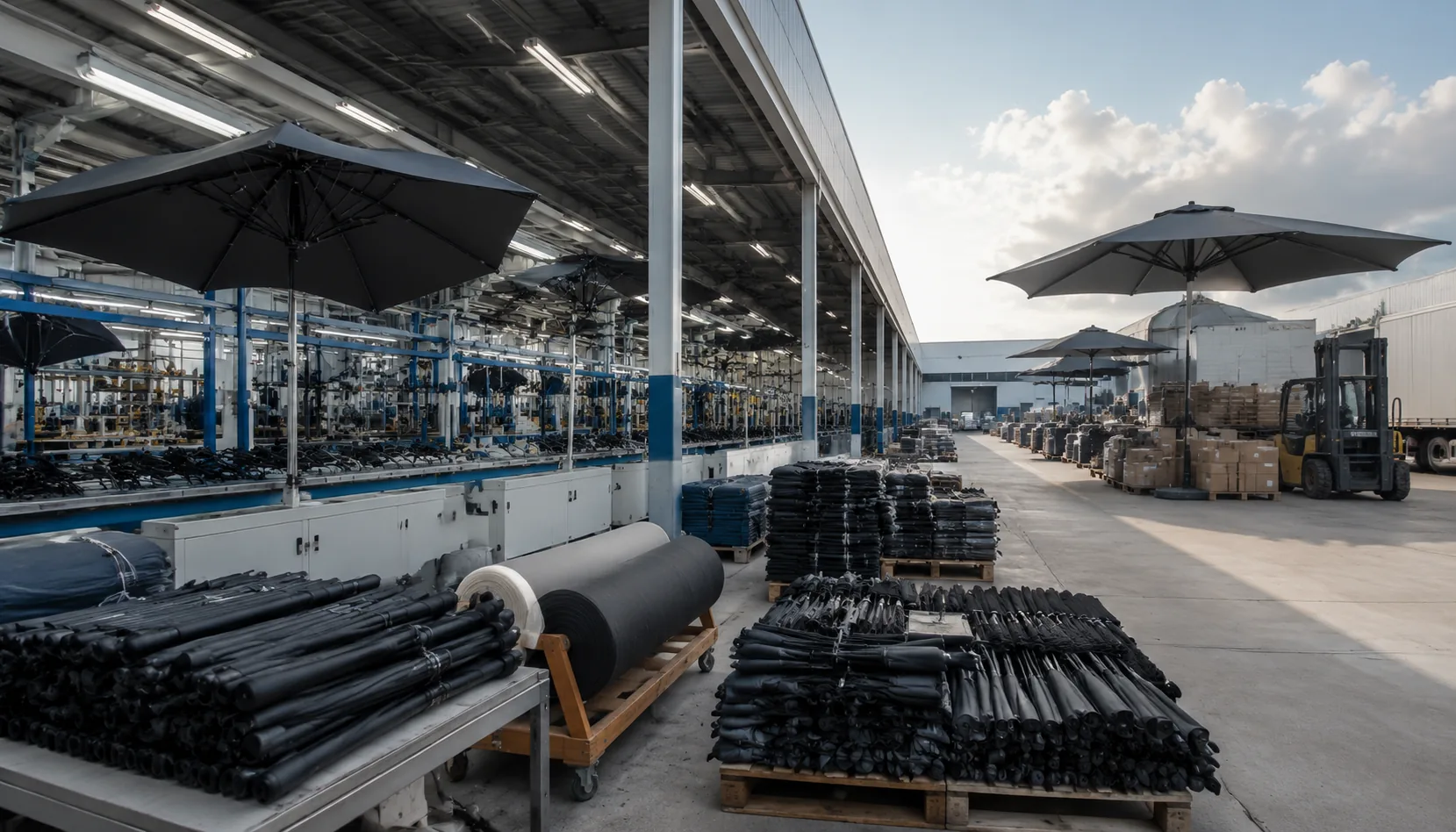
Branded Umbrellas for Logistics Yards and Warehouse Teams
Source durable branded umbrellas for yard marshals, dock teams, and warehouse staff with fiberglass ribs, safety colors,...
Read More »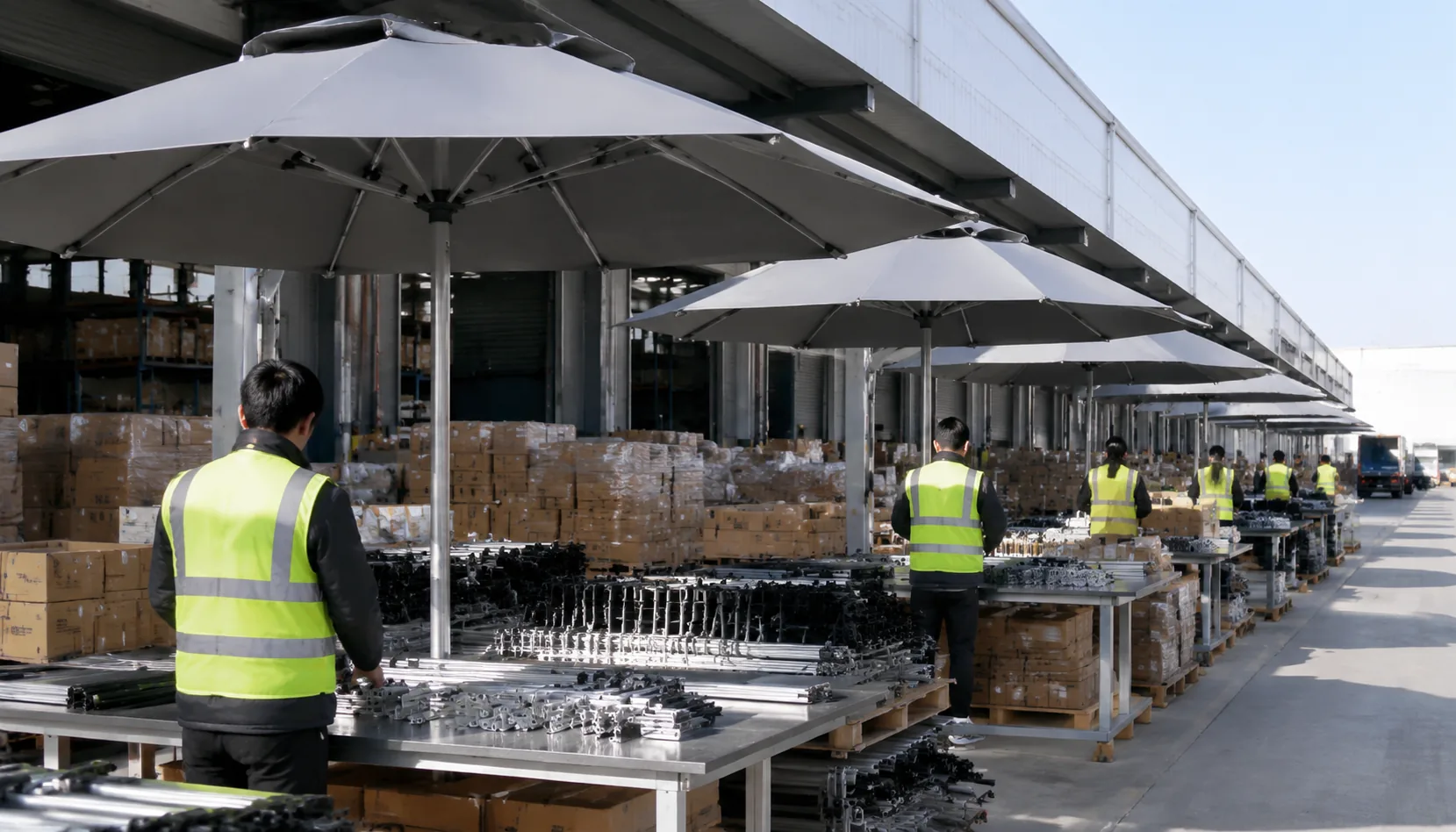
Umbrellas for Logistics Yards and Warehouse Operations
Build practical umbrella programs for logistics yards with rugged ribs, high-visibility panels, MOQ planning, FOB/DDP de...
Read More »
Branded Umbrellas for Telecom Retail and Field Sales
Build telecom umbrella programs for retail stores, street sales, and installer handoffs with durable specs, packaging, a...
Read More »