Umbrellas for Logistics Yards and Warehouse Operations
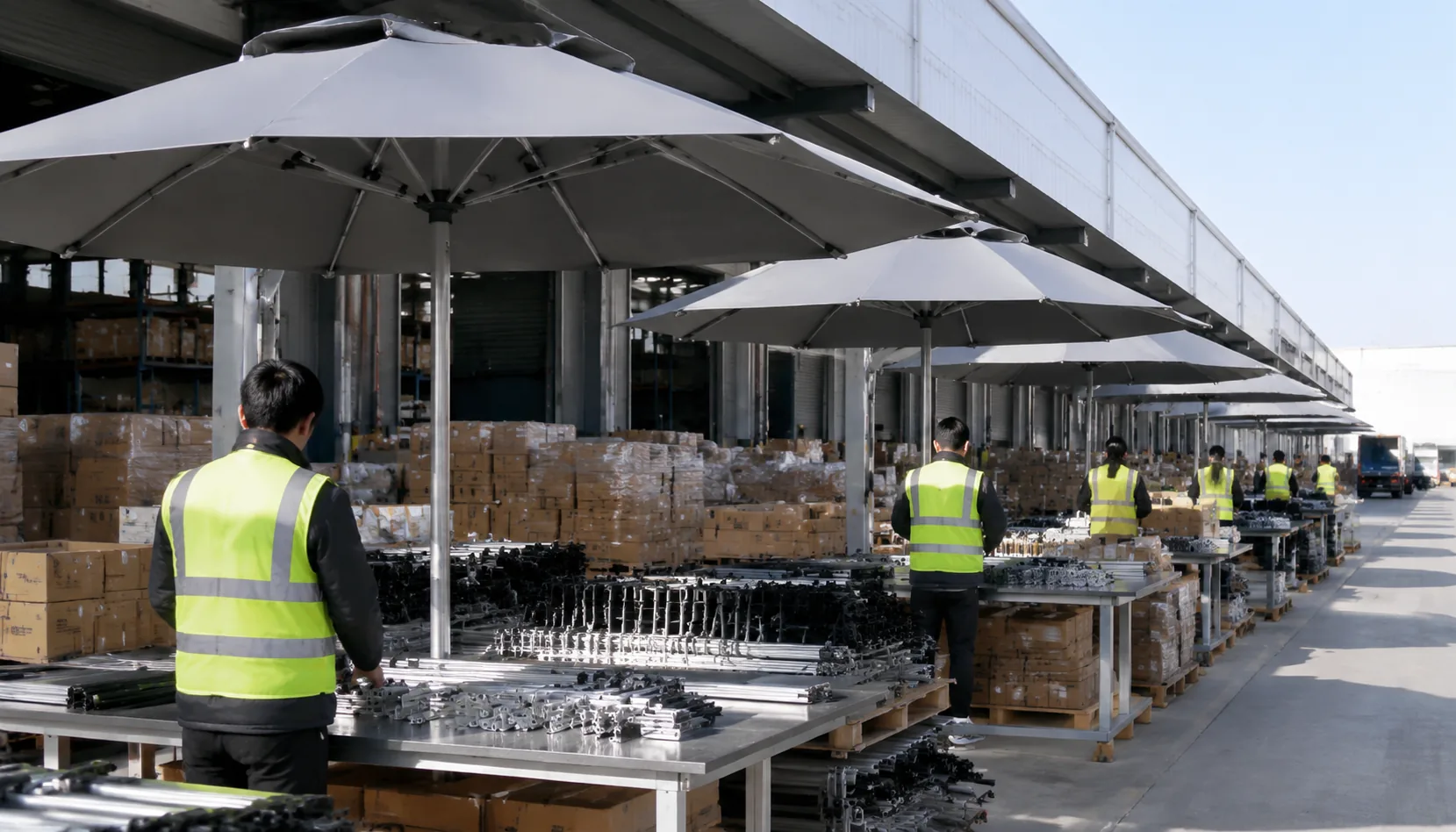
In a busy yard, umbrellas are not giveaways; they are safety gear that gets dragged through rain, wind, forklifts, dock doors, and shift changes. When buyers specify logistics yard umbrellas, the real risk is underbuilding the frame, choosing panels that disappear in low light, or missing carton and delivery details that disrupt rollout. On our Songxia production floor, we control rib strength, reflective or high-visibility fabric, MOQ planning, FOB/DDP packing, and final inspection before a program leaves the line.
Where Umbrellas Fit in Logistics Operations
The most useful logistics yard umbrellas are not the cheap collapsible pieces people keep in a car door; they are tools for keeping gate flow, yard checks, and driver handoff moving when rain hits at 6:30 a.m. A guard post needs 27" or 30" umbrellas with 8K or 10K fiberglass ribs, not thin steel ribs that bend after one gust between trailers. Gate inspectors use them while checking seals, license plates, container numbers, and inbound paperwork. Yard jockeys and supervisors need coverage for walking between dispatch, fuel islands, and parked trailers without carrying a rain jacket all shift. At dock doors, umbrellas help during short dock-to-office movement where full rain suits are too slow to put on. For outdoor security booths, I prefer straight-handle manual-open models because they tolerate dirt, gloves, and repeated open-close cycles better than delicate auto-open-close mechanisms.
Visitor escorts are a separate use case and should be treated differently from employee issue. For customer audits, carrier meetings, and executive visits, shared station umbrellas at reception, guard houses, and shipping offices prevent delays and make the site look controlled. These distribution center umbrellas usually need a clean black, navy, or safety-yellow 190T or 210T pongee canopy with a simple logo, reflective trim if night movement is common, and a vented double-canopy if the route crosses open trailer lanes. Warehouse rain gear umbrellas used by operations staff can be more utilitarian: stronger shaft, rubberized grip, serialized label, and a storage sleeve that does not disappear after the first week. If a site has long shuttle walks from employee parking to the time clock, 23" personal-issue umbrellas make sense, but they should not replace larger shared umbrellas staged at choke points.
Personal-issue and shared station programs fail for different reasons. Personal umbrellas get lost, taken home, or crushed in lockers, so procurement should order enough units for headcount plus 10-15% replenishment and specify employee ID marking if accountability matters. Shared station umbrellas get abused harder: they are leaned against dock bumpers, dropped on wet concrete, and opened in crosswinds near 53-foot trailers. For those, windproof work umbrellas with fiberglass ribs, a steel or fiberglass shaft, and a vented canopy rated around 50+ mph in controlled wind-tunnel testing are worth the extra cost. As a bulk umbrella supplier, ZheBrella normally recommends separating SKUs: compact 21" or 23" auto-open units for individual issue, and 27" or 30" manual-open station umbrellas for gates, dispatch, and escort points, inspected under AQL 2.5 before FOB or DDP shipment.
Frame and Fabric Choices for Heavy Daily Use
For umbrellas that live in a logistics yard, I would choose fiberglass ribs before steel unless the only target is lowest first cost. Steel ribs are stiff and cheap, but they take a set after repeated gusts, and once the paint is scratched by pallet corners, dock plates, or cart frames, rust starts quickly. Fiberglass ribs flex and recover, which matters when a gate checker or forklift spotter opens the umbrella beside trailers where wind funnels between containers. For normal warehouse rain gear umbrellas used between doors, parking areas, and guard booths, an 8K fiberglass frame is usually enough. For exposed yards, truck staging lanes, and cross-dock sites with frequent side gusts, a 16K frame spreads the load better and reduces canopy flutter. I would also specify a stronger center shaft and reinforced tips, because rib count alone does not make a windproof work umbrella.
Canopy fabric should match how the umbrella is issued and abused. For standard distribution center umbrellas, 190T pongee is the practical baseline: it prints cleanly, dries faster than cheaper polyester, folds without feeling crunchy, and keeps unit cost controlled for bulk programs. If the umbrella will be handed to supervisors, visiting auditors, retail partners, or drivers as branded gear, 210T pongee gives a noticeably heavier hand feel and better drape. The difference is not magic waterproofing; both fabrics still need proper water-repellent treatment, tight stitching, and clean seam tension. In production, I watch the sewing line for puckering around the panel joints because poor tension creates weak points even when the fabric spec looks good on paper. A Teflon coating can improve water shedding, while UV treatment up to UPF 50+ is useful for yards where staff also need sun protection during loading peaks.
Frame layout should be tied to wind exposure, not copied from a retail umbrella catalog. A 23 inch auto-open 8K model works for security posts, receiving doors, and short walks across a covered dock apron. A 27 inch or 30 inch model gives better coverage for clipboards, scanners, and handheld terminals, but the larger canopy catches more wind, so I prefer fiberglass 16K ribs and a vented double-canopy design for open trailer yards. Our standard practice at ZheBrella is to test heavy-use samples with repeated open-close cycles, rib flex checks, and AQL 2.5 inspection before packing, because a logistics yard umbrella that fails after two storms creates more complaints than a slightly higher unit price. If you are buying through a bulk umbrella supplier, ask for the frame material, rib count, shaft diameter, fabric denier, coating, and wind-test target in writing before approving the pre-production sample.
Visibility, Safety, and Branding Requirements
Visibility is not decoration in a logistics yard; it is part of the safety system. For logistics yard umbrellas, I normally specify high-visibility yellow or orange panels on at least two opposing canopy sections, with reflective piping around the outer edge so forklift drivers and spotters catch the silhouette under headlights or dock lamps. Full neon canopies look good on paper, but they show grease, diesel mist, and tire dust quickly, so a better factory-floor compromise is alternating hi-vis panels with navy, charcoal, or black 190T/210T pongee sections that hide stains. If the umbrella is used near trailers and pallet staging, I prefer 27" or 30" straight umbrellas over compact folding models because the larger canopy keeps paperwork, scanners, and high-vis vests drier without forcing workers to hunch.
Logo placement needs discipline because a big dark print across a fluorescent panel can defeat the purpose of warehouse rain gear umbrellas. Keep logos on dark panels, or use small one-color marks on hi-vis sections with enough open yellow or orange area left around them. For distribution center umbrellas, our standard practice at ZheBrella is to reserve two clean branding zones, usually 180 degrees apart, and keep reflective trim continuous so safety visibility is not broken by artwork. Screen printing works for simple depot logos, while heat transfer is better for multi-color corporate marks; either way, artwork should be tested after wet rubbing because umbrellas handled with oily gloves can expose weak ink adhesion faster than retail use.
Handle and tip details matter more than buyers expect. Straight handles are easier to hook over a cart rail, staging rack, or guard booth bracket, while EVA grips give better control than smooth plastic when workers wear nitrile-dipped or leather gloves. For windproof work umbrellas, I would pair fiberglass ribs with a reinforced steel shaft, 8K or 10K frame construction, and a rounded safety tip rather than a sharp metal point, especially where people move between dock doors in tight lanes. The ferrule should be large enough to find by touch but not so aggressive that it scratches truck paint or warehouse doors. If ordering from a bulk umbrella supplier, ask for a glove-use sample test: open, close, carry, hang, and recover the umbrella with cold or wet gloves before approving MOQ production.
Procurement Model for Multi-Site Networks
Set MOQ from the network map, not from a catalog number. For logistics yard umbrellas, I usually start with the site count, then separate fixed guard-post demand from mobile supervisor demand. A 12-site network with 2 gates, 1 trailer check lane, and 3 yard marshals per site needs a different buy plan than a 40-site parcel network using umbrellas only for peak-season dispatch. For most industrial orders, a practical MOQ is 300-500 pieces per color/spec for 23" or 27" auto-open models, and 800-1,200 pieces when custom-molded handles, reflective tape, or POE/PVC clear panels are involved. If the buyer wants 30" golf-style windproof work umbrellas with fiberglass ribs and double-canopy vents, I prefer grouping sites into regional release batches of 500-1,000 units so frame procurement, canopy cutting, printing, and AQL 2.5 inspection stay stable.
Keep one shared specification across regions unless there is a real climate or safety reason to split it. Mixed specs are where procurement loses control: one facility orders 190T pongee with steel ribs, another orders 210T pongee with fiberglass ribs, and replacement stock no longer matches the SOP photos or brand guide. For warehouse rain gear umbrellas, a common spec might be 27" arc, 8K fiberglass ribs, black 190T or 210T pongee, Teflon water-repellent coating, reflective binding, EVA straight handle, and manual-open or auto-open mechanism depending on glove use. Distribution center umbrellas used at dock doors can go smaller, often 21" or 23", but yard use should not be underbuilt; if wind regularly reaches 35-45 mph across open trailer lots, a vented double canopy tested to 50+ mph is worth the extra cost.
Lead times should be booked backward from rainy seasons, not from the day the first site runs out. Normal production is 35-50 days after artwork approval and deposit, with another 20-35 days for ocean freight to North America or Europe depending on port congestion. Centralized importers usually choose FOB Ningbo or Shanghai because they can consolidate logistics yard umbrellas with rainwear, cones, and safety supplies, then allocate inventory through their own DCs. DDP works better for facility-level replenishment when sites lack import capability or need cartons delivered directly to warehouses, but the unit cost is higher because duties, last-mile delivery, and split shipments are built in. A bulk umbrella supplier should also reserve 2-3% spare cartons for damage claims and emergency transfers during storm months.
Inspection Checklist Before Site Deployment
A site deployment inspection has to start with the frame, because a pretty canopy is useless if the umbrella folds beside a loading dock. For logistics yard umbrellas, we normally use AQL 2.5 for major defects and pull samples from finished cartons, not from the sewing line. Check rib strength by opening the umbrella fully, pressing the tip against a rubber mat, and loading the ribs until the frame flexes without permanent bend; fiberglass ribs should recover cleanly, while steel ribs must not kink at the joint. Inspect 8K, 10K, or 16K assemblies for loose rivets, uneven stretchers, cracked plastic tips, and runner wobble. The runner lock should click positively with no half-lock position, especially on 23", 27", and 30" work umbrellas used by gate staff and forklift spotters. Manual, auto-open, and auto-open-close models should be cycled at least 20 times per sampled unit, with no spring drag, delayed release, or handle separation.
Canopy checks need water and abrasion, not just visual approval under bright lamps. On warehouse rain gear umbrellas and distribution center umbrellas, fabric tension should be even across every panel; loose 190T or 210T pongee will flap hard in crosswind and tear around the rib tip pockets. For seam leakage, spray the crown, panel joins, and binding tape for three minutes, then inspect the inside for bead-through, not only dripping. Windproof work umbrellas with double-canopy vents must have balanced vent overlap, because one tight side and one loose side will twist the shaft in 40–50 mph gusts. Printed logos need a dry-rub and wet-rub test, plus tape lift on screen print, heat-transfer, or sublimation areas. If the buyer specifies UV coating, confirm UPF 50+ labeling and make sure the coating does not leave tacky marks after carton compression.
Carton testing matters because many failures happen before the first rainy shift. A master carton for logistics yard umbrellas should survive edge, corner, and flat drops from 60–80 cm depending on gross weight, with no bent shafts, cracked handles, or crushed ferrules after unpacking. Use five-ply export cartons for 27" and 30" golf-style units, and avoid over-tight banding that deforms canopies. Receiving teams at a distribution center need clean master-carton labeling: PO number, SKU, color, size, rib count, mechanism type, quantity, gross/net weight, carton dimensions, country of origin, and scannable bar code on two adjacent sides. If you are buying from a bulk umbrella supplier, require the carton mark file before production packing starts, not after goods are sealed. Our standard practice at ZheBrella is to photograph open-carton layouts and final labels during pre-shipment inspection so warehouse receiving can match cartons against the packing list without opening every box.
Frequently Asked Questions
Are 16K umbrellas necessary for warehouse yards?
Use 16K ribs for exposed yards, coastal sites, or locations with frequent gusts. For short walks between docks and offices, an 8K fiberglass frame can be more cost-effective.
Should logistics umbrellas use automatic open mechanisms?
Auto-open is useful for gate guards and drivers who need one-handed deployment. For shared station umbrellas, manual open can reduce mechanism wear and lower replacement cost.
What specifications work best for umbrellas used in logistics yards?
For yard teams, buyers typically choose 23–27 inch canopies, fiberglass ribs, steel or fiberglass shafts, and pongee or polyester fabric with a water-repellent coating. High-visibility yellow or orange panels and reflective piping can improve visibility around trucks and loading bays.
What MOQ should a distribution center plan for custom work umbrellas?
A practical MOQ is usually 500–1,000 pieces per design, depending on canopy size, fabric color, logo method, and packaging. If multiple sites need the same umbrella with different printed logos, confirm whether the supplier can split cartons by location.
How should importers inspect bulk umbrellas for warehouse operations?
Inspection should include open-close cycling, rib alignment, canopy tension, seam leakage checks, logo placement, carton labeling, and random wind-resistance sampling. Many buyers use AQL 2.5 for major defects and AQL 4.0 for minor defects before FOB or DDP shipment.
Looking to Launch Your Custom Umbrella Line?
ZheBrella is a Zhejiang-based OEM/ODM umbrella manufacturer with 17 years of export experience. Free design, low MOQ from 100 pieces, windproof construction, full-color print.
Get Free Quote Now »People Also Search For
Related Articles
Branded Umbrellas for Logistics Yards and Warehouse Teams
Source durable branded umbrellas for yard marshals, dock teams, and warehouse staff with fiberglass ribs, safety colors,...
Read More »
Umbrella Programs for Logistics Yards and Warehouses
Source umbrella programs for logistics yards, warehouses, and dock teams with windproof specs, safety colors, QA checks,...
Read More »
Branded Umbrellas for Insurance Claims and Roadside Teams
Plan umbrellas for insurance adjusters and roadside crews with windproof frames, fast reorders, compliant logos, and rea...
Read More »