Private Label vs White Label Umbrellas: What's the Difference?
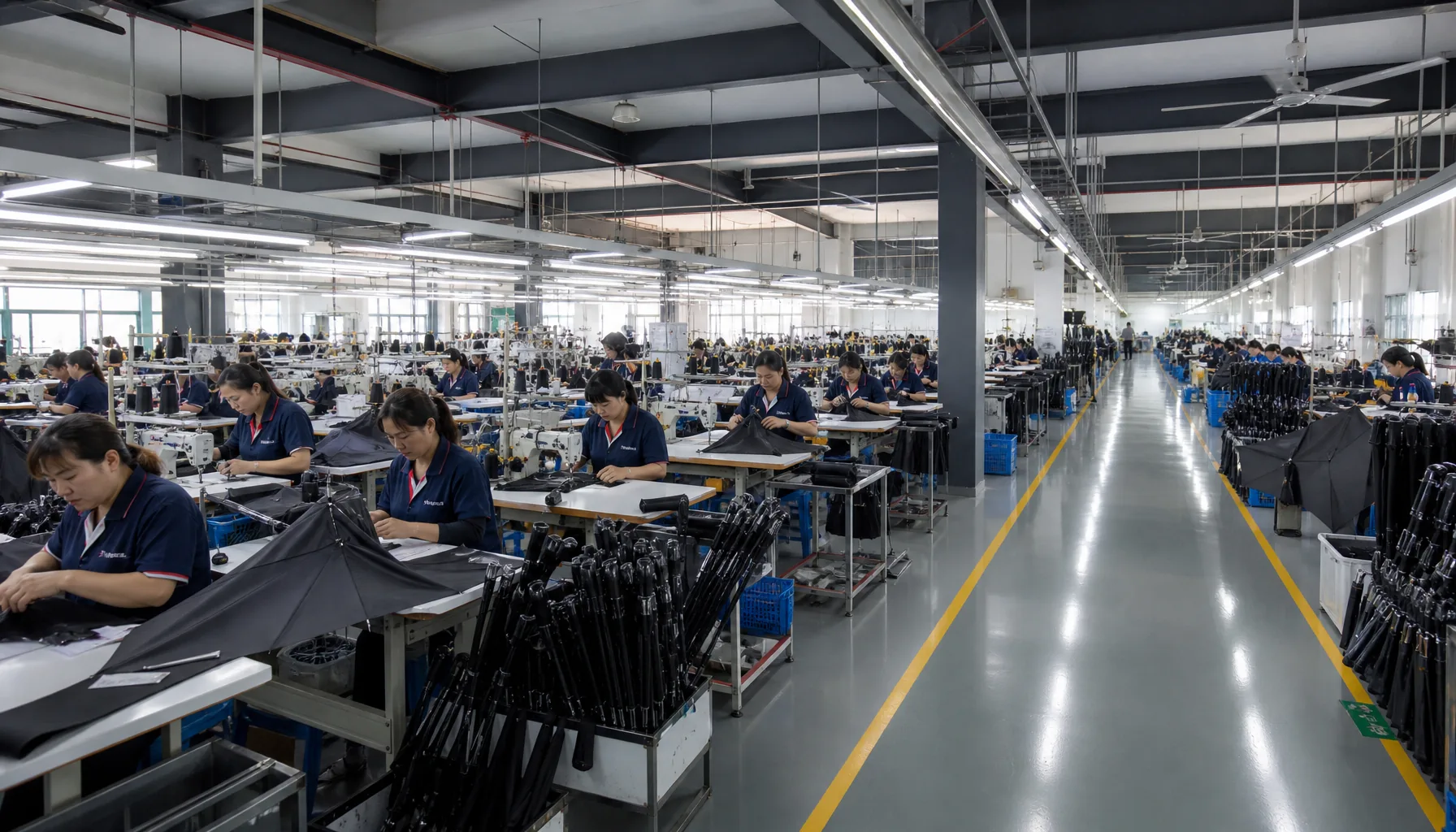
Choosing between private label and white label is not just a branding decision; it changes your margins, lead times, minimum order quantities, and how much control you have over materials, canopy construction, and packaging. In umbrella sourcing, those tradeoffs become real on the factory floor, where frame specs, printing limits, and component availability can quickly shape the final product. If you are evaluating a private label umbrella for your brand, the right model depends on how much customization you need now and how much risk you can carry.
Defining private label and white label
In umbrella sourcing, a white label umbrella is a finished or near-finished product built to a supplier’s standard spec, then sold with your logo or packaging. The frame, canopy fabric, handle, and opening mechanism are usually fixed or chosen from a short menu of options, so you are buying speed and lower complexity, not deep product control. A private label umbrella goes further: the buyer defines more of the product identity, such as canopy material, panel count, rib construction, handle shape, printing method, and sometimes even packaging inserts and hangtags. The difference is not just branding; it is how much of the product spec you own before production starts.
From a factory floor perspective, white label is closer to re-labeling an existing umbrella program, while private label umbrella work usually sits under OEM umbrella branding. With white label, a supplier might offer a 23-inch auto-open model in 190T pongee with a standard steel frame and print your logo on one panel. With private label, you might specify fiberglass ribs for wind resistance, a double-canopy vent, 210T pongee, UV coating, a molded EVA handle, and a custom colorway matched to a Pantone reference. Our standard practice at ZheBrella is to separate these two paths early because they affect tooling, sampling, MOQ, and lead time in very different ways.
The sourcing risk is different too. A white label umbrella is usually faster to launch, cheaper to test, and easier to reorder because the factory already has the component stack and assembly process dialed in. A custom brand umbrella gives you more differentiation, but it also means more decisions: decoration method, carton marks, barcode format, manual or auto-open-close mechanism, and whether the target is a retail shelf, promotional campaign, or corporate gift program. If your goal is a quick market test, white label is usually the practical starting point. If you need a product that looks and feels like your own line, private label is the more accurate model, even if it requires more sampling and tighter QC such as AQL 2.5 before shipment.
Design control and exclusivity
A private label umbrella gives you real control over the parts buyers notice first: canopy color, panel layout, handle shape, shaft finish, strap, sleeve, and packaging. If you want a specific PMS match, a matte black frame, or a two-tone canopy with a custom print placement, that is normal work in private label production. On the factory floor, the difference is simple: a private label umbrella is built to carry your brand identity from the first sample, while a white label umbrella usually starts as a finished stock model with only limited decoration added later. The more you change the structure, the more the tooling, materials, and testing change too, especially if you move from a standard 21-inch manual frame to a 23-inch auto-open model or a vented double-canopy windproof build. The tradeoff is cost and lead time, but the benefit is that the product looks like yours instead of a generic item with a logo on it.
Exclusivity is where OEM umbrella branding matters most. With a private label umbrella, you can usually lock in a design that is not shared with every other buyer, which matters if you sell through retail, events, or promotions and do not want the same umbrella turning up under different names. A white label umbrella can be faster and cheaper because the base design already exists, but you are buying into a shared platform, not ownership of the silhouette or construction details. If you need a custom brand umbrella for a campaign, you can still use standard components like 190T pongee, fiberglass ribs, or an EVA handle, but the final combination should be tied to your spec sheet and not offered as a generic catalog item. In practice, exclusivity is strongest when the frame, canopy, print layout, and packaging all follow your approved spec, not just the logo on the sleeve.
The real dividing line is how far you want to go beyond decoration. A white label umbrella is usually a stock umbrella with logo print or a simple hangtag, which is fine for short-run giveaways or fast-turn orders. A private label umbrella lets you define the product architecture: 8K, 10K, or 16K rib count, fiberglass versus steel ribs, 190T or 210T pongee, UV coating, Teflon finish, and even the opening mechanism. That level of control changes how the umbrella performs in wind, how it feels in the hand, and how it sits against competing products on a retail shelf. ZheBrella’s standard practice is to treat those choices as part of branding, not just engineering. If your buyer cares about margin, consistency, and repeat ordering, the best approach is usually to separate basic white label runs from a true custom brand umbrella program so you do not pay for exclusivity where you do not need it.
MOQ and cost differences
MOQ is the first hard split between a white label umbrella and a private label umbrella. A white label program usually means you are buying a ready-made 23" or 27" frame and canopy spec that is already in production, so MOQ can stay low, often 200 to 500 pieces per color if the factory has stock components. Once you move into oem umbrella branding, the order has to cover custom canopy printing, woven labels, sleeve printing, and sometimes handle engraving or pantone-matched trim, which pushes the run higher, commonly 500 to 1,000 pieces per design. For a true custom brand umbrella with a unique handle, rib color, or vented double-canopy structure, the factory has to lock tooling and material allocations before cutting fabric, so small trials get expensive fast. At the factory floor level, the MOQ is not arbitrary; it is tied to how many rolls of 190T or 210T pongee, how many cartons of frames, and how much line changeover time the order consumes.
Price follows the same logic. A white label umbrella is cheaper because the supplier is spreading cutting, sewing, and assembly over an existing spec, so the only real variable is the logo application. Screen print on a stock panel might add only a small increment per piece, while a full-panel sublimation or heat-transfer run adds more because of setup and color management. A private label umbrella usually costs more per unit because you are paying for dedicated printing films, extra QC checks, and slower line speed during changeovers. On a 1,000-piece order, the gap can be several tenths of a dollar to multiple dollars per unit depending on whether you choose manual, auto-open, or auto-open-close mechanisms, fiberglass versus steel ribs, and whether the canopy needs UV coating or Teflon treatment. ZheBrella typically sees the best cost efficiency when the client accepts a standard frame and puts the budget into branding instead of fully custom hardware.
The practical rule is simple: white label works when you want to test demand with the lowest upfront cash, while private label umbrella orders make sense when the brand needs control over appearance and retail margin. If you only need a logo on a stock product, you can keep both MOQ and tooling cost down and move faster on lead times, often around 15 to 25 days after artwork approval. If you want a differentiated SKU for a retail program, the factory will price in die-cut canopy panels, custom hangtags, and more detailed AQL 2.5 inspection, and the MOQ will rise accordingly. Buyers should also separate unit price from landed cost; FOB looks cheap until you add packaging upgrades, import duties, and freight, while DDP can hide those variables but usually carries a higher per-piece quote. In practice, the cheapest umbrella is rarely the cheapest program if it misses the shelf or cannot hold margin in the channel.
Speed to market tradeoffs
A white label umbrella moves faster because the core work is already done before you place the order. The canopy panel layout, frame spec, handle style, and packaging are pre-approved, so the factory is not rebuilding the product from zero. In practice, that means no new rib tooling, no fresh pattern grading, and no long sampling loop for every color or logo placement. For a 21" or 23" promo model with a standard 190T pongee canopy, a white label umbrella can often go straight from art approval to bulk production in days instead of weeks. If the buyer is just adding a small logo on the strap, sleeve, or panel, the path is even shorter because the product itself does not change. That is the real speed advantage: fewer engineering decisions, fewer proof rounds, and fewer chances for delay.
A private label umbrella takes longer because the brand is asking for control over the product, not just the decoration. Once you change panel count, canopy fabric, handle shape, vent structure, or frame material, you are into OEM umbrella branding work, and the factory has to check feasibility, stress points, color matching, and packaging compatibility. A custom brand umbrella may need screen print or heat-transfer tests, Pantone validation on 210T pongee, and sample approval for hang tags, labels, and carton marks. On the factory floor, every added variable slows the line: a new rib spec can affect opening force, a different Teflon coating can alter sewing behavior, and a special EVA handle can change assembly time. That is why private label umbrella projects usually need more lead time before mass production starts.
The tradeoff is simple: white label gets you to market first, while private label gives you differentiation later. If the goal is to test a promotion, hit a seasonal window, or launch a low-risk retail SKU, white label is the practical move because MOQ is lower, sampling is lighter, and dispatch can be tied to existing inventory or standard production slots. ZheBrella usually treats these as two different workflows: white label for speed and margin discipline, private label for buyers who need a distinct product identity and can absorb the extra days. For a buyer comparing FOB timelines, the fastest path is usually a stock frame with one-color branding and standard carton art; the slow path is anything that changes the structure, material stack, or compliance paperwork. In umbrella sourcing, speed is mostly about how much of the design is already locked before you place the order.
Choosing a model for your stage
If you are starting out, a white label umbrella is the faster and cheaper way to test demand. You are usually picking from existing 21" or 23" frames, standard pongee 190T canopies, and a fixed factory spec, then adding a logo by screen print or heat transfer. That keeps MOQ lower, tooling out of the picture, and lead time closer to 25 to 35 days instead of waiting on new frame samples, color approvals, and packaging changes. A private label umbrella becomes worth the extra effort only when you already know your customer, price point, and reorder pattern. If you are still proving the market, do not lock up cash in custom handle molds, special vented canopies, or color-matched components too early.
Established brands should think differently. Once you need consistent shelf presence, better margin control, and stronger retail differentiation, oem umbrella branding makes more sense because you can specify rib count, canopy fabric, handle shape, packaging, and performance instead of just printing a logo on a stock item. That is where a custom brand umbrella starts paying off: 10K or 16K fiberglass frames for wind resistance, 210T pongee with Teflon or UV coating, auto-open-close mechanisms, and branded cases that match the rest of the line. If you are selling through distributors or big-box retail, buyers will notice whether the product is truly yours or just a generic white label umbrella with your mark on it.
My rule is simple: use white label to learn, use private label umbrella to scale. Startups need speed, low MOQ, and less exposure to quality mistakes, because the first order often teaches more than the pitch deck does. Brands with repeat demand should move into custom specs once they can forecast reorders and absorb a longer approval cycle for samples, carton art, and AQL 2.5 inspection. ZheBrella usually sees the best results when a startup begins with a standard 8K auto-open style, then upgrades to a branded vented model or a heavier 16K frame after sales data justifies it. That sequence keeps cash flow sane and avoids overengineering a product before the market has validated it.
Frequently Asked Questions
What is a private label umbrella?
A private-label umbrella is made to your own design and specifications and sold exclusively under your brand. It offers the most control and differentiation but requires higher MOQs and longer development than picking an existing stock model.
Is white label or private label cheaper for umbrellas?
White label is usually cheaper and faster because you brand an existing factory design with lower MOQs. Private label costs more and takes longer but gives you a unique, exclusive product. Choose based on budget, volume, and how distinctive you need to be.
What is the typical MOQ difference between private label and white label umbrellas?
White label umbrellas usually start at a lower MOQ because the core design is already fixed, often around 300 to 500 pieces per style. Private label runs usually need 1,000 pieces or more per color or model if you want custom panels, handles, packaging, or branded hangtags.
How much longer does private label umbrella production take than white label?
A white label order may ship in about 15 to 25 days after order confirmation if inventory materials are available. Private label orders often take 30 to 50 days because they usually require custom materials, printing, packaging, and pre-production sampling.
Which sourcing model gives better margin control for a distributor?
Private label generally gives better long-term margin control because you can differentiate the umbrella and reduce direct price comparison with competitors. White label can be faster and cheaper to launch, but it is easier for other buyers to source the same product and compete on price.
Looking to Launch Your Custom Umbrella Line?
ZheBrella is a Zhejiang-based OEM/ODM umbrella manufacturer with 17 years of export experience. Free design, low MOQ from 100 pieces, windproof construction, full-color print.
Get Free Quote Now »People Also Search For
Related Articles
Private Label Umbrella MOQ and Cost Planning for Buyers
Learn how MOQ, unit cost, and lead times interact when sourcing private label umbrellas, with practical numbers for bett...
Read More »
Private Label Umbrella Programs for Retail and Gift Buyers
Plan a retail umbrella line with tiered SKUs, MOQ by style, packaging, barcode needs, AQL 2.5 inspection, and FOB or DDP...
Read More »
Umbrella Packaging for Hotel, Resort, and Amenity Brand Programs
Design packaging for hotel and resort umbrella programs that protects the product, supports brand standards, and simplif...
Read More »