Branded Umbrellas for Wineries, Breweries, and Tasting Rooms
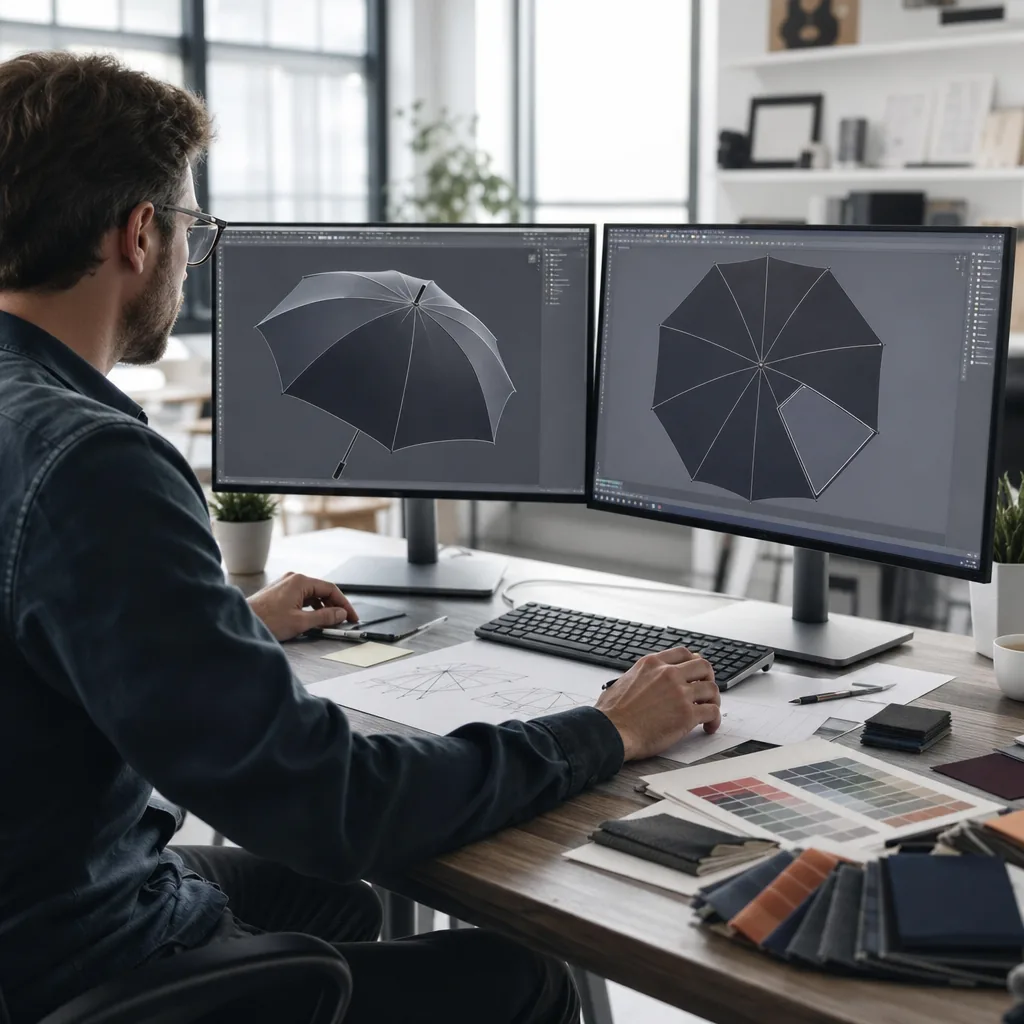
For wineries, breweries, and tasting rooms, an umbrella has to do more than carry a logo; it needs to survive patio service, wet parking-lot events, retail handling, and repeat use by club members. On our factory floor in Songxia, we see branded winery umbrellas fail most often from weak ribs, loose runner fit, thin fabric coating, or print choices that look good in a proof but fade under sun and rain.
Define the Revenue and Guest-Experience Roles
The first mistake wineries make is treating every umbrella as the same SKU. In practice, branded winery umbrellas split into four jobs: tasting-room retail, wine-club gifts, outdoor concerts and harvest events, and rainy-day guest service. Each job changes the economics. A retail piece can carry a higher price point if it feels like real merchandise, usually a 23" or 27" auto-open model with 190T or 210T pongee, a printed sleeve, and a hangtag. Wine-club gifts often work better as 21" compact umbrellas with a simple case, because they ship cheaper and fit in a club carton. For branded winery umbrellas, the packaging is part of the margin; a plain polybag kills perceived value faster than a weak canopy does.
For tasting room merchandise, people buy with their eyes, so the umbrella has to look like it belongs beside wine bottles and tasting notes. That means clean panel printing, a decent handle finish, and packaging that feels retail-ready rather than bulk-import generic. Brewery promotional umbrellas usually follow the same logic: a 23" or 27" piece with a logo printed on two opposite panels is enough for casual buyers, while gift-tier beverage brand umbrellas may need full-panel art or a matching box insert. If the umbrella is meant to sit by the register, keep the cost controlled and the shape familiar; if it is a paid souvenir, spend more on decoration and presentation instead of oversizing the frame.
Outdoor venue umbrellas for concerts and harvest events need a different build entirely. I would move to 30" golf-style frames, fiberglass ribs, and a double-canopy vented top if the site gets real wind; a cheap steel frame snaps and becomes a liability when the weather turns. For guest service, the umbrella should be easy to hand out fast, open smoothly, and survive repeated use by people carrying bags and children. That usually means auto-open or auto-open-close, a Teflon or UV-coated canopy for dirty hands and sun, and packaging that stacks efficiently in back-of-house cartons. The right mix is not one umbrella program; it is separate programs tied to retail revenue, gift value, and operational utility.
Select Styles for On-Premise and Take-Home Use
For retail shelves and point-of-sale racks, compact 21-inch auto-open models are the practical choice for branded winery umbrellas. They fold small enough to sit beside tasting room merchandise, fit in a gift bag, and keep freight costs reasonable when you are ordering by the carton. I would spec a 190T pongee canopy with a simple one-color print or small repeat logo; anything more complicated usually gets lost on a canopy that small. Auto-open matters here because guests will actually use it without fumbling, and the fast deployment reads as a premium feature even at a lower price point. If you want brewery promotional umbrellas that move quickly as impulse buys, this size is the least risky SKU.
For guest-facing service, 23-inch stick umbrellas are the better all-around format. They feel more substantial than a compact model, but they are still light enough for host stands, reservation desks, and retail counters. This is the size I would pick for branded winery umbrellas meant to be handed out with purchases or sold as tasting room merchandise, because the stick shaft gives you a cleaner presentation and more print area on the canopy. Fiberglass ribs are worth the small cost increase if your site sees real wind; steel bends, fiberglass flexes. A wood-look handle also helps, especially for beverage brand umbrellas tied to a premium label, because it reads less like a mass-market giveaway and more like a usable accessory.
For outdoor venue umbrellas and VIP gifts, step up to 27-inch or 30-inch double-canopy vented construction. That vent is not decorative; it lets gusts pass through instead of flipping the frame, which matters if staff are using the umbrellas on patios, vineyard paths, or brewery queues. I would pair fiberglass ribs with an auto-open or auto-open-close mechanism only if the target user is a guest; for staff, a manual open can be more durable over time. The larger frame also gives you better logo visibility from across the terrace, which is why these are the best beverage brand umbrellas for high-value clients. Add wood-look handles and a matte shaft finish if you want the piece to feel like a premium gift rather than a piece of seasonal hardware.
Build Designs Around Beverage Brand Assets
The strongest branded winery umbrellas usually start with the beverage assets buyers already control: bottle labels, capsule colors, cork marks, tasting notes, hop icons, barrel stamps, or a clean wordmark. I prefer building the canopy around large color fields first, then placing the logo where it reads from 10 to 20 feet away. On an 8K umbrella, that often means two or four alternating panels in a vineyard green, deep burgundy, cream, or matte black. For brewery promotional umbrellas, repeating hop cones, malt grains, tap handles, or can silhouettes can work well, but keep the repeat loose enough that it does not turn muddy after sewing. A 23" or 27" golf umbrella gives more room for pattern work than a 21" folding umbrella, especially when the canopy uses 190T or 210T pongee with water-repellent coating.
PMS matching needs to be handled before bulk fabric cutting, not after finished samples arrive. Dye-lot variation is normal on pongee, POE, PVC, and EVA canopies, and the same PMS burgundy will look different on coated fabric than on a paper label. For beverage brand umbrellas, we normally ask for vector artwork, Pantone references, and a physical label or printed swatch if the color is mission-critical. Sleeve printing is often underestimated: the sleeve has a smaller printable area, but it is visible at retail, in tasting room merchandise displays, and in gift packs. Woven labels on the tie strap or sleeve seam can add a premium touch without overcrowding the canopy, especially for estate wineries and craft breweries that want a quieter look.
Fine-line artwork is where many outdoor venue umbrellas fail in production. A wine crest with hairline vines may look sharp in a PDF, but once it crosses an 8K or 16K panel layout, the ribs and seam allowance can break the image in awkward places. On 16K frames, every panel is narrower, so circular badges, bottle illustrations, and hop wreaths need to be checked against the actual cutting template. Avoid placing small vintage years, appellation text, or thin outlines directly over seams. For branded winery umbrellas, the safer factory approach is to keep detailed art inside one panel, use larger repeats across multiple panels, and leave at least 12 to 15 mm from stitch lines so the sewing tolerance does not damage the design.
Plan Inventory for Seasonal Traffic Peaks
Storage is where many tasting rooms underestimate the problem. A 23-inch stick umbrella usually packs 36 to 48 pieces per export carton, while a 27-inch golf umbrella may pack only 24 pieces because the shaft and handle eat volume. Cartons can be 40 to 48 inches long, and they do not stack neatly in a narrow back office next to wine club boxes, glassware, POS displays, and event supplies. Compact umbrellas are easier for tasting room merchandise because they fit in smaller cartons and can be restocked under a counter, but they do not create the same patio visibility as beverage brand umbrellas in full size. If back-of-house space is tight, split shipments by season: spring rain inventory first, festival and harvest inventory later, and holiday gift-set units packed separately with barcode labels. For branded winery umbrellas, the best plan is usually one evergreen SKU kept in stock year-round plus one seasonal design ordered only against confirmed event demand.
Specify Quality for Outdoor Venue Conditions
Outdoor venue umbrellas fail first at the fabric, shaft finish, and rib joints, not at the logo. For branded winery umbrellas used on patios, lawn tastings, and event queues, I would specify 190T pongee as the entry point and 210T pongee when the handle feel and canopy drape need to match a premium tasting room. A basic water-repellent coating is enough for light rain, but wineries and breweries with all-day sun exposure should consider UV coating up to UPF 50+, especially on 27" and 30" golf umbrellas used by staff or guests moving between production buildings and outdoor seating. For brewery promotional umbrellas that may live in trunks, behind bars, or rental bins, fiberglass ribs outperform painted steel because they flex instead of taking a permanent bend after gusts.
The shaft and runner hardware matter in humid cellars, coastal tasting routes, and beer gardens where umbrellas are stored damp. Powder-coated steel is acceptable for budget 21" or 23" compact models, but rust-resistant galvanized steel, aluminum, or fiberglass shafts are safer choices for outdoor venue umbrellas that see repeated weekend use. On full-size beverage brand umbrellas, I prefer an 8K fiberglass frame for normal retail merchandise and a 10K double-canopy vented construction when the site is exposed to vineyard winds or open parking-lot events. Auto-open is convenient for tasting room merchandise, but auto-open-close compacts need tighter spring and button testing because returns usually come from mechanism fatigue, not fabric leakage.
Quality control should be written into the purchase order, not negotiated after cartons arrive. Our standard practice at ZheBrella is AQL 2.5 for major defects, checking canopy seam tension, print registration, water-repellency, frame opening force, tip alignment, rust marks, and carton drop condition before shipment. For branded winery umbrellas sold as retail items, packaging should also be specified early: kraft hang tags for a natural wine look, printed belly bands for shelf stacking, polybags for event giveaways, and retail barcodes or FNSKU labels when inventory moves through POS or third-party warehouses. If the order ships FOB Ningbo or DDP to a tasting room network, barcode placement and master carton markings prevent more receiving problems than most buyers expect.
Frequently Asked Questions
Are umbrellas better as merchandise or complimentary guest items for wineries?
Both can work, but the specs should differ. Retail umbrellas need stronger packaging and barcode labeling, while complimentary guest umbrellas can prioritize durability, logo visibility, and lower unit cost.
What canopy size is best for outdoor tasting-room staff?
A 27-inch or 30-inch double-canopy umbrella is usually better for staff because it provides more coverage and wind resistance. Fiberglass ribs are preferred over steel ribs for repeated outdoor use.
What umbrella styles work best for wineries and breweries: portable gift umbrellas or fixed patio models?
Most buyers split the order by use case: folding or straight umbrellas for retail and club-member gifts, and large patio or market umbrellas for outdoor seating and tasting areas. For patio use, commercial frames with vented canopies and 8-rib construction are typically preferred over consumer-grade promo umbrellas.
Can artwork be matched across umbrellas, bottle packaging, and tasting room merchandise?
Yes. Factories can usually match Pantone colors and apply the same logo set across canopy panels, sleeves, hangtags, and carton labels. For OEM orders, buyers should confirm print method, panel layout, and approved color tolerance before mass production.
What order planning is typical for seasonal tasting events or wine club gift programs?
For custom production, many importers plan 45-60 days for sampling and mass production, plus shipping time. If the umbrellas are tied to harvest events, summer festivals, or holiday club shipments, it is safer to lock artwork and quantities at least 90 days before the delivery deadline.
Looking to Launch Your Custom Umbrella Line?
ZheBrella is a Zhejiang-based OEM/ODM umbrella manufacturer with 17 years of export experience. Free design, low MOQ from 100 pieces, windproof construction, full-color print.
Get Free Quote Now »People Also Search For
Related Articles

Custom Umbrellas for Breweries, Wineries, and Beverage Brands
Build beverage-brand umbrella programs for tasting rooms, distributor promos, and retail merch with fabric, print, windp...
Read More »
Custom Umbrellas for Wineries, Breweries, and Beverage Brands
Source branded umbrellas for beverage launches, tasting rooms, and distributor incentives with durable specs, print opti...
Read More »
Branded Umbrellas for Outdoor Winery and Brewery Programs
Build winery and brewery umbrella programs for tasting rooms, patios, tours, and retail shelves with durable specs and p...
Read More »