Corporate Umbrellas for Conferences and Delegate Welcome Kits
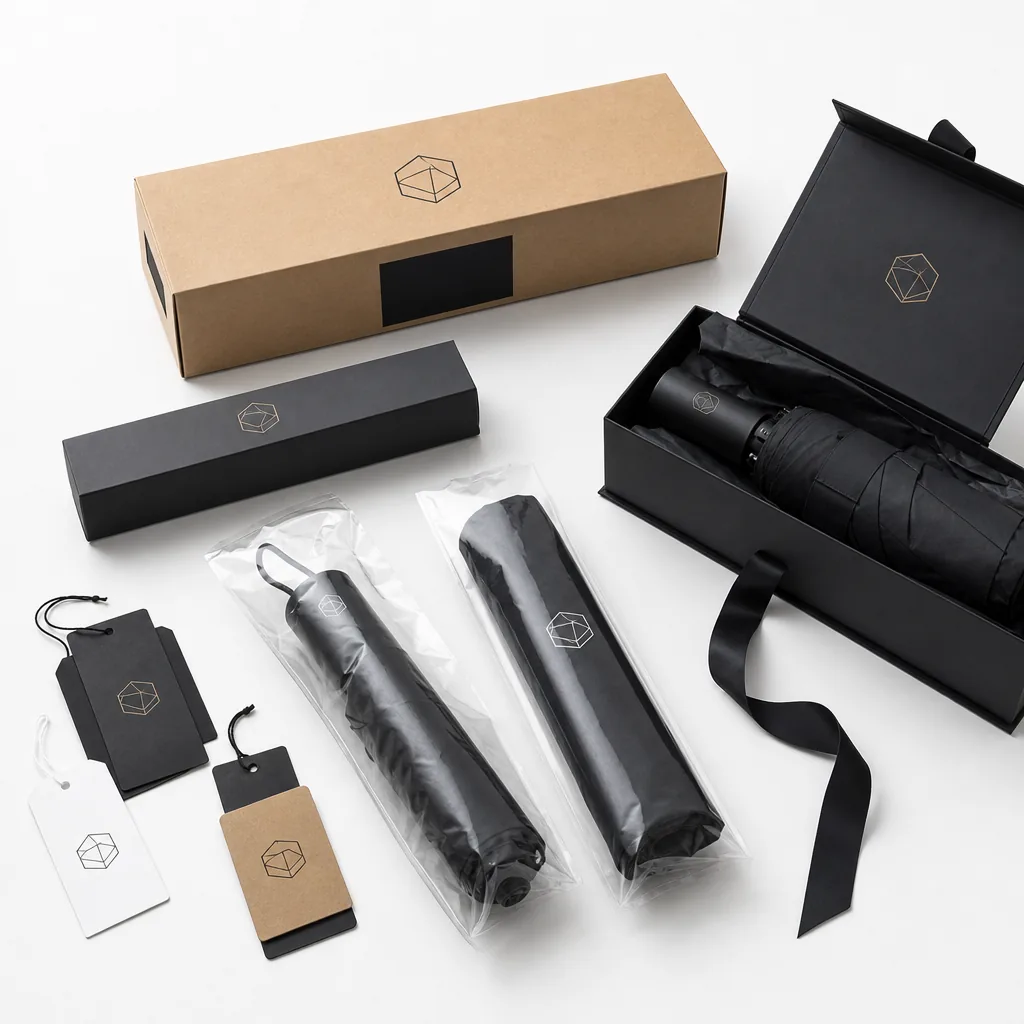
A delegate umbrella looks simple until cartons are short, sleeve colors drift, or a windy arrival day exposes a weak frame in front of your client. On our factory floor in Songxia, we plan conference umbrella programs around the real constraints that matter to buyers: canopy fabric, rib count, handle finish, imprint position, packing sequence, MOQ, lead time, and whether the order ships FOB or DDP.
Why conferences use umbrellas in welcome kits
Umbrellas earn their place in delegate welcome kits when the route exposes attendees to rain: registration desk queues, hotel shuttle drop-offs, badge checks outside the hall, walks between buildings, and evening transfers to off-site dinners. For standard kits, specify 21" or 23" folding models because they fit non-woven or canvas tote bags, pack into flight luggage, and keep registration assembly fast. Reserve 27" to 30" stick umbrellas for VIP arrivals, board meetings, sponsor escorts, and venue staff who need wider shoulder coverage and a cleaner front-of-house look. Strong conference umbrella programs start with the user and movement path before logo placement, because a compact folder and a full-size stick umbrella change storage space, crowd flow, carton count, and freight cost.
Auto-open is the right upgrade when attendees need one-hand operation while holding a phone, badge, coffee, passport wallet, sample bag, or luggage handle. That applies to curbside arrivals, hotel transfers, shuttle boarding, rain lines outside the convention center, and outdoor security checks. For bulk auto-open umbrellas, use an 8K or 10K frame with a steel shaft and fiberglass ribs when gust recovery matters; low-cost all-steel ribs bend more easily in crowded entrances. A 190T pongee canopy is the baseline for corporate use, while POGOONI 190T or 210T pongee gives cleaner screen print and heat-transfer results. For coastal venues, open-air festivals, or long uncovered walks, a double-canopy vented model rated around 50+ mph lowers breakage risk compared with a thin compact umbrella bought only on unit price.
Procurement risk comes from packaging, inspection, and delivery timing, not just the umbrella spec. Branded event umbrellas should be carton-packed by kit sequence when a fulfillment team inserts them into delegate welcome kits, or individually sleeved when staff will hand them out at registration during rain. For FOB umbrella sourcing, confirm carton dimensions, gross weight, barcode labels, and whether each unit ships in a fabric sleeve, EVA pouch, or polybag because those choices affect freight cost and on-site handling speed. At ZheBrella, pre-production samples are approved before mass printing, then opening force, rib alignment, canopy tension, logo position, and sleeve fit are checked under AQL 2.5 before export. Typical lead time is 25 to 35 days after artwork approval for 1,000 to 5,000 pieces, with extra time for custom PMS dyeing, UPF 50+ coating, Teflon water repellent finish, or DDP delivery to multiple hotels.
Spec choices that matter for delegate programs
For conference umbrella programs, start with the frame because it sets both failure risk and landed weight. Steel ribs keep the first quote low and are acceptable for hotel-to-shuttle use, but they add carry weight and can stay bent after a side gust. Fiberglass ribs usually add $0.35 to $0.80 per unit, depending on size and rib count, but they flex back instead of taking a permanent kink. Use 8K construction for most 21" folding umbrellas and 23" stick umbrellas; it gives enough canopy tension for clean logo placement without paying for extra ribs. A 16K frame makes the canopy rounder and more premium, but it adds rib tips, sewing labor, assembly time, inspection points, and typically 8% to 15% to unit cost. For delegate welcome kits, reserve 16K for VIP drops, sponsor merchandise, or retail-quality branded event umbrellas that will be photographed open and compared against other gifts.
Fabric choice affects logo sharpness, perceived value, drying time, and whether the umbrella still looks credible after the event. POGOONI 190T pongee is the practical baseline for bulk auto-open umbrellas because it packs neatly, dries faster than cheap polyester, and supports screen print or heat transfer without looking thin under venue lighting. 210T pongee feels denser on 23" and 27" stick umbrellas, but the upgrade is easiest to justify when delegates will reuse the umbrella or when the product will sit beside lower-grade samples. If the event window is short and the artwork is a simple one- or two-color logo, keep 190T and spend the budget on fiberglass ribs, a stronger shaft, or cleaner sleeve packing. Teflon water-repellent or UPF 50+ coatings can be specified, but treat them as batch-tested add-ons in the quotation rather than assuming the claim from the fabric line item.
Specify double-canopy windproof construction only when delegates will walk between convention halls, hotels, and outdoor venues in coastal or storm-prone cities. For a ballroom giveaway that mainly goes into luggage, a single-canopy 8K fiberglass frame is usually the better cost-risk balance. A vented 23" fiberglass umbrella can be rated around 50+ mph in a controlled wind tunnel, but the second canopy increases fabric consumption, sewing time, packed thickness, and welcome-kit carton volume. Lock print requirements before finalizing the frame: one-panel logos are cheapest, two opposite panels improve visibility in crowd photos, and full-wrap or alternating sponsor marks require tighter registration and higher reject control. For FOB umbrella sourcing, separate rib material, 8K versus 16K construction, 190T versus 210T pongee, auto-open hardware, coating, and print coverage into distinct cost lines so buyers can reduce cost without weakening the whole spec.
Packaging, pack-out, and kit assembly requirements
Mixed delegate welcome kits fail when rigid items move against the umbrella during handling. A metal bottle, power bank, or badge clip can dent an EVA or plastic handle, scratch ribs, snag a POE/PVC window panel, or pressure-mark a heat-transfer logo. For conference umbrella programs, ship bulk auto-open umbrellas in master cartons and move them into kits only at the local pack-out point. Insert umbrellas last, with runner, rib tips, and handle ends facing away from notebooks, badges, and paper inserts. Specify one protective layer per unit: sewn sleeve for premium drops, PE sleeve for standard badge-bag inserts, or individual kraft wrap when the kit includes metal or hard plastic items. Add kraft dividers or a paperboard channel around sharp components. Use a printed hangtag, UPC/barcode label, or room-drop code on the sleeve so hotel staff can sort opened cartons without relying on master-carton marks.
Write carton and pack-out requirements into the PO before production. Common export packs are 24 pieces per carton for 21-inch folding umbrellas, 12 to 24 pieces for 23-inch auto-open styles, and 12 pieces for 27-inch or 30-inch golf umbrellas. For FOB umbrella sourcing, require five-layer export cartons, reinforced tape on long edges, and carton labels showing PO number, item, color, size, quantity, gross weight, and destination property if split deliveries are planned. If the canopy uses POGOONI 190T or 210T pongee with a heat-transfer logo, keep mixed-kit weight off the printed canopy face; add a top sheet or paperboard spacer before sealing. AQL 2.5 inspection should cover sleeve stitching, hangtag data, open-close function, logo placement, carton compression, and random kit-weight variance. For hotel deliveries, allow 2 to 3 extra days beyond normal DDP transit for dock appointments, receiving windows, and split drops across conference properties.
Ordering terms procurement teams should compare
For conference umbrella programs, compare MOQ, sample timing, and production readiness before unit price. A realistic factory MOQ for branded event umbrellas starts around 500 pieces per color for standard 21" or 23" auto-open stick models; budget for 1,000 pieces when the order requires a custom canopy color, special handle, or retail-style sleeve. Bulk auto-open umbrellas in stocked 190T pongee, including POGOONI 190T specifications, usually move faster because fabric and frames are already available. A physical pre-production sample typically takes 5 to 7 days after artwork approval, plus 2 to 3 days if Pantone matching or heat-transfer placement needs correction. Production normally runs 18 to 30 days after sample approval and deposit, with timing driven by print method, rib count, and packaging. One- or two-panel screen printing is faster than full-panel sublimation, which requires tighter cutting alignment before sewing.
Inspection terms protect the event date. For delegate welcome kits, write AQL 2.5 for major defects and AQL 4.0 for minor cosmetic defects into the purchase order, then define functional checks: open-close action, rib tips, ferrules, handle bonding, canopy seam leakage, logo position, carton marks, barcode labels, and inner polybag requirements. For 8K steel shaft umbrellas, inspectors should check frame symmetry and spring force; for fiberglass ribs or double-canopy vented models, add rib-flex and vent-stitching checks. Final inspection should compare packed cartons against the approved sample before release, but large conference umbrella programs also need inline inspection once 20% to 30% of goods are assembled. Catching weak springs, crooked logos, or incorrect labels after full packing can cost several days, which is often the entire delivery buffer for a fixed conference date.
Choose FOB umbrella sourcing when your procurement team or freight forwarder already consolidates China cargo, controls customs documents, and can take responsibility from Ningbo or Shanghai port onward. FOB gives clearer visibility into unit cost, inland trucking, export declaration, and vessel choice, especially for 2,000 to 10,000 umbrellas shipped with other event merchandise. Choose DDP when an event agency, association, or in-house team needs cartons delivered to a hotel, convention center, or 3PL warehouse without managing import duty, customs clearance, or last-mile delivery. The tradeoff is control: DDP can hide freight assumptions, and urgent air shipment of 23" auto-open umbrellas is costly because umbrellas are long, volumetric cargo. For events less than 45 days away, compare FOB and DDP using carton dimensions, gross weight, HS code, destination ZIP code, and required delivery date, not just the umbrella unit price.
Quality and timing risks for event deadlines
The main deadline risk in conference umbrella programs is rain-season capacity, not logo printing. From March to June, and again before Q4 gifting, frame assembly and canopy dye lots book out fast, especially for 23" and 27" auto-open models with fiberglass ribs. Do not wait for badge, lanyard, or tote approval before starting umbrellas; that can consume 10 to 15 production days before sampling even begins. Lock the umbrella spec first: size, 8K/10K/16K rib count, auto-open mechanism, canopy fabric, handle, sleeve, carton pack, and kit-insertion method for delegate welcome kits. For a fixed event date, a standard 23" 8K bulk auto-open umbrella in POGOONI 190T carries less schedule risk than a custom-molded handle or 16K windproof frame. Add QC time to the plan: spring-force checks, open-close fatigue testing, and random mechanism inspection catch registration-day failures before shipment, where a perfect logo cannot help.
Color approval needs production tolerances, not paper-proof expectations. Pantone targets on dyed pongee, heat-transfer panels, and screen-printed logos will not match coated paper exactly; dark navy, red, orange, and metallic colors usually create the most rework risk. A Delta E 2-3 tolerance is realistic for fabric production. For branded event umbrellas, put approval milestones directly into the PO: digital mockup in 1 to 2 days, strike-off or printed panel in 3 to 5 days, pre-production sample in 7 to 10 days, and no bulk production until written sign-off. Keep one approved physical color standard with factory QC and one with the client or sourcing agent, so final inspection is judged against the same material under controlled light, not a phone photo from a hotel lobby.
Build the logistics fallback before paying the deposit. For FOB umbrella sourcing by sea to major ports, target bulk completion at least 18 to 25 days before the conference, with extra buffer if customs clearance feeds directly into delegate welcome kits. If the calendar is tight, split the shipment: send 5% to 10% by air for speaker kits, VIP arrivals, registration desks, and emergency replacements, while the balance moves by sea or truck under FOB or DDP terms. Schedule AQL 2.5 final inspection no later than 48 hours before cargo handover, covering carton drop checks, barcode scans, logo position measurement, and random open-close testing. Conference umbrella programs should also carry a 2% to 3% overrun for transit damage, late attendee additions, and hotel-room delivery errors.
Frequently Asked Questions
What umbrella style works best for delegate welcome kits?
A 21-23 inch folding umbrella is easiest to pack into bags and hotel deliveries, while a 27 inch auto-open stick umbrella gives a larger imprint area. The best choice depends on whether the kit prioritizes portability or brand visibility.
How far in advance should a conference order be placed?
For custom programs, allow time for sampling, artwork approval, and production, which commonly means several weeks before the event date. Large orders or complex packaging should be placed earlier to protect against shipping delays and inspection rework.
What umbrella specs work best for conference delegate kits?
Most buyers choose a 21 to 23 inch auto-open umbrella with 190T pongee or polyester fabric, a metal shaft, and fiberglass ribs for a balance of cost, durability, and pack-out size. A sleeve with logo printing is often added so the umbrella looks finished inside a welcome kit.
What MOQ should we expect for branded event umbrellas?
For standard bulk auto-open umbrellas with one-color logo printing, MOQ is commonly 500 to 1,000 pieces per design. Custom canopy colors, full-panel printing, or special packaging may require 1,000 to 3,000 pieces depending on fabric and frame availability.
How early should a distributor place a conference umbrella order?
A practical timeline is 45 to 60 days before the event for standard FOB production, including sampling, artwork approval, manufacturing, inspection, and ocean freight booking. For urgent conferences, DDP air freight can shorten delivery but usually increases landed cost significantly.
Looking to Launch Your Custom Umbrella Line?
ZheBrella is a Zhejiang-based OEM/ODM umbrella manufacturer with 17 years of export experience. Free design, low MOQ from 100 pieces, windproof construction, full-color print.
Get Free Quote Now »People Also Search For
Related Articles
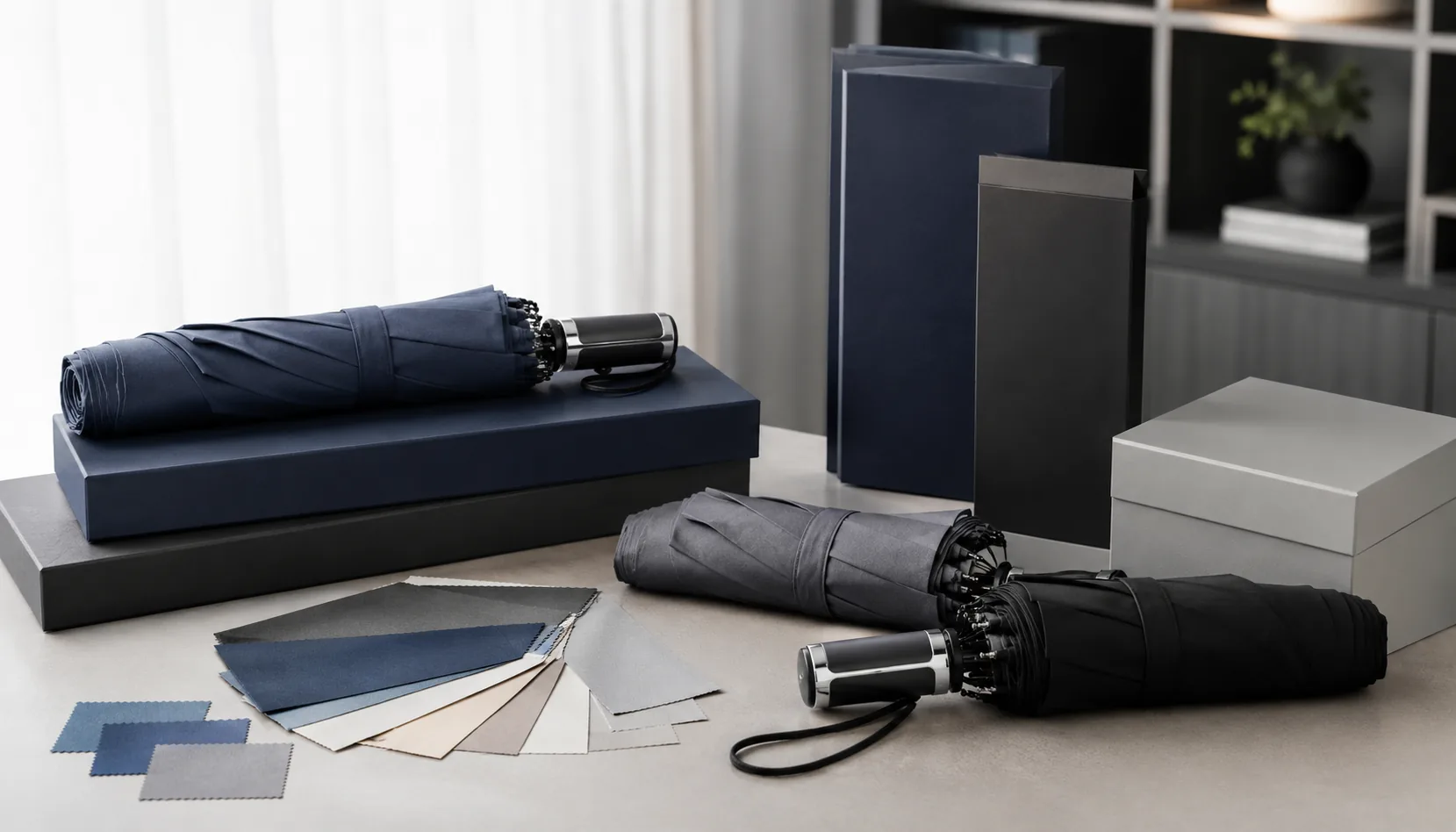
Gift-Ready Umbrella Welcome Kits for Corporate Programs
Plan branded umbrella welcome kits with inserts, packaging, and source terms that fit onboarding, event, and VIP gifting...
Read More »Custom Umbrellas for Bank Branches and Financial Offices
Learn which umbrella specs fit bank branches, investor events, and client visits, including rib choices, branding method...
Read More »
Umbrella Programs for Luxury Retail Concierge and Valet
Build a premium umbrella program for luxury retail concierge and valet teams with upscale materials, branding, QC, and d...
Read More »