Gift-Ready Umbrella Welcome Kits for Corporate Programs
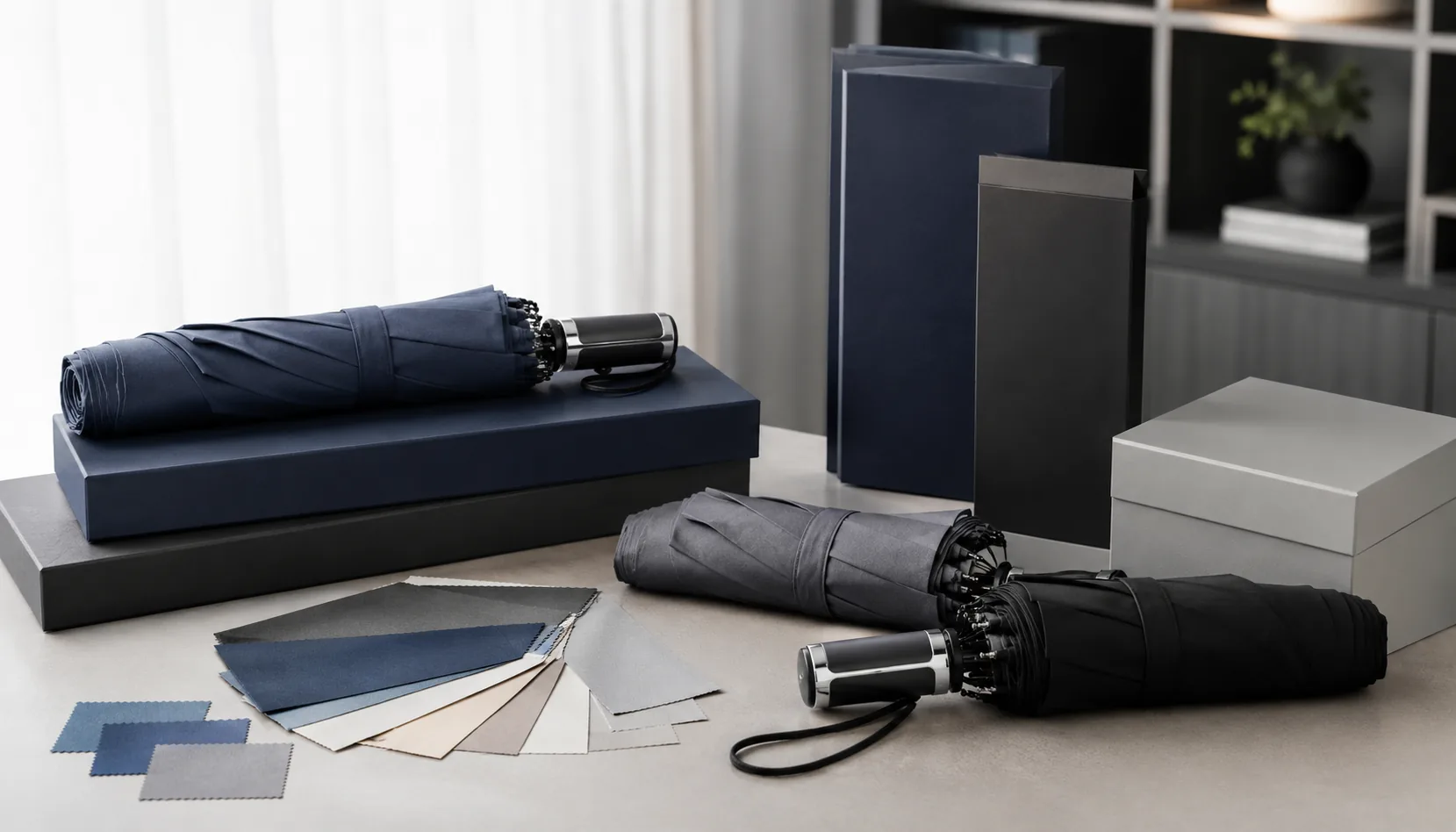
Branded welcome kits often fail where procurement, packaging, and timing collide: umbrellas arrive with crushed inserts, inconsistent logo placement, or carton dimensions that blow up freight costs. On our Songxia packing lines, we see that gift-ready umbrellas only work when canopy fold, sleeve fit, insert thickness, and master-carton count are engineered together. That's the difference between corporate umbrella gift kits that look polished on arrival and ones that create rework before an onboarding or event drop.
Choosing the right umbrella model for gifting
For corporate umbrella gift kits, the safest default is a 21-inch or 23-inch compact auto-open umbrella that closes to roughly 11 to 13 inches and fits a laptop bag or carry-on without becoming dead weight. Travel gifting fails when the umbrella is too bulky, so I usually avoid full steel frames and stick to an 8K rib set with a black metal shaft plus fiberglass end ribs; that keeps weight around 350 to 420 grams while still handling commuter use. A 190T or 210T pongee canopy prints cleanly and feels better than cheap polyester, especially when the client wants subtle tone-on-tone branding instead of a loud promo look. For branded umbrella presentation, compact models also work better with rigid drawer boxes, magnetic gift cartons, or molded inserts because the folded diameter is predictable. If the umbrella is going into welcome kit packaging with notebooks, bottles, or apparel, auto-open-close sounds attractive but adds cost and failure points; plain auto-open is the better balance unless the buyer is targeting executive onboarding.
When the gift needs to read as premium rather than merely useful, move up to a 27-inch or 30-inch full-size windproof frame with fiberglass shaft and ribs, preferably 8K or 10K rather than 16K. More ribs look dense on paper, but for actual durability a well-built fiberglass 8K with double-canopy venting outperforms a decorative 16K steel frame that bends and stays bent. This is the model I recommend for premium umbrella gifts because the user feels the difference immediately: better balance in hand, deeper canopy coverage, and a wind-tunnel rating that can honestly clear 50 mph when the venting, runner, and rib joints are built correctly. Pair it with 210T pongee and a Teflon finish so water sheds fast instead of hanging in the weave. Our standard practice at ZheBrella is to hold these gift-grade orders to AQL 2.5 and pay special attention to runner play, stitch density at the tips, and logo centering across the panels, because gifting magnifies cosmetic defects. Straight EVA or wood-look handles and a matching sleeve usually do more for perceived value than adding unnecessary trim.
For outdoor campaigns, UV umbrellas only work if the sun-protection spec is real and the format still makes sense for distribution. A UPF 50+ canopy on 190T or 210T pongee with black UV undercoating is the practical standard; clear POE, PVC, or EVA canopies are fine for rain fashion, but they are poor choices when the buyer actually needs shade and heat reduction. If the program is tied to golf days, site visits, campus tours, or summer welcome events, a 23-inch or 27-inch canopy gives meaningful sun coverage without the oversized footprint of a 30-inch golf umbrella. This is where corporate umbrella gift kits can go wrong: buyers choose a dramatic full-length model that looks good in a sample room but is awkward in hotels, airports, and mailroom handling. For FOB DDP umbrella sourcing, decide early whether the umbrellas will ship bulk to a kitting partner or arrive pre-packed, because carton count, insert design, and duty treatment affect landed cost more than a minor frame upgrade. A typical MOQ is 500 pieces, and custom UV models usually need 25 to 35 days after artwork and shade approval.
Building a presentation kit around the umbrella
The umbrella dictates the packaging geometry, not the other way around. A 23-inch auto-open straight umbrella with an 8K fiberglass frame usually closes to about 33 to 35 inches, while a 21-inch auto-open-close folding style lands closer to 11 to 13 inches, so the sleeve, message card, and tissue spec should be built from that starting point. For corporate umbrella gift kits, I prefer a fitted sleeve in 250 to 300 gsm art paper or soft-touch laminated kraft rather than a loose polybag; it prevents the tip and ferrule from punching through the presentation during transit. Message cards work best at A6 or 4 x 6 inches, inserted under a belly band or tucked into the sleeve mouth so they do not slide to the box bottom. Tissue should be 17 to 22 gsm, acid-free, and wrapped around the handle and canopy head separately if you are packing crook handles, because those are what scuff first. If the umbrella is a premium 190T or 210T pongee style with a rubberized handle, branded umbrella presentation should protect touch points instead of burying them.
Rigid boxes only make sense when the customer wants a true one-piece gift experience and is willing to pay dimensional freight for it. For a straight umbrella, a shoulder-neck rigid box in 1200 gsm board with a 157 gsm wrap gives the cleanest reveal, but it adds bulk fast; a 35 x 3 x 3 inch gift box can cube out before the product value does, especially under DDP billing. A cleaner production compromise is an E-flute mailer with a printed sleeve, die-cut handle cradle, and one layer of tissue, which still feels finished but survives parcel handling better. Folding umbrellas are easier: a 13 x 4 x 3 inch rigid drawer box or magnetic lid box works well for premium umbrella gifts, especially if you pair a 10K or 12K compact frame with a woven strap and molded EVA pouch. Outer mailers should be crush-tested, not guessed at. For most U.S. parcel programs, I would specify a 32 ECT corrugated shipper minimum, plus corner protection if the gift box edges must arrive sharp.
Multi-item onboarding kits need a different pack-out logic because the umbrella becomes the longest and heaviest component in the carton. If you are combining a 21-inch folding umbrella with a notebook, bottle, badge set, and apparel, the umbrella should sit in its own channel along one wall with cardboard partitions or molded pulp, otherwise it migrates and bruises the smaller items. Welcome kit packaging for these builds usually works better in a rectangular corrugated mailer than in a rigid gift box, because you need void control, not showroom theatrics. Our standard practice at ZheBrella is to confirm pack-out by actual assembly before mass production, then inspect the finished kit to AQL 2.5 with drop checks on master cartons, not just the umbrellas themselves. For FOB DDP umbrella sourcing, this matters because packaging errors are what create rework at the forwarder: bad barcode placement, over-height mailers, and mixed inner counts. Corporate umbrella gift kits ship more cleanly when the presentation is designed around freight reality, not just the unboxing photo.
Balancing brand impact with landed cost
The biggest cost mistake in corporate umbrella gift kits is spending on a theatrical box before the umbrella itself feels right in the hand. Buyers notice three things immediately: print quality, opening action, and whether the canopy fabric feels thin. If the artwork is simple, a clean 1-color or 2-color screen print on 190T pongee usually gives the best cost-to-impact ratio; if the logo has gradients or tight registration, move to heat-transfer or sublimation on 210T pongee instead of upgrading the carton. A well-made 23-inch auto-open umbrella with fiberglass ribs and a crisp logo will outscore a cheaper steel-frame umbrella dressed up in a magnetic rigid box every time. For branded umbrella presentation, I usually tell buyers to keep the outer structure disciplined: 1200 to 1400 gsm rigid board or a solid E-flute mailer with a printed wrap, matte lamination, and sharp edge lines. Ribbon, belly bands, and custom metal pulls are the first things I cut when landed cost gets tight because they add perceived luxury for about 10 seconds, then end up in the trash.
If you have real budget to allocate, put it into the frame and canopy specification before you add decorative packaging layers. An 8K fiberglass frame is the baseline I trust for most welcome kit packaging because it keeps weight and breakage in a reasonable range during parcel handling, while a 16K frame gives a dressier look but adds more sewing operations, more rib joints, and usually a higher defect risk if the factory is rushing assembly. For practical use, the jump from 190T to 210T pongee is more noticeable than most buyers expect: the canopy drapes better, takes print more evenly, and feels less promotional. UPF 50+ coating is worth the premium when the program is consumer-facing in warm climates or tied to outdoor events, but it is wasted money if the umbrellas will mainly sit in office reception areas or winter onboarding packs. Our standard practice at ZheBrella is to protect the use case first, then tune the packaging around it rather than the other way around.
Landed cost changes fast once packaging dimensions start driving freight. A rigid gift box with a molded insert, 157 gsm art paper wrap, and ribbon closure can add more cubic volume than upgrading from manual open to auto-open or from steel ribs to fiberglass ribs, and that matters even more under FOB DDP umbrella sourcing when parcel, dimensional weight, and last-mile handling are included. Insert paper is where disciplined buyers can save money without hurting presentation: a 350 gsm printed card sleeve or folded welcome message often does the same branding job as a custom vacuum-formed tray, especially for 21-inch or 23-inch umbrellas. If the goal is premium umbrella gifts, spend on one structural packaging element that protects the item and one visible finish that carries the brand, then stop. For most corporate programs, that means a sturdy carton, accurate logo reproduction, and a better umbrella spec, not a stack of extras. Buyers who balance it that way usually end up with fewer transit claims, cleaner AQL 2.5 inspections, and a gift set that still makes sense when the DDP invoice arrives.
MOQ, sampling, and lead time planning
MOQ drives the whole kit plan more than most buyers expect. A basic 23-inch auto-open umbrella with an 8K fiberglass frame, black steel shaft, and 190T pongee canopy might run at 300 to 500 pieces if the frame is already in line, but once you add custom handle color, a 10K or 16K frame, double-canopy venting, or a rigid presentation box, the practical minimum usually jumps to 1,000 pieces or more. For corporate umbrella gift kits, the real constraint is not only the umbrella factory MOQ; it is the combined MOQ of the umbrella, insert card, molded tray, carton labels, and any kitting labor setup. If procurement wants 600 kits split into three branded versions, the umbrella side may still need 1,000 canopies per print layout, so you either standardize one umbrella across all kits or accept excess stock. On the factory floor, that is the difference between a clean packout run and a messy partial-assembly job with leftover components nobody wants to carry.
Sample approval needs to happen in stages, or the final kit will drift away from what purchasing thought they bought. First approve the umbrella construction sample: size, such as 21-inch folding or 27-inch golf, manual versus auto-open-close, fiberglass versus steel ribs, handle material, and closure strap length. After that, approve the artwork on the real substrate, not only a PDF proof. A logo printed on 190T pongee, 210T pongee, or clear POE behaves differently in edge sharpness and color density, especially with screen print versus heat transfer. For premium umbrella gifts, I also insist on a packaging white sample before full production, because a box that looks fine on a dieline can crush the canopy cap or scrape the ferrule once the umbrella is folded. Then approve one full pre-production set: umbrella, belly band, insert, tissue, carton markings, and barcode placement. Our standard practice at ZheBrella is to lock that sealed sample as the inspection reference under AQL 2.5 so assembly and QC are judging the same target.
Added packaging almost always extends lead time, and buyers should budget that honestly instead of treating it as a minor accessory. A plain umbrella order might ship in 25 to 35 days after deposit for common frames, but welcome kit packaging can add 5 to 7 days for offset-printed sleeves, 10 to 15 days for rigid magnetic boxes, and 2 to 3 extra days just for hand kitting, carton relabeling, and pallet sorting. If the box uses foam inserts, custom EVA trays, or imported paper stock, delays can stretch past two weeks because those materials often come from different suppliers than the umbrella line. Branded umbrella presentation also changes the shipping math: a boxed 23-inch straight umbrella cubes out much faster than a polybagged unit, so FOB DDP umbrella sourcing needs carton dimensions confirmed before booking. I have seen buyers hit their umbrella ex-factory date and still miss the vessel because the packaging vendor delivered late or the master carton failed drop testing and had to be rebuilt.
Shipping and fulfillment details buyers should lock early
The decision between FOB and DDP changes the whole ownership map for corporate umbrella gift kits, not just the freight bill. Under FOB Ningbo or Shanghai, the factory usually finishes the umbrella itself, packs inner sleeves or mailer boxes, and delivers master cartons to the forwarder; kitting with notebooks, bottles, or onboarding cards is often pushed to a 3PL near the destination port or final market. Under DDP, buyers tend to expect one accountable party for the full chain: umbrella production, carton labeling, export paperwork, import duties, and final delivery to one DC or multiple office addresses. That matters because a 21 inch auto-open-close 8K folding umbrella in 190T pongee packs very differently from a 27 inch double-canopy vented golf umbrella with fiberglass ribs, and DIM weight can swing faster than unit cost. If your FOB DDP umbrella sourcing plan is vague, you get the usual failure: correct umbrellas, wrong labels, and no clear answer on who missed the ship window or pallet routing instructions.
Kitting location should be locked before sampling, because the factory and a third-party handler do not inspect the same way. If the factory assembles the full welcome kit packaging, we can build the umbrella, gift box, insert card, and accessory placement around a fixed pack-out method, then inspect to AQL 2.5 at both product and presentation level: canopy color match, print position, handle orientation, barcode scan, carton marks, and drop-test integrity. That is the cleaner route for premium umbrella gifts when the kit is simple and the components are already in Asia. Once a domestic 3PL or promo distributor opens master cartons and re-kits locally, umbrella quality remains the factory’s responsibility, but the branded umbrella presentation becomes a shared risk. I have seen good 23 inch steel-rib auto-open umbrellas fail the end customer’s check because the third-party added the wrong insert, crushed EVA pouches, or mixed office-specific carton labels after the factory seal was broken.
The practical split is this: let the factory kit when the bill of materials is stable, the SKU count is low, and the destination wants uniform cartons by PO, office, or employee class. Let a third-party handler do it when personalization happens late, such as named letters, region-specific literature, or mixed-country final mile under DDP. In that case, write the inspection boundary into the PO: factory covers umbrella construction, decoration, and export carton accuracy; handler covers final assortment, relabeling, and proof of pack by carton ID. ZheBrella’s standard practice is to issue a pre-shipment packing matrix showing umbrella model, 190T or 210T fabric, rib count, unit net weight, carton count, and shipping marks before booking, because that document is what keeps claims from bouncing between supplier, forwarder, and 3PL. Buyers who lock this early avoid the expensive surprise where the umbrellas pass, but the welcome kit packaging misses retailer routing, Amazon-style labeling, or last-mile appointment rules.
Frequently Asked Questions
Are umbrella welcome kits better built as one packed unit or shipped in separate pieces?
For most corporate programs, fully assembled kits are easier for the recipient and cleaner for the brand. Separate components only make sense when local fulfillment lowers freight or customs cost.
What umbrella specs are worth upgrading for a premium gift kit?
Fiberglass ribs, an auto-open mechanism, a denser pongee canopy, and a double-canopy windproof frame usually add perceived value. If the gift is outdoor-facing, UPF 50+ is also worth specifying.
What components can be included in a corporate umbrella welcome kit?
A typical kit can include a branded umbrella, printed sleeve or wrap band, insert card, instruction card, hang tag, and rigid gift box or mailer carton. For onboarding programs, buyers often add a welcome letter or QR card linking to HR or brand content.
What is the usual MOQ for umbrella gift kits with custom packaging?
For OEM programs, MOQs commonly start around 500–1,000 sets depending on umbrella style, box material, and print method. Fully custom rigid boxes or molded inserts may require higher quantities because of tooling and setup costs.
Should corporate gift kit buyers request FOB or DDP pricing?
FOB is suitable if your company or forwarder manages ocean freight, customs, and final delivery. DDP is easier for distributors and retail teams that need landed cost visibility, because it includes freight, import duties, customs clearance, and delivery to the agreed address.
Looking to Launch Your Custom Umbrella Line?
ZheBrella is a Zhejiang-based OEM/ODM umbrella manufacturer with 17 years of export experience. Free design, low MOQ from 100 pieces, windproof construction, full-color print.
Get Free Quote Now »People Also Search For
Related Articles

Branded Umbrella Presentation Kits for Corporate Gifting
Build corporate umbrella gift kits with sleeves, cards, and inserts that feel premium while staying practical on MOQ, fr...
Read More »Branded Umbrella Gift Sets for Corporate Gifting Programs
Show buyers how branded umbrella gift sets raise perceived value with premium specs, clean packaging, and cost control f...
Read More »Branded Umbrella Ribbon Wraps for Premium Gift Programs
Design ribbon wraps for premium umbrella gifts with correct materials, logo placement, packing method, and QC checks for...
Read More »