Private Label Umbrella Programs for Retail Brand Owners
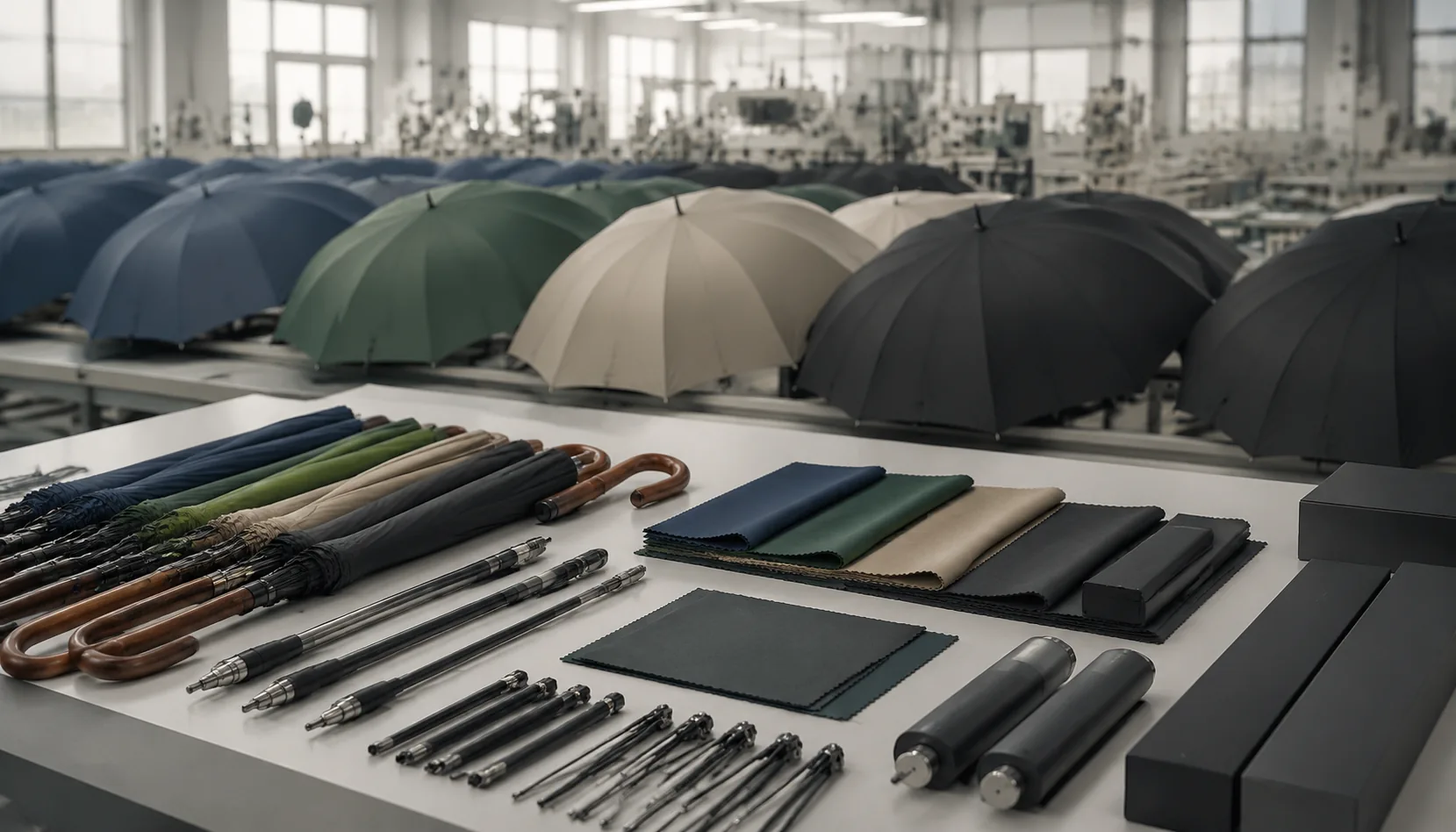
Retail brand owners usually know the look they want, but the risk sits in the details: SKU spread, fabric handfeel, rib strength, packaging fit, carton marks, and inspection standards that must survive both store shelves and rainy-day returns. A solid private label umbrella program starts on the sampling table, where we match canopy fabric, frame construction, handle tooling, MOQ, and AQL checkpoints before bulk production locks in.
Define the Retail Assortment Strategy
A retail umbrella sourcing plan should start with good-better-best tiers, not with random colors from a catalog. For most chains, I like a 6–10 SKU base: two compact 21" auto-open-close umbrellas for daily carry, two 23" straight umbrellas for classic entry price, one or two 27" golf umbrellas, and one UV style with UPF 50+ coating for sun-heavy regions. The good tier can use steel shaft, 8K steel ribs, 190T pongee, manual or auto-open, and a simple molded handle. The better tier should move to fiberglass ribs, 210T pongee, Teflon water-repellent finish, and cleaner sleeve packaging. The best tier earns its shelf space with 10K or 16K ribs, double-canopy venting, stronger springs, EVA or rubberized handles, and wind-tunnel targets around 50+ mph. A private label umbrella program fails when every SKU looks different but performs the same; the customer must see a clear step-up at each price point.
Climate decides which umbrellas deserve volume. In Seattle, Vancouver, or northern Europe, compact and straight rain umbrellas should carry the assortment because frequency of use is high and replacement demand is steady. In Florida, Australia, the Middle East, and parts of Southeast Asia, UV umbrellas with silver or black glue coating, UPF 50+ rating, and POE or pongee canopy options can outsell basic rain styles in summer. Coastal markets need fiberglass ribs and vented golf umbrellas because wind claims destroy margin faster than fabric cost ever will. Snow markets need larger arc coverage and stronger frames, not delicate mini capsules. Store format also matters: convenience and drug stores should keep 3–5 fast-moving SKUs at sharp retail prices, while department stores can support 10–16 SKUs with gift packaging, prints, and seasonal colors. Our standard practice at ZheBrella is to map frame construction and canopy fabric to claimed use first, then adjust color and branding later.
Target retail price should control SKU count and specification discipline. If the opening price is $9.99–$14.99, do not overload the product with 210T fabric, fiberglass, heat-transfer logos, and premium sleeves unless the buyer accepts a thinner margin. A $19.99–$29.99 middle tier can carry the branded umbrella assortment: auto-open compact, 23" straight, and one UV option using 190T or 210T pongee with better coating and AQL 2.5 inspection. Above $34.99, the umbrella must justify itself with a visible feature such as 10K windproof construction, double-canopy golf size, custom handle, or retail-ready box. For OEM umbrella supplier discussions, share the price ladder, target FOB or DDP cost, expected MOQ by color, and launch calendar before sampling. Umbrella line planning is much cleaner when buyers decide which three roles each SKU plays: traffic driver, margin builder, or brand statement. That keeps the private label umbrella program focused instead of bloated.
Choose Frame and Fabric Specifications
Frame specification decides whether a private label umbrella program makes money after returns, not just whether the first FOB quote looks attractive. For price-sensitive retail umbrella sourcing, I normally start with a steel shaft and steel ribs on 21" compact or 23" stick umbrellas because the tooling is mature, assembly is fast, and unit cost stays predictable at volume. Aluminum shafts reduce weight and improve the hand feel, but they bend more easily if paired with weak ribs, so I use them carefully on fashion or travel lines rather than hard-use rain programs. For entry models, 8K construction is enough if the canopy is not oversized and the buyer accepts a normal wind rating. For a better branded umbrella assortment, upgrade the ribs to fiberglass even when the shaft remains steel; fiberglass ribs flex back instead of permanently deforming, which is the difference between a complaint and a repeat customer after a 35–45 mph storm.
Rib count should match retail positioning, not personal preference. An 8K frame is clean, economical, and suitable for supermarket, event, and promotional SKUs where MOQ pressure and landed cost matter most. A 10K frame gives a rounder canopy shape and a little more stability, but the cost increase is not always visible to shoppers unless the handle, fabric, and packaging also improve. A 16K frame belongs in premium umbrella line planning: it looks substantial on shelf, distributes load better across the canopy, and pairs well with double-canopy vented windproof designs that can survive 50+ mph wind-tunnel testing when built with proper fiberglass ribs and reinforced tips. As an OEM umbrella supplier, our standard practice is to test rib recovery, runner lock strength, and rivet tightness before approving bulk assembly, because a beautiful 16K umbrella with loose joints will fail faster than a simple 8K frame built correctly.
Fabric choice is where many retail brand owners overspend or underspecify. 190T pongee is the practical baseline for a private label umbrella program: smooth enough for screen printing or heat-transfer logos, lighter in the hand, and cost-effective for 21" auto-open compact umbrellas or 23" manual stick umbrellas. 210T pongee has a denser weave, better drape, and a richer retail feel, especially with Teflon water-repellent treatment or black UV coating rated UPF 50+. The heavier 210T fabric also supports cleaner panel tension on 27" golf umbrellas and 30" oversize models, but it adds cost and drying weight, so I reserve it for premium, golf, outdoor, or department-store assortments. If the line includes transparent fashion umbrellas, compare POE, PVC, and EVA separately; they sew, print, and cold-crack differently, and they should not be judged against woven pongee by fabric weight alone.
Plan Branding Beyond the Canopy
Branding decisions have to move past the top panel, because retail buyers judge the whole package before a customer ever opens the umbrella. In a private label umbrella program, I usually lock the canopy artwork first, then confirm woven seam labels, handle logo method, sleeve print, hangtag format, barcode sticker placement, and carton marks in one approval file. Woven labels work best on 190T and 210T pongee sleeves or canopy seams when the logo has small text that screen printing cannot hold cleanly. For handles, molded PP or ABS J-handles need a logo cavity in the tool, while EVA foam, rubberized straight handles, and wood-look handles usually take pad printing, laser engraving, or a metal badge. The choice affects both unit cost and sampling time; a new molded handle insert can add 7–12 days before pre-production samples.
Retail distribution needs identification discipline, not just attractive branding. Hangtags should carry item name, size such as 21 inch folding or 23 inch stick, rib count such as 8K fiberglass or 10K steel, canopy fabric, care text, country of origin, importer details, and any claims like UPF 50+ or windproof double-canopy only if the build supports them. Barcode stickers need scannable UPC or EAN codes, SKU numbers, color names, and sometimes price fields, with adhesive tested on sleeves and retail boxes so labels do not curl in humid containers. For a branded umbrella assortment, I prefer one consistent hangtag shape across compact, golf, kids, and fashion umbrellas, then use color-coded stickers or small icon blocks to separate manual, auto-open, and auto-open-close mechanisms at shelf level.
Retail boxes and master carton marks are where many otherwise good retail umbrella sourcing projects get delayed. Box dielines must allow the umbrella to slide in without crushing ferrules, tips, or curved handles; a 30 inch golf umbrella needs different packing logic than a 21 inch 3-fold auto-open-close model. Master cartons should show brand, PO number, SKU, color, quantity, gross and net weight, carton size, made-in-China mark, and destination carton number, with side marks aligned to the retailer’s routing guide. Our standard practice at ZheBrella is to check these marks during AQL 2.5 final inspection against the buyer’s approved packing file, not against factory memory. A capable OEM umbrella supplier should treat these retail details as part of umbrella line planning from day one, because wrong carton data can block FOB release or DDP warehouse receiving even when the umbrellas themselves pass inspection.
Set MOQ, Pricing, and Incoterm Expectations
MOQ should be set by style first, then by color, because frame tooling, fabric purchasing, and print setup do not scale the same way. For a private label umbrella program, a practical starting point is 600–1,200 pcs per style for standard 21" folding, 23" stick, or 27" golf umbrellas, with 300–500 pcs per color when using stock 190T or 210T pongee. Custom-dyed canopy fabric usually pushes the color minimum to 1,000 pcs because the mill needs a workable dye lot. If the buyer wants a branded umbrella assortment across compact auto-open-close, vented golf, and kids POE models, I prefer separating MOQ by construction: steel shaft economy models can run lower, while fiberglass ribs, 10K/16K frames, wood handles, or special EVA/PVC panels need more stable volume to control defects and unit cost.
Sample fees should be treated as development control, not as a nuisance charge. A plain stock sample may cost $20–$50 plus courier, but a pre-production sample with logo printing, custom handle color, matching sleeve, barcode label, and retail hangtag often runs $80–$200 depending on screens, heat-transfer films, or sublimation artwork. For serious retail umbrella sourcing, I recommend approving three checkpoints: material swatch, printed canopy panel, and finished pre-production sample. Our standard practice at ZheBrella is to refund or credit sample fees after bulk order confirmation when the artwork, fabric, and frame remain unchanged. If a buyer keeps revising PMS colors, switching from manual to auto-open, or changing from steel to fiberglass ribs, the sample clock and cost restart because the risk profile changes.
Incoterms change the math more than many retail buyers expect. FOB Ningbo or Shanghai is the cleanest factory quote because it shows product cost separately from freight, duty, marine insurance, and domestic delivery; it is best for buyers with their own forwarder. CIF adds ocean freight and insurance to the destination port, but the buyer still handles customs clearance, duties, and final trucking, so it is not a true landed cost. DDP is the easiest for margin planning because it includes duty-paid delivery to a warehouse or 3PL, but it also hides variables such as tariff classification, port congestion, and delivery-zone surcharges. For umbrella line planning, ask the OEM umbrella supplier to quote FOB and DDP side by side at 600, 1,200, and 3,000 pcs so you can see where price breaks are real rather than just freight dilution.
Control Quality Across Repeat Orders
Repeat-order quality starts with a locked golden sample, not a nice PDF spec. For a private label umbrella program, I want one approved physical sample kept by the buyer, one by the factory merchandiser, and one sealed in the QC room with date, PO number, canopy fabric, rib count, handle material, logo method, and packing standard written on the tag. Pantone approval should be done under D65 light, especially for 190T or 210T pongee where wet finishing can shift dark navy, burgundy, and forest green by half a tone. If the branded umbrella assortment includes both 23" auto-open stick umbrellas and 21" auto-open-close compact umbrellas, each SKU needs its own golden sample because frame geometry, spring force, print placement, and folded length are different risk points.
Final inspection should be written into the purchase order as AQL 2.5 for major defects, with critical defects at zero tolerance. In retail umbrella sourcing, common major defects include bent steel ribs, loose fiberglass rib tips, skipped canopy stitches, logo off-position over 3 mm, weak Velcro tabs, scratched rubberized handles, and auto-open buttons that stick after packing pressure. For auto-open and auto-open-close models, our standard practice at ZheBrella is to pull units for fatigue checks: 300 open-close cycles for promotional-grade frames and 500 cycles for retail-grade frames before shipment approval. A simple pass once is not enough; weak springs usually show failure after repeated cycling, especially on 10K compact frames with tight folding tolerances.
Water-repellency checks should be repeated on every bulk order, even when the mill claims the same Teflon or PU coating was used. We test spray beading on canopy panels, seam leakage around the top notch, and drying behavior after 5 minutes of surface wetting; poor finishing shows up as dark water patches on 190T pongee or whitening on coated POE/PVC panels. Carton drop-test requirements also belong in the QC file: one corner, three edges, and six faces from 76 cm for export cartons under 15 kg is a practical baseline. A serious OEM umbrella supplier should connect these checks to umbrella line planning, because a failed carton test on a 30" golf umbrella order can damage ferrules, tips, and handles before the retailer even opens the master carton.
Frequently Asked Questions
How many umbrella SKUs should a new retail private label line start with?
Most buyers start with 3–6 SKUs: a compact travel umbrella, a standard straight umbrella, a premium windproof model, and optionally a UPF 50+ sun style. This keeps MOQ and inventory risk manageable.
Can one factory support multiple retail packaging formats?
Yes, a vertically integrated OEM/ODM factory can usually manage sleeves, printed boxes, hangtags, barcode labels, and display-ready cartons. Buyers should confirm packaging dielines before sample approval.
What SKUs should a retail private label umbrella program include first?
A practical launch range usually includes 3-5 core SKUs: compact folding umbrellas, automatic open/close umbrellas, golf umbrellas, kids umbrellas, and one premium windproof model. Retail buyers often start with 2-4 colors per SKU to control inventory risk.
What MOQ should buyers expect for a branded umbrella assortment?
Typical OEM umbrella MOQs start around 500-1,000 pieces per style for standard fabrics and frames, with higher MOQs for custom molds, exclusive handles, or fully customized packaging. Mixed-color production is often possible if the total style MOQ is met.
Which inspection points matter most before shipping retail umbrellas?
Key checks include canopy print alignment, frame opening and closing function, rib strength, fabric waterproofing, handle attachment, barcode accuracy, carton labeling, and AQL inspection results. For retail programs, packaging condition and hangtag compliance should be verified before final shipment.
Looking to Launch Your Custom Umbrella Line?
ZheBrella is a Zhejiang-based OEM/ODM umbrella manufacturer with 17 years of export experience. Free design, low MOQ from 100 pieces, windproof construction, full-color print.
Get Free Quote Now »People Also Search For
Related Articles
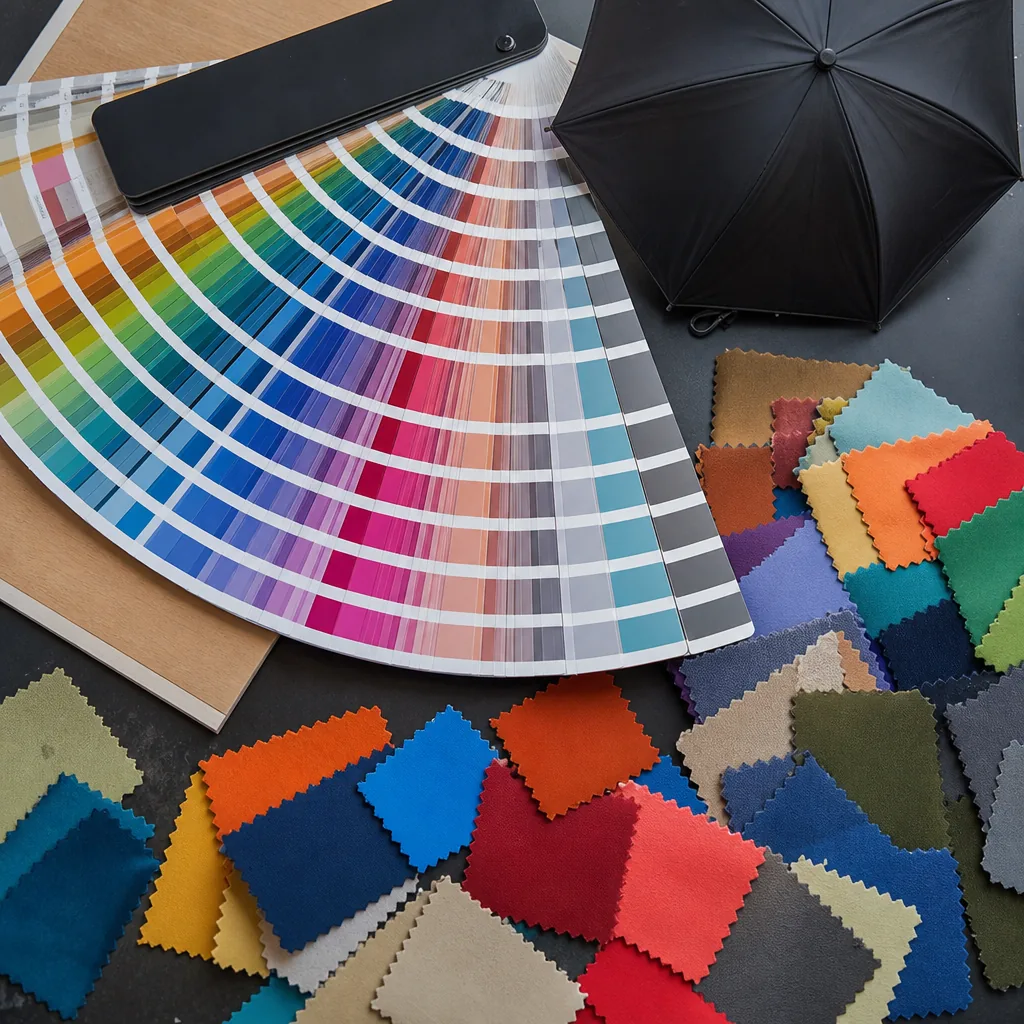
Private Label Umbrella Programs for Retail Chains and Hotel Groups
Plan private label umbrella assortments with brand control, packaging, MOQ, and FOB/DDP terms that fit multi-location re...
Read More »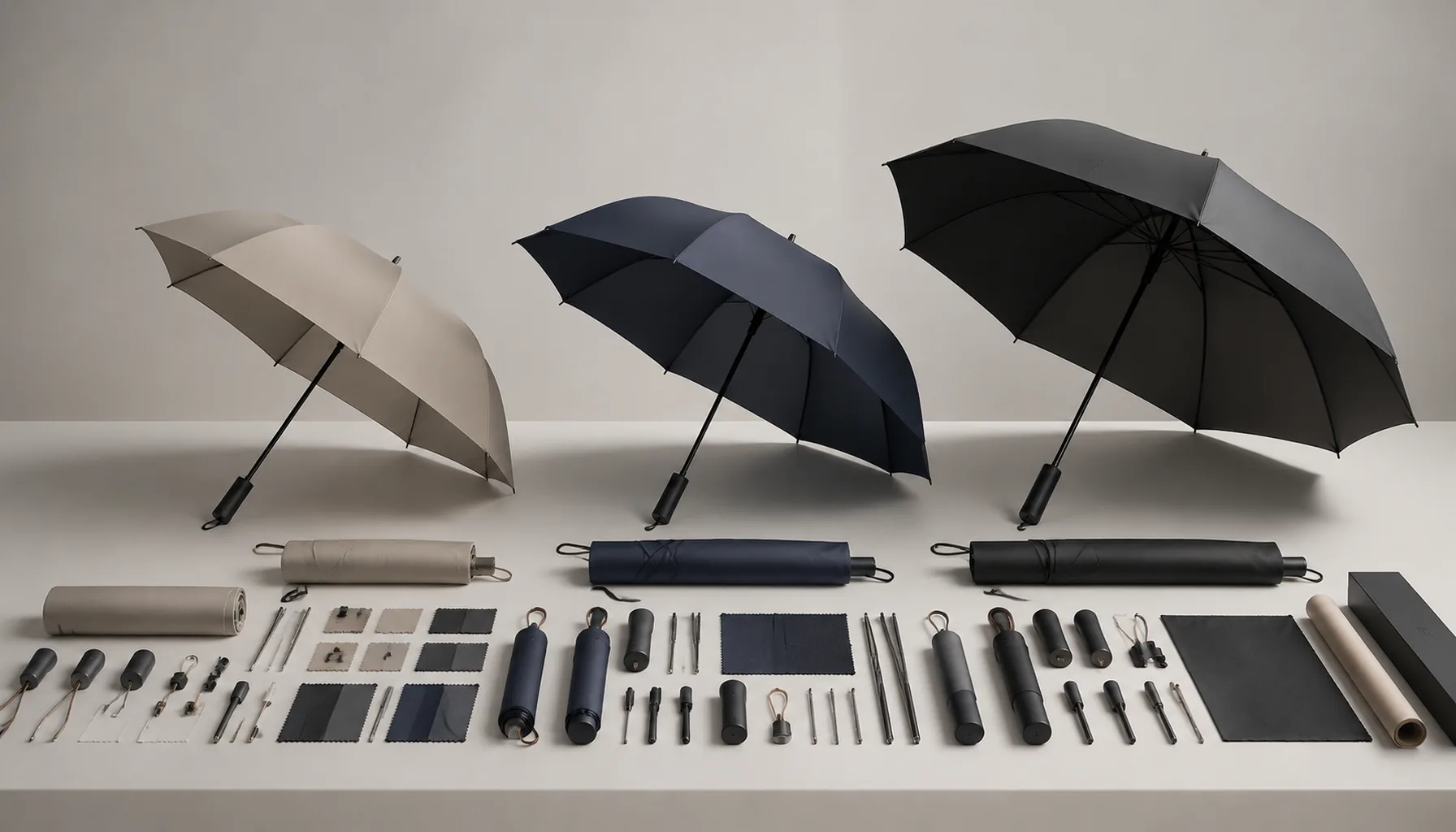
Retail Umbrella Line Planning: Good-Better-Best Specs
Build a retail umbrella range with clear good-better-best specs, target costs, MOQs, AQL checks, and packaging choices f...
Read More »Retail Umbrella Assortment Planning for Private Labels
Build a profitable private-label umbrella lineup with SKU tiers, canopy sizes, rib counts, fabric specs, packaging, MOQ,...
Read More »