Private Label Umbrella Programs for Retail Chains and Hotel Groups
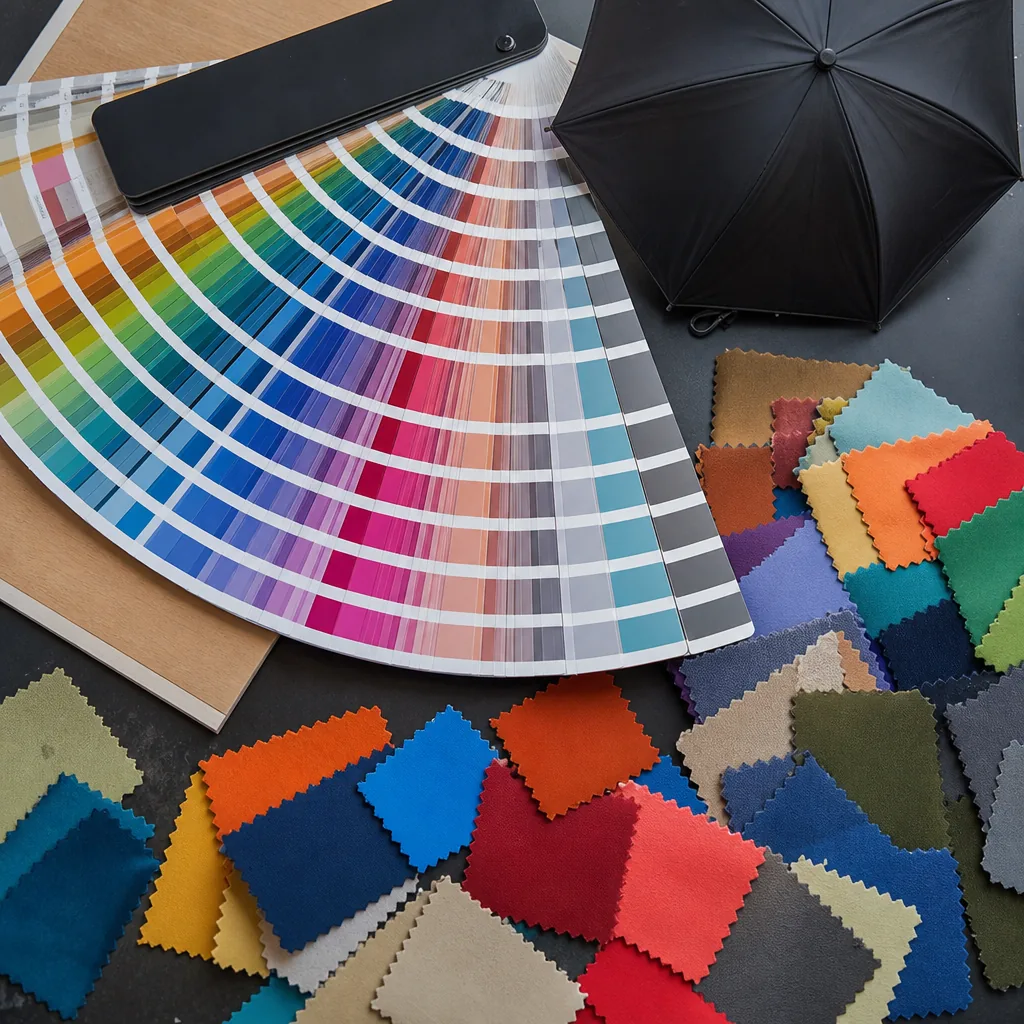
Retail chains and hotel groups do not need another generic umbrella offer; they need a private label umbrella supplier that can keep color, logo placement, packaging, and replenishment consistent across dozens or hundreds of locations. From the factory floor, the real challenge is balancing brand control with MOQ, lead time, and FOB or DDP terms so the program stays profitable, on schedule, and easy to roll out.
Build the assortment architecture
As a private label umbrella supplier, I would split the range into three tiers so buyers can see exactly where the margin sits and where the failure risk is. Entry should be a 21" manual compact with 8K steel ribs, 190T pongee, and one-position screen print; it is cheap to land, easy to replenish, and works for mass retail, convenience channels, and basic hotel back-up stock. Core should carry the volume: 23" auto-open 8K or 10K fiberglass, 190T or 210T pongee, straight or soft-touch handle, and a cleaner branded umbrella packaging spec for e-commerce and chain stores. Premium should be the 27" or 30" storm line with 16K fiberglass, double-canopy venting, UPF 50+ coating, and stronger shaft hardware for a real wind story instead of a fake one. ZheBrella’s standard practice is to lock the construction first, then apply the branding after the sample passes open-close and wind checks.
For a retail umbrella assortment, keep the entry and core SKUs year-round because they cover the widest size and price spread, and they simplify replenishment across stores and online listings. The seasonal or event-only pieces should be the premium 30" golf umbrellas, color-limited canopy runs, and special handle finishes, because those are harder to forecast and they tie up fabric and print capacity when demand is soft. In a hotel umbrella program, I would keep one black 23" auto-open model stocked all year for lobby use, plus a smaller 21" compact for guest-request kits, and only order branded colors for property openings, conference seasons, or loyalty campaigns. That keeps the standard stock clean while letting the chain add logo impact where it actually matters.
The commercial split should also match the buying terms: entry SKUs work best for FOB DDP umbrella programs with stable reorder cadence, while core and premium tiers can carry higher decoration complexity and tighter QC. If the chain wants low inventory risk, hold year-round stock on the black or navy core models and treat printed panels, gift boxes, and sleeve variants as make-to-order lots with 20- to 35-day lead times depending on color matching and carton pack. For retail buyers, the private label umbrella supplier should set MOQ by tier, not by channel, so the 21" entry line stays flexible and the 27"/30" premium line does not get forced into uneconomical short runs. That structure keeps the assortment readable for merchants and avoids mixing cheap throwaway SKUs with the umbrellas that are supposed to protect the brand.
Standardize branding surfaces
The first rule is to lock the brand system before anybody starts art routing. For a private label umbrella supplier, that means defining the canopy print area by panel count, seam breaks, and safe margins, not just by logo size. On a 21" or 23" folding umbrella, the usable zone is usually a single panel or a repeat across 2 adjacent panels; on a 27" or 30" stick umbrella, you can support a larger mark, but you still need to leave room for vents, top tips, and panel distortion. I prefer a simple rule set: one primary logo placement, one secondary copy line, and a fixed color target for 1-color and full-color versions. That keeps the retail umbrella assortment consistent across SKUs, whether the canopy is 190T pongee, 210T pongee, or POE for rain-event use. For ZheBrella, the practical standard is to approve a printed mockup on the actual frame before mass production, because artwork that looks fine flat often shifts badly once the canopy is tensioned.
Sleeve copy, hangtags, and handle marks should all carry the same hierarchy so the unit reads as one branded product, not three unrelated surfaces. The sleeve can handle care text, size, and barcode; the hangtag should carry only the retail-facing message, SKU, and country-of-origin details; the handle mark should be reduced to a logo, model code, or color dot for warehouse picking. That structure works for a hotel umbrella program as well, where the guest-facing piece needs to stay clean and durable but the carton and inner pack can still carry compliance data. In a FOB DDP umbrella program, the packaging spec matters as much as the canopy art because carton labels, polybag warnings, and branded umbrella packaging often get mixed up by different factories. Keep the artwork rules simple enough that one master file can be reused across 1-2 color printing or full-color sublimation without redrawing every SKU; otherwise the approval process becomes slow and the defects start with the artwork, not the sewing line.
Set the commercial model
For a retail chain or hotel group, the commercial model should start with SKU-level MOQs, not a blanket order number. Our standard practice at ZheBrella is to quote per umbrella size, mechanism, canopy fabric, and print colorway, because a 23" auto-open polyester umbrella and a 30" vented golf model do not run on the same cutting or assembly schedule. A private label umbrella supplier should tell you the MOQ by SKU and by color up front, since one logo on black and navy is usually easier to consolidate than three canopy colors with separate transfer films. Mixed cartons are possible when the canopy, frame, and handle are identical, but mixed SKUs inside the same outer carton usually only make sense for a retail umbrella assortment with tight replenishment planning. If you need branded umbrella packaging, that has to be frozen at the same time as the artwork, because the carton proof, hangtag, and barcode data affect the approval path and the packout labor.
Sample approvals are where most schedules slip. A realistic timeline is 5 to 7 days for blank or stock-fabric samples, 7 to 12 days for printed strike-offs, and longer if you need PMS matching, woven labels, or custom sleeve artwork. Until the sample is signed off, production should not start on bulk canopies or packaging plates; otherwise you pay twice for rework. For a hotel umbrella program, we normally ask for one physical pre-production sample and one packaging proof, because buyers often change the rib finish, handle color, or logo placement after they see the actual umbrella in hand. If approval is delayed, bulk lead time moves immediately, and a private label umbrella supplier should say that plainly instead of hiding it inside the factory calendar.
FOB and DDP serve different buying problems, so compare them by region and not just by unit price. FOB works when your freight team wants control over ocean or air booking, customs brokerage, and final destination charges; DDP works when the buyer wants a single landed number for stores, hotels, or distribution centers and does not want to manage import paperwork. For Europe, the UK, and parts of North America, DDP can make a branded umbrella packaging program easier to budget because duties, VAT handling, and last-mile delivery are bundled, but the quoted margin must include the real transit and clearance risk. For a retail umbrella assortment, FOB may look cheaper on paper, while DDP can be lower-risk for seasonal programs with fixed opening dates. The right quote should show both terms on the same spec sheet so procurement can compare landed cost by region and choose the cleaner commercial structure.
Write the quality and compliance spec
The spec has to start with the bill of materials, not the artwork. For a retail umbrella assortment or hotel umbrella program, lock the frame to fiberglass ribs and tips, a steel shaft with the agreed wall thickness, and pongee 190T or 210T canopy fabric with the exact coating called out on the PO, whether that is water-repellent, Teflon-treated, or UV-rated UPF 50+. If the program uses a vented double-canopy or auto-open-close mechanism, those details should be frozen in the sample stage because they change both wind performance and failure mode. As a private label umbrella supplier, we treat the material declaration as a compliance document: rib alloy, shaft gauge, canopy composition, handle resin, and any latex-free or phthalate-free statement have to match what the retailer approved, not what the factory happens to have in stock.
For quality control, use AQL 2.5 for key defects and make that explicit on the inspection sheet. Key defects should include broken ribs, mis-sewn panels, failed open-close operation, crooked shaft alignment, visible print registration error, water leakage at the crown, and any color or size mismatch against the approved master sample. ZheBrella’s standard practice is to separate critical, major, and minor defects, then verify panel count, rib count, seam strength, and opening force before carton release. Retailers and hotel buyers usually want a second pass on packing accuracy as well, because a good umbrella in the wrong box still becomes a chargeback. If the program is FOB DDP umbrella delivery, the packing spec should also define master carton count, inner polybag or sleeve type, desiccant if required, and the exact barcode placement.
Carton labeling and barcode accuracy are not optional details; they are part of the compliance record. Each carton should show SKU, PO number, color, size, quantity, country of origin, carton dimensions, gross and net weight, and a scannable barcode that matches the retailer master data file exactly. For branded umbrella packaging, the print proof, die line, and barcode symbology need sign-off before mass production, and any one-to-one retail carton labels should be verified against the ASN or vendor portal requirements. For U.S. and EU accounts, add REACH confirmation for restricted substances, CPSIA-style testing when the umbrella is for youth use, and a declaration on lead, phthalates, and azo dyes where applicable. If the customer requires third-party lab reports, build in lead time for fabric, handle, and print-ink testing before shipment.
Plan replenishment and rollout
For a retail umbrella assortment or a hotel umbrella program, reorder points should be set from real sell-through, not guesswork. I start with weekly demand, then add a safety stock layer that covers at least one production window plus transit buffer, because a 30 to 45 day lead time disappears fast when a store reset moves or a property opening date slips. If a chain sells 200 units a week across 40 doors, a 1.5 to 2.0 week safety stock is usually more practical than waiting until the shelf is empty. As a private label umbrella supplier, we also watch packaging and carton packout, because branded umbrella packaging changes case counts, pallet height, and warehouse handling. If the replenishment plan includes FOB DDP umbrella terms, the reorder trigger has to account for where the inventory sits, who clears customs, and how many days are lost in handoff between the factory and the DC.
The fastest way to control cost is to reuse the same frame platform and change canopy color, print, or handle finish instead of opening new tooling for every program. A shared frame with 8K or 10K fiberglass ribs, or a 23-inch auto-open format, gives you one validated structure and multiple SKUs for different banners, hotels, or seasons. New tooling only makes sense when the size or mechanism changes materially, such as moving from manual to auto-open-close, or from a straight shaft to a compact travel build. That decision matters because a new frame spec adds sample rounds, failure testing, and longer approval cycles. On the factory floor, the expensive part is not ink, it is rebuilding a stable process. For most private label umbrella supplier work, color variation and print variation deliver more retail value than redesigning the rib geometry.
Rollout should be staged by opening date and by door rank, not shipped as one big batch. For a new hotel opening, I would lock the master sample 60 to 75 days ahead, freeze artwork 45 days ahead, and release the first PO early enough to absorb a normal 30 to 45 day run plus inspection and freight. For retail, I prefer a first fill that covers the top 30 to 40 percent of doors, then a second replenishment after the first sales read, so you do not overbuy a slow colorway. If the assortment is split between 21-inch compact units and larger 27-inch or 30-inch rain models, each size needs its own safety stock target because velocity is never the same. ZheBrella’s standard practice is to keep the platform fixed, then adjust canopy color, print, and branded umbrella packaging so the program can scale without requalifying the whole build.
Frequently Asked Questions
Can one private label umbrella program cover both retail shelves and hotel amenities?
Yes, if you keep the core frame and fabric the same and vary the packaging or imprint. That reduces MOQ pressure and keeps the brand consistent while still fitting each channel.
How should a chain handle multiple colors without inflating inventory?
Use one base model with shared components and assign a minimum per color only for the canopy fabric. If the factory accepts mixed color orders, you can lower risk while keeping enough stock for rollout.
What MOQ is typical for a private label umbrella program for retail chains?
For most OEM programs, MOQ is usually 300 to 500 pieces per style or color, with packaging changes often starting at 500 to 1,000 pieces. If you want custom retail boxes or hang tags, expect the minimum to be higher than for simple logo printing.
How long does a hotel umbrella program usually take from sample approval to shipment?
A normal timeline is 30 to 45 days after final sample approval for production, plus freight time. Air shipment can arrive in about 7 to 12 days, while sea freight often takes 20 to 40 days depending on destination.
Should a retailer choose FOB or DDP for umbrella imports?
FOB works well if your team or freight forwarder controls logistics and customs clearance. DDP is better when you want landed cost simplicity, especially for multi-location rollouts, because duties and delivery are handled in one quote.
Looking to Launch Your Custom Umbrella Line?
ZheBrella is a Zhejiang-based OEM/ODM umbrella manufacturer with 17 years of export experience. Free design, low MOQ from 100 pieces, windproof construction, full-color print.
Get Free Quote Now »People Also Search For
Related Articles
Private Label Umbrella Programs for Retail Brand Owners
Build a retail-ready private label umbrella line with the right SKUs, fabrics, frame specs, packaging, MOQ, and inspecti...
Read More »
How to Specify Branded Umbrellas for Retail and Corporate Programs
Build a practical spec for branded umbrellas that protects logo placement, color control, packaging, and landed cost acr...
Read More »Umbrella Packaging for Hotel, Resort, and Amenity Brand Programs
Design packaging for hotel and resort umbrella programs that protects the product, supports brand standards, and simplif...
Read More »