Private-Label Umbrellas for Amazon FBA: Prep and Sourcing
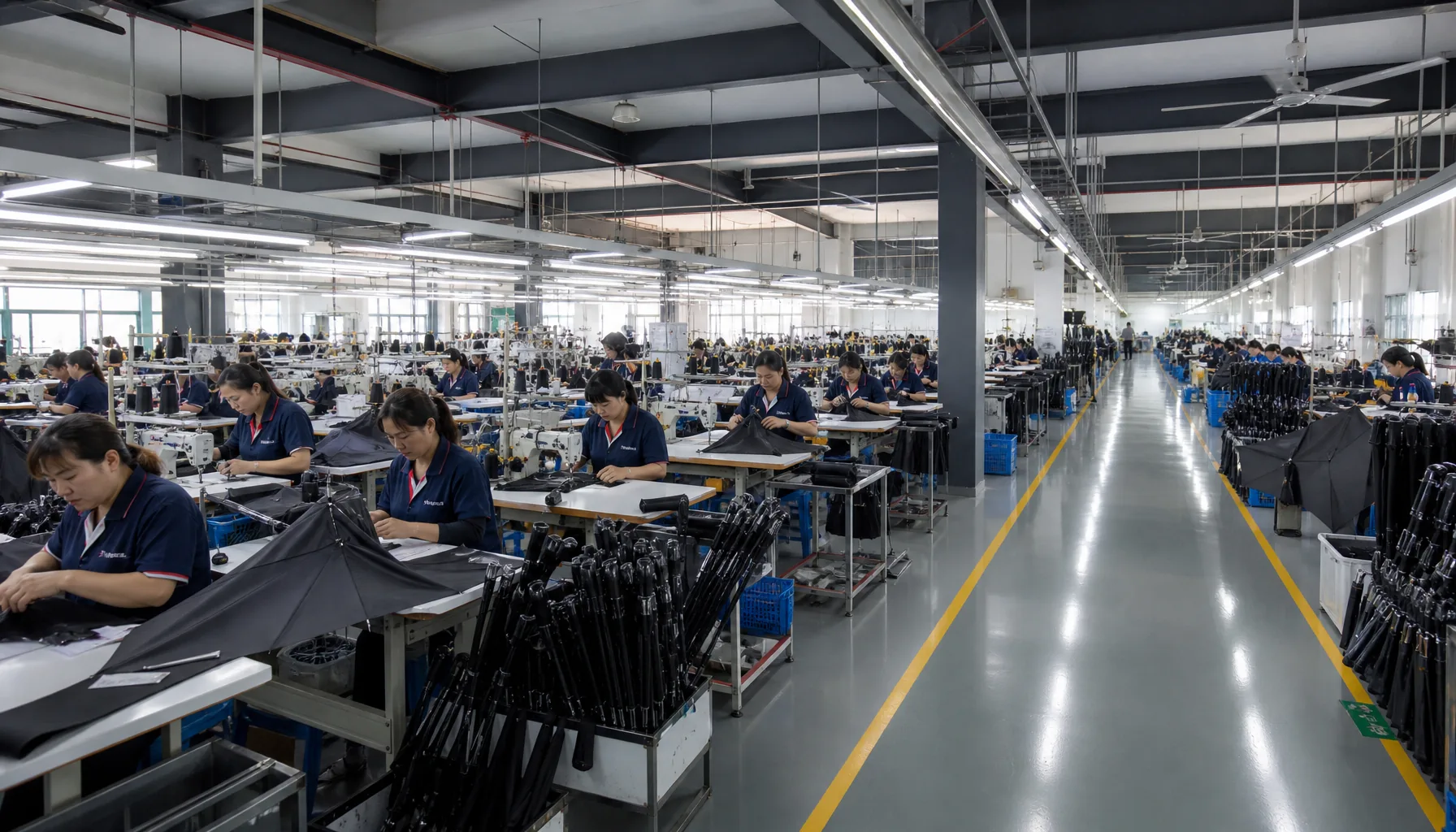
Launching an amazon fba umbrella looks simple until the details start breaking margins: canopy size, wind performance, barcode placement, carton counts, and Amazon prep rules all have to line up before inventory moves cleanly through the warehouse. On the factory floor, we see that the real risk is not making an umbrella, but making the same umbrella consistently, with packaging and labeling that survive export, inbound receiving, and customer returns. Private-label buyers who plan sourcing around those constraints avoid delays, rework, and surprise costs.
Picking a differentiated umbrella to sell
If you want an amazon fba umbrella that does not get buried in the search results, stop starting with price and start with a spec that buyers can recognize in one image. The category is crowded with generic 42-inch black auto-open models, and those are easy to compare on price but hard to defend on margin. A better private label umbrella amazon play is to choose one clear use case: a compact travel umbrella with 6K or 8K fiberglass ribs, a 190T pongee canopy, and a sleeve that actually fits after repeated folding; or a golf umbrella with a 27-inch or 30-inch canopy, double-layer venting, and a wind rating that survives real gusts instead of a vague claim. The point is to sell a measurable difference, not just a logo on a commodity frame. That is where umbrella product sourcing amazon becomes more disciplined: you define rib count, shaft material, coating, and open mechanism first, then build the listing around those choices.
The fastest way to lose on FBA is to pick a product that looks differentiated in photos but fails in prep. A fba umbrella prep plan needs to account for canopy moisture, sharp tips, closure tension, polybag suffocation labeling, carton drop performance, and whether the folded length fits Amazon size tiers without wasting freight. I would rather ship a slightly heavier 23-inch auto-open-close umbrella with fiberglass ribs and a Teflon-treated canopy than chase the lightest possible unit and eat returns from bent frames or weak stitching. If you are targeting gift or corporate buyers, add features that matter on the shelf and in review photos: EVA or rubberized handles, reflective piping, UV coating with UPF 50+, or a vented double-canopy design for wind. Those details are what make the amazon fba umbrella category less interchangeable and give you room to build a defendable ASIN.
Private label umbrella amazon sourcing should also be designed around the buyer, not the factory's easiest setup. For retail and event programs, I would separate SKUs by audience: a 21-inch compact manual model for commuter carry, a 23-inch auto-open unit for general use, and a 27-inch golf format for outdoor promotions and higher perceived value. Then decide whether the canopy is 190T pongee, 210T pongee, POE, PVC, or EVA based on how the product will be positioned, because each material changes print quality, dry time, and perceived quality. If the umbrella is meant to stand out in search, one strong differentiator is usually enough: color-blocked panels, screen-printed logos with clean edge control, or a vented frame that handles 50+ mph gusts in testing. The best umbrella product sourcing amazon strategy is not to add every feature, but to pick one or two that buyers can understand instantly and that your supplier can repeat at AQL 2.5 without drift.
FBA packaging and labeling requirements
For an amazon fba umbrella, the first mistake buyers make is treating labeling like a warehouse afterthought. Each retail unit needs an FNSKU label that stays readable through transit, so place it on the outer polybag or retail box, not on a curved canopy panel where it will wrinkle. If you are selling a private label umbrella amazon listing, the label should match the exact child ASIN and the barcode must be fully covered if Amazon requires an FNSKU-only workflow. On the factory side, we normally print and verify labels during packing rather than handing them off to a third-party prep house, because mixed SKUs in umbrella sourcing are a common source of scan errors. The label stock matters too: cheap thermal labels can smear when cartons sit in humid consolidation warehouses or container loading areas. For fba umbrella prep, the practical standard is clean placement, full scanability, and no exposed competing barcodes.
Polybag rules are where a lot of umbrella shipments get rejected. If the canopy, handle, or strap is packed in a polybag, Amazon expects the bag to be completely sealed and the suffocation warning to be visible when the opening is large enough to trigger the requirement. For a foldable amazon fba umbrella, the bag should fit the closed length without forcing the ribs or tip into the film, because punctures create both scan and damage problems. Opaque polybags are useful when you want the product to arrive with a cleaner shelf presentation, but the bag still has to allow barcode scanning without removing the unit. In umbrella product sourcing amazon work, I push buyers to choose bag thickness that survives compression in master cartons, especially for auto-open-close models with sharper crown points. If the bag tears in transit, Amazon can treat that as a prep failure even when the umbrella itself is fine.
Carton specs should be set around weight, cube efficiency, and how the umbrellas actually move through the chain, not just what fits on paper. Keep the master carton under Amazon’s size and weight limits for the destination marketplace, and build the pack-out so handles alternate direction or layer with dividers if the ribs can rub through the canopy surface. For FOB or DDP shipments, use a carton that can survive consolidation, palletization, and repeat handling, with clear carton labels showing shipment ID, destination, and unit count. Standard practice at ZheBrella is to confirm final carton count against the carton dimensions after sample packing, because a 21-inch manual umbrella and a 30-inch golf umbrella do not tolerate the same nesting pattern. For a private label umbrella amazon program, request carton drop-test discipline, corner reinforcement when needed, and a final AQL 2.5 check on label placement before goods leave the factory.
Quality control to protect reviews
An amazon fba umbrella listing can survive a weak image set; it cannot survive repeated defects. On FBA, one broken tip, crooked stitch line, or leaking seam turns into a one-star review faster than a bad ad campaign. The common failure points are predictable: ferrule cracks, loose rib joints, misaligned canopy panels, weak thread tension at the runner, and coating defects on pongee 190T or 210T fabric. For a private label umbrella amazon launch, the factory has to treat QC as review protection, not just shipment release. Our standard practice is to inspect opening force, lock engagement, canopy symmetry, printing alignment, and packaging consistency before goods ever reach the Amazon prep flow. If the product is auto-open or auto-open-close, we also test spring return and pinch risk, because buyers punish handling problems as quickly as outright breakage.
For fba umbrella prep, the most useful checks are simple and ruthless. Start with incoming material control: fiberglass ribs should be checked for splintering and resin voids, steel ribs for rust, plating loss, and bend memory, and canopy rolls for color variation, pinholes, and coating weight drift. Then run in-line sampling against AQL 2.5, with separate checks for frame function, seam strength, tip bonding, strap stitching, and carton count accuracy. A private label umbrella amazon order usually needs a pre-pack audit that verifies barcode placement, suffocation warnings if required, polybag thickness, and case pack consistency, because fulfillment mistakes create stranded inventory and avoidable returns. I also insist on open-close cycle testing on a sample from each production lot, since a mechanism that works once is not good enough for FBA.
Good umbrella product sourcing amazon work depends on finding the defects before Amazon customers do. The worst listings are rarely killed by one catastrophic failure; they die from a steady stream of small annoyances: a vent panel that sags, a handle that twists, a shaft that rattles, a canopy edge that frays after one wet commute, or a print that flakes during the first use. The fix is a layered inspection plan: pre-production sample approval, first-article inspection, mid-line checks, and a final random inspection tied to each PO. For larger runs, I prefer a documented torque test on ferrules, wind simulation for double-canopy vented models, and packaging drop tests from 60 to 80 cm. That level of discipline is what keeps an amazon fba umbrella from becoming a returns problem.
Coordinating the factory with prep
For an amazon fba umbrella, the factory has to do more than put the canopy in a polybag. The cleanest setup is to assign the FNSKU at the source, print and apply it on the unit or retail bag, and keep the barcode placement consistent across the whole lot. If the product is sold as a private label umbrella amazon listing, I prefer factory-level control of the label format, carton quantity, and case pack because it cuts down on rework at the prep warehouse. ZheBrella’s standard practice is to confirm the SKU map before production starts, then lock the artwork, barcode type, and carton count so the shipment does not drift between samples and mass production.
Fba umbrella prep is mostly about preventing avoidable damage and scan failures. Umbrellas are long, awkward, and easy to dent, so the outer carton should be sized to avoid crushing the runner, handle, or ferrule, with each unit bagged and separated to stop abrasion during transit. For umbrella product sourcing amazon, I usually push for a simple stack: unit bag, barcode label, master carton label, then pallet label if the shipment is going to a prep center or cross-dock. If the listing requires suffocation warnings, country-of-origin marks, or lot codes, those need to be printed before the goods leave the factory, not added later by a third-party warehouse.
Freight to FBA should be planned around carton dimensions, not just unit price. A cheap umbrella with oversized cartons can become expensive once Amazon charges for cubic weight and receiving delays. The better approach is to match carton count to the selling plan, keep carton weights inside Amazon limits, and decide early whether the move should go by parcel, LTL, or ocean plus domestic drayage into FBA. For a private label umbrella amazon launch, I would rather spend a little more on tighter packaging, stronger carton compression, and pre-checked labels than deal with commingled cartons, unreadable barcodes, or a rejected delivery appointment after arrival at the FC.
Launch costs and inventory planning
The first mistake with an amazon fba umbrella launch is treating the unit price as the whole budget. A real first order needs cash for sampling, tooling if you change parts, packaging, carton testing, barcodes, photo samples, and the actual freight into an FBA warehouse. For a private label umbrella amazon listing, I would budget separately for the canopy spec, frame spec, and compliance work because those are the cost drivers: a 21" compact manual model with steel ribs is one number, while a 23" auto-open-close umbrella with fiberglass ribs, pongee 190T, and a vented double-canopy is a different cost structure entirely. On the factory side, our standard practice is to quote one MOQ for production and a second number for spare parts and replacements, because broken tips, runners, and tie straps always show up after launch. If you do not reserve cash for packaging corrections and a second sample round, the launch gets delayed even when the unit cost looks acceptable on paper.
For inventory planning, the key is not overbuying your first sku before you know the real sell-through. An fba umbrella prep plan should assume some loss to inbound damage, labeling mistakes, and Amazon receiving delays, so the first shipment should not be your entire season buy unless the product is very stable and already proven. I would normally size the first run to cover 30 to 60 days of sales, then reorder once you have 3 to 4 weeks of coverage left, because umbrella lead times are rarely just production days; you also need inspection, packing, ocean or air transit, and warehouse intake. If you are sourcing a private label umbrella amazon product in peak rainy season or Q4, reorder earlier, because a 20-day factory lead time can turn into 45 to 60 days before stock is live again. That gap matters more than squeezing a few cents off the ex-factory price.
Umbrella product sourcing amazon should be built around a replenishment calendar, not a one-time purchase order. The right question is how many units you can keep on hand after accounting for MOQ, cash conversion, and your expected conversion rate, not just how low the FOB number is. A safer approach is to forecast at three levels: conservative, base, and aggressive, then place the first order at the base case and reorder at the conservative case so you are not reacting after the listing is already out of stock. For branded umbrellas, I also separate core inventory from packaging inventory, because if you run out of printed boxes or inserts, you may have product sitting in the factory but not ready for FBA. If the item is a seasonal amazon fba umbrella, plan the second buy before the first container lands; if it is a year-round promo item, keep a smaller but continuous cycle so the listing ranking does not reset from stockouts.
Frequently Asked Questions
Can a factory prep umbrellas for Amazon FBA?
Yes. Many umbrella factories can apply FNSKU labels, use compliant polybags with suffocation warnings, and pack to Amazon's carton requirements, so goods arrive FBA-ready. Confirm the exact labeling and packaging specs with the factory before production.
How do I avoid bad reviews on a private-label umbrella?
Differentiate on genuine quality - fiberglass ribs, a reliable mechanism, real wind resistance - and inspect every order under AQL before it ships. In FBA, defects translate directly into negative reviews that are hard to recover from.
What packaging changes help an umbrella stand out on Amazon without increasing FBA prep complexity?
Use a custom printed polybag or color box with a barcode-visible window, then keep the inner pack simple enough for FBA scanning. For most umbrella SKUs, a single retail box plus carton labels is easier to manage than complex inserts or multi-piece gift packaging.
What is a typical MOQ for private-label umbrellas from a factory supplier?
For standard manual or automatic umbrellas, MOQs often start around 500 to 1,000 pieces per color or style, depending on canopy size, handle type, and print method. Custom panels, special fabric, or unique handles usually push the MOQ higher.
How much lead time should an Amazon seller allow for umbrella sourcing and prep?
Sample approval usually takes 7 to 14 days, while mass production is often 25 to 40 days after artwork and specs are confirmed. Add another 7 to 12 days for export packing, inspection, and sea or air freight to your prep center or Amazon receiving location.
Looking to Launch Your Custom Umbrella Line?
ZheBrella is a Zhejiang-based OEM/ODM umbrella manufacturer with 17 years of export experience. Free design, low MOQ from 100 pieces, windproof construction, full-color print.
Get Free Quote Now »People Also Search For
Related Articles
Private Label Umbrella Assortments: Building a Retail Line
Build a profitable private label umbrella range with the right SKU mix, frame specs, fabrics, packaging, MOQ strategy, a...
Read More »
Building a Private Label Umbrella Assortment for Retail
Plan a profitable private label umbrella line with SKU mix, rib counts, fabric grades, MOQ strategy, packaging, and FOB/...
Read More »Private Label Umbrella MOQ and Cost Planning for Buyers
Learn how MOQ, unit cost, and lead times interact when sourcing private label umbrellas, with practical numbers for bett...
Read More »