Building a Private Label Umbrella Assortment for Retail

Retailers building a private label umbrella assortment often underestimate how quickly margin disappears when SKU mix, rib strength, fabric grade, and carton specs are set without factory-side discipline. On our Songxia production lines, we see the same pattern every season: too many overlapping styles, MOQs spread too thin, and delivery plans that ignore real FOB and DDP lead times. A profitable line starts with assortments engineered around store price points, replenishment logic, and what can actually run cleanly at scale.
Start With Retail Price Points and Buyer Personas
Set the retail ladder before you choose prints, handles, or packaging. A workable private label umbrella assortment usually starts with three bands: opening at $9.99-$14.99, mid-tier at $16.99-$29.99, and premium at $34.99-$59.99+, with select outdoor or golf styles above that. For convenience shoppers buying during a rainy commute, keep the opening tier narrow and cost-controlled: 21-inch or 23-inch manual stick umbrellas, or 3-fold manual compacts, on shared 8K steel frames with black electroplated shafts and either 190T pongee or basic POE canopies for clear domes. Limit decoration to a 1-color screen print, standard woven label, polybag, and export carton; gift boxes, belly bands, and multi-process branding compress margin too quickly at this retail. In retail umbrella sourcing, this tier wins on sell-through, low breakage, and fast replenishment, so the buyer logic is simple: fewer colorways, higher units per SKU, and shared components that support cleaner reorders and lower stock risk.
The $16.99-$29.99 band is where fashion and travel shoppers start comparing mechanism, hand feel, and branding, so the spec has to move with the price. Use 8K or 10K frames with fiberglass ribs, auto-open or auto-open-close functions, 190T to 210T pongee, matte rubberized handles, matching sleeves, and tighter canopy shaping. This is also the practical range for private label rain umbrellas with stronger branding, including all-over heat transfer, contrast edge binding, metal logo plaques, belly bands, or color retail boxes. Margin still depends on disciplined umbrella SKU planning: many specialty retailers target 60%+ initial markup, but near-duplicate prints dilute volume, complicate carton assortments, and raise barcode and packing errors. Reserve premium for buyers who will notice construction as much as style. At $34.99-$59.99, outdoor and gift shoppers can support 27-inch or 30-inch golf umbrellas with double-canopy venting, fiberglass shafts, UPF 50+ coating, Teflon finish, wood or machined metal handles, and wind ratings above 50 mph. Packaging should step up to claim-based hangtags, EVA sleeves, and sturdier presentation boxes, with AQL 2.5 inspection focused on finish quality and mechanism feel. Your umbrella MOQ strategy should follow the tier: opening-price programs work best on shared frames and deeper color volume, while premium programs should carry fewer styles because custom molds, specialty coatings, and gift packing increase unit cost and return risk.
Choose a Balanced SKU Mix Across Umbrella Types
A balanced private label umbrella assortment should start with four clearly different silhouettes, not six versions of the same umbrella. For most mid-market retail programs, the lowest-risk mix is one 21-inch or 23-inch 3-fold compact, one 23-inch auto-open straight stick, one 30-inch vented golf umbrella, and one seasonal UPF 50+ sun umbrella. That lineup covers commuter use, car-door convenience, gifting, and outdoor events without forcing overlap at shelf level. In retail umbrella sourcing, each SKU should have a clear job and a distinct spec. The compact is usually the price-volume driver: 190T or 210T pongee, 8K fiberglass ribs, and a manual or auto-open frame keep pack size small and unit cost under control while avoiding the weight and warranty risk of all-steel construction. The straight stick should sell on durability and presentation, with auto-open, an 8K frame, a steel shaft, fiberglass ribs, and either a hooked handle or EVA grip. The golf style only makes sense if it is truly windproof: double-canopy venting and internal wind testing around 50 mph matter more than simply offering a larger arc.
Most margin erosion in umbrella SKU planning comes from near-duplicate styles that split volume and weaken your umbrella MOQ strategy. Three private label rain umbrellas that differ only by handle color, rib count, or a 1-inch arc change rarely look distinct to the shopper, but they create separate factory variables, lower run efficiency, and raise landed cost. A handle change can require a new mold MOQ; moving from 8K to 10K or 16K changes rib sets, runner geometry, tip components, and carton size; switching from 190T pongee to POE, PVC, or EVA changes sewing, sealing, and print yield. The practical rule is simple: separate SKUs by use case and performance threshold, not by minor hardware tweaks. Keep the assortment anchored in portability, everyday reliability, wind coverage, and one UV-coated seasonal option. Standardize core components where possible, then vary graphics, sleeve cards, or retail packaging instead. One 3,000-piece run will usually price much better than six 500-piece runs because you reduce setup time, canopy waste, carton complexity, and FOB cost while keeping replenishment more predictable.
Translate Price Tiers Into Technical Specifications
Start with the target shelf price, then lock the bill of materials for each position in the private label umbrella assortment. For opening price points, a 21-inch or 23-inch compact built on an 8K frame with a 190T pongee canopy, steel shaft, and mixed steel ribs is the lowest-risk base spec for retail umbrella sourcing. It controls unit cost and fits high-volume replenishment, but buyers should treat it as basic rain coverage only: steel adds weight, and once a steel rib takes a bend after inversion, recovery is limited. Keep this tier manual open unless margin clearly supports a basic auto-open system; adding mechanics to an entry umbrella can raise defect exposure faster than it raises perceived value. For the next step up, 210T pongee is usually the most efficient upgrade because the tighter weave improves print sharpness, supports cleaner full-panel graphics, and gives private label rain umbrellas a smoother hand. Pair it with a 23-inch or 27-inch frame and fiberglass end ribs so the shopper sees a real durability gain, not just a higher ticket.
Move into mid and premium tiers only when the customer can recognize the upgrade within a few seconds of handling the product. A 23-inch or 27-inch auto-open stick with 210T pongee, an 8K frame, and fiberglass end ribs is a practical middle spec for umbrella SKU planning: the open action feels better, flex recovery is stronger than steel, and the cost stays below most 27-inch to 30-inch golf constructions. Use 16K frames selectively for fashion, gifting, or department-store programs. They create a rounder canopy and a more refined silhouette, but the added rib count increases assembly time and tolerance risk, so they are rarely the right base for volume business. Reserve double-canopy vented designs for 27-inch to 30-inch executive or golf umbrellas with fiberglass frames, where higher wind resistance can be tested and supported instead of implied on-pack. Premium handles, sleeves, and hangtags justify the spend only when they improve touch, presentation, or selling clarity: rubberized grips, matte crook handles, wood-look handles, and sleeves or tags that explain auto-open, UV coating, recycled fabric, or vented construction. In umbrella MOQ strategy, treat custom handles, woven labels, and upgraded tags as separate sourcing decisions because their minimums often exceed the MOQ of a stock frame platform.
Manage MOQ, Colors, and Packaging Without Overstock
Color-level MOQ is what keeps a private label umbrella assortment sellable instead of bloated. Factories may quote MOQ by style, but the real breakpoints sit in the bill of materials: canopy dye lots, handle molds, sleeves, and retail packaging all set their own minimums. A 23-inch 8K auto-open umbrella can be offered at 1,200 pieces per style, yet only 300 pieces per color if every color uses the same frame, shaft, and handle. That changes when you specify a custom Pantone on 190T pongee rather than stock black, navy, or red; the fabric mill may need 800 to 1,000 meters per shade, which usually lifts the workable color MOQ to about 500 to 700 units. For retail umbrella sourcing, the disciplined approach is to freeze hardware first, open with proven core colors, and treat seasonal shades as test SKUs until sell-through supports a repeat order. That gives buyers cleaner umbrella SKU planning and fewer slow colors trapped in inventory.
Shared-frame production is the simplest cost lever in a private label umbrella assortment. When several SKUs share one 21-inch folding 8K auto-open-close chassis with fiberglass ribs, a black electroplated steel shaft, an ABS handle, and a woven wrist strap, you can change canopy print, logo placement, or sleeve graphics without reopening tooling or splitting component buys. The same logic works on straight umbrellas: one 27-inch 16K frame can carry solid 190T pongee, alternating panels, or a basic screen print while keeping assembly stable and QC aligned to AQL 2.5. Buyers usually save more by consolidating around one or two handle families and one frame diameter than by chasing the lowest headline MOQ, because each move from EVA foam to molded PP or wood-look plastic creates a separate purchasing, packing, and inspection stream. Distributors can also standardize one fabric across multiple SKUs, or one handle across several silhouettes, to reduce unit cost without making private label rain umbrellas look duplicated.
Packaging is where an umbrella MOQ strategy often creates hidden overstock. Start with carton packing that fits store handling and freight efficiency: typically 24 or 36 pieces per master carton for straight umbrellas, and 36 to 60 pieces for compact folding styles, depending on unit weight and carton compression limits. Risk rises when each color needs its own display box, barcode label, hangtag, and PE or non-woven inner sleeve, because those trims are hard to reuse on the next PO. A lower-risk setup is to standardize UPC or EAN label size and placement, keep one bilingual care hangtag across the line, and reserve printed display boxes for the highest-volume SKUs only. Inner sleeve options should match the retail price point: clear polybags are the lowest cost, matching pongee sleeves improve presentation, and zip sleeves add perceived value but increase sewing time and carton cube. For replenishment programs, common packaging specs shorten reorder lead times and cut write-offs.
Sampling, Quality Approval, and Delivery Planning
Lock the approval sequence before you quote a delivery date: proto sample, pre-production sample, then bulk production. For a private label umbrella assortment, the proto sample is where you settle the specs that drive unit cost, margin, and return risk: 21 inch compact, 27 inch golf, or 30 inch straight; 8K or 10K rib construction; fiberglass versus steel ribs; manual open versus auto-open-close; and canopy material such as 190T pongee, 210T pongee, or clear POE for fashion SKUs. On stock frames with existing molds and standard handles, proto sampling typically takes 5 to 7 days. A new handle shape, molded tip, or woven label usually adds 3 to 5 days. Do not clear this stage from photos alone if your retail umbrella sourcing spans opening price, mid-tier, and giftable SKUs. The same print can behave differently on a 21 inch 3-fold auto-open-close frame versus a 30 inch straight umbrella, especially for opening force, balance, canopy tension, and perceived hand feel. A physical proto review catches those differences before you lock umbrella SKU planning across multiple frame types.
Use the pre-production sample as the final cost and risk gate. It should match production intent in frame, canopy panels, print method, care label, hangtag, polybag, inner carton, and master carton. If your artwork includes tight registration, metallic ink, or edge-to-edge sublimation on 190T or 210T pongee, approve it against Pantone targets and check panel alignment, seam shift, and distortion near tip pockets before cutting bulk fabric. Set AQL 2.5 checkpoints before release: clean appearance with no oil marks or scratched ferrules; even canopy tension with no loose stitches; auto-open or auto-open-close cycling without runner hesitation; print accuracy within the approved tolerance; and retail packaging with correct barcode placement and ship-ready carton strength. As a practical benchmark, allow 30 to 35 days after PPS approval for 3,000 to 5,000 pieces on stock frames with simple printing and standard export cartons. Allow 40 to 50 days for mixed SKUs, custom retail boxes, double-canopy vented styles, or added UPF 50+ or Teflon finishes. Under FOB terms, book vessel space once bulk fabric and packaging are confirmed; under DDP, add a 7 to 12 day customs and transit buffer and complete final inspection before container loading so private label rain umbrellas ship on time without turning your umbrella MOQ strategy into destination-side claims.
Frequently Asked Questions
How many umbrella SKUs should a small private label launch start with?
Many buyers start with 3 to 5 SKUs: one compact, one automatic straight umbrella, one premium windproof model, and optional seasonal or fashion colorways. This keeps MOQ and inventory risk manageable.
Can multiple colors share one MOQ?
Sometimes, if the same fabric type, frame, handle, and print method are used. Buyers should confirm the minimum per color because dyeing, cutting, and packing still create factory-level changeover costs.
What is a practical starting SKU count for a new private label umbrella program?
For a first retail launch, 4 to 8 SKUs is usually the most workable range: for example, 2 compact styles, 1 stick umbrella, 1 golf umbrella, plus color variants. This keeps tooling, packaging, and MOQ exposure manageable while still giving buyers enough assortment depth for testing.
How should MOQ be allocated across colors and handle variations in one umbrella style?
Many factories can support a style MOQ around 500 to 1,000 pieces, but color splits often need 100 to 300 pieces per color and a higher minimum for custom handles or molds. If you are testing sell-through, keep the frame and canopy spec fixed and vary print or colorways instead of changing hardware across every SKU.
When should a buyer choose FOB instead of DDP for a retail umbrella assortment?
FOB is usually better when you already have a forwarder, need tighter landed-cost control, or are consolidating umbrellas with other seasonal items. DDP can work for smaller launches or first orders, but buyers should confirm duty treatment, carton labeling requirements, and final delivery lead time before approving the PO.
Looking to Launch Your Custom Umbrella Line?
ZheBrella is a Zhejiang-based OEM/ODM umbrella manufacturer with 17 years of export experience. Free design, low MOQ from 100 pieces, windproof construction, full-color print.
Get Free Quote Now »People Also Search For
Related Articles
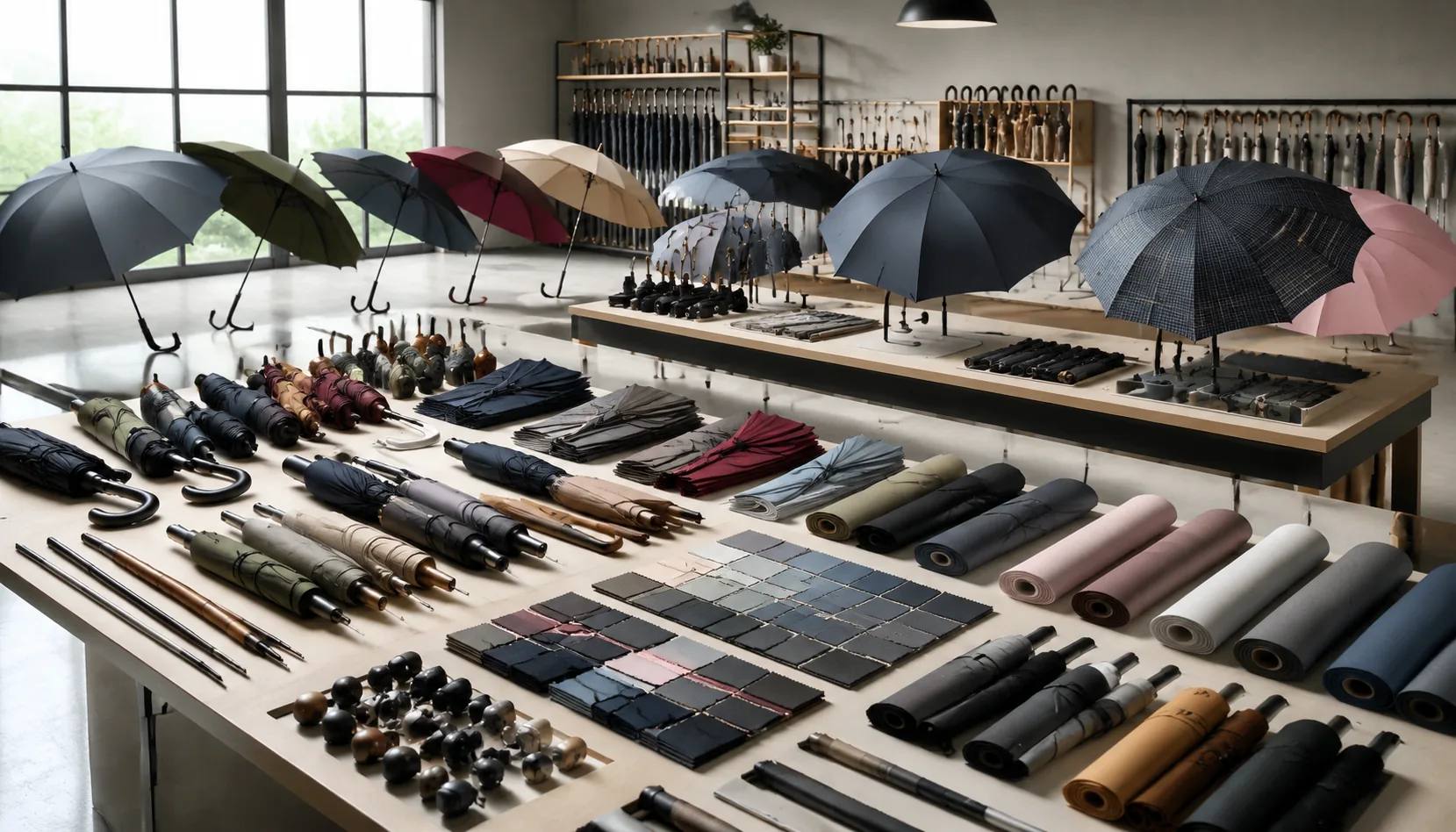
Private Label Umbrella Assortment Planning for Retail Buyers
Build a balanced private label umbrella range with clear SKUs, fabric specs, MOQ planning, AQL targets, and retail-ready...
Read More »Private Label Umbrella Programs: SKU Planning for Retail Buyers
Plan retail umbrella SKUs with the right sizes, fabrics, MOQ, packaging, and FOB/DDP timelines before committing to a pr...
Read More »
Private Label Umbrella Assortments: Building a Retail Line
Build a profitable private label umbrella range with the right SKU mix, frame specs, fabrics, packaging, MOQ strategy, a...
Read More »