Private Label Umbrella Assortment Planning for Retail Buyers
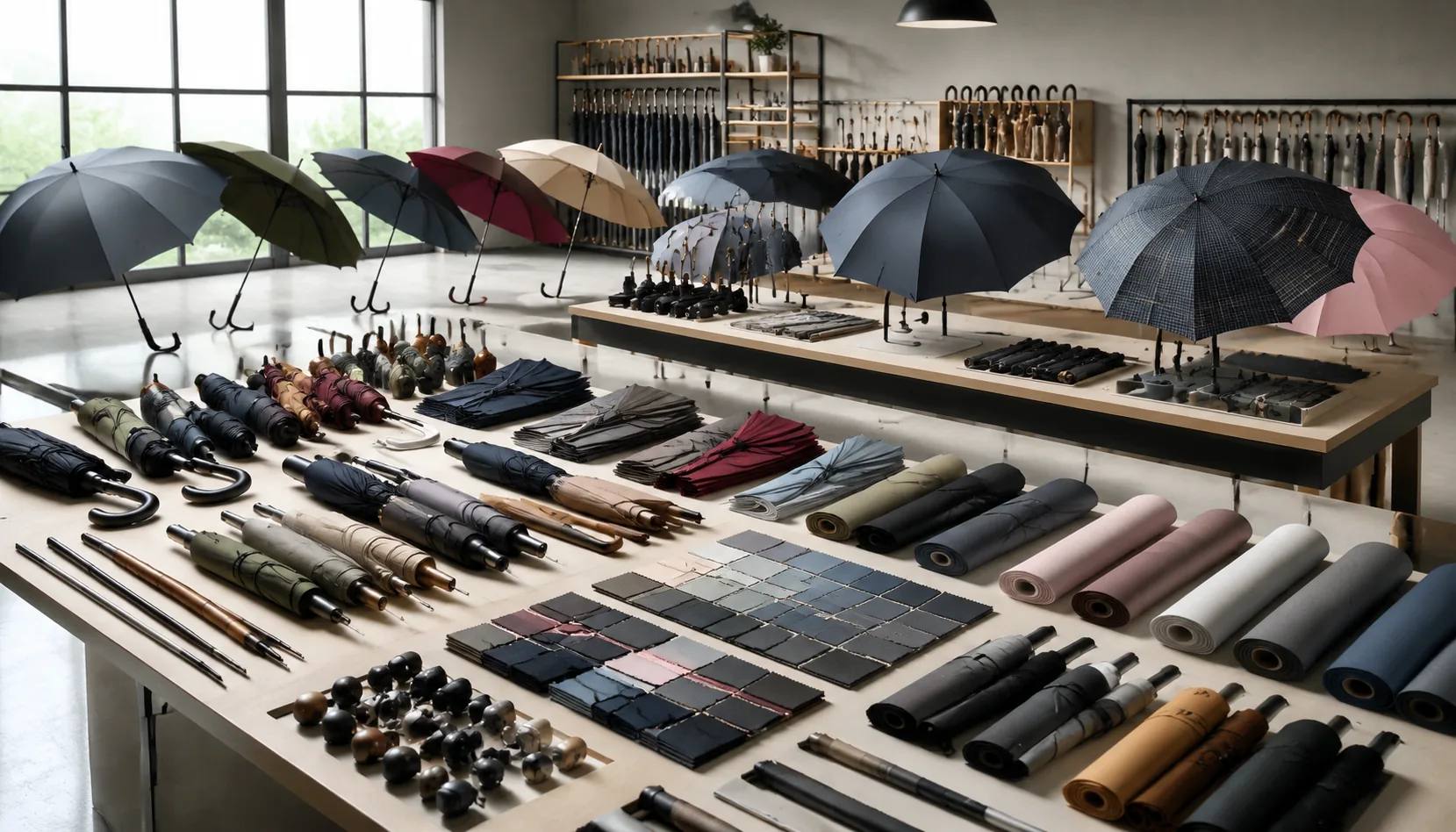
Retail buyers often see umbrella programs fail for the same reasons we see on the factory floor: too many overlapping SKUs, vague fabric specs, and packaging decisions made after production has already started. A balanced private label umbrella assortment starts with clear use cases, realistic MOQs by frame and fabric, AQL targets that match the selling channel, and retail-ready packs engineered before sampling—not after cartons are booked.
Define the Retail Price Architecture
Price architecture should start with use case, not decoration. For a private label umbrella assortment, I usually map “good” around compact 3-fold units: 21" or 23" arc, manual or basic auto-open, 8K steel ribs, 190T pongee, straight plastic handle, sleeve only or simple OPP bag. This is the volume SKU for drugstores, supermarkets, campus shops, and travel sets, often landing at a $9.99–$14.99 retail target depending on freight and margin. If the buyer wants a lower opening price, do not fake it with thinner fabric and loose sewing; reduce packaging first. A printed hangtag plus barcode sticker costs much less than a PET gift box, and it does not weaken the frame. For retail umbrella sourcing, the lowest tier still needs a clean opening cycle, rust-controlled shaft, and canopy seam tolerance tight enough to pass AQL 2.5 without arguing over “acceptable” puckering.
The “better” tier is where umbrella SKU planning becomes important because formats should separate clearly on the shelf. A 23" auto-open 3-fold with fiberglass-reinforced ribs, 210T pongee, Teflon water-repellent coating, and rubberized handle can sit around $16.99–$24.99 retail. A 27" stick umbrella with 8K or 10K fiberglass ribs, steel shaft, curved EVA or PU handle, and matching sleeve can justify $19.99–$29.99, especially for commuter and department-store channels. If the assortment includes private label rain accessories like ponchos or shoe covers, keep this mid-tier visually coordinated but do not overpack it. Color belly band, woven label, care insert, and UPC are usually enough. The common factory-floor mistake is letting every SKU become “premium” on paper; then the 3-fold, stick, and golf umbrella all fight at the same price point and the buyer loses ladder logic.
The “best” tier should earn its price through structure and performance, not just a heavier carton. Golf umbrellas at 30" or 32", 8K or 16K fiberglass ribs, double-canopy vented windproof construction, 210T pongee or polyester with UV UPF 50+ coating, and a tested 50+ mph wind-tunnel claim can retail from $34.99–$59.99. Sun umbrellas can sit in the same upper band when they use black UV backing, reflective silver coating, POE viewing panels, or EVA-coated handles with a premium sleeve. For private label umbrella assortment planning, I advise buyers to assign packaging budgets by tier: sleeve and hangtag for good, printed header card or kraft box for better, rigid gift box only for best or online bundles. As a wholesale umbrella supplier, ZheBrella typically checks target FOB against carton cube early, because a beautiful $4 gift box can destroy DDP economics faster than a 10K fiberglass upgrade.
Build SKUs Around Real Buyer Needs
For a private label umbrella assortment, I would not start with a broad catalog; I would start with four jobs to be done. The daily-carry SKU should be a 21" or 23" folding umbrella, auto-open if the buyer wants convenience, manual if they want the lowest landed cost, with 190T or 210T pongee and fiberglass ribs so the frame survives real bag abuse. That is the volume driver in retail umbrella sourcing because it hits commuters, students, and gift buyers at the same time. For umbrella SKU planning, keep the body simple: one logo position, one handle style, one sleeve, and a consistent panel count so repeat orders do not fragment production. The compact model is also where you can protect margin by avoiding decorative extras that raise defect risk and slow packing.
The second core SKU should be a family-size stick umbrella, usually 27" or 30", with a steel shaft, fiberglass ribs, and a straight handle that feels stable in the hand. This is the format that sells for school runs, event use, and car storage, and it gives a wholesale umbrella supplier a cleaner carton pack than oddball sizes. I would pair that with a premium double-canopy vented windproof model, ideally 23" or 27" with 8K or 10K fiberglass ribs and a vented top layer; that construction handles stronger gusts and is the one item in a private label umbrella assortment that justifies a higher retail ticket. For private label rain accessories, the premium piece also helps anchor the line and makes the rest of the range look more considered.
The fourth SKU should be a UPF 50+ sun option, usually in 190T pongee with silver UV coating or a reflective inner layer, because many buyers now want one umbrella that works for rain and heat. In practice, I keep the color program tight: black, navy, and one seasonal accent for the rain line, then one light neutral for the sun model. Fewer colorways reduce fabric MOQ, simplify screen setup, and cut the risk of dead stock when a retail promotion changes. On the factory side, our standard practice is to hold the assortment to four core constructions and only open extra colors after sell-through proves demand. That is the cleanest way to balance private label umbrella assortment breadth with inventory discipline, especially when order sizes are spread across multiple SKUs instead of one large program.
Lock Core Specifications Before Sampling
Lock the fabric, frame, and mechanism before any artwork sampling, because changing these later will invalidate cost, weight, carton size, and test results. For a mass retail private label umbrella assortment, 190T pongee is the usual starting point: tight enough for clean water repellency, affordable in dyed stock lots, and stable for screen or heat-transfer logos. Premium lines should move to 210T pongee, especially on 23" and 27" sticks where the hand-feel is obvious on the sales floor. If the program includes private label rain accessories beyond umbrellas, keep fabric color standards consistent across sleeves, pouch bags, and rain ponchos, or the display will look mismatched under store lighting.
Frame choices need to be specified in plain engineering terms, not just “windproof.” Steel ribs keep cost down and work for 8K promotional or opening-price retail umbrellas, but they add weight and can bend permanently after inversion. Fiberglass ribs cost more but recover better, especially on 10K or 16K frames. An 8K frame is fine for a compact 21" manual umbrella or basic 23" stick; 16K belongs in a premium wind-resistant line where the buyer is willing to pay for smoother canopy tension and better rib distribution. For retail umbrella sourcing, I would not approve a 16K frame with low-grade shaft plating or weak stretchers, because customers blame the brand, not the component factory.
Mechanism and packing details should be frozen in the same spec sheet as the frame. Manual open is cheaper, lighter, and safer for kids’ or budget SKUs; auto-open suits 23" stick umbrellas and executive gifts; auto-open-close is mainly for 21"–23" compact travel styles but needs cycle testing because springs and runners fail before fabric does. Handle material, finish, and shape must be defined: EVA foam, rubberized plastic, ABS crook, wooden J-handle, or soft-touch coating all affect perceived value. Sleeve fabric, stitched label, hangtag size, warning text, UPC/EAN barcode position, and carton barcode must be confirmed before sampling. Good umbrella SKU planning also means assigning barcode numbers only after color, size, and mechanism are final, otherwise warehouse receiving will become a mess.
Plan Packaging for Shelf and E-Commerce
Display-ready cartons are useful when the retailer wants fast shelf loading, but they change umbrella SKU planning because carton quantity, orientation, and barcode visibility must match the store planogram. A 12-piece PDQ tray works for compact umbrellas near checkout; a 24-piece shipper is better for seasonal aisle sets; long stick umbrellas often need a floor display or vertical divider carton to prevent handle damage. Every carton should carry scannable labels on at least two adjacent sides: PO number, style number, color, quantity, gross/net weight, carton dimensions, country of origin, and GS1-128 or retailer SSCC labels when requested. A wholesale umbrella supplier should also separate mixed-color assortments clearly inside the carton, because DC receivers do not open every sleeve to identify navy versus black. Good packaging reduces chargebacks, speeds inbound receiving, and keeps the private label umbrella assortment looking consistent online and on shelf.
Control Costs, MOQ, and Inspection Risk
MOQ risk is usually created by color and component fragmentation, not by the umbrella category itself. For a private label umbrella assortment, I advise retail buyers to count MOQ by SKU/color, not just by total order quantity. A 23" auto-open stick umbrella in black, navy, red, and custom Pantone green is four production lots for canopy cutting, printing, sewing, and packing control. A common factory floor threshold is 500-1,000 pcs per color for standard 190T pongee, while custom dyed 210T pongee or special POE/PVC/EVA panels may push higher because the fabric mill has its own minimums. If the order mixes 21" folding, 23" stick, and 27" golf umbrellas, umbrella SKU planning should start with the slowest-moving colors and eliminate weak variants before artwork is finalized.
The best way to control cost is to share parts across styles without making the retail wall look repetitive. For example, a 21" auto-open-close compact, a 23" auto-open stick, and a 30" golf umbrella can use the same 190T pongee color, the same woven label, the same hangtag, and the same carton mark, while changing frame size, handle type, and rib structure. Steel ribs reduce price, but fiberglass ribs and stretchers are better for wind claims, especially on 8K or 10K double-canopy designs rated around 50+ mph in a controlled wind tunnel. In retail umbrella sourcing, shared components also reduce spare-part mistakes during assembly and make reorders easier for a wholesale umbrella supplier to schedule.
Never skip pre-production samples if the program involves private label rain accessories with custom logos, UV coating, Teflon water repellent, or retail packaging. A proper PP sample should confirm canopy fabric weight, print position, handle material, barcode scan, warning labels, sleeve fit, and carton drop-test logic before bulk cutting starts. Typical mass production lead time is 30-45 days after sample approval, assuming no late artwork changes and no custom fabric delay. Final inspection should use AQL 2.5 for major defects, checking open/close function, rib alignment, seam tension, water repellency, logo color, packaging, and carton quantity. FOB gives the buyer more freight control and clearer factory pricing; DDP is simpler for smaller retailers but hides duty, inland trucking, and seasonal freight volatility inside the unit cost.
Frequently Asked Questions
How many umbrella SKUs should a new private label range start with?
Most retail buyers can start with 3-5 SKUs: one compact, one stick, one windproof premium model, and one seasonal sun or golf umbrella. This keeps MOQ and color inventory manageable.
Can different SKUs share the same fabric color and logo setup?
Yes. Sharing 190T or 210T pongee colors, logo artwork, handles, and sleeves can reduce sampling time, simplify quality control, and improve pricing across the assortment.
How many SKUs should a first private label umbrella assortment include?
Most retail buyers start with 6–12 SKUs: compact folding umbrellas for everyday price points, 1–2 stick umbrellas, and a premium option such as windproof or golf umbrellas. Keep colors focused at first, usually black, navy, gray, and 1–2 seasonal colors.
What MOQ should buyers expect when planning umbrella SKUs?
Typical OEM umbrella MOQs are 500–1,200 pieces per style or color, depending on frame, fabric, and printing requirements. Buyers can often reduce risk by using shared components across multiple SKUs, such as the same frame with different canopy colors.
What quality targets should be set for retail umbrella orders?
For retail programs, buyers commonly use AQL 2.5 for major defects and AQL 4.0 for minor defects, with checks for opening function, rib strength, fabric leakage, printing accuracy, and barcode packaging. Pre-production samples should be approved before bulk production begins.
Looking to Launch Your Custom Umbrella Line?
ZheBrella is a Zhejiang-based OEM/ODM umbrella manufacturer with 17 years of export experience. Free design, low MOQ from 100 pieces, windproof construction, full-color print.
Get Free Quote Now »People Also Search For
Related Articles
Private Label Umbrella Programs for Retail Buyers and Chains
Plan a private label umbrella line with realistic MOQ, fabric, frame, packaging, AQL, and FOB/DDP details for retail pro...
Read More »
Retail Umbrella Assortment Planning: SKU Specs That Sell
Plan retail umbrella SKUs by size, rib count, fabric, packaging, and MOQ to balance shelf price, durability, and repleni...
Read More »
Private Label Umbrella Programs for Retail Buyers
Plan a retail-ready private label umbrella line with clear specs, MOQ tiers, packaging choices, QC checks, and FOB or DD...
Read More »