Private Label Umbrella Programs for Retail Buyers and Chains
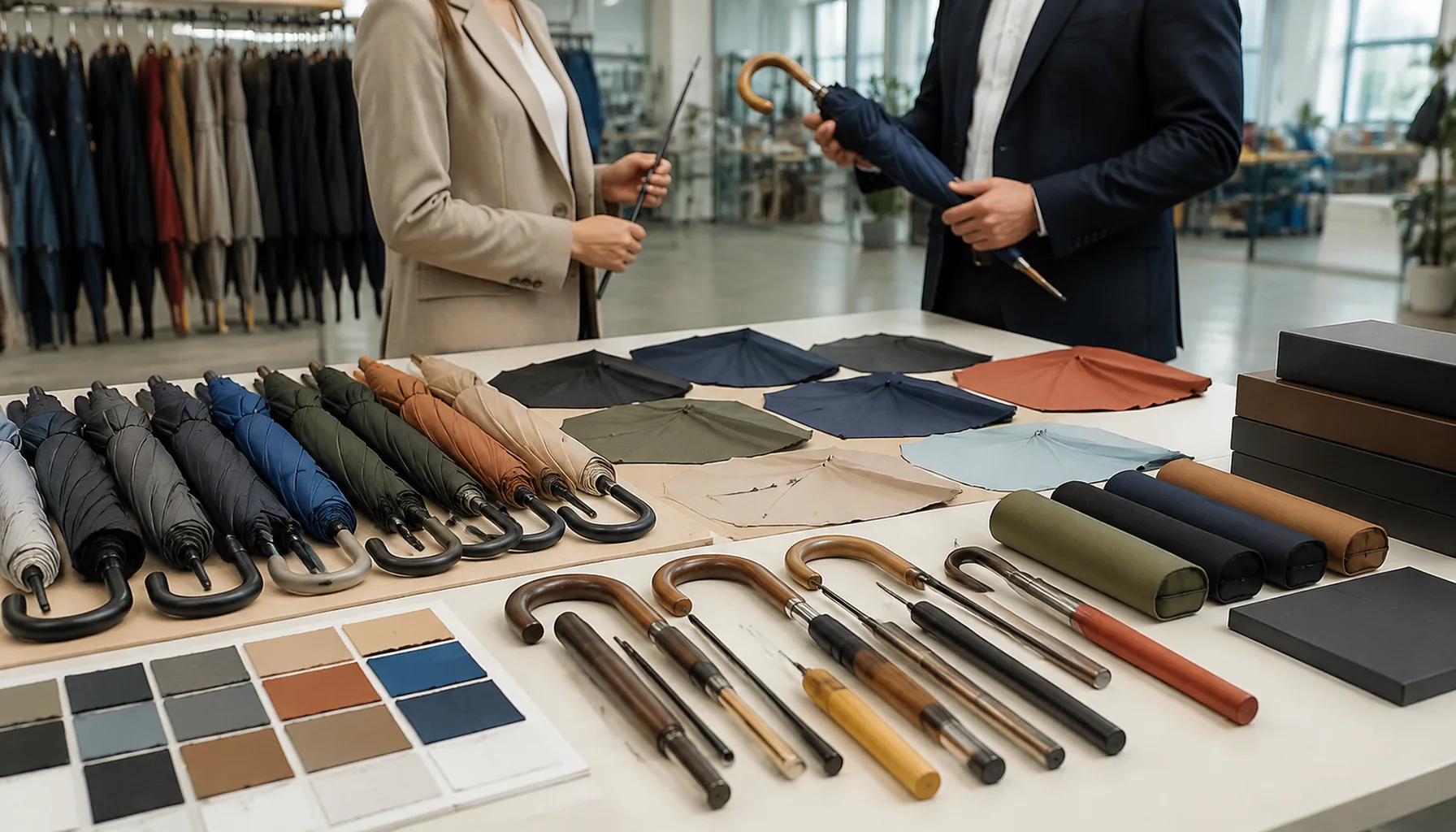
Retail umbrella programs often get delayed not by design ideas, but by mismatched MOQ, fabric choices, frame specs, packaging assumptions, and unclear inspection or delivery terms. As a private label umbrella manufacturer in Songxia, we see buyer plans succeed when sourcing, QC, and logistics are locked before sampling, from pongee weight and shaft strength to carton drop tests, AQL levels, and FOB or DDP cost control.
Define the Retail Line Before Sampling
Define the line by retail use case before you ask for samples, because a private label umbrella manufacturer cannot cost properly from a mood board. I usually start with five anchor SKUs: a 21" 3-fold compact for handbags and checkout fixtures, a 23" straight stick for daily commuting, a 27" or 30" golf umbrella for outdoor and club channels, a 19" kids umbrella with POE or pongee canopy, and a 23" UPF 50+ sun model for summer travel. For the compact, assume 8K steel or fiberglass ribs, 190T pongee, manual or auto-open-close, target retail $9.99–$19.99, 48–60 pcs per export carton, and a realistic umbrella MOQ of 1,200–3,000 pcs per color depending on printing. The straight stick can retail at $14.99–$29.99 with 24–36 pcs per carton, especially if you specify J-handle, EVA foam, or coated plastic grip up front.
Golf umbrellas are where buyers often under-budget the frame. A cheap 27" steel 8K golf model may look fine in a showroom, but a retail chain taking returns after one windy weekend will wish it had specified fiberglass shaft and ribs, double-canopy venting, and at least a 50+ mph wind-tunnel benchmark. For a 27"/30" golf SKU, plan retail at $24.99–$49.99, 12–24 pcs per carton, 210T pongee, manual or auto-open, and MOQ around 600–1,200 pcs per color when the canopy is solid or panel-printed. Kids umbrellas need a different risk check: rounded tips, pinch-proof runner, lighter 8K frame, non-toxic POE/PVC/EVA windows if used, and carton counts of 48–72 pcs. Target retail is normally $7.99–$16.99, but licensed artwork, sublimation, or multiple panel colors can push OEM umbrella production costs higher than buyers expect.
Sun umbrellas should be planned as a seasonal SKU, not treated as a rain umbrella with a silver coating added at the end. A credible UPF 50+ model needs black glue or silver UV coating, documented fabric test results, colorfastness control, and careful seam tension because coated 190T/210T pongee marks more easily during sewing. Retail price usually lands at $16.99–$34.99 for a 23" stick or compact sun model, with 24–48 pcs per carton and MOQ of 1,200–2,400 pcs per color. As a retail umbrella supplier, ZheBrella’s standard practice is to build the first quote matrix with FOB and DDP options, carton dimensions, gross weight, lead time of 35–55 days after approval, and AQL 2.5 inspection assumptions. That gives private label rain umbrellas a commercial structure before anyone wastes two weeks sampling a style the shelf price cannot support.
Choose Frame and Fabric Specs That Fit the Price Tier
Frame choice is where retail price tier becomes visible before the customer even opens the umbrella. Steel shafts and steel ribs keep cost down and give a solid hand-feel, but they add weight and can bend permanently after a hard gust; I usually reserve them for entry-level 21" and 23" manual or auto-open stick umbrellas sold as value private label rain umbrellas. Aluminum shafts reduce weight and resist rust better, but aluminum ribs alone are not my first choice for wind claims because they deform too easily. Fiberglass ribs cost more, yet they flex back instead of kinking, which is why a serious private label umbrella manufacturer will push fiberglass for mid-tier and premium retail programs. An 8K frame is standard and efficient for most 23" models, while 10K gives a modest durability upgrade without looking overbuilt. A 16K rib layout creates a rounder canopy and stronger positioning, but it adds labor, rib parts, and sewing alignment time, so it belongs in premium 27" or 30" family-size SKUs, not every shelf slot.
Fabric spec should follow the same price logic: do not pay for 210T pongee if the handle, frame, and packaging still look like a discount umbrella. 190T pongee is the practical baseline for many retail umbrella supplier programs because it prints cleanly, dries faster than cheap polyester, and gives acceptable water beading with a standard water-repellent finish. 210T pongee is denser, smoother, and better for saturated colors, especially navy, black, bottle green, and custom Pantone panels used in OEM umbrella production. Plain polyester can work for opening-price umbrellas, but it wrinkles more, has a rougher hand, and usually needs tighter incoming inspection on color shade and coating consistency. For higher retail claims, add Teflon coating for stronger initial repellency or UV coating for UPF 50+ summer positioning. Our standard practice at ZheBrella is to match fabric roll inspection with canopy cutting records, because a 2-3% shade variation across panels becomes very obvious on 16K umbrellas.
Double-canopy windproof construction is worth the added cost only when the retail story and frame can support it. A vented double canopy lets air escape through the upper layer, reducing inversion risk in gusts; paired with fiberglass ribs and a decent runner, it can survive 50+ mph wind-tunnel testing in a controlled setup. But if the program uses thin steel ribs, a loose runner, or a weak spring in an auto-open mechanism, the vent is mostly decoration and the return rate will still come from bent ribs or failed tips. For a chain buyer, I would specify double canopy on 27" golf umbrellas, 23" premium stick umbrellas, and compact auto-open-close models positioned as storm umbrellas. It adds fabric, sewing operations, binding, and inspection time, so umbrella MOQ and target FOB price must be discussed early. For mixed retail assortments, keep the entry SKU simple with 190T pongee and 8K steel or steel-fiberglass hybrid, then reserve 210T pongee, 10K/16K fiberglass, and vented construction for the margin-driving tier.
Build Branding Into the Product and Packaging
Branding has to be locked before tooling and bulk fabric cutting, not treated as an artwork afterthought. For private label rain umbrellas, we normally map logo positions by SKU: one-color screen print on 1 or 2 canopy panels for 23" stick umbrellas, heat-transfer logos on 21" compact sleeves, laser-engraved or pad-printed marks on EVA, rubberized, wooden, or ABS handles, and woven labels inside the canopy seam when the brand wants a quieter retail look. On 8K and 10K frames, panel distortion is manageable if the logo stays away from rib seams; on 16K fashion umbrellas, artwork must be checked across narrower panels because curved tension can make round logos look oval. A serious private label umbrella manufacturer should provide a print layout showing exact millimeter placement, printable area, panel orientation, and whether the canopy is 190T pongee, 210T pongee, POE, PVC, or EVA, because each material takes ink differently.
Pantone matching needs both paper approval and physical sample approval. I have seen buyers approve PMS 186C on a PDF and then reject bulk goods because the red looked dull on black 190T pongee with Teflon coating. The right process is strike-off first, then pre-production sample with the actual canopy fabric, coating, handle, sleeve, hangtag, barcode label, and retail box. For OEM umbrella production, our standard practice at ZheBrella is to keep signed samples in the printing room and final inspection area so the screen-print operator, sewing line leader, and AQL 2.5 inspector compare against the same reference. If the umbrella includes UPF 50+ coating, reflective trim, or a double-canopy vented windproof structure, the branding spec should state whether those functional parts can be printed, sewn through, or left untouched to avoid warranty complaints.
Packaging is part of the retail program, especially for chains with automated receiving. A retail umbrella supplier should confirm sleeve artwork, hangtag thickness, J-hook direction, UPC/EAN barcode size, retail box dieline, warning text, country-of-origin marking, and master carton labels before mass production. Carton markings should include PO number, SKU, color, size such as 21", 23", 27", or 30", quantity, gross/net weight, carton dimensions, destination, and scannable barcode if the warehouse requires it. Umbrella MOQ also changes with packaging: a plain sleeve may start around 500 pieces per color, while custom retail boxes, printed handles, and Pantone-dyed fabric often push realistic MOQ to 1,000–3,000 pieces. For FOB Ningbo or Shanghai, pack-out accuracy prevents chargebacks; for DDP delivery to chain DCs, incorrect carton labels can cost more than the umbrellas.
Set Quality Standards for Repeat Retail Orders
Repeat retail orders fail when the buyer approves a nice pre-production sample but the factory lets small variables move every month. For private label rain umbrellas, I set checkpoints at incoming fabric, cutting, sewing, frame assembly, finished-goods inspection, and carton packing. Fabric inspection should catch slubs, oil marks, color shade bands, coating scratches, and wrong hand-feel before panels are cut; a 190T or 210T pongee canopy with Teflon treatment should not show pinholes under backlight or obvious dye migration after rubbing. During sewing, inspectors should pull-test crown seams, panel joins, Velcro tabs, and label stitching, because weak thread tension looks acceptable on the table but opens after 20 to 30 wet-dry cycles. For retail programs, I prefer written defect photos beside the spec sheet, not vague wording like “good quality,” because store returns usually come from repeatable process misses.
Frame and mechanism checks need the same discipline as canopy checks. On 8K, 10K, or 16K frames, rib alignment should be checked open and closed; one twisted fiberglass rib or loose stretcher joint will make the canopy lean, scrape the runner, or fail wind testing. Auto-open and auto-open-close mechanisms should be cycled at least 10 times during in-line inspection and again at final inspection, with attention to button force, shaft lock, runner travel, spring rebound, and safe closing resistance. For stick umbrellas in 23", 27", or 30" sizes, the runner must glide without burrs, and the tips must sit evenly around the canopy edge. A serious retail umbrella supplier will also do a water-spray test after finished assembly, not just on fabric rolls, because needle holes, bad top caps, and poorly seated ferrules are where leakage starts.
For chain-store OEM umbrella production, final inspection should use AQL 2.5 for major defects and a tighter internal screen for critical safety issues such as sharp metal edges, broken ribs, failed shaft locks, exposed fiberglass, or auto-open misfire. The umbrella MOQ matters because a 600-piece trial order may be inspected almost piece by piece, while a 10,000-piece replenishment order needs statistical sampling plus strong in-line control to avoid discovering the problem after packing. Our standard practice at ZheBrella is to seal a golden sample with the approved canopy fabric, logo print, handle, frame, carton mark, and hangtag, then compare every production lot against it for color, opening diameter, rib count, packaging, and mechanism feel. That golden sample is the cheapest insurance a private label umbrella manufacturer can give a buyer, because it stops silent lot-to-lot drift before it reaches 300 stores.
Plan Lead Times, MOQ, and Delivery Terms
Lead time starts when the retail buyer freezes the spec, not when the first email is sent. For a private label umbrella manufacturer, the practical clock begins after artwork files, Pantone colors, canopy material, rib count, handle type, hangtag, barcode, carton marks, and test requirements are confirmed in writing. A clean program using a 23" auto-open stick umbrella with 190T pongee, steel shaft, fiberglass ribs, and one-position screen print can usually move into sampling fast. More complicated private label rain umbrellas—double-canopy vented golf models, 10K or 16K frames, UPF 50+ coating, EVA or POE clear panels, heat-transfer logos, or custom molded handles—need more engineering checks before a sample should be cut.
Sampling normally takes 7–10 days after design confirmation, assuming standard fabric and frame components are available in Songxia. If the buyer asks for custom-dyed 210T pongee, Teflon water-repellent coating, sublimation all-over print, or retail packaging with printed inserts, add several days for material matching and pre-production approval. For mass production, plan 25–45 days depending on complexity and quantity: 25–30 days for standard 21" or 23" folding umbrellas, 35–40 days for 27" or 30" golf umbrellas with vented canopies, and closer to 45 days when OEM umbrella production includes custom molds, mixed SKUs, or strict AQL 2.5 inspection with carton drop testing.
Umbrella MOQ should be discussed by SKU, not just by total order volume. A retail umbrella supplier may accept 500–1,000 pcs per color for standard frames, but custom canopy printing, dyed fabric, or private-label packaging often pushes the economical MOQ to 1,200–3,000 pcs per style. For delivery terms, FOB Ningbo or Shanghai is best for chains with their own forwarder, customs broker, and import compliance team; it keeps factory pricing transparent and freight under the buyer’s control. DDP is better for retailers without import infrastructure because duty, customs clearance, domestic trucking, and final warehouse delivery are bundled, but buyers should still confirm Incoterms, delivery address type, pallet rules, and who pays demurrage if receiving appointments are missed.
Frequently Asked Questions
What is a realistic MOQ for a private label umbrella program?
For standard factory models, MOQ often starts around 500–1,000 pieces per color or design. New molds, special handles, or custom packaging can raise MOQ because materials and setup must be purchased in bulk.
Can one retail order include several umbrella styles?
Yes, but each style and color usually has its own MOQ and material setup. Buyers can reduce risk by using shared fabrics, shared handles, and coordinated packaging across the assortment.
What MOQ should retail buyers expect for a private label umbrella program?
A typical MOQ is 500–1,000 pieces per style for standard folding or stick umbrellas, with 1,200–3,000 pieces often needed for custom fabric colors, molded handles, or exclusive frame changes. Mixed colors under one approved frame can sometimes be combined if the total order meets factory minimums.
What AQL level is commonly used for retail umbrella inspections?
Many retail buyers use AQL 2.5 for major defects and AQL 4.0 for minor defects, with function checks covering open-close action, shaft strength, rib alignment, fabric leakage, print placement, and packaging accuracy. Critical defects are usually set at 0 acceptance.
How long does OEM umbrella production take after sample approval?
For standard private label rain umbrellas, bulk production usually takes 30–45 days after sample, artwork, and deposit approval. Custom frames, special coatings, retail display packaging, or peak-season orders may extend lead time to 50–60 days.
Looking to Launch Your Custom Umbrella Line?
ZheBrella is a Zhejiang-based OEM/ODM umbrella manufacturer with 17 years of export experience. Free design, low MOQ from 100 pieces, windproof construction, full-color print.
Get Free Quote Now »People Also Search For
Related Articles
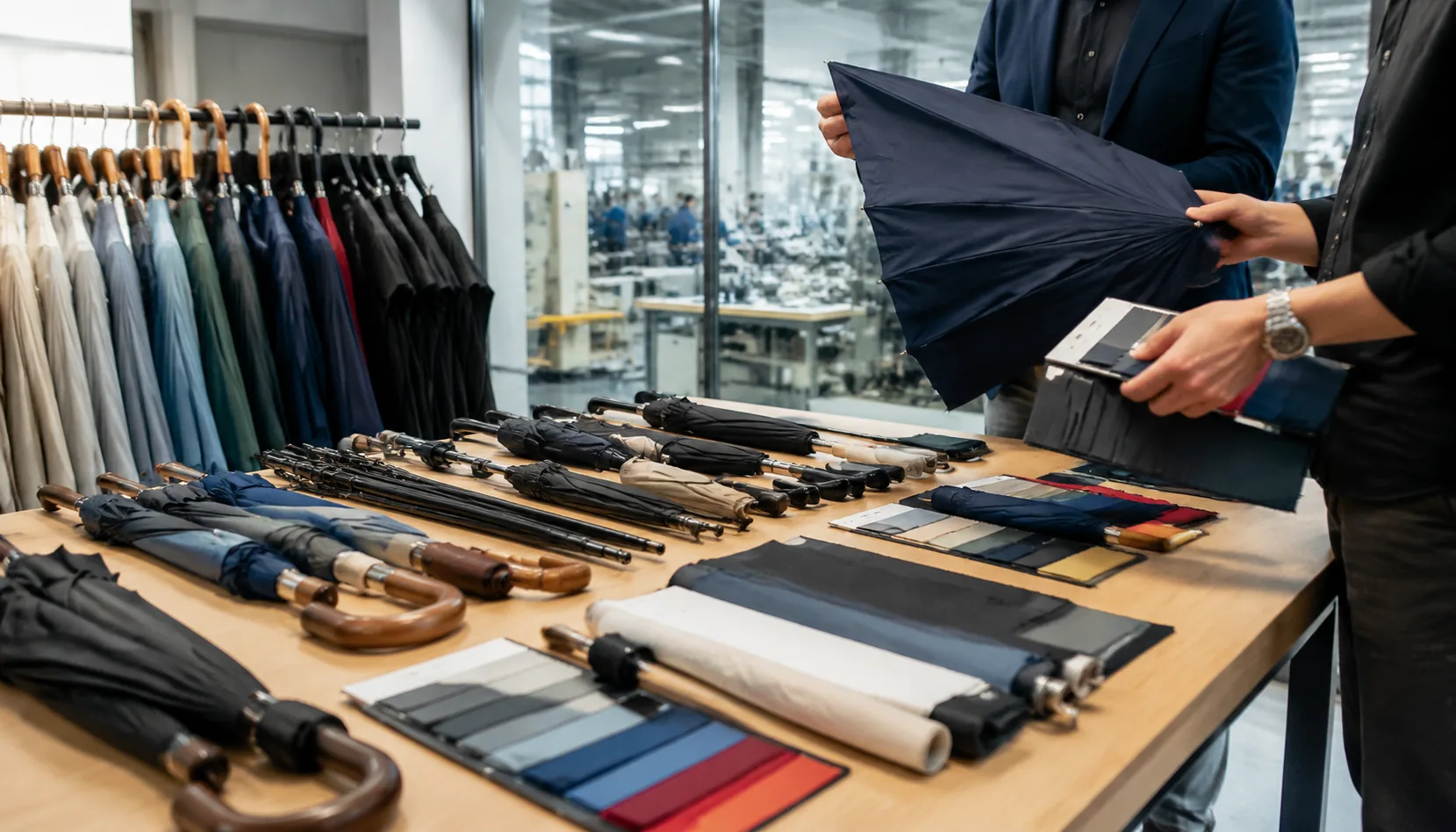
Private Label Umbrella Programs for Retail Buyers
Plan a retail-ready private label umbrella line with clear specs, MOQ tiers, packaging choices, QC checks, and FOB or DD...
Read More »
Private Label Umbrella Sourcing for Retail Chains and Brands
A buyer-focused guide to sourcing private label umbrellas with the right MOQ, specs, QC plan, and Incoterms for retail p...
Read More »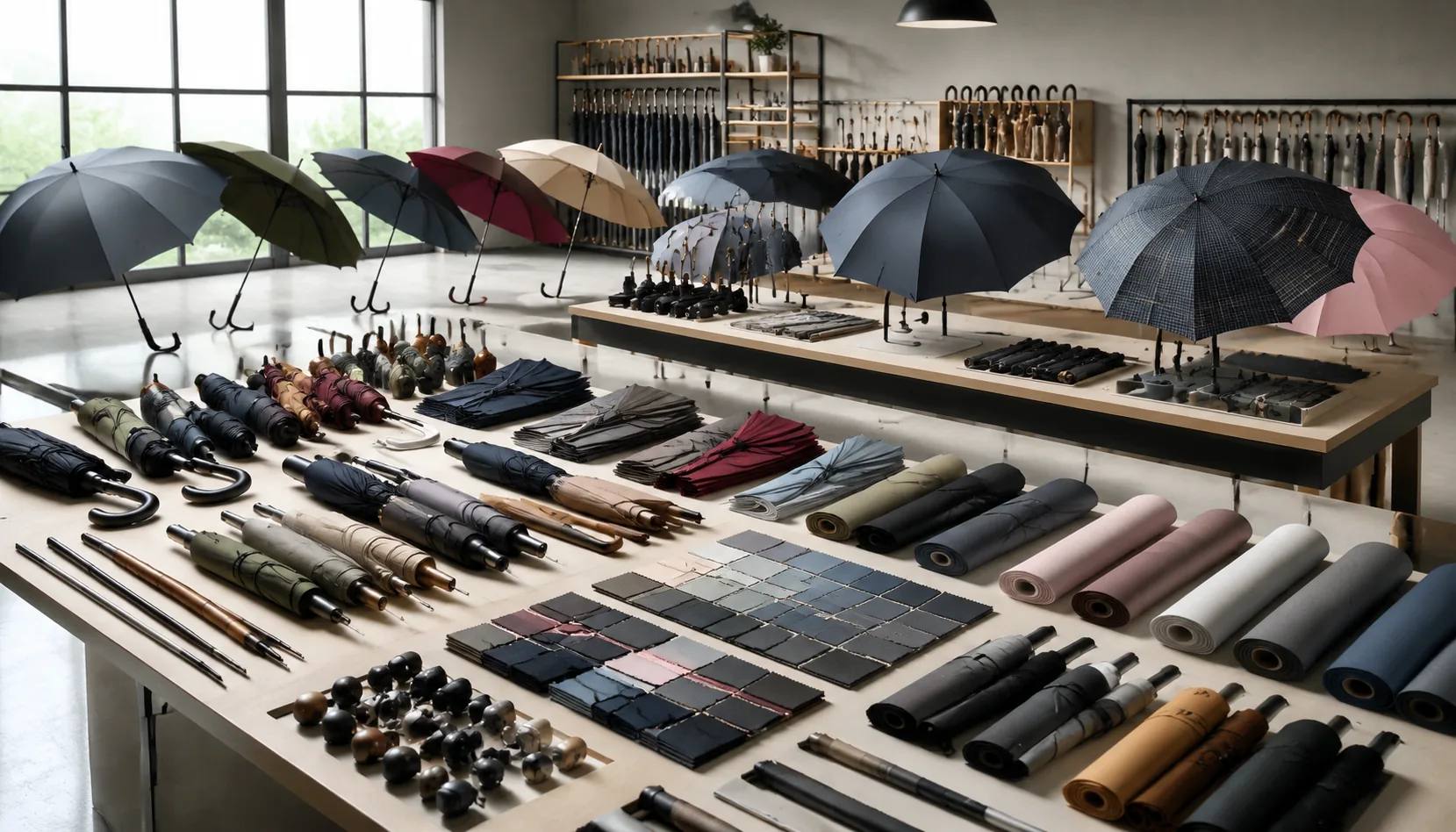
Private Label Umbrella Assortment Planning for Retail Buyers
Build a balanced private label umbrella range with clear SKUs, fabric specs, MOQ planning, AQL targets, and retail-ready...
Read More »