OEM vs ODM Umbrella Manufacturing: Which Do You Need?
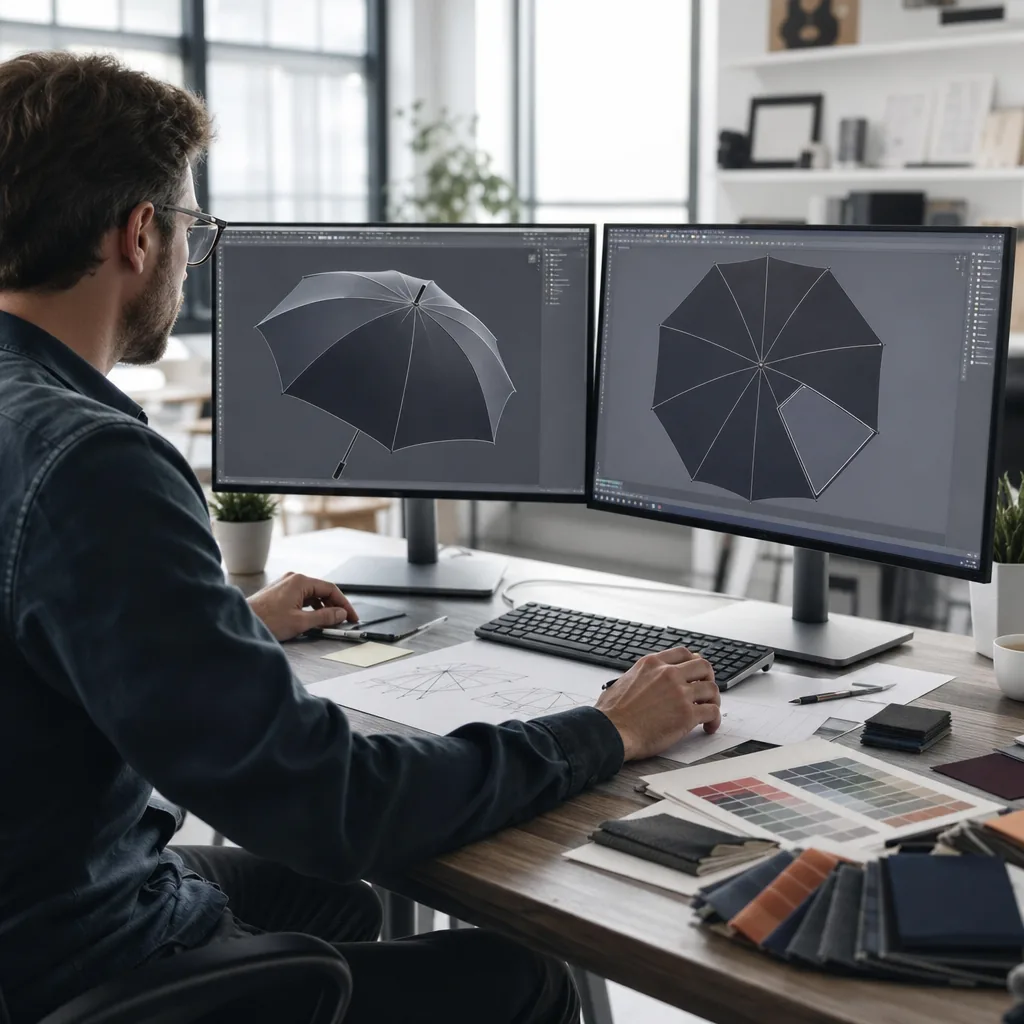
Choosing between OEM and ODM umbrella manufacturing usually comes down to how much of the product you want to define yourself and how much development work you are prepared to carry. An oem umbrella program gives you control over structure, materials, graphics, and packaging, but it also requires clearer specs, tighter sampling, and more coordination on the factory floor. ODM reduces that burden with proven models, yet it limits how far you can differentiate the final product.
Defining OEM and ODM for umbrellas
An OEM umbrella is build-to-your-design, not a generic product with your logo slapped on it. You provide the frame spec, canopy material, open/close mechanism, handle shape, printing file, and often the performance target as well, such as 8K fiberglass ribs, 23-inch canopy, pongee 190T, auto-open-close, or a double-canopy vented windproof build. The factory then develops the tooling, pattern, and production method to match your brief. In practice, OEM is the right route when you need control over the details that affect cost, durability, and brand consistency, especially if the umbrella has to pass a specific wind test, UV target like UPF 50+, or retail packaging requirement. For an oem umbrella program, the important question is not just appearance; it is whether the construction, materials, and finishing can be repeated at scale without drifting from spec.
An ODM umbrella manufacturer works differently. The factory already has an existing umbrella platform, then adapts it with your brand, colorway, fabric, handle, or minor structural changes. That usually means faster sampling, lower development cost, and less risk on the first order because the frame geometry, rib spacing, sewing method, and packing format are already proven on the factory floor. ODM is useful when you want a launch-ready product without paying for full custom umbrella development, or when your order volume is too small to justify new tooling. The tradeoff is simple: you get speed and lower setup cost, but you also accept the limits of the base design. If the starting point is a 21-inch manual umbrella with steel ribs and basic POE canopy, you can change branding and some trims, but you are not truly redesigning the product from the ground up.
The oem vs odm umbrella decision usually comes down to control, speed, and order size. OEM makes sense when the umbrella is a core product, when you need a specific construction such as 10K or 16K ribs, Teflon coating, or a retail line that must look and perform differently from competitors. ODM is better when the purchase is promotional, time-sensitive, or price-driven, and the buyer mainly needs dependable supply with limited engineering work. A practical rule: if you need a unique fit, performance claim, or proprietary look, go OEM; if you need a workable umbrella quickly and the factory’s existing design is close enough, ODM will usually save time and money. ZheBrella’s standard practice is to separate these two paths early, because mixing them late in the process is what causes sample delays, quote confusion, and unrealistic lead time expectations.
Design ownership and IP
In an OEM umbrella program, the buyer should own the product definition from day one: panel layout, canopy artwork, handle shape, rib spec, coating, packaging, and the final tech pack. If the contract is written properly, the factory produces to those instructions and does not reuse the same custom umbrella development package for another customer. The practical line is simple: the buyer owns the brand-facing design, while the factory retains its general manufacturing know-how unless the agreement explicitly assigns molds, drawings, or tooling. On the shop floor, that means your print files, color standards, size table, and BOM need to be locked before pilot sampling. Otherwise, you end up arguing about whether a change request is a revision or a new design, which is how IP disputes start.
In an ODM umbrella manufacturer model, the factory usually owns the base platform first: the frame geometry, standard canopy pattern, and pre-existing tooling. The buyer is licensing or selecting from that library, then adding brand marks, colorways, packaging, and sometimes a few functional changes. That is the core of the oem vs odm umbrella decision. If you need fast market entry and lower upfront development cost, ODM works, but you should not assume exclusivity unless it is written into the contract and paid for. A factory can legally reuse the same 23-inch auto-open-close vented structure or 190T pongee canopy on another account if the tooling and design were never assigned to you. Our standard practice is to separate background IP from customer-specific IP in the quote and sample approval documents.
The legal issue matters because umbrella products look simple but are built from many separate assets: canopy artwork, panel pattern, rib mechanism, runner design, handle mold, strap, label, and retail packaging. In an OEM umbrella project, each of those pieces should have an owner, a file location, and an approval trail. If you want real control, the purchase order should say who owns the final CAD, who pays for molds, who can reuse the tooling, and whether the factory may show the sample in its sales book. For private-label buyers, the safest setup is usually OEM with a clear IP assignment clause; for speed-driven buyers, ODM with written exclusivity on the selected model can work. Without that paperwork, "custom" often just means your logo on someone else’s platform.
Development effort and timeline
An ODM umbrella is the faster path because you are building on an existing platform: the 23" or 27" frame, runner, tips, handle, and canopy panel layout are already proven. In practice, the work is usually limited to color selection, logo placement, packing artwork, and maybe a handle swap from EVA to PU or wood. That cuts custom umbrella development time sharply, because there is no new rib geometry to validate and no new open-close mechanism to debug. For a basic ODM umbrella manufacturer program, you can often move from artwork approval to pre-production samples in 7 to 15 days, then into mass production in another 20 to 35 days if the fabric and fittings are in stock.
An oem umbrella is a different job. Once you change rib count, frame material, canopy size, vent structure, or automatic mechanism, you are asking the factory to engineer the product, not just decorate it. A real OEM cycle may involve frame drawings, ferrule and slider adjustment, fabric shrink testing on 190T or 210T pongee, wind resistance checks on fiberglass ribs, and sample rounds for stitch pitch, seam alignment, and opening force. If you want a double-canopy vented windproof build, or a 16K structure instead of a standard 8K frame, expect tooling or component tuning. For new OEM umbrella programs, 15 to 30 days for development samples is normal, and total lead time often stretches to 35 to 60 days before bulk can start.
The oem vs odm umbrella decision usually comes down to how much margin you want to buy with time. ODM works when speed matters and the buyer accepts a known frame, known carton size, and lower engineering risk; OEM makes sense when the product needs a specific feel, higher wind performance, or a branded detail that competitors cannot copy easily. In our standard practice at ZheBrella, we push OEM projects through a tighter sample gate so small failures show up before bulk, because fixing a loose runner, weak rib joint, or bad canopy tension after production starts wastes both time and cash. If your launch date is fixed, choose ODM; if the product itself is the selling point, budget the extra development effort and expect a longer timeline.
Cost and MOQ implications
For an oem umbrella program, the real cost driver is tooling and change control. If you are changing the frame, handle, vent structure, canopy size, or print layout, you are paying for sampling, pattern corrections, and sometimes new molds for handle parts or ferrules. That is why a custom umbrella development project can look cheap on paper and then get expensive in the first 2 or 3 rounds of samples. By contrast, an odm umbrella manufacturer can spread that engineering cost across an existing platform, so the unit price is usually lower at launch and the setup fee is smaller. The tradeoff is simple: OEM gives you exact specs and stronger brand differentiation, while ODM reduces upfront spend because the rib set, shaft, and canopy pattern already exist. If your buyer only needs a logo change and a color shift, OEM is usually overkill.
MOQ follows the same logic. A true oem umbrella order often starts at 1,000 to 3,000 pieces per color or per size because the factory has to reserve materials, print screens, and assembly capacity for a unique build. If you want 21-inch compact umbrellas, 23-inch golf frames, or a double-canopy windproof model with a specific 190T pongee and Teflon coating, the minimum rises when every component is custom. An odm umbrella manufacturer can often work with 300 to 500 pieces on a stock base because the ribs, shaft, and canopy panel count are already standardized. That lower MOQ is useful for pilot runs, retail tests, and seasonal promotions, but you give up some control over details like panel shape, vent size, or handle geometry.
The price gap is not just unit cost; it is also cash tied up in inventory risk. With OEM, you may pay more per piece in the first order, but you avoid being forced into a generic product that does not fit your brand positioning. With ODM, the first quote often looks better, yet you can end up carrying excess stock if the colorway or trim is too close to what other buyers are already using. In practice, the best oem vs odm umbrella decision depends on volume and margin structure: if you expect repeat orders above 5,000 pieces, OEM often pays back through cleaner branding and less competition on the shelf; if you need speed, low entry cost, and limited exposure, ODM is the safer starting point. ZheBrella typically sees buyers move from ODM to OEM after the first sell-through cycle once they know which frame spec and canopy fabric actually sell.
Picking the right model
If you already have a spec sheet, panel artwork, canopy material target, handle style, and a target price, choose an oem umbrella path. That means you control the rib count, opening mechanism, canopy fabric, and print method, and the factory builds to your drawing instead of steering you toward an existing sample. An 8K or 10K folding frame with fiberglass ribs, 190T or 210T pongee, auto-open-close, and a UV coating is straightforward for an oem umbrella order, but only if your requirements are clear enough to quote and tool correctly. The cost is usually higher upfront because custom umbrella development needs pattern work, sampling, logo proofing, and sometimes mold changes for handles or tips, but you get a product that actually matches your brand instead of a close enough substitute.
If you need something faster, cheaper, and less risky, an odm umbrella manufacturer is usually the better fit because you start from a proven platform that already has working frame geometry, fabric options, and decoration limits. That is the right call when your team does not have the time or engineering staff to validate wind resistance, stitch density, venting, or coating compatibility, and you mainly need to choose from existing 23-inch or 27-inch builds, then adjust color, logo, and packaging. In practice, oem vs odm umbrella comes down to control versus speed: OEM gives you exclusivity and tighter brand fit, ODM reduces sampling cycles and keeps MOQ, lead time, and tooling risk lower. Our standard practice is to push brands toward OEM only when they can approve specs in writing and accept a longer sample-to-production timeline; otherwise, ODM is the cleaner commercial decision.
Frequently Asked Questions
What is the difference between OEM and ODM umbrellas?
OEM means the factory builds an umbrella entirely to your design and specifications. ODM means you adapt and brand an existing factory design. OEM gives full control and ownership; ODM is faster and lower-effort because the design already exists.
Is OEM or ODM better for a new umbrella brand?
If you have a finished design and the volume to support it, OEM gives a unique product. If you want speed and lower risk, ODM lets you brand a proven design and launch quickly, then move to OEM as you scale.
How much more development work does an OEM umbrella project usually require than ODM?
OEM projects usually need full pattern, frame, handle, canopy, and packaging development, so the timeline is often 30 to 60 days longer than an ODM project. In practice, OEM also tends to require more sampling rounds before production approval.
What MOQ is typical for ODM umbrella orders compared with OEM?
ODM orders often start around 500 to 1,000 pieces per style if the factory already has a ready platform. OEM orders usually need a higher MOQ, commonly 1,000 to 3,000 pieces, because the factory must set up new materials or components.
Who owns the design in an OEM umbrella project versus an ODM project?
In OEM, the buyer usually owns the product design and branding rights, subject to the manufacturing agreement. In ODM, the factory keeps the base design, and the buyer typically licenses it for branding, color changes, or minor feature adjustments.
Looking to Launch Your Custom Umbrella Line?
ZheBrella is a Zhejiang-based OEM/ODM umbrella manufacturer with 17 years of export experience. Free design, low MOQ from 100 pieces, windproof construction, full-color print.
Get Free Quote Now »People Also Search For
Related Articles
Custom Logo Umbrella Manufacturer: The Complete OEM/ODM Guide for Brands
Everything brands and importers need to know about sourcing custom logo umbrellas from China - from MOQ and pricing to p...
Read More »
Private Label Umbrella Programs for Retail Buyers and Chains
Plan a private label umbrella line with realistic MOQ, fabric, frame, packaging, AQL, and FOB/DDP details for retail pro...
Read More »
Private Label Umbrella Programs for Retail Buyers
Plan a retail-ready private label umbrella line with clear specs, MOQ tiers, packaging choices, QC checks, and FOB or DD...
Read More »