Single vs Double Canopy Umbrellas: When the Extra Layer Pays Off
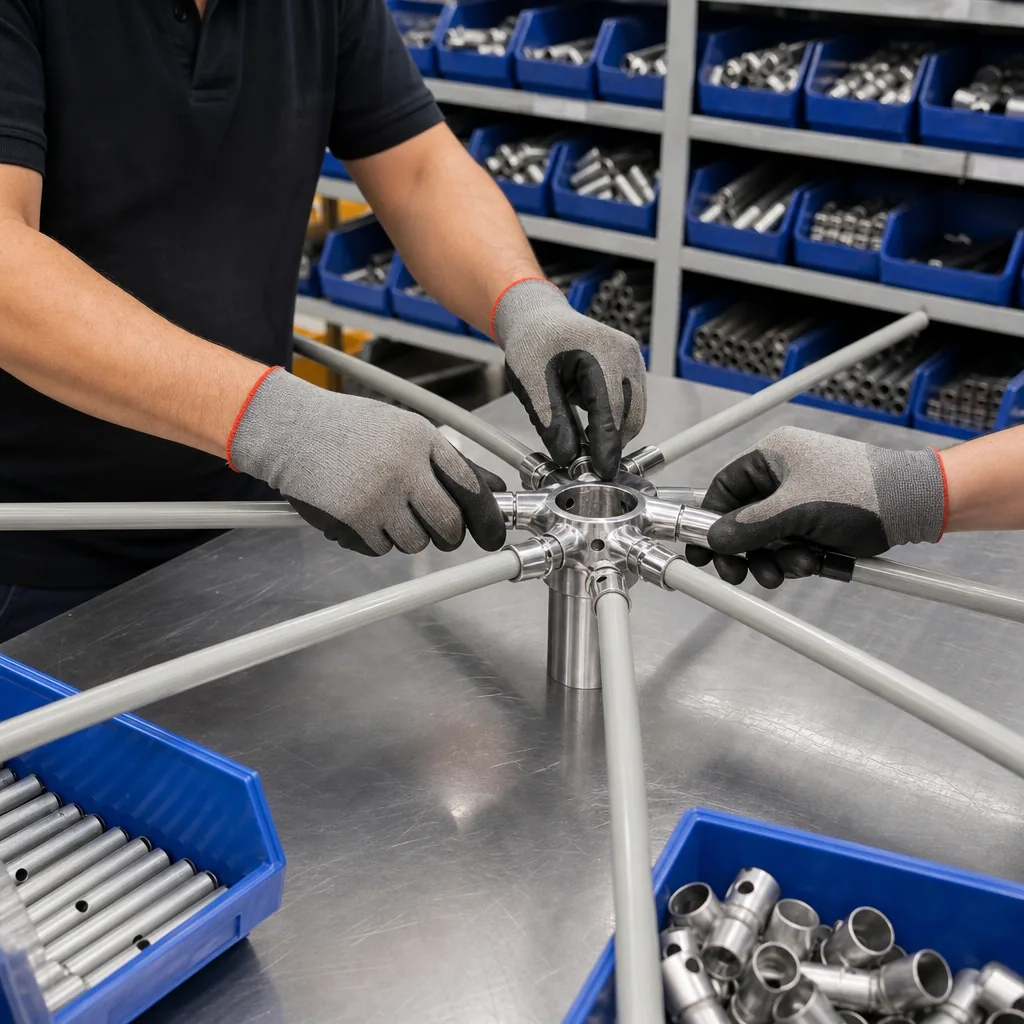
Choosing between single and double canopy umbrellas comes down to more than a catalog spec; it affects how the frame vents in gusts, how the product feels in hand, and what margin is left after decoration and packaging. A double canopy umbrella can reduce inversion risk in the right wind profile, but it also adds fabric, stitching, and labor that show up on the factory line. The right choice depends on your market, target price, and performance requirements.
What a double canopy actually is
A double canopy umbrella is not just two fabrics sewn together. It is an outer canopy and a separate inner canopy, cut with a deliberate gap or overlapping vent so air can pass through instead of loading the frame like a sail. On the factory floor, the difference is easy to spot: a single canopy umbrella has one continuous skin stretched over the ribs, while a double layer umbrella uses a second panel below the top skin, usually stitched with spaced vents around the crown. That vented umbrella design is there for one reason: when a gust hits, the air is forced through the opening or between the layers rather than pushing the whole structure inside out. That is why these umbrellas are common in golf formats, large promotional sizes, and any application where wind is the real failure mode.
The extra layer pays off when the umbrella is oversized, used in exposed streets, or specified with a stronger frame but still needs fabric relief. A 23" or 27" fiberglass frame can survive a lot more abuse if the canopy is vented correctly, because the load is reduced before it reaches the runner, ribs, and stretcher joints. A poorly built double canopy umbrella is worse than a good single canopy umbrella, though: if the vent gap is too tight, stitched closed, or misaligned, the air has nowhere to go and the canopy starts fluttering, tearing at the seams, or flipping under pressure. In our standard practice at ZheBrella, we check that the upper and lower layers overlap enough to block rain but still leave a clean escape path for wind, which is the whole point of the double canopy structure.
Wind performance: why vents matter
The vent is doing real mechanical work, not decoration. On a single canopy umbrella, wind catches the canopy like a shallow bowl and pushes upward pressure into the frame, which is why cheap units invert first at the crown or along the ribs. A vented umbrella design interrupts that pressure path by letting air escape between the layers, so the canopy does not behave like one solid sail. In our factory practice at ZheBrella, the difference shows up immediately in the frame test: the same 23" stick umbrella with fiberglass ribs will usually hold shape longer in gusts when the top layer is slit or lifted to create a controlled exhaust path. That does not make it storm-proof, but it lowers lift enough that the runner, stretcher, and rib joints are less likely to fold backward under a sharp gust.
A double canopy umbrella works because the upper layer creates a pressure-relief chamber. Wind hits the lower canopy, then bleeds out through the vent instead of loading the entire surface at once. That reduces the suction effect on the leeward side and keeps the canopy from ballooning, which is the first step before inversion. The practical result is less strain on the tips and less torsion at the rib ferrules, especially on 8K and 10K frames where each rib has to carry more load. A double layer umbrella is most useful when the panels are large, such as 27" or 30" golf styles, because the exposed surface area rises fast and so does the lift. If the vent is cut too narrow, it does almost nothing; if it is too open, rain protection drops and the shape gets sloppy.
A single canopy umbrella still has a place when compact size, lower cost, and clean print coverage matter more than wind resistance. For everyday city carry, a 21" or 23" auto-open-close frame with a dense 190T or 210T pongee canopy may be enough, especially if the user is not facing strong crosswinds. But once the requirement moves into repeated outdoor exposure, the vented umbrella design pays for itself by reducing the failure rate that comes from inversion and snap-back. The point is not that a double canopy umbrella eliminates damage, only that it shifts the failure threshold higher by letting the air escape before the frame takes the full load. In procurement terms, that usually means fewer bent ribs, fewer broken tips, and better survival in the kind of 50+ mph gusts that expose weak constructions fast.
Weight, cost, and added sewing
A double canopy umbrella costs more because you are literally building two fabrics instead of one, then aligning them so the upper layer vents cleanly without distorting the frame. On a standard 23-inch automatic model, that means more canopy yardage, more cutting waste, more edge binding, and more stitching time than a single canopy umbrella. If the fabric is 190T pongee, the added grams are not huge on paper, but once you multiply by the outer shell, inner shell, and reinforcement around the vent openings, the weight increase is real in hand and in freight. For buyers comparing a double canopy umbrella to a single layer, the cost delta is usually driven less by raw fabric and more by labor minutes and inspection risk.
The sewing sequence is also less forgiving. A vented umbrella design needs the upper canopy panel lengths, spoke points, and crown openings to match within tight tolerances, or the umbrella looks twisted when opened. That adds setup time at cutting, extra needle passes at the hem and vent edges, and more chance of rework if the top layer puckers after heat setting or printing. In our standard practice at ZheBrella, we treat a double layer umbrella as a higher-labor build, especially on 8K and 10K frames where the vent openings have to clear the ribs evenly. A small error in the inner canopy can create noise in the wind and uneven tension that customers notice immediately.
The real tradeoff is not just price, it is what the buyer gets for the extra sewing. A double canopy umbrella usually holds shape better in gusts because the vent lets air escape instead of ballooning the panel, so the added cost makes sense on larger 27-inch or 30-inch frames, especially with fiberglass ribs and auto-open-close mechanisms. But if the application is short-term promo use, a single canopy umbrella often wins on landed cost because there is less fabric, fewer operations, and lower AQL exposure. For retail programs, the double canopy umbrella pays off when wind performance and perceived quality matter more than shaving a few cents off unit cost.
Branding on a double canopy
Printing on a double canopy umbrella is not the same problem as decorating a single canopy umbrella. You are dealing with two separate fabrics, two seam patterns, and often two different visibility rules. The outer layer usually carries the main branding because it faces the customer and takes the weather, while the inner layer can be left plain, printed with a secondary message, or used for a cleaner repeat pattern that shows through the upper cloth. On a vented umbrella design, the spacing between layers matters because a heavy print near the vent edge can distort when the canopy opens. If the artwork crosses seams, I plan it around panel geometry first, not around a flat mockup, because a logo that looks centered on screen can shift 10 to 20 mm once the ribs tension the fabric.
For a double layer umbrella, the safest approach is to treat the two canopies as separate print surfaces with different tolerances. Sublimation works well on polyester pongee 190T or 210T, especially when the customer wants full-color graphics, but it must be registered carefully so the outer and inner panels do not fight each other visually. Screen print is still the better choice for bold logos, because it holds opacity and gives cleaner edge control on dark cloth. If the customer wants the same branding on both layers, I usually recommend a simplified mark on the inner canopy and a stronger version on the outer canopy, because too much detail disappears once the umbrella is in use. On a double canopy umbrella, the real test is not the artwork file, but whether the logo still reads correctly when the canopy is wet, moving, and partially backlit.
Choosing single or double by use case
For most promotional programs, a single canopy umbrella is the right tool because the economics make sense. If you are handing out 21" to 23" manual or auto-open models at a trade show, or building a low-cost retail line with POE, PVC, or 190T pongee, there is rarely enough margin to justify a second layer. A well-cut single canopy umbrella with steel ribs or a basic fiberglass frame already handles light rain, prints cleanly for logos, and keeps unit cost and carton count under control. Our standard practice at ZheBrella is to match the construction to the channel first, then the decoration method, because screen print, heat transfer, and sublimation each behave differently on a flat canopy versus a more structured build.
Golf buyers are where the double canopy umbrella starts paying for itself. A 27" or 30" canopy with fiberglass ribs, reinforced stretcher points, and a vented umbrella design moves air instead of fighting it, which matters on open fairways and during transit between green and cart. A double canopy umbrella is not just a style choice; the upper vent reduces inversion risk in gusts, and the extra layer helps the frame stay usable in the 35 to 50+ mph range when the build is correct. For branded golf programs, that usually means 210T pongee, auto-open or auto-open-close mechanisms, and a wider print area that still reads clearly from a distance. If the buyer wants fewer failures and fewer returns, this is where the double layer umbrella earns its cost.
Premium retail and executive gifts are the other clear case for a double canopy umbrella. Customers paying for a cleaner finish expect details like matched fabric tension, hidden vent stitching, Teflon or UV coatings, and a tighter closing profile that does not look bulky in the hand or in a carry sleeve. In this segment, the extra layer is less about raw wind resistance and more about perceived quality, rain performance, and brand positioning. A double canopy umbrella with 8K, 10K, or 16K fiberglass rib options can support a higher AQL target, better panel registration, and a more controlled presentation on shelf. If the brief is a premium gift, the extra material and sewing step usually make sense; if the brief is mass giveaway, the single canopy umbrella remains the practical choice.
Frequently Asked Questions
Is a double canopy umbrella better?
For wind resistance, yes - the vented upper layer lets gusts escape, reducing lift and inversion. It costs more and weighs a bit more, so single canopies remain fine for low-wind, budget, or simple promotional use.
Does a double canopy umbrella leak through the vent?
No. The two layers overlap so the vent gap is covered from above; rain runs off the top layer while wind escapes through the offset opening. A well-made double canopy stays as dry as a single one.
Is a double canopy umbrella always better in wind?
No. It performs better when wind resistance and inversion prevention matter, but it is not the best choice for every buyer. For low-cost promotions or everyday carry, a single canopy umbrella is usually lighter and cheaper to produce.
How much more does a double canopy umbrella usually cost?
The extra layer and stitching typically add about 10% to 25% to unit cost, depending on frame spec, fabric, and print coverage. Larger golf sizes usually see a bigger premium than compact manual-open models.
What MOQ and lead time should a distributor expect for custom vented umbrellas?
A common OEM MOQ is 500 to 1,000 pieces per color or print, though it varies by frame and panel count. Standard lead time is often 25 to 40 days after artwork approval, with longer schedules during peak season or for more complex builds.
Looking to Launch Your Custom Umbrella Line?
ZheBrella is a Zhejiang-based OEM/ODM umbrella manufacturer with 17 years of export experience. Free design, low MOQ from 100 pieces, windproof construction, full-color print.
Get Free Quote Now »People Also Search For
Related Articles
Windproof Umbrella Construction: Fiberglass Ribs, Double Canopy, and Vented Tops
Inside a windproof umbrella - the engineering choices that determine whether it survives a 40 mph gust or inverts on the...
Read More »
Single-Canopy vs Double-Canopy Umbrellas for Buyer Programs
Learn when single- or double-canopy umbrellas make sense by budget, wind performance, fabric use, printing needs, and im...
Read More »
Double-Canopy Windproof Umbrella Builds for Retail Buyers
Learn how double-canopy vents, rib choice, and frame layout improve wind resistance, and what specs retailers should req...
Read More »