Windproof Umbrella Construction: Fiberglass Ribs, Double Canopy, and Vented Tops
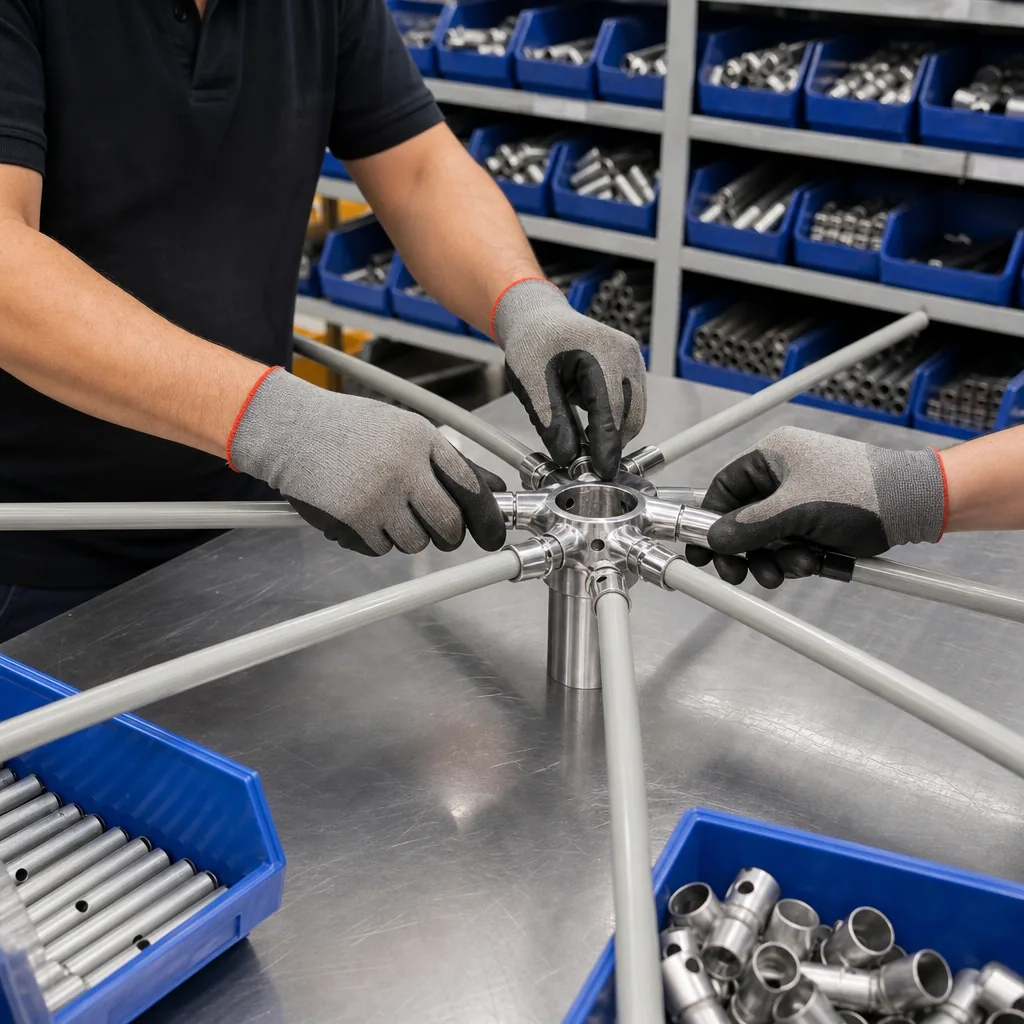
A windproof umbrella isn't a marketing label — it's a specific combination of rib material, canopy geometry, and venting that allows the canopy to absorb gusts without inverting. Here's what actually determines wind performance, and how to spec a real windproof umbrella for B2B order.
Why Ribs Matter More Than Anything Else
The rib is the structural skeleton of the umbrella. Three common materials:
- Steel ribs: rigid, durable for normal use, fail catastrophically in wind by bending permanently. Found in cheap promotional umbrellas.
- Aluminum ribs: lightweight, flexes more than steel, suitable for compact folding umbrellas where weight matters.
- Fiberglass ribs: flexible and shock-absorbing. Bends under wind load and springs back. The key material for any umbrella marketed as windproof.
A pure fiberglass rib is also lighter than steel — about 30% lighter for the same canopy span. The trade-off is cost: fiberglass ribs add roughly $0.50-$1.20 to the per-piece factory cost vs steel.
Double Canopy and Vented Tops
A windproof umbrella usually has a "double canopy" — actually a single canopy with a vent flap halfway down each panel. When wind pushes up under the canopy, air escapes through the vent instead of inverting the umbrella. The flap is angled so it stays closed in light wind (when you want the umbrella to keep rain out) but lifts under pressure.
Testing methodology: in our QC workshop we use a calibrated wind tunnel that simulates gusts up to 60 mph. A pass requires the canopy to survive 30 seconds at the rated wind speed without inversion and without permanent rib deformation.
Hub and Runner Quality
The hub (where all ribs converge at the top) and the runner (the sliding piece on the shaft that opens the canopy) are the two highest-stress components. Cheap umbrellas use stamped sheet-metal hubs with crimped rib attachments — these fail at the rib-hub joint long before the rib itself bends.
Quality windproof umbrellas use machined or precision-cast hubs with riveted rib-hub joints. Per-piece cost premium: ~$0.40. Visible to the buyer: the hub looks more substantial when you examine the top of the umbrella.
The Shaft Question
Three shaft types are common:
- Single solid shaft (stick umbrellas): strongest, no joints. Doesn't fold.
- Two-piece telescopic shaft: standard for compact folding umbrellas. The joint is the weak point — quality shafts use brass or precision-machined steel joints, cheap ones use stamped plastic joints that develop play after a few hundred open-close cycles.
- Three- or four-piece collapsing shaft: ultra-compact 5-fold travel umbrellas. More joints means more potential weakness, but quality factories use over-spec joints with anti-rotation pins.
Canopy Fabric and Waterproofing
The canopy fabric itself rarely "fails" in wind — it's the structure that gives out first. But quality canopy fabric matters for waterproofing longevity:
- 170T-190T polyester (low-end): waterproof when new, loses coating after 6-12 months of use. Used in $1.20-level promotional umbrellas.
- 210T Pongee (mid-tier): the standard for quality umbrellas. Holds waterproof coating for 2-3 years of regular use.
- 210T Teflon-coated Pongee (premium): water beads up and rolls off. Maintains performance for 3-5+ years. Adds ~$0.60-$0.90 per piece.
- 250T heavy-duty Pongee: the canopy fabric for premium golf umbrellas and patio market.
Frequently Asked Questions
What wind speed should a 'windproof' umbrella actually survive?
Marketing language is loose, but engineering reality is: 30-40 mph for a standard windproof umbrella with fiberglass ribs, 50-60 mph for a true double-canopy vented design with reinforced fiberglass. Above 60 mph (severe gale) no consumer umbrella is reliable.
Does the rib count matter for wind performance?
Yes, but less than rib material. Going from 8 ribs to 10 ribs adds ~10% wind resistance for the same canopy diameter. Going from steel ribs to fiberglass ribs adds 40-60% wind resistance — a much bigger lever.
Can you make a fully metal-free windproof umbrella?
Almost. We can do fiberglass ribs, aluminum hub, fiberglass shaft (or hollow fiberglass-reinforced plastic), plastic runner, and plastic handle. The only metal that's hard to remove is the small spring inside the auto-open mechanism. Useful if you're targeting airline-friendly travel SKUs.
What wind speed should a commercial windproof umbrella be tested against?
For B2B buyers, a common target is 35 to 45 mph in a controlled wind test. The test should define whether the umbrella can stay upright, resist inversion, and recover without rib deformation after repeated cycles.
Do fiberglass ribs need a double canopy to perform well in strong wind?
Fiberglass ribs help the frame flex and return, but they do not release air pressure by themselves. A double canopy or vented top is usually added to reduce lift, which is especially important on 62-inch and larger golf umbrellas.
What MOQ and lead time are typical for OEM windproof umbrellas?
Many factories quote 300 to 1,000 pieces per design, depending on panel print, handle style, and canopy fabric. Sample production often takes 7 to 10 days, while bulk lead time is usually 30 to 45 days after approval.
Looking to Launch Your Custom Umbrella Line?
ZheBrella is a Zhejiang-based OEM/ODM umbrella manufacturer with 17 years of export experience. Free design, low MOQ from 100 pieces, windproof construction, full-color print.
Get Free Quote Now »People Also Search For
Related Articles
Double-Canopy Windproof Umbrella Builds for Retail Buyers
Learn how double-canopy vents, rib choice, and frame layout improve wind resistance, and what specs retailers should req...
Read More »Fiberglass vs Steel Umbrella Ribs: Which Survives 50 mph Wind?
A factory engineer compares fiberglass and steel umbrella ribs on wind resistance, fatigue life, weight, and cost so buy...
Read More »
Umbrellas for Construction Crews and Field Service Teams
Choose heavy-duty umbrellas for supervisors and inspectors, with windproof frames, high-visibility branding, and repleni...
Read More »