Fiberglass vs Steel Umbrella Ribs: Which Survives 50 mph Wind?
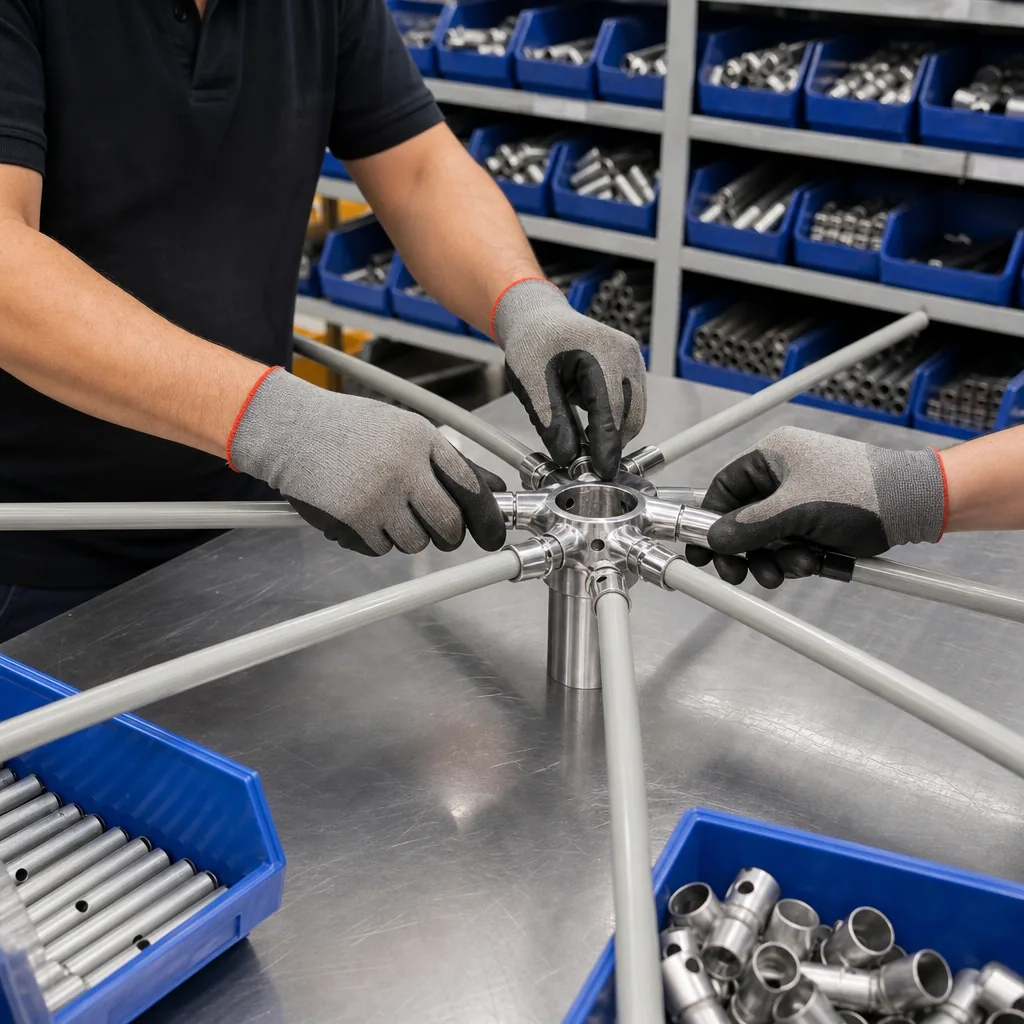
When an umbrella fails at 50 mph, the problem is usually not the canopy but the ribs: bending too far, staying bent, or snapping after repeated cycles. On the factory floor, the choice between fiberglass and steel comes down to how each frame handles wind load, fatigue, weight, and cost in real production, not just in a brochure. For buyers specifying durable umbrellas, fiberglass umbrella ribs often change the equation in ways that only show up after thousands of opens and closes.
Why rib material decides wind resistance
Wind resistance is mostly a rib problem, not a canopy problem. When a gust hits, the load travels from the canopy into the stretcher, then into the rib and runner joints, and that is where cheap umbrellas die first. A rigid structure can look strong on the sales sheet, but if it cannot flex and return, the stress concentrates at the ferrules and rivets until something snaps. That is why umbrella rib types matter so much: the best windproof umbrella rib material is the one that bends enough to shed load without taking a permanent set. In practice, fiberglass umbrella ribs are favored on better windproof builds because they spring back after deflection instead of deforming the way low-grade steel can when the geometry is thin or the plating is poor.
A steel umbrella frame still has a place, but mostly in lower-cost or heavier-duty constructions where straight stiffness matters more than elastic recovery. Steel can hold shape well in calm conditions, yet in a 40–50 mph side gust the failure point is often not the rib body itself but the connection points: welded tabs, spring pins, and the socket where the stretcher meets the runner. Once one joint starts to oval out, the umbrella loses alignment and the next gust finishes the job. That is why I look first at joint design, then at material, then at rib count: 8K and 10K frames behave very differently from 16K when the load is distributed across more slender members instead of a few oversized ones.
Flex is not a weakness in a storm; uncontrolled stiffness is. A well-designed rib system should deflect under peak load, spread that force across the canopy, and recover without kinking, cracking, or loosening the pivots. On the factory floor, the umbrellas that survive repeated wind testing usually combine fiberglass on the outer ribs with reinforced steel in the shaft or hub, plus properly swaged joints and rust-resistant hardware. If the umbrella is a manual open or auto-open-close model, the mechanism also changes the stress path, so a poorly tuned spring can punish the ribs during opening as much as the wind does outside. For buyers comparing fiberglass umbrella ribs against a steel umbrella frame, the real question is not which material is “stronger” in the abstract, but which assembly keeps its geometry after repeated gust cycling and AQL 2.5 inspection.
Steel ribs: strength, cost, and the rust problem
Steel still wins when the frame is large, the canopy span is heavy, and the buyer cares more about raw load-bearing stiffness than pack weight. A carbon-steel steel umbrella frame with thicker main ribs and stretchers can handle a 27" or 30" golf umbrella or a patio-style structure without the same deflection you see in lighter alloys. In practice, gauge matters more than the label: thin steel that looks strong on paper will twist at the joints, while a properly sized steel rib set gives better torsional resistance under sudden gusts. Among common umbrella rib types, steel is still the simplest choice for oversized frames because the material is cheap, easy to stamp, and forgiving in mass-production tooling.
The downside is obvious to anyone who has opened umbrellas after a rainy season: carbon steel rusts at the ferrules, rivet points, and cut edges first. Once corrosion starts, the hinge action gets rough, and the canopy starts tracking unevenly because the rib geometry no longer closes square. Stainless steel improves that, but it adds cost fast and does not magically solve weight; a stainless steel umbrella frame is usually chosen for premium outdoor or marine use, not for a price-sensitive retail promo line. If the application is a patio or market umbrella that stays open for long periods, steel can still be the right windproof umbrella material because it tolerates larger diameters and higher static loads better than many lighter alternatives.
For handheld umbrellas, steel becomes a compromise: stronger than cheap aluminum in some spots, but heavier in the hand and harder on the runner and spring if the mechanism is auto-open-close. That extra mass also makes a 16K or 24K structure feel clunky, which is why buyers comparing fiberglass umbrella ribs usually move away from steel once they need better flex recovery and lower carry weight. On the factory floor, I would spec steel only when the use case is oversized, low-cost, and not exposed to salt or constant wet storage; otherwise, the rust problem shows up in returns, not in the sample room.
Fiberglass ribs: flex, fatigue life, and flyaway safety
Fiberglass umbrella ribs behave the way a windproof umbrella rib material should behave: they flex, recover, and keep the canopy alive instead of turning the whole frame into a bent stick. On a 21" or 23" auto-open stick umbrella, good fiberglass umbrella ribs can deflect several inches under gust load and spring back without taking a set, which is exactly what you want when a 50 mph crosswind hits the edge of the canopy. Steel umbrella frame parts can be stronger in straight compression, but once they yield, they usually stay bent; that permanent deformation ruins the open geometry and creates the flyaway failure customers complain about after one bad storm.
From a production standpoint, the useful distinction is not simply fiberglass versus steel, but umbrella rib types and how the material is built into the rib. Solid fiberglass is more tolerant of repeated flex, while lower-grade composite ribs can crack at the ferrule, runner, or joint if the resin content is wrong or the layup is inconsistent. In wind-tunnel testing, I care more about fatigue cycles than a one-time peak load: a rib that survives one 50 mph burst but fails after 200 open-close flexes is not a real windproof umbrella rib material. The better fiberglass umbrella ribs keep their spring curve and canopy tension through repeated gust loading, especially on 10K and 16K frames where the load is spread across more support points.
There is also a practical safety angle people overlook: fiberglass is non-conductive, so it has dielectric safety advantages around power lines, traffic signals, and wet urban environments where a steel umbrella frame becomes a liability. That does not make any umbrella safe near electrical hazards, but it does reduce the chance of a conductive strike path through the shaft or rib set. In factory QC, we check flex recovery, tip alignment, and fatigue after wind-tunnel runs, then reject ribs that show whitening, micro-cracks, or loss of return force. The best fiberglass umbrella ribs are not just lighter than steel; they are more forgiving, less likely to stay deformed, and much safer for daily carry in storm-prone markets.
Hybrid frames: fiberglass ribs on a steel shaft
The most common windproof build is not all-fiberglass and not all-steel; it is a steel or aluminum shaft carrying fiberglass umbrella ribs with resin tips at the outer ends. That mix works because the shaft takes axial load and keeps the centerline straight, while the ribs need flex to bend under gusts instead of snapping. In a 23" or 27" auto-open stick umbrella, I would rather see 8K or 10K fiberglass ribs on a plated steel shaft than a stiff steel umbrella frame all the way out to the tips, because the failure mode is usually a broken rib end, not a collapsed center tube. Resin tips matter too: they reduce local stress at the canopy edge and protect the fabric from tearing when the umbrella inverts and rebounds in repeated wind cycles.
Among umbrella rib types, this hybrid construction is the practical middle ground for a windproof umbrella rib material because it balances cost, weight, and repair rate. Full fiberglass frames are lighter and more flexible, but they often need better ferrules and thicker wall sections to avoid twist; full steel frames are stronger in straight-line compression but can stay bent after a 50 mph hit. A steel or aluminum shaft with fiberglass umbrella ribs usually survives gusts better because the shaft stays rigid while the ribs flex independently, especially with a double-canopy vented top that lets pressure escape. On production lines, the weak points are not the main rib itself but the spring button, runner, and tip interface, so we check those during AQL 2.5 rather than assuming the material alone tells the story.
If the buyer wants a true windproof umbrella rib material spec, I usually recommend fiberglass umbrella ribs with a metal shaft, resin rib tips, and either a 190T or 210T pongee canopy with venting; that combination handles repeated flex without the permanent set you see in cheap steel rib sets. For compact 21" folding models, the hybrid frame keeps weight down enough for daily carry, while 30" golf umbrellas benefit from thicker fiberglass sections and a stronger steel shaft collar to stop wobble at the handle joint. ZheBrella’s standard practice on export windproof models is to match rib thickness, shaft gauge, and canopy tension as one system, because if any one part is too weak, the umbrella fails in the field long before the spec sheet runs out.
How to spec ribs for your use case and budget
For a cheap promotional 21" to 23" umbrella, the practical spec is usually a steel umbrella frame with steel main ribs and a simple manual or auto-open mechanism. If the customer only needs low-cost giveaways, transit ads, or short-term event use, steel is fine as long as the canopy is 190T polyester or POE and the rib geometry is not overloaded. In this size range, fiberglass umbrella ribs usually add a small but real cost delta, but they also reduce breakage when people twist the shaft in rush-hour wind or leave the umbrella inverted. On a factory cost basis, steel-to-fiberglass upgrades often land around $0.20 to $0.60 per piece for smaller promotional models, depending on rib count, ferrule style, and whether the tips and stretchers are also upgraded.
For a 30" golf umbrella, I would treat fiberglass umbrella ribs as the default if the buyer cares about durability, because the long span puts much more torque on the joints. A 10K or 16K layout with fiberglass main ribs and fiberglass stretchers handles repeated opening better than a cheap steel frame, especially on vented double-canopy designs. This is where umbrella rib types matter: all-steel frames are cheaper up front, but they dent, deform, and stay bent after one bad gust; fiberglass flexes and returns. The cost premium versus steel is usually about $0.50 to $1.20 per piece for a golf umbrella, and that is often cheaper than the replacement rate you get from failed retail returns or event damage claims.
For a storm-proof spec aimed at 50 mph wind performance, do not think in terms of “steel or fiberglass” as a simple binary. The best windproof umbrella rib material is usually a hybrid: fiberglass main ribs, fiberglass stretchers, reinforced steel shaft, and a double-canopy vent to bleed pressure. If the buyer wants true storm use, ask for 8K/10K/16K counts with thicker rib profiles, anti-rust plating on all steel parts, and a tested open-close cycle, not just a catalog claim. On fully upgraded storm models, the per-piece delta versus a basic steel frame can be $1.00 to $2.50+, but that is the right place to spend money because the failure point in high wind is usually rib fatigue, not fabric.
Frequently Asked Questions
Are fiberglass umbrella ribs better than steel?
For wind resistance and longevity, yes. Fiberglass flexes and returns to shape instead of taking a permanent bend, and it does not rust. Steel is cheaper and stiffer, which suits large stationary patio frames but inverts more easily in gusts.
How much more do fiberglass ribs cost?
Typically 8-20% more per umbrella than equivalent steel ribs, depending on rib count and size. On a 23-inch promotional umbrella that is often only USD 0.15-0.40 extra per piece.
What rib material is best for windproof golf umbrellas?
A double-canopy frame with fiberglass ribs and a fiberglass or aluminum-fiberglass shaft. This combination is rated to survive sustained winds above 50 mph in our wind-tunnel checks.
For a 50 mph wind target, when is fiberglass the better spec than steel?
Fiberglass is usually the better choice when flex and fatigue life matter more than absolute stiffness. For umbrellas expected to survive repeated gusts around 40 to 50 mph, buyers often spec fiberglass ribs or a fiberglass-steel hybrid because fiberglass bends back instead of permanently deforming.
Does steel still make sense for umbrella frames in OEM production?
Yes, steel still makes sense when you need lower material cost and a stiffer frame for lower-wind use cases. It is common in budget umbrellas, but it typically needs better corrosion protection and is more likely to bend under repeated high-wind loading.
What is a realistic MOQ and lead time for custom rib materials?
For OEM umbrella frames, MOQ is often 500 to 1,000 pieces per spec, depending on canopy size and hardware. Lead time is commonly 30 to 45 days after sample approval, with longer timelines if you need custom mold work or special corrosion testing.
Looking to Launch Your Custom Umbrella Line?
ZheBrella is a Zhejiang-based OEM/ODM umbrella manufacturer with 17 years of export experience. Free design, low MOQ from 100 pieces, windproof construction, full-color print.
Get Free Quote Now »People Also Search For
Related Articles
Umbrella Frame Riveting Quality: Controlling Joint Failure
Learn how rivet selection, hole tolerance, and pull testing reduce loose ribs, twisted stretchers, and frame failures in...
Read More »
Umbrella Rib Riveting Process for Stronger OEM Frames
See how rib riveting, hole alignment, and pull-force checks improve frame strength and consistency in OEM umbrella manuf...
Read More »Umbrella Frame Assembly Tolerances and QC Checks for Buyers
Learn which frame tolerances, weld points, and QC checks reduce defects in umbrella production and protect bulk orders f...
Read More »