Umbrella Frame Assembly Tolerances and QC Checks for Buyers
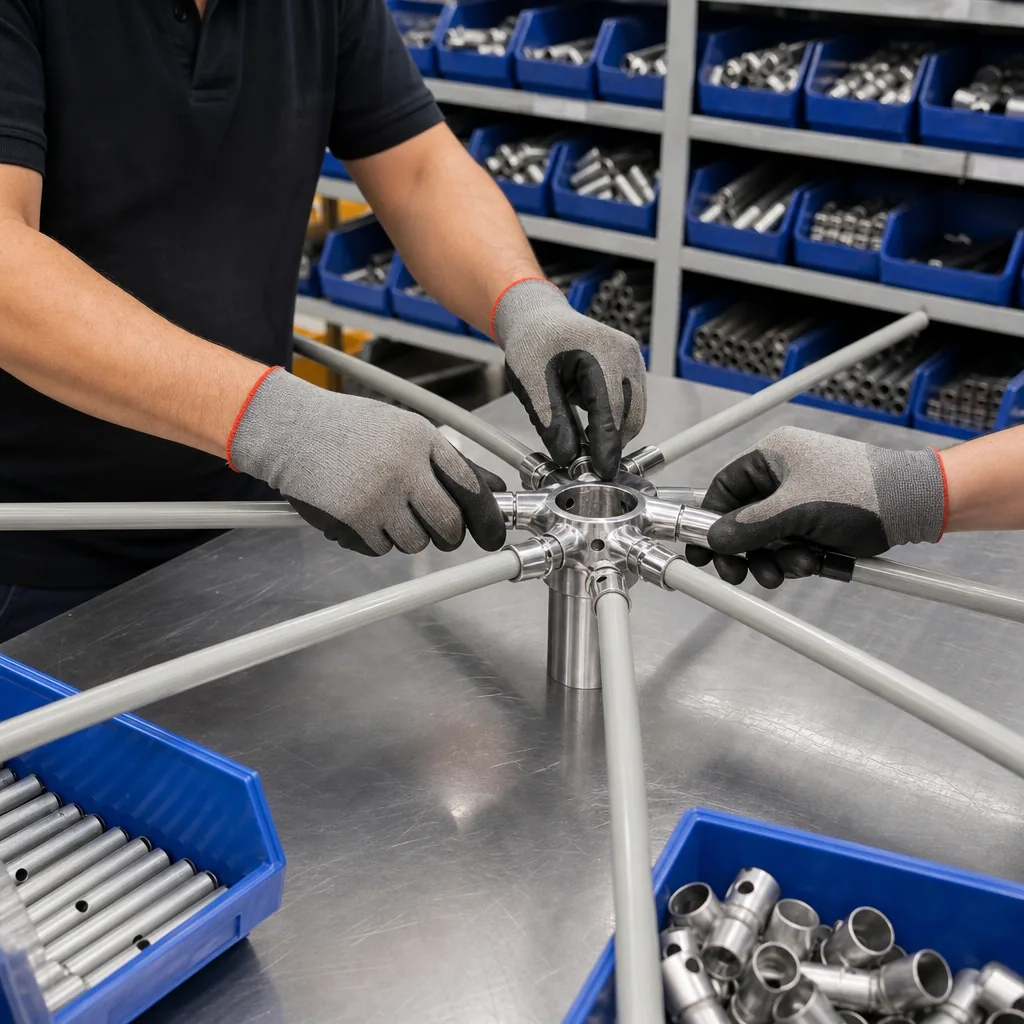
When a bulk umbrella order starts failing, the problem is often not the canopy but the frame: a millimeter off in hole spacing, a weak rivet, or a sloppy weld can turn into bent ribs, uneven opening, and returns after shipment. Buyers who understand umbrella frame assembly tolerance limits and inspection checkpoints can catch these issues before production locks in, protecting lead times, margins, and brand reputation.
Why frame tolerance matters in bulk orders
In bulk production, umbrella frame assembly tolerance is not a cosmetic issue; it decides whether the umbrella opens cleanly, locks positively, and holds canopy tension after a few cycles. A 1.0 mm rib length error can shift panel geometry enough to create loose corners, puckering at the tip, or a canopy that rubs the ferrule on closing. Runner fit is just as sensitive: if the runner bore is too tight on the shaft or the notch engagement is shallow, opening force climbs and the mechanism feels gritty; if it is too loose, you get wobble, misalignment, and premature wear. In practice, buyers should treat umbrella frame assembly as a controlled mechanical system, not just a sewing accessory.
For rib tolerance control, I normally advise buyers to define critical dimensions on the approved sample and spec sheet: rib length, rib hole position, shaft OD/ID mating points, runner travel, and finished open diameter. Typical workable targets are ±1.0 mm on fiberglass ribs for standard 21" to 23" folding umbrellas, with shaft straightness held within 1.5 mm over the full length for a steel shaft on stick umbrellas. If you are ordering windproof models, the rib tolerance needs to be tighter near the tip end because small offsets change load distribution under gusts. Without those callouts, one factory may accept cosmetic variation that later shows up as poor opening force or uneven panel tension.
The other point buyers miss is that umbrella quality inspection has to measure movement, not only appearance. Under AQL 2.5, you should require functional checks for opening force, latch retention, full-open diameter, and repeated cycle performance, because a frame can look acceptable and still fail after packing and shipping stress. I would specify no visible shaft bow, smooth runner travel, and matching rib lengths across a carton lot, especially when mixing fiberglass ribs with a steel shaft in the same program. In my experience, returns usually come from stacked small errors: a slightly short rib, a slightly loose runner, and a shaft that is just off-center enough to make the canopy sit crooked.
Key frame components to inspect
On a real umbrella frame assembly line, the first things I check are the ferrules, tips, notches, springs, push buttons, and every hinge point around the runner and stretcher joints. Ferrules must seat fully without wobble, tips should be capped cleanly with no sharp edges, and notches need consistent depth so the ribs lock without slippage. Springs and push buttons fail in boring ways: weak return force, inconsistent travel, or a burr inside the housing that jams after a few cycles. In umbrella quality inspection, those are not cosmetic issues; they turn into field returns fast, especially after repeated open-close testing.
For rib tolerance control, fiberglass ribs and steel ribs behave differently. Fiberglass ribs usually give better fatigue life and more forgiving flex in wind, but they can show resin voids, splintering at cut ends, or uneven wall thickness at the ferrule interface. Steel ribs and a steel shaft hold geometry better and feel stiffer, yet they are more sensitive to plating defects, bending at the notch, and poor rivet setting at the joints. During sample approval, I check the ferrules, notches, and joints first, then the spring/button mechanism, because those parts reveal whether the tooling and assembly discipline are actually stable before you waste time on finish details.
For buyers approving an umbrella frame assembly, I would run the sample through repeated open-close cycles, then inspect the same stress points again under magnification: notch wear, rivet looseness, tip retention, and any cracking around molded plastic parts. Under AQL 2.5, one bad joint can hide a broader process problem, so the inspection lot should include frames from the start, middle, and end of production, not just the first-off sample. If the frame is built with fiberglass ribs, pay extra attention to end caps and the first bend near the stretcher; if it uses a steel shaft, check straightness, socket fit, and corrosion-prone contact points before canopy sewing ever starts.
What a factory QC checklist should include
A useful factory checklist starts with cycle testing, because the fastest way to catch bad umbrella frame assembly is to open and close random samples before anyone talks about appearance. We run repeated opening cycles to check for smooth travel, consistent stop points, and whether the runner binds on the steel shaft. Snap-back matters just as much: the frame should release cleanly without the ribs slamming or twisting out of plane. For fiberglass ribs, I look for spring consistency and resin cracks at the ferrule and hinge points; for steel rib systems, I check for edge burrs, plating damage, and early deformation around the rivet holes. If the mechanism feels sticky on the bench, it usually gets worse after packing and shipment.
Locking strength needs a separate check, not just a quick hand test. The button, push-release, or auto-open lock should hold under repeated force without partial engagement, because a weak lock is a functional defect, not a cosmetic one. In umbrella quality inspection, rib tolerance control is about more than matching length; it is about keeping canopy spread symmetrical so opposing ribs land at the same angle and the tips do not fight each other. Visual alignment should confirm that the crown, stretcher, ribs, and canopy seams sit centered over the steel shaft, with no side lean, no twisted runner, and no uneven tip height. Small deviations can still pass if they do not affect use, but once the frame looks skewed from 1 to 2 meters away, the buyer will see it immediately.
AQL 2.5 is normally used differently for frame defects and cosmetic issues. Functional problems such as broken ribs, failed locks, bent shafts, missing rivets, or frames that will not open smoothly are treated as major defects and are sampled strictly, because they affect usability and safety. Cosmetic items like minor plating marks, small scratches, or light color variation on non-visible parts are usually counted separately and tolerated at a higher rate, provided they do not expose corrosion risk or weaken the part. For rust resistance, the checklist should include salt-spray or humidity exposure on plated parts, plus a post-test review of hinge points, welds, and cut edges. That is the practical way to keep umbrella frame assembly under control before the canopy is even sewn on.
How to set buyer-approved tolerances
Set buyer-approved tolerances before the first cutting ticket is issued, because once the umbrella frame assembly line starts, changes get expensive fast. Ask the factory to measure canopy symmetry, rib count consistency, and the steel shaft diameter on a pre-production sample, then record the acceptable range in millimeters, not vague language like “good fit.” For example, confirm the rib length match between opposite panels, the runner travel distance, and the shaft wall thickness if you care about wind performance or handle wobble. If the order uses fiberglass ribs, spell out the allowable flex and recovery standard separately from steel parts, because those two materials behave differently under load.
In a real pre-production sample, I want the buyer to check opening force, lock engagement, ferrule seating, tip alignment, and whether every rib nests evenly against the canopy edge. That is where rib tolerance control matters: if one rib is 2 mm longer than the others, the canopy will show twist, puckering, or uneven tension after sewing. The spec sheet should lock the umbrella size, rib count, shaft diameter, tolerance band for critical parts, and the approved material callout for fiberglass ribs or steel shaft components. If the buyer leaves any of those open, the factory will default to its own standard, which may not match the brand’s expectations.
For umbrella quality inspection, put the pass/fail criteria into the document before mass production, not after the shipment is already packed. I usually recommend a simple table that lists critical dimensions, sampling points, and the AQL 2.5 plan for visual and functional checks, so everyone knows whether a deviation is cosmetic or reject-level. If the canopy symmetry is off, the frame is loose, or the shaft diameter drifts outside the agreed range, the batch should stop at first-article approval. That is the cleanest way to protect both the buyer and the factory from arguments later over what “acceptable” was supposed to mean.
Common defects and how to prevent them
Loose rivets are the first thing I check when a buyer asks about umbrella frame assembly because they show up as wobble, noise, and premature failure in the field. The usual cause is a bad rivet upset, worn tooling, or a mismatch between hole size and shank diameter; on fiberglass ribs, the problem gets worse if the drilling position drifts by even a small amount. The correct fix is not hand-tightening after the fact; it is controlling rivet length, punch wear, and hole location at the station, then verifying pull-through and opening cycles during umbrella quality inspection. If a supplier is serious about rib tolerance control, the frame should pass a repeatable fit check before it ever reaches canopy sewing.
Uneven ribs and bent shafts are usually traceable to bent wire stock, poor jig alignment, or operators forcing parts past a press fit. A steel shaft that is slightly out of straightness can still pass a quick visual check, but it will create canopy wrinkles, inconsistent opening force, and bad tip alignment once the umbrella is fully assembled. Good factories sort shaft straightness early, use go/no-go fixtures for rib length and symmetry, and inspect rib geometry after each critical forming step; with fiberglass ribs, they also watch for splintering and local crush at the ferrule and joint areas. In practice, this is where AQL 2.5 sampling matters, because a small batch of off-center frames can turn into a full carton of returns if the defect slips through.
Poor spring tension usually comes from inconsistent temper, weak torsion settings, or assembly mistakes in the runner and latch area, and it directly affects opening force and lock reliability. If the spring is too weak, the umbrella will not stay open; if it is too strong, operators damage ribs during cycling and create hidden fatigue that shows up later as breakage. The supplier should standardize spring specifications, check opening force on a sample basis, and record rework at the frame line, because every rejected frame adds labor, slows packing, and pushes lead times out by several days. For buyers, the cost is not just repair parts; it is sorting, re-inspection, and lost schedule margin, which is why a disciplined umbrella quality inspection process is cheaper than trying to fix defects after mass production starts.
Frequently Asked Questions
What tolerance should buyers ask for on umbrella frame parts?
Ask the factory to define tolerances for shaft straightness, rib length, and joint fit on the spec sheet. The exact numbers depend on umbrella size and mechanism, but they should be approved before mass production.
Is AQL 2.5 enough for frame inspection?
AQL 2.5 is common for general inspection, but critical functional defects may need tighter internal control. Buyers should separate cosmetic defects from mechanical failures in the inspection plan.
What frame measurements should a buyer put on the pre-shipment inspection report?
At minimum, specify shaft outer diameter, shaft straightness, rib length, rib symmetry left-to-right, runner travel, and top-to-tip overall height. For bulk orders, buyers often set critical dimensions with a tolerance band such as ±1.0 to ±2.0 mm depending on component and umbrella size.
How many umbrellas should be opened and closed during QC to catch frame assembly issues?
For a final random inspection under AQL 2.5, inspectors typically test units from the selected sample size, not every carton. A practical B2B standard is to run repeated open-close checks on sampled units and flag any binding runner, uneven tension, loose rivet, or rib crossover before shipment approval.
Which defects should be classified as major versus minor for umbrella frame inspection?
Major defects usually include broken fiberglass ribs, cracked joints, sharp burrs, failed welds, bent steel shafts, or a frame that cannot open and lock correctly. Minor defects are typically light finish scratches, small paint inconsistencies, or slight cosmetic misalignment that does not affect function or carton compliance.
Looking to Launch Your Custom Umbrella Line?
ZheBrella is a Zhejiang-based OEM/ODM umbrella manufacturer with 17 years of export experience. Free design, low MOQ from 100 pieces, windproof construction, full-color print.
Get Free Quote Now »People Also Search For
Related Articles
Umbrella Frame Assembly Line: Rivets, Jigs, and Tolerance Control
Learn how umbrella frames are assembled with rivets, jigs, and tolerance checks so bulk OEM orders open smoothly and pas...
Read More »
Umbrella Frame Riveting Process: Tolerances and QC Checks
Specify rivet size, hole tolerance, frame alignment, and inline pull checks to reduce loose ribs, jammed runners, and AQ...
Read More »
Umbrella Frame Tension and Canopy Fit: What Buyers Should Check
Learn how rib tension, stitch allowance, and canopy shrinkage affect opening feel, panel alignment, and rejection rates ...
Read More »