Umbrella Frame Tension and Canopy Fit: What Buyers Should Check
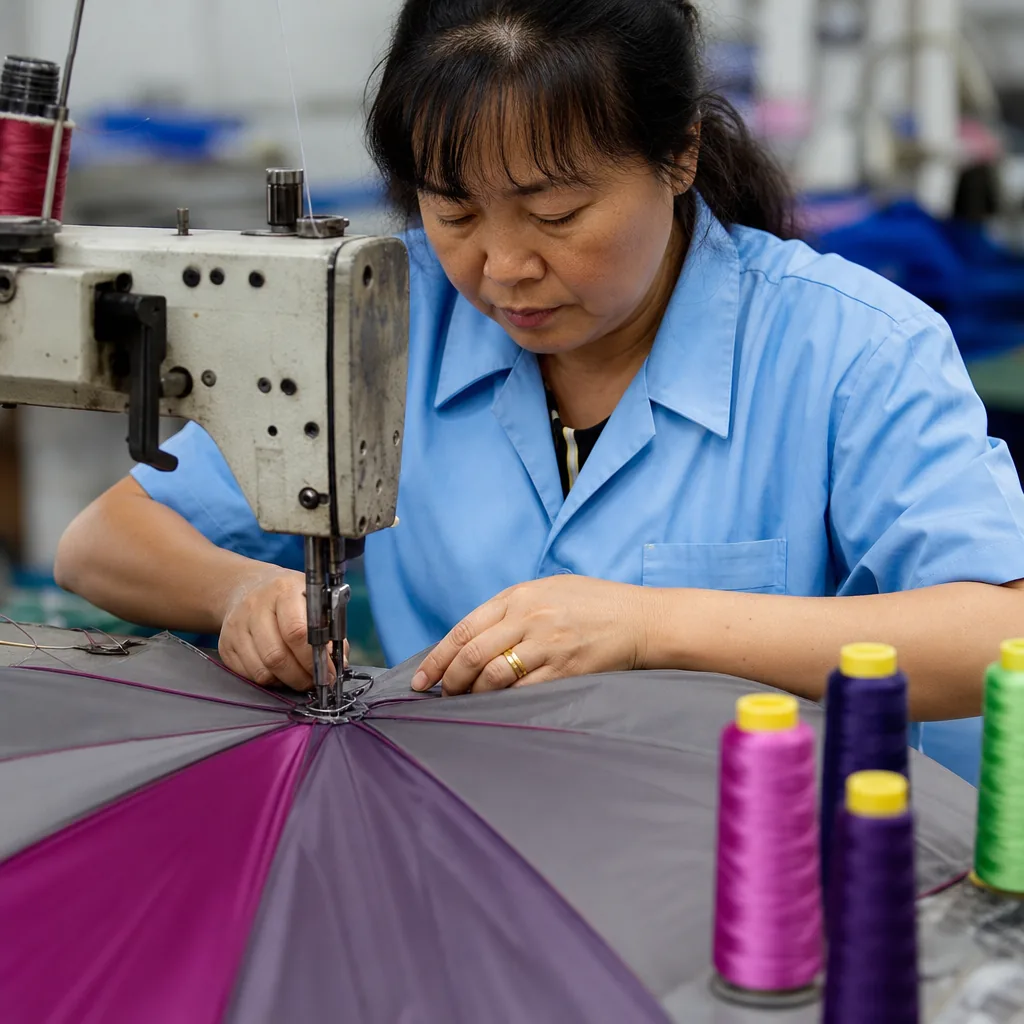
Bulk umbrella orders often fail for the same avoidable reasons: the frame opens too stiffly, the canopy sits off-center, or panels wrinkle after sewing and heat-setting. At the factory floor, the real variables are umbrella frame tolerances, rib tension, stitch allowance, and how much the fabric shrinks before final assembly. Buyers who check these details early usually avoid higher rejection rates, inconsistent opening feel, and last-minute size disputes.
Map the frame geometry
Start with the geometry, not the marketing label. A 23-inch umbrella can still be wrong if the shaft length, rib length, panel count, and open diameter do not match the drawing. I want the buyer to specify the closed shaft length to the millimeter, the stretch length of the main ribs, the exact number of panels, and the target open diameter with a tolerance band. A sample should be built against that spec and measured on the bench, because a nominal size does not tell you whether the canopy will sit tight or hang loose. This is where umbrella frame tolerances matter: a 2 to 4 mm drift in rib length, ferrule position, or stretcher angle can change the canopy fit enough to create wrinkles, panel pull, or a weak crown.
Rib count changes the geometry as much as the size label does. An 8K frame and a 16K frame are not interchangeable just because both are called 23-inch; the panel angle, seam load, and stretch path are different, so the same canopy pattern will fit one frame and fight the other. I check rib tension testing by opening the frame repeatedly and feeling for uneven spring-back, loose joints, or a hinge that carries more load than the rest. If the ribs are fiberglass, the flex profile should be consistent from tip to stretcher; if steel, the draw and temper need to hold shape without permanent set. Good umbrella frame tolerances show up in the symmetry of the arc, not in a catalog line.
Canopy fit is the other half of the job, and canopy shrinkage control has to be built into production, not corrected after sewing. Pongee 190T or 210T will relax differently after heat cutting, printing, and stitching, so the cutting table should use a compensated pattern, then be verified after conditioning. I prefer an AQL 2.5 umbrella inspection that checks open diameter, tip spacing, seam alignment, and panel match against the master sample, because one bad panel can hide inside an otherwise acceptable lot. The right control plan also tracks the frame and canopy together: if the sample was approved on one batch of 8K 16K ribs and the mass run changes the rib supplier, the fit has to be rechecked before release.
Control tension and shrinkage
The first thing I check is whether the canopy pattern actually matches the frame before sewing starts. Good umbrella frame tolerances are useless if the pattern ignores seam allowance, because a 3 to 5 mm error per panel becomes a visible flat spot or puckered crown after the fabric is under load. With pongee 190T or 210T, edge binding and turned hems also matter: if the binding is too tight, the edge shortens after stitching and the canopy pulls off-center; if it is too loose, the hem waves and the ribs never sit evenly. On 8K and 16K ribs, that imbalance shows up fast because more ribs means more contact points and less forgiveness.
Canopy shrinkage control starts before cutting, not after production is finished. Polyester, POE, and PVC-coated fabrics all move differently after heat setting, printing, or lamination, so the cut size has to account for that change instead of assuming the cloth stays stable. In practice, we test the fabric lot, then allow for shrinkage after heat exposure and tensioning so the finished open diameter does not drift outside spec. A buyer should ask for a measured tolerance, not “close enough”: for a standard stick umbrella, a few millimeters on open diameter is normal, while crown height should stay within roughly 3 to 5 mm if the pattern and stitching are controlled correctly.
Rib tension testing is where bad assumptions get exposed. A canopy that looks fine on the table can still sit too loose on the frame, especially on vented double-canopy styles or auto-open-close umbrellas where the fabric is pulled harder at the apex and tips. During AQL 2.5 umbrella inspection, we check whether the canopy centers properly, whether the crown height repeats from sample to sample, and whether the open diameter matches the approved spec across the batch. At ZheBrella, the point is not cosmetic perfection; it is making sure the fabric, stitch line, and frame load are balanced so the umbrella opens cleanly and stays within umbrella frame tolerances after repeated cycling, not just on the first open.
Choose rib count and materials
8K, 10K, and 16K frames are not just marketing labels; they change the way the umbrella opens, holds shape, and closes. An 8K frame usually gives a lighter, faster action with lower closing force, which is fine for a compact promotional style, but it can feel soft if the canopy is cut too loose. A 10K frame is the middle ground I usually trust for better panel support and less flutter in a light wind. A 16K frame adds more support points around the canopy, so the open looks cleaner and the canopy sits flatter, but the user will feel more resistance when closing because the runner is working against more ribs and stretch points. When buyers compare umbrella frame tolerances, they should look at how much play exists at the joints, not just the listed rib count.
Material choice matters as much as rib count. Fiberglass ribs are better when the goal is a clean open without tip pull-out, because they flex instead of snapping back hard, and they reduce the sharp rebound that can distort the canopy edge. Steel ribs give a firmer feel and better memory in straight-line loading, but they can create more canopy stress if the frame is over-tensioned or if the ferrules are poorly aligned. For 21 inch and 23 inch folding umbrellas, fiberglass often gives better user comfort and less panel flutter; for larger 27 inch or 30 inch golf styles, a mixed build with steel center pole and fiberglass ribs is often the practical balance. The right answer depends on whether the buyer wants stiffness, wind response, or a lighter open-close cycle.
The real control point is matching the frame to rib tension testing and canopy shrinkage control before bulk production. If the fabric shrinks after cutting and sewing, even a good 8K 16K ribs build will pull the tips inward, create loose corners, or make the canopy sit unevenly at the top cap. We check opening symmetry, tip seating, and closing force during sample approval, then repeat that under AQL 2.5 umbrella inspection on production lots to catch inconsistent joint fit or bent ribs. On the factory floor, the best frames are the ones that open cleanly, hold panel tension without buzzing or fluttering, and close without fighting the user. If the frame geometry is right, the canopy lies flat; if it is wrong, no amount of panel sewing can fully hide it.
Inspect the failure points
The first thing I check on first-article approval is whether the frame tracks straight under load. Twisted runners, uneven spoke load, and loose tips usually show up before the canopy ever reaches a rain test. If the ferrule sits off-center or the runner binds halfway up, the buyer is already looking at poor umbrella frame tolerances, not a cosmetic issue. On 8K and 16K ribs, the mismatch is easier to hide because the canopy can be forced on at sewing, but the defect returns as wrinkling and panel creep after opening and closing cycles. In AQL 2.5 umbrella inspection, I want the sample opened on a flat table, then checked for symmetric rib spread, equal arc height, and consistent tip alignment from panel to panel. If one side sits higher or the tips flare outward, that is not a minor adjustment; it means the frame set, ferrule, or stretcher holes are out of control and the canopy fit will drift in production.
Wrinkled panels and seam puckering are usually a canopy problem first, but they often expose frame error as well. If the cut panels are correct and the fabric still pulls into waves near the seams, the likely causes are bad rib tension testing, wrong seam allowance, or shrinkage that was not controlled after printing, heat-setting, or waterproof coating. Buyers should compare the sample with the spec sheet under full opening: panel edges should lay smooth, seams should sit flat, and the fabric should not bridge between ribs. On vented or double-canopy construction, puckering around the vent ring or inner layer edge is a real warning sign because the two layers shrink differently and the stress concentrates at the tie points. ZheBrella treats that as a failure in process control, not a sewing nuisance. If a buyer sees a canopy that needs hand-stretching to look acceptable in first-article approval, the line will not self-correct later.
Loose tips and unstable panel tension are the defects that tend to show up after a few open-close cycles, which is why I insist on checking them before mass production starts. A loose tip may look harmless on day one, but it lets the panel walk, creates corner slack, and then turns into fluttering on wind exposure and uneven wear at the tip pocket. Buyers should press on each tip, confirm the fabric is captured cleanly, and verify that the runner locks without overtravel that crushes the canopy edge. For auto-open and auto-open-close models, this is even more important because the spring force can mask poor fit during a quick demo and then expose it later in use. The right approval standard is simple: no visible twist, no puckered seams, no loose corners, and no panel that changes shape when the frame is cycled several times. If those points fail, the umbrella frame tolerances are too loose for stable production, and the lot should be corrected before moving to bulk sewing or final packing.
Write the QC rulebook
The first thing I check is whether the frame holds geometry under load, not whether it "looks straight" on the bench. For umbrella frame tolerances, I want a defined radial and axial allowance at the rivet points, the runner, and the tip sockets, because a loose 8K or 16K frame will telegraph into canopy puckering after only a few opening cycles. Rib tension testing should be done on finished assemblies with the canopy mounted, using a fixed pull gauge on opposite ribs and a repeatable open-close position, so the factory can document a real pass/fail line instead of guessing by feel. For 21" and 23" travel models, I would not accept uneven rib resistance or a runner that drifts under moderate hand force; the frame should open smoothly, lock positively, and return without binding. Cycle life matters more than a one-time showroom sample. For standard manual umbrellas, I would require at least 1,000 opening cycles for promotional grades and 2,000 to 3,000 cycles for retail programs, with no cracked tips, loose ferrules, or spring loss that affects opening force. Auto-open and auto-open-close mechanisms need a tighter screen because the trigger and shaft geometry can hide wear until late in production; the good units keep the same snap and latch feel after repeated testing, while the weak ones start misfiring or collapsing unevenly. Canopy shrinkage control has to be checked on the sewn blank and again after heat-setting or curing, because a fabric that shrinks 2% to 3% will pull the ribs out of square and make the edge wave. On coated pongee 190T or 210T, I want the sewing and finishing process held to the same target, not treated as separate problems. For release, I would use AQL 2.5 umbrella inspection as the floor, not the ceiling, and define the defect list before production starts. Critical failures include broken ribs, failed locking, exposed sharp wire, off-center canopy fit, and print registration so far off that the panel seam shows through; major failures include inconsistent panel tension, loose stitches, and uneven tip insertion. If the order is headed to retail or ecommerce, carton pack-out has to survive abuse, so I would specify polybag protection, corner reinforcement where needed, and a carton drop requirement of at least 60 to 76 cm on faces, edges, and corners without scuffing the canopy or popping the runner. ZheBrella’s standard practice is to confirm the packed sample after drop testing, then recheck one carton from the line every shift so the shipping condition matches the approved sample, not just the production photo.
Frequently Asked Questions
Why does a sample open cleanly but production units look loose?
Small changes in cutting, seam stitching, or rib length can add up across the canopy. If the factory does not control shrinkage and tension by lot, the final units will not match the signed sample.
What tolerance should buyers ask for on canopy size?
For a standard retail umbrella, ask for a narrow tolerance on both open diameter and closed length, and write it into the spec sheet. The exact number should match the frame class, but vague tolerances create avoidable rejects.
What rib length tolerance should a buyer ask for on bulk umbrella orders?
For standard retail umbrellas, many buyers specify rib length within +/- 2 mm to +/- 3 mm depending on size and frame type. Tighter control matters on 8K and 16K frames because small deviations can change canopy tension and panel symmetry.
How much canopy shrinkage is acceptable after cutting and sewing?
A practical target is to keep finished canopy shrinkage within 1.5% to 3.0% against the cutting pattern, measured after sewing and light finishing. If the fabric lot is unstable, buyers should require pre-shrink testing before mass production.
What AQL level is commonly used for umbrella fit and tension inspection?
Many importers use AQL 2.5 for major visual and functional defects, including poor canopy fit, uneven panel spacing, and abnormal opening feel. For critical frame mismatch issues, some buyers set a stricter internal limit even if the final shipment uses AQL 2.5.
Looking to Launch Your Custom Umbrella Line?
ZheBrella is a Zhejiang-based OEM/ODM umbrella manufacturer with 17 years of export experience. Free design, low MOQ from 100 pieces, windproof construction, full-color print.
Get Free Quote Now »People Also Search For
Related Articles
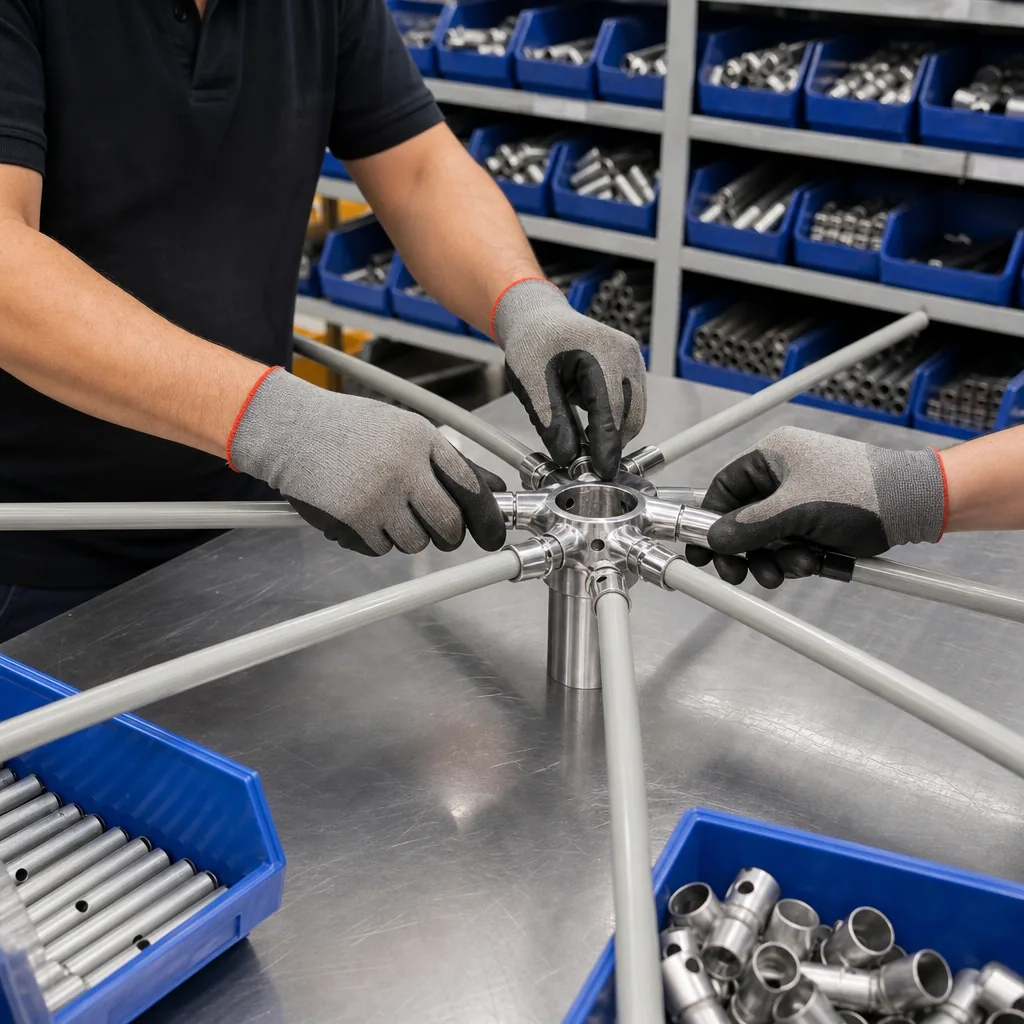
Umbrella Frame Assembly Tolerances and QC Checks for Buyers
Learn which frame tolerances, weld points, and QC checks reduce defects in umbrella production and protect bulk orders f...
Read More »
AQL 2.5 for Umbrella Inspections: What Buyers Should Specify
See how AQL 2.5 is applied to umbrella orders, which defects matter most, and what tolerances protect quality before shi...
Read More »
Umbrella Frame Tension Specs for OEM Manufacturing Buyers
Learn which frame tension specs affect open force, canopy fit, and failure rates so you can specify durable OEM umbrella...
Read More »