AQL 2.5 for Umbrella Inspections: What Buyers Should Specify
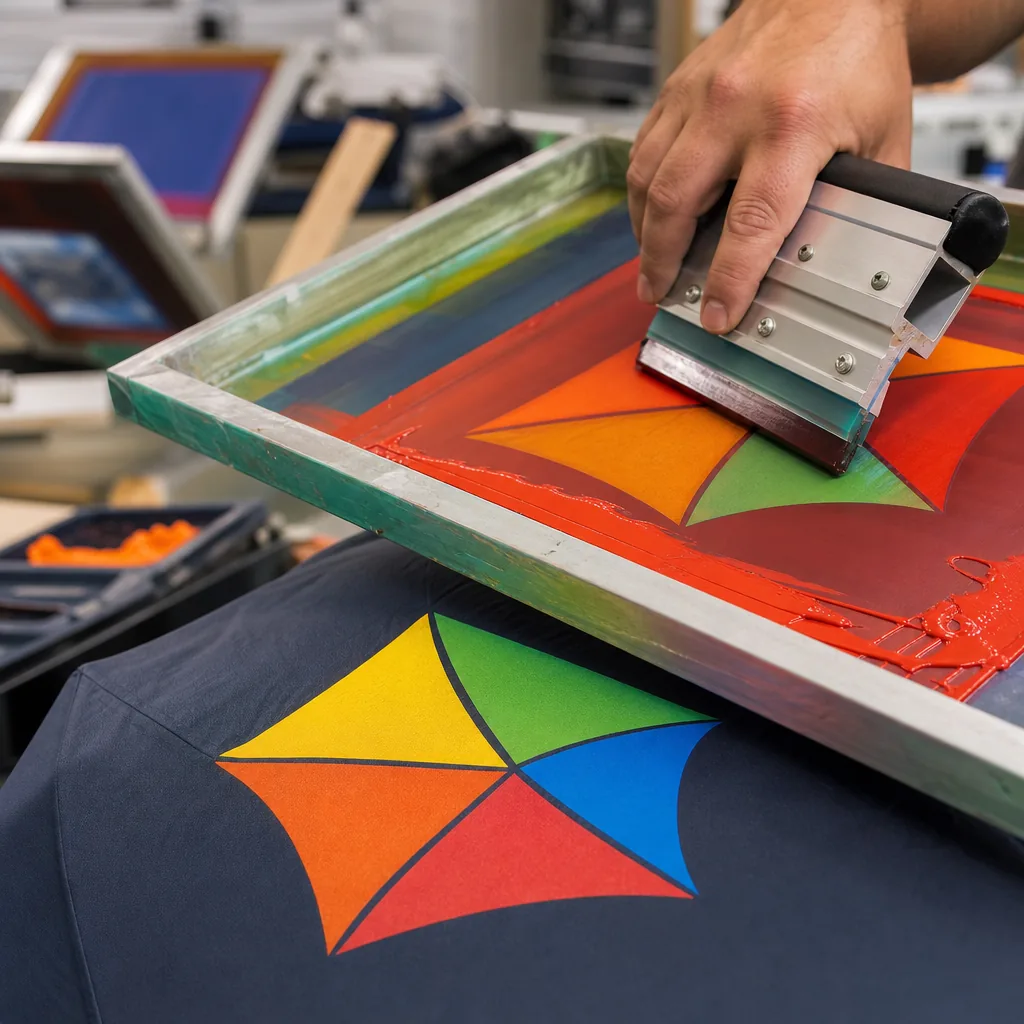
When umbrella buyers specify quality limits too loosely, small defects like broken ribs, loose tips, uneven stitching, and print errors can pass until the shipment is already on the truck. An AQL 2.5 umbrella inspection gives a practical acceptance standard, but only if the buyer defines which defects count, how they are sampled, and what happens when a batch sits near the limit. On the factory floor, that clarity is what keeps a normal production variation from becoming a rejected order.
What AQL 2.5 Means for Umbrella Orders
An AQL 2.5 umbrella inspection is acceptance sampling, not 100% checking. You take a statistically defined sample from a lot and decide whether the whole shipment passes based on defect counts. In practice, buyers should separate defects into critical, major, and minor. Critical defects get zero tolerance because they can injure users or make the umbrella unusable, such as a sharp rib tip punching through the canopy, a locking failure that collapses under load, or exposed metal at the runner. Major defects are functional or visual failures that a customer will reject, like a torn canopy seam, broken rib, bad open-and-close action, wrong print placement, or water leakage from a failed coating. Minor defects are cosmetic issues that do not stop use, such as small thread ends, light scuffs, or a slightly off-center label. In an AQL 2.5 umbrella inspection, the exact accept/reject number depends on lot size and inspection level, but the logic is consistent: one bad batch can be rejected even if most pieces look fine.
For umbrella orders, sample size is tied to the shipment size and the inspection standard, usually ANSI/ASQ Z1.4 or ISO 2859-1. At General Inspection Level II, a lot of 501 to 1,200 pieces is typically sampled at 80 units, 1,201 to 3,200 at 125 units, and 3,201 to 10,000 at 200 units. That sample is judged against the AQL 2.5 limit for major defects, while critical defects are usually set to zero acceptances. This is where a buyer needs a proper umbrella QC checklist, because the sample must reflect real failure modes: canopy seam inspection, rib tolerance control, handle fit, spring tension, tip attachment, and opening cycle performance. If the supplier only checks outer appearance, they can still ship umbrellas with weak ferrules or misaligned stretcher rivets that fail after a few uses.
Component-level inspection and finished-goods inspection are not the same thing, and mixing them up creates false confidence. Component inspection looks at parts before assembly: fiberglass or steel ribs, shaft straightness, canopy panels, stitching density, coating weight, and print registration. That catches problems early, but it does not prove the umbrella works as a unit. Finished-goods inspection checks the assembled product under shipment quality control conditions: open-close cycles, canopy symmetry, rib clearance, leak testing, wind resistance, and carton packing. A supplier can pass good ribs and still fail the finished umbrella because the runner is mis-crimped or the seam allowance is too short. For that reason, buyers should specify both stages in the PO, especially on private-label runs where a 2.5 AQL at the final lot level is expected. ZheBrella uses the same split in practice: part checks first, then finished-goods sampling before release.
Critical Checks on Frames, Ribs, and Open-Close Function
For an AQL 2.5 umbrella inspection, the first gate is the frame geometry, not the fabric. Shaft straightness should be checked against a fixed jig, because even a 1.5 to 2.0 mm bow in a 21" or 23" shaft will show up later as uneven canopy tension and poor closing alignment. Ferrule fit matters just as much: the top notch, runner, and tip cup should seat without play, and rib symmetry should be verified left-to-right and panel-to-panel before any packing starts. In a proper umbrella QC checklist, I want rib count verification, pin placement, and joint rivet security recorded by size and style, whether the frame is 8K, 10K, 16K, or a vented double-canopy build. Rib tolerance control should be documented in millimeters, not adjectives, because buyers need shipment quality control data that can be repeated at the factory and at receiving.
Spring tension and auto-open performance need measurable checks, not a visual pass/fail. For auto-open and auto-open-close models, the release button should fire consistently at a controlled force window, and the runner must travel smoothly without hesitation, partial deployment, or rebound. On the line, I would test opening force consistency across a sample set and reject units that vary beyond a narrow band, because one stiff mechanism in a carton often signals a poor spring batch or an out-of-spec locking notch. The handle lock, center shaft detent, and end stopper should survive repeated cycling without loosening. In practice, a useful shipment quality control target is zero functional failures in the AQL 2.5 umbrella inspection sample and no visible deformation after 10 to 20 open-close cycles during inline verification.
Handling tests should focus on breakage rates and what actually happens when cartons are dropped, stacked, and reopened. A decent umbrella QC checklist includes a light impact check on the assembled frame, then a reopen test after compression to confirm the ribs return to position and the canopy hangs evenly. For folding umbrellas, the ferrule and slider area are common failure points, while full-length stick umbrellas usually fail at the shaft joint or rib tip if the rivet is loose. I also want canopy seam inspection tied to frame checks, because a crooked rib often creates seam stress that tears later at the stitch line. Under AQL 2.5 umbrella inspection, define acceptance by function and rate: no cracks, no bent main ribs, no lock slip, and a breakage rate low enough to protect the shipment, not just the sample.
Canopy and Stitch Quality Benchmarks
For pongee 190T or 210T, inspectors should start with the cloth itself, not just the finished umbrella. The basic checks are GSM consistency, weave uniformity, color shade, and whether the coating or water-repellent finish is even across every panel. In an AQL 2.5 umbrella inspection, the canopy seam inspection should verify that each panel is cut on grain, the apex is centered, and the panel set matches the approved artwork and layout. On printed umbrellas, placement tolerance matters: logos that drift toward the hem or sit off-center are a common buyer complaint even when the umbrella is otherwise functional. Our standard practice is to check sample panels under strong light before sewing starts, because fabric defects and print misalignment are cheaper to catch there than after full assembly.
Stitch quality is where a lot of cheap umbrellas fail shipment quality control. Inspectors should look for skipped stitches, broken thread, loose thread ends, puckering along curved seams, and inconsistent stitch density at the peak and hem. A weak seam may pass a casual visual check but leak under spray testing, especially on 190T fabric with a light coating and tight seam allowances. The edge binding should sit flat without twisting, and the seam allowance should be consistent from panel to panel so the canopy opens smoothly instead of pulling to one side. Buyers should also specify rib tolerance control, because even a perfect seam will look crooked if the frame geometry is off and the canopy is forced to stretch unevenly over the ribs.
Common reject reasons are straightforward: skipped stitches near the top cap, loose thread tails that can snag in use, seam puckering that creates stress points, misaligned panel matching, and water leakage at seams after rain simulation or spray testing. On printed models, smudged logos, color shift, and print placement errors are just as serious as structural defects because they affect retail acceptance. A practical umbrella QC checklist should combine visual inspection, open-close cycling, seam pull checks, and a wet test on random units from each lot, with the defect limit tied to AQL 2.5 umbrella inspection criteria. If the buyer wants fewer field failures, the spec should define seam width, stitch count, acceptable leak points, and the exact approval sample, not just “good quality” on the PO.
Packaging, Carton Count, and Transit Damage Controls
Packaging failures are not cosmetic in an AQL 2.5 umbrella inspection; they become pass/fail when the product arrives crushed, mixed, or mislabeled. Carton drop risk is usually highest on corner impact, so the master carton needs enough board strength, tight void control, and a sleeve fit that prevents the folded umbrella from punching through the lid during a 1 m drop. If the sleeve is loose, the canopy migrates and the tip or runner can damage the panel print, which then turns into a shipment quality control dispute even when the umbrellas themselves passed function testing. For retail-ready units, I want the barcoded hang tag, polybag, insert card, and UPC all matched before carton sealing, because one barcode error can make an otherwise good lot fail receiving at the warehouse. Carton count is where a lot of buyer specifications get vague, and vague specs create avoidable shortages. The umbrella QC checklist should state units per inner pack, inners per master carton, gross weight target, and whether extras are allowed for sampling replacement or must be excluded from the shipped count. For 21-inch or 23-inch umbrellas, a packed carton that is too full will crush the canopy crowns and create seam stress; too loose, and the ribs and tips shift enough to dent neighboring units. I also check sleeve fit against the actual folded length, not the nominal spec, because a 5 mm mismatch is enough to bend the ferrule or scuff a POE canopy edge. At AQL 2.5 umbrella inspection, that kind of packaging defect is counted as a transit-damage risk, not as harmless packing variation. Export labeling should be treated as part of product quality, not an afterthought. Master cartons need the correct style code, color, quantity, carton number, country of origin, net and gross weight, and consignee marks aligned with the packing list and commercial invoice; if any one of those is wrong, the lot may clear factory inspection but still fail at the warehouse dock. Barcode accuracy matters on retail-ready units and on the outer cartons, because one unreadable label can block receiving, especially for mixed-SKU programs. The practical check is simple: scan sample barcodes from each case lot, verify carton count against the packing list, and open enough units to confirm the sleeve, polybag, and insert sequence is consistent. In shipment quality control, that is often the difference between an accepted lot and a claim for shortage or relabeling.
How to Write a Factory QC Spec That Reduces Disputes
If you want an AQL 2.5 umbrella inspection to mean anything in practice, do not write only “AQL 2.5” on the PO and assume the factory will interpret it the same way you do. Spell out the defect categories, the lot size, the sampling standard, and the acceptance rules in the same document. The spec should attach photos for critical, major, and minor defects, because “small stain” or “slight crookedness” is where disputes start. For umbrellas, define the umbrella QC checklist by component: canopy print registration, panel symmetry, stitch density, tip insertion, runner travel, spring force, handle fit, and packing condition. Set measurable tolerances where possible, such as panel mismatch in millimeters, rib length deviation, canopy seam allowance, and opening/closing cycle counts. If the supplier is expected to follow rib tolerance control or canopy seam inspection standards, write the measurement method, the tool to use, and who signs off the record. Do not leave room for “factory standard” language unless you already know exactly what that factory standard is.
The cleanest way to reduce arguments is to lock in a signed golden sample before bulk production and make it the reference for appearance, color, stitching, and functional behavior. For an AQL 2.5 umbrella inspection, define which defects are rejectable on a per-unit basis and which are allowed only within the sample plan. Add rework rules in plain language: who pays for sorting, whether reworked goods need a second inspection, and whether rework can happen before or after carton sealing. If you need shipment quality control to be more than a paper exercise, require inline checks at first article, midline, and final packing, especially on canopy printing, frame assembly, and carton counts. The factory should also sign off on test methods: open-close cycle test, wind resistance check, salt spray if the order calls for it, and visual inspection under specified lighting. Without that, a buyer may think a defect is major while the factory treats it as cosmetic.
Pre-shipment inspection should be mandatory when the order is large, the artwork is customer-specific, or the product has multiple failure points, such as auto-open-close mechanisms, vented double canopies, or mixed frame materials. If the goods are promotional or retail bound, use PSI on finished cartons, not random loose units, so you verify actual pack-out, barcode labels, hangtags, and master carton markings. Inline checks are useful when lead time is tight or the line has new workers, but they do not replace final sampling; they catch drift, not final lot defects. In the contract, require the inspector to record counts by defect type, photos of every rejected sample, and a disposition note for each lot: accept, sort, rework, or hold. That is how an AQL 2.5 umbrella inspection becomes enforceable instead of argumentative. ZheBrella’s standard practice is to pair a signed golden sample with a written rework rule, because once production starts, memory is not a quality system.
Frequently Asked Questions
Should umbrella buyers use AQL 2.5 for every order size?
AQL 2.5 is a common starting point for finished-goods inspections, but it should be matched to order value and risk. Small promotional runs may tolerate slightly more cosmetic variance, while retail programs usually need tighter defect definitions and clearer critical defect rules.
What defects should be treated as critical on umbrellas?
Any failure that makes the umbrella unusable or unsafe should be critical, such as a broken rib, failed auto-open mechanism, or severe shaft bend. For branded programs, major print misregistration or leaking seams can also be critical if they affect saleability.
For a 5,000-piece umbrella order, how many units are usually checked under AQL 2.5?
The sample size depends on the inspection level and lot size table, but a 5,000-piece lot typically lands in a sample range of around 200 to 315 units under normal inspection. Buyers should confirm the exact code letter and sampling plan before production starts so the factory uses the same acceptance rule.
Which umbrella defects should be treated as major instead of minor in an AQL 2.5 inspection?
Major defects usually include broken ribs, failed opening or closing, canopy holes, severe seam slippage, and handle looseness. Cosmetic issues like light print misalignment or small thread trims are often minor unless they affect branding or function.
What tolerance should buyers specify for rib length and canopy seam variation?
For most OEM umbrella programs, buyers often specify rib length tolerance within +/- 2 mm to +/- 3 mm and seam alignment within 3 mm to 5 mm, depending on the model. The key is to lock the tolerance in the purchase order and inspection checklist before mass production.
Looking to Launch Your Custom Umbrella Line?
ZheBrella is a Zhejiang-based OEM/ODM umbrella manufacturer with 17 years of export experience. Free design, low MOQ from 100 pieces, windproof construction, full-color print.
Get Free Quote Now »People Also Search For
Related Articles
Umbrella Frame Assembly Tolerances and QC Checks for Buyers
Learn which frame tolerances, weld points, and QC checks reduce defects in umbrella production and protect bulk orders f...
Read More »
Umbrella Frame Tension and Canopy Fit: What Buyers Should Check
Learn how rib tension, stitch allowance, and canopy shrinkage affect opening feel, panel alignment, and rejection rates ...
Read More »
Umbrella Canopy Panel Cutting and Seam Alignment Controls
Understand how panel cutting, seam alignment, and stitch control shape canopy appearance, waterproofing, and rejection r...
Read More »