Umbrella Frame Riveting Process for Durable OEM Orders
When an OEM order fails at the frame, the problem usually started long before final AQL: a soft rivet, oversized hole, uneven setting pressure, or skipped pull check. On our Songxia production floor, the umbrella frame riveting process is controlled by rivet grade, hole tolerance, fixture alignment, and line-side pull-force testing so 8K and 16K frames stay consistent through assembly, packing, and export handling.
Why Riveting Controls Frame Durability
Riveting decides whether a frame feels solid after 500 openings or starts rattling in the carton. In the umbrella frame riveting process, each pivot point has to clamp the rib, stretcher, and notch or runner link tightly enough to remove side play, but not so tight that the joint binds. A loose rivet lets the rib wobble under canopy tension, so the load shifts from the full 8K or 10K structure onto one or two ribs during gusts. An over-compressed rivet is just as bad: it pinches the stretcher eye, increases runner friction, and makes auto-open springs work harder. On production lines for OEM umbrella frames, we normally check umbrella rivet tolerance by joint rotation feel, side clearance, and sample pull testing before canopy sewing, because fabric can hide a weak frame until final AQL 2.5 inspection.
The stress pattern changes a lot between an 8K rain umbrella and a 16K premium frame. An 8K frame has fewer load paths, so each rib-to-stretcher rivet carries more bending force when the canopy flips or the user shakes water off a 190T pongee cover. If one rivet hole is punched oval or the rivet head is not seated flat, that rib becomes the first failure point. A 16K frame spreads wind load better, especially with fiberglass rib assembly, but it also doubles the number of moving joints that can create accumulated friction. That is why a 16K manual straight umbrella may look strong on paper yet open poorly if rivet compression varies by only a few tenths of a millimeter across the frame. More ribs improve shape and wind resistance only when every pivot rotates consistently.
Compact umbrellas and golf umbrellas fail in different places, so the riveting setup cannot be copied blindly. A 21 inch 3-fold compact has short ribs, telescopic shafts, and tight runner travel; even slight rivet burrs can scrape neighboring links and slow an auto-open-close mechanism. The factory has to control head height and washer placement so the folded frame nests cleanly without rubbing the 190T or 210T canopy. A 27 inch or 30 inch golf umbrella puts heavier leverage on the crown, middle rib joints, and long fiberglass or steel stretchers, especially in double-canopy vented windproof models tested at 50+ mph. For umbrella frame quality control, I want to see smooth runner travel, no clicking under twist load, no cracked rib eyelets, and no visible looseness after repeated open-close cycling before bulk packing.
Rivet Materials, Hole Size, and Fit Tolerances
Rivet choice is not cosmetic; it decides whether OEM umbrella frames stay tight after salt spray, rain cycles, and repeated opening impact. Plated low-carbon steel rivets are the normal cost choice for promotional 21" and 23" manual umbrellas because they set quickly, hold shear well, and keep the frame bill low. The weak point is corrosion at the cut edge and under the head if zinc or nickel plating is thin, so I avoid them for marine, golf, or long-retail warranty programs. Stainless steel rivets cost more and wear tooling faster, but they are the safer choice for 27" and 30" golf umbrellas, especially with double-canopy vented windproof builds. Brass rivets are easy to peen and resist red rust, but they are softer; use them where smooth pivot action matters more than high shear strength, not on overloaded stretchers that must survive 50+ mph wind-tunnel claims.
Hole fit is where many frame failures start. For the umbrella frame riveting process, our standard practice is to keep the punched or drilled hole about 0.05-0.12 mm larger than the rivet shank on steel ribs, and closer to 0.10-0.18 mm on fiberglass rib assembly because fiberglass does not tolerate forced expansion the way steel does. If a 2.0 mm rivet is used, a 2.08-2.15 mm hole is usually workable depending on coating thickness and burr control. Too tight, and the rivet splits the fiberglass wall or locks the joint; too loose, and the umbrella develops side play after 500-1,000 open-close cycles. Umbrella rivet tolerance should also include head diameter, grip length, and set height, not only shank size. A good rivet should rotate the joint cleanly without visible ovalization around the hole.
Washers are cheap insurance when the rib wall is thin, the canopy is heavy 210T pongee with Teflon coating, or the frame uses plastic runners that create uneven bearing pressure. On steel-to-steel joints, a washer is not always needed if the rivet head covers enough surface and the hole edge is clean, but on fiberglass-to-metal pivots I prefer a small stainless or brass washer to spread load and prevent the head from biting into the laminate. For umbrella frame quality control, inspectors should check burr height, cracked fiberglass fibers, head concentricity, and free pivot movement before canopy sewing hides the problem. In AQL 2.5 inspection, I treat frozen joints, cracked ribs, missing washers where specified, and loose rivets with audible rattle as major defects. The umbrella frame riveting process should be locked before mass cutting starts, because one wrong rivet length can ruin thousands of assembled frames.
Assembly Jigs for Consistent Rib Geometry
Consistent rib geometry starts with hard stops, not operator eyesight. In a proper umbrella frame riveting process, each rib and stretcher sits in a positioning jig that fixes the rib angle, stretcher pivot distance, and notch-to-runner alignment before the rivet is pressed. For 8K and 10K OEM umbrella frames, we usually hold the left-right rib angle within about ±1.0 degree and the stretcher hole position within ±0.3 mm; on 16K fashion frames the tolerance stack is tighter because small errors repeat around the full circle. Steel ribs can be corrected slightly after riveting, but fiberglass rib assembly is less forgiving because over-bending creates white stress marks or hidden fiber cracks. A good jig has replaceable bushings at the rivet point, hardened locator pins for the notch, and a center reference that matches the final shaft diameter, whether it is 8 mm, 10 mm, or 12 mm.
Stretcher length control matters as much as rib angle because it determines opening force and canopy tension. If the stretcher is 1 mm too long across several ribs, the umbrella may snap open aggressively, overload the runner spring, and feel harsh on an auto-open mechanism. If it is too short, the canopy sits loose, especially on 190T pongee or thin POE panels, and the edge will flutter even if the sewing is correct. Poor jig control also shifts the notch position, so the runner does not travel evenly; that causes one side of a 23 inch stick umbrella to open early while the opposite side lags. Buyers often blame fabric cutting when they see diagonal wrinkles, but on the line we first check the frame jig, rivet hole ovality, and umbrella rivet tolerance before touching the canopy pattern.
Umbrella frame quality control should audit the jig, not only the finished frame. Our standard practice at ZheBrella is to verify the first 20 frames from each setup, then pull samples every 500 pieces for rib spread diameter, tip-to-tip symmetry, runner travel force, and rivet looseness under repeated open-close cycling. For promotional OEM orders, AQL 2.5 inspection should include at least one fully assembled canopy-fit check because a bare frame can look acceptable while the sewn cover exposes geometry drift. Worn jig pins are a common hidden failure: a 0.2 mm enlarged locator hole can become a visible canopy twist after 10,000 pieces. For windproof double-canopy models rated around 50+ mph, we also check that fiberglass ribs return to the same arc after loading, because inconsistent riveting changes how the vent dumps pressure. Tight jigs cost money, but reworking misfit canopies costs more.
In-Line Pull, Torque, and Open-Close Checks
During production, umbrella frame quality control should include 10 to 20 open-close cycles on in-line samples, not just one demonstration open. Ten cycles are enough to reveal loose rivets, bent stretchers, and weak runner locks on standard promotional orders; twenty cycles are better for retail-grade windproof frames, double-canopy vented designs, or any auto-open mechanism using stronger springs. At ZheBrella, our standard practice is to mark failed samples by station and cavity, then quarantine the last produced bundle until the rivet punch, anvil height, or hole alignment is corrected. The inspector records pull feel, torque play, runner travel, lock engagement, and visible deformation before the lot moves toward canopy fitting and AQL 2.5 final inspection. If the frame cannot survive repeated cycling on the bench, it will not survive a customer snapping it open in rain and wind, especially when the finished umbrella has heavier coated fabric such as UPF 50+ pongee or a laminated EVA/POE canopy.
Buyer Specs to Add Before Mass Production
Lock the frame specification before you approve artwork, because the umbrella frame riveting process is where cheap substitutions show up first. State the shaft and rib material clearly: black painted steel, chrome-plated steel, aluminum, or fiberglass rib assembly with steel stretchers. For promotional 21" and 23" umbrellas, 8K steel is common; for retail golf umbrellas, 27" or 30" with 8K or 16K fiberglass ribs gives better wind recovery. Put the rib count, rib diameter, stretcher thickness, runner type, spring grade, and handle attachment method into the PO. A vague line like “windproof frame” lets a supplier choose a lighter rib or thinner stretcher to protect margin, especially when MOQ is low. If the order is 500 pieces, some factories will buy spot-market frames; at 3,000 to 10,000 pieces, tooling, color matching, and dedicated component sourcing become more realistic under FOB Ningbo or Shanghai terms.
Define rivet details in measurable terms, not just appearance words. The umbrella rivet tolerance should cover rivet diameter, head height, flare width, rotation smoothness, and pull-out resistance after opening and closing cycles. For steel frames, specify nickel-plated, black electrophoretic, or stainless rivets, then add a corrosion requirement such as 24-hour or 48-hour salt spray with no red rust at the rivet head. For fiberglass ribs, the rivet must clamp without crushing the rib wall; over-riveting creates white stress marks and later rib splitting. Our standard practice at ZheBrella is to check riveting pressure on the first 20 frames of a production lot, then recheck after every tooling adjustment. If the buyer wants a double-canopy vented 30" golf umbrella rated to survive 50+ mph gusts, the rivet spec matters as much as the 190T or 210T pongee canopy fabric.
Sample approval should freeze the approved frame, not only the canopy print. Ask for a signed pre-production sample showing frame finish, rib count, runner movement, open diameter, closed length, rivet appearance, carton label, polybag warning, and barcode placement. For umbrella frame quality control, require AQL 2.5 final inspection with functional checks: manual, auto-open, or auto-open-close mechanism, no loose rivets, no sharp burrs, no misaligned ribs, and smooth opening for at least 20 cycles on sampled units. Carton labeling should include PO number, SKU, color, quantity, gross weight, net weight, carton size, country of origin, and destination marks. DDP orders often require earlier carton and label confirmation because Amazon FBA, retail DCs, and event warehouses reject unclear marks. FOB orders give buyers more freight control, but component delays still affect lead time, usually 25 to 35 days after sample approval for standard OEM umbrella frames.
Frequently Asked Questions
Should fiberglass ribs use the same rivets as steel ribs?
Not always. Fiberglass ribs need rivets and washers that avoid cracking under compression, while steel ribs can tolerate higher staking pressure but need stronger anti-rust plating.
Can rivet problems be caught only at final inspection?
Final AQL 2.5 inspection can catch visible looseness, but many failures come from process drift. In-line pull checks and open-close testing are better for stopping defects before thousands of frames are assembled.
What rivet tolerance is typically used for 8K and 16K umbrella frames?
Most OEM programs hold the rivet-hole fit within a tight tolerance band, often around ±0.1 to ±0.2 mm depending on rib material and rivet type. The exact target should match the frame drawing and the pull-force requirement before AQL release.
How is pull force checked on fiberglass rib assemblies?
Factories usually sample assembled ribs and apply a controlled tensile pull test to confirm the joint does not loosen or crack. The test limit is set by the buyer’s spec, but many export orders require consistent pass/fail results across each production lot.
Where does riveting QC fit before final inspection?
Rivet checks are normally done in-process, before full frame assembly and before AQL inspection. That lets the factory catch hole misalignment, loose rivets, and weak joints early, reducing rework and export defects.
Looking to Launch Your Custom Umbrella Line?
ZheBrella is a Zhejiang-based OEM/ODM umbrella manufacturer with 17 years of export experience. Free design, low MOQ from 100 pieces, windproof construction, full-color print.
Get Free Quote Now »People Also Search For
Related Articles
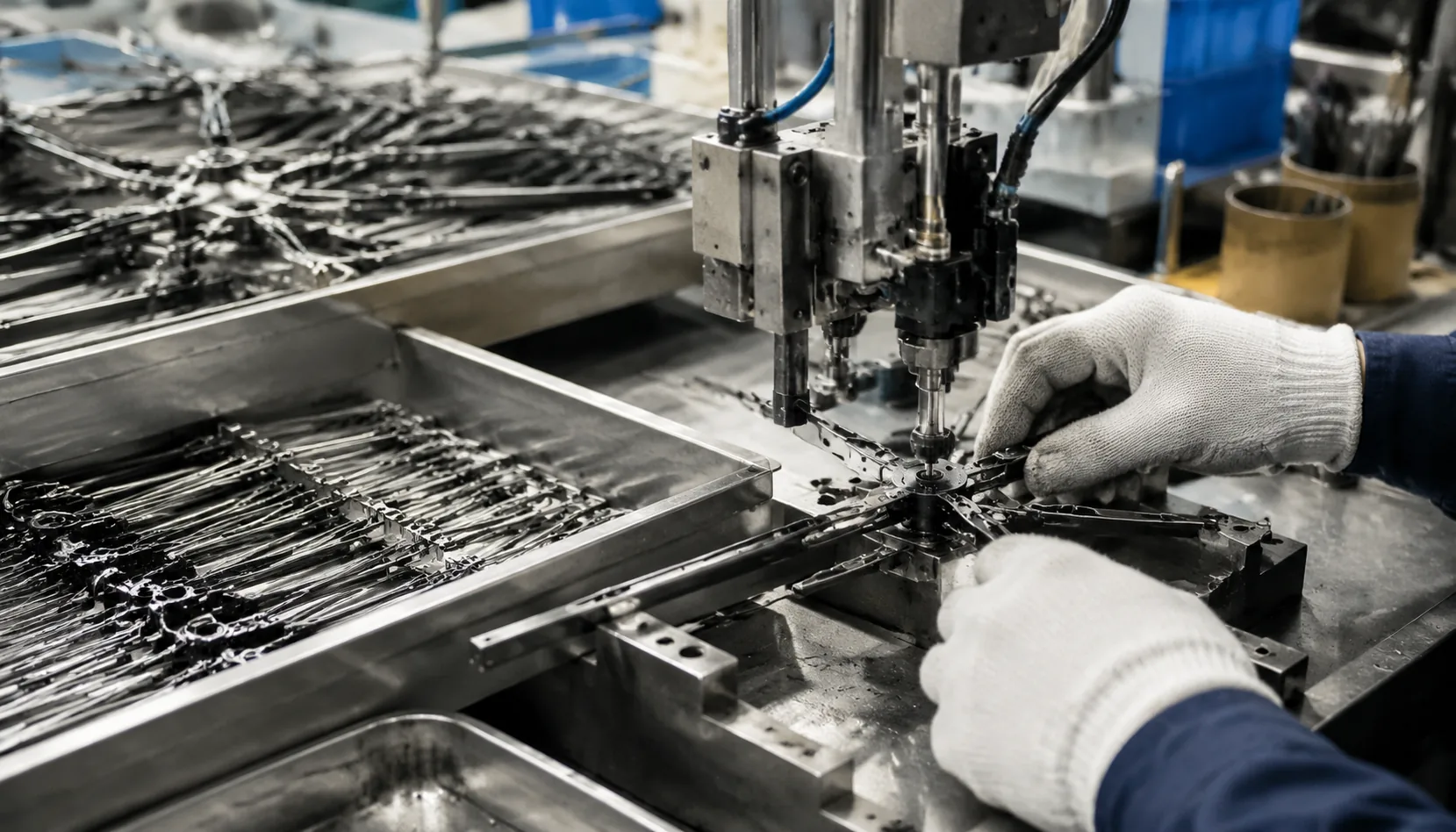
Umbrella Frame Riveting Process Control for Bulk Orders
See how rivet size, hole alignment, and pull-force checks improve umbrella frame durability across fiberglass, steel, 8K...
Read More »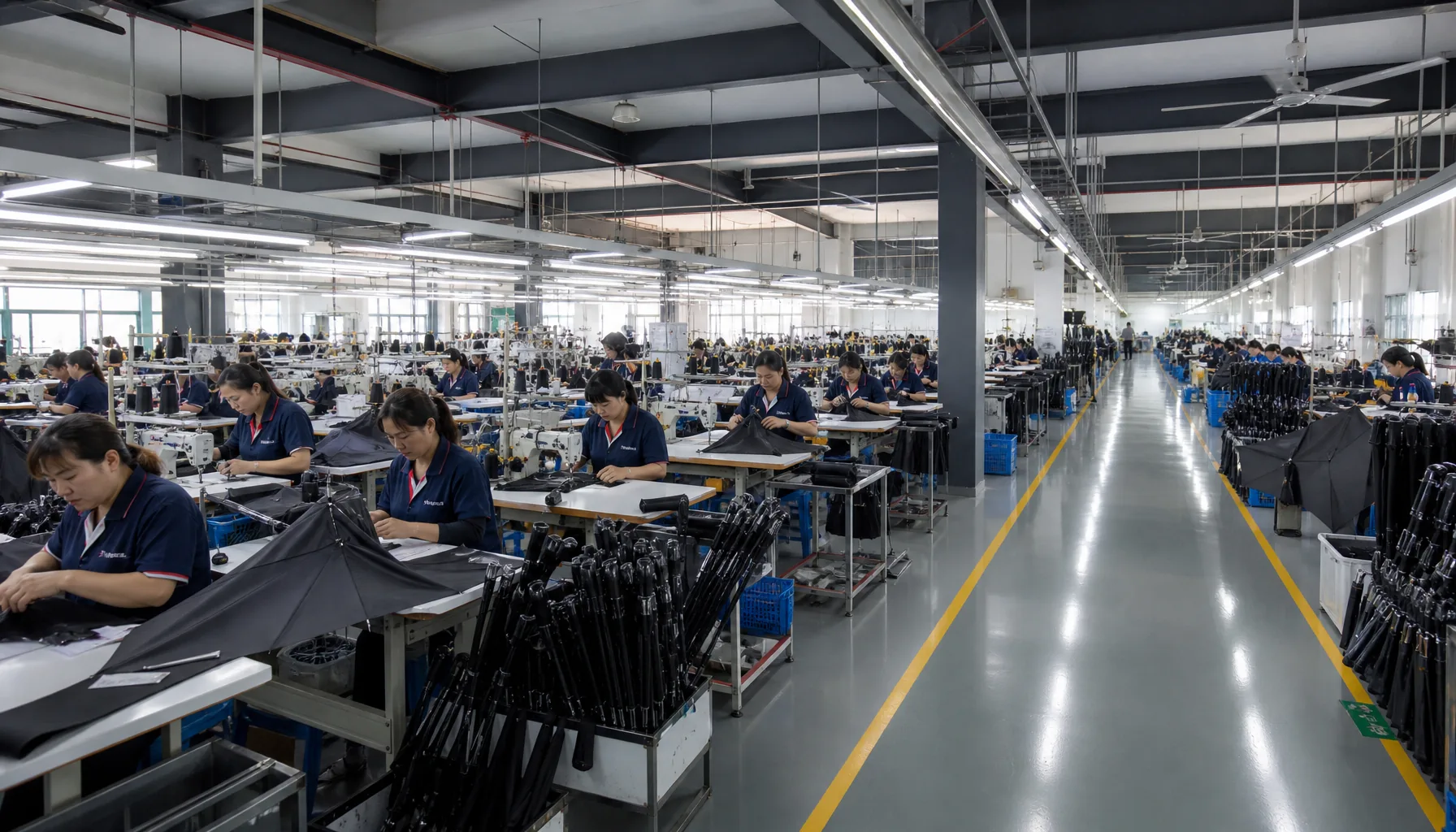
Umbrella Frame Riveting Process Controls for OEM Durability
See how rivet diameter, setting force, washer fit, and in-line pull tests prevent loose ribs, noisy frames, and AQL 2.5 ...
Read More »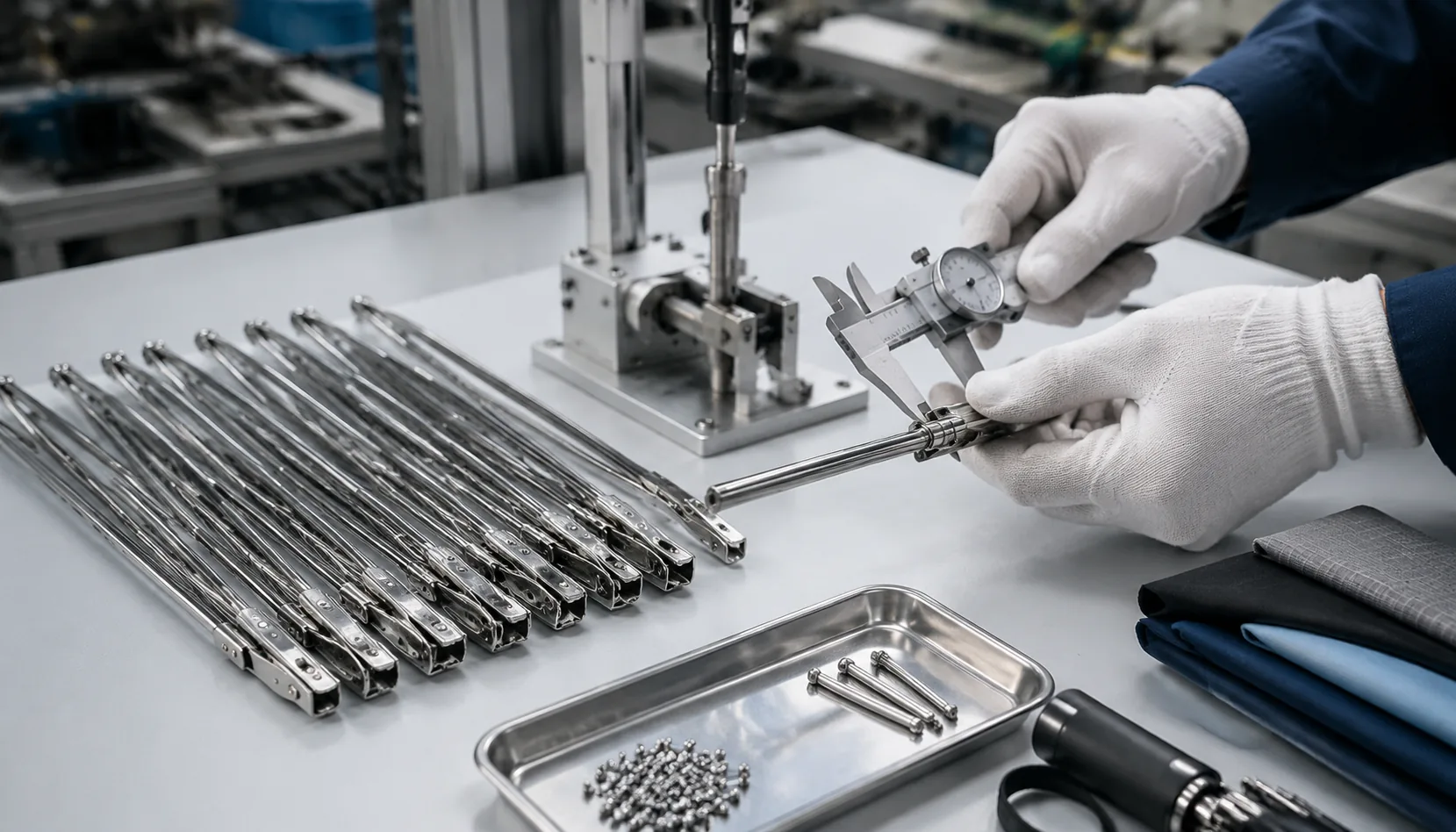
Umbrella Frame Riveting Quality: Tolerances and Pull Tests
Specify rivet fit, pull strength, and in-process checks to reduce loose ribs, canopy sag, and field failures in OEM umbr...
Read More »