Umbrella Frame Riveting Process Control for Bulk Orders
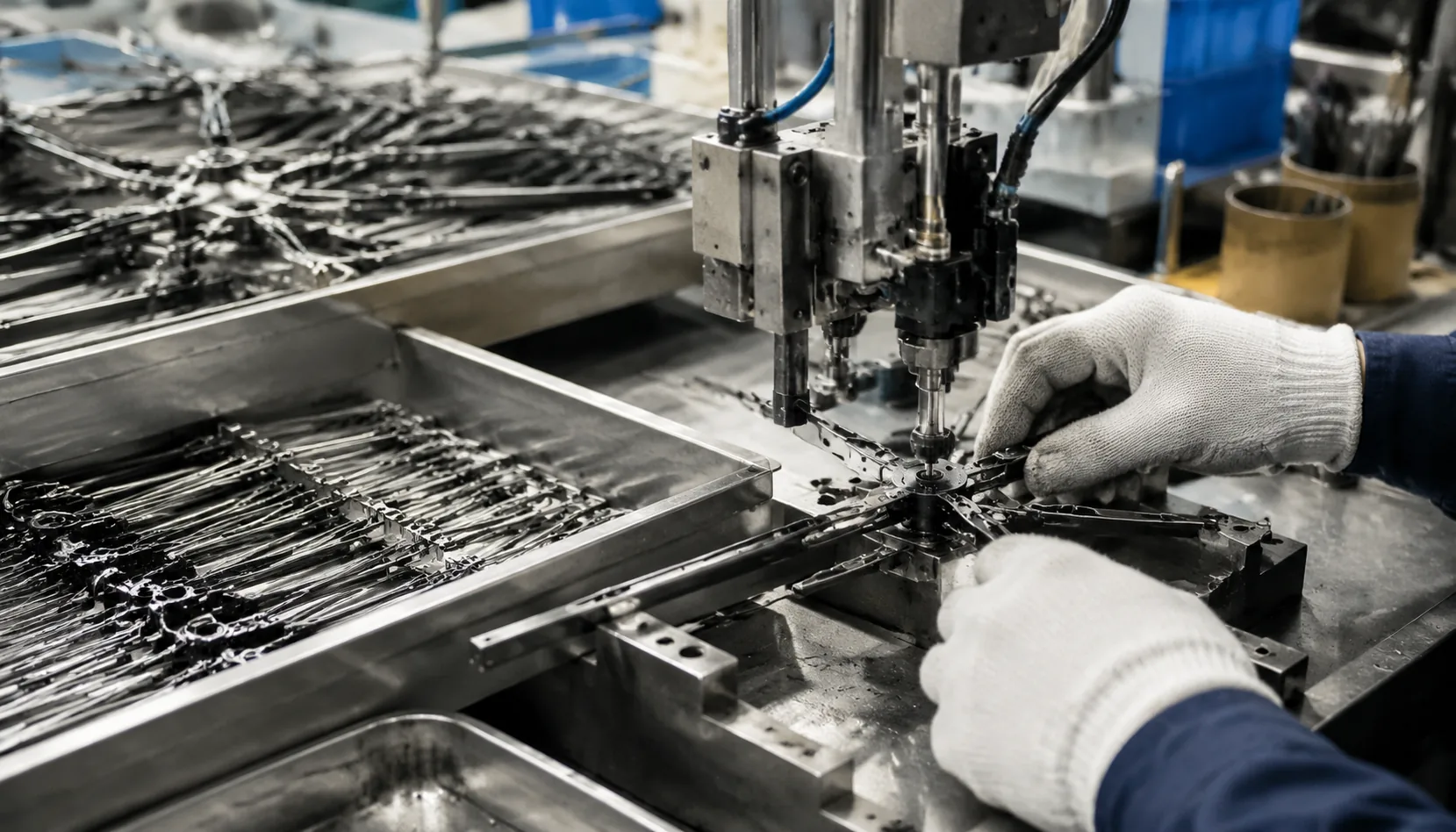
When bulk umbrella orders start failing, the problem is usually not the canopy—it is the frame details hidden in production, especially the umbrella frame riveting process. In our factory, we control rivet size, hole alignment, and pull-force checks on fiberglass, steel, 8K, and 16K OEM builds because even a small mismatch can loosen joints, distort ribs, or raise return rates after shipment.
Where Riveting Affects Umbrella Durability
Riveting is where umbrella durability is either built in or quietly lost, because every opening force passes through a few small metal joints. On a standard 23" straight umbrella with 8K steel ribs, the critical rivet points are the rib-to-stretcher joint, stretcher-to-runner joint, rib tip hinge, notch connection at the top, and any auxiliary linkage used for auto-open. On 10K or 16K frames, the load per joint is lower, but there are more joints to control, so variation multiplies fast in bulk production. For fiberglass rib riveting, the hole edge matters more than on steel: a rough punched hole or tilted rivet can crush the glass fiber bundle and create a delayed crack after 300–500 open-close cycles. In umbrella frame assembly, we check not only whether the rivet is present, but whether it rotates freely without side play, because that is what decides whether the canopy opens evenly under real use.
A loose rivet first shows up as wobble at the rib and stretcher, then as canopy distortion after sewing tension pulls the 190T or 210T pongee panels out of line. Buyers often think the fabric cutting is wrong, but on the floor we usually trace one-sided sagging to two or three loose stretcher rivets or a runner rivet with excessive clearance. Over-tight rivets are just as bad: the joint binds, the runner feels heavy, and an auto-open mechanism may release with a hard snap instead of a clean travel. In the umbrella frame riveting process, we control clinch height and rotation torque together; a rivet that looks neat but cannot pivot is a failure waiting for the cycle tester. For windproof double-canopy umbrellas rated around 50+ mph, tight-but-free movement is even more important because the ribs must flex and recover instead of locking stress into one hinge.
Our standard practice at ZheBrella is to treat riveting as a measurable OEM umbrella quality control point, not a cosmetic checkpoint. During in-line inspection, operators pull random frames before canopy mounting and test runner travel, rib symmetry, notch seating, and linkage timing on manual, auto-open, and auto-open-close models. For bulk orders, we record defects such as loose rivet, cracked fiberglass, binding joint, off-center head, missing washer, and distorted rib angle under AQL 2.5 final inspection. Opening-cycle tests are where bad riveting becomes obvious: loose joints enlarge the hole and cause rattling or rib collapse, while over-peened joints heat up from friction and eventually jam or snap the stretcher. Good umbrella production engineering means setting rivet length, head diameter, hole clearance, and press pressure before mass production starts, then locking those settings so the 5,000th frame behaves like the approved pre-production sample.
Rivet Specs for Fiberglass and Steel Frames
Rivet selection changes with rib material because fiberglass and steel fail in different ways. On fiberglass rib riveting, the hole should be clean-drilled, not punched, with a typical clearance of rivet shank plus 0.10–0.20 mm; tighter holes create stress whitening, while loose holes let the joint oval out after cycling. For 2.6–3.0 mm fiberglass ribs on 23" and 27" frames, we usually use a semi-tubular brass or nickel-plated steel rivet long enough to leave about 1.2–1.5 times shank diameter for rolling. A small nylon or brass washer is not decoration here; it spreads load and prevents the rivet head from biting into the glass bundle. Forming pressure must be lower and more progressive than on steel, because one over-hit can crack the rib internally and pass visual inspection until the first wind test.
Steel ribs tolerate punching and higher forming pressure, but they punish poor length control. For common 0.45–0.55 mm U-channel steel ribs, hole clearance can sit closer to shank plus 0.05–0.15 mm, and the rolled tail should be tight enough to remove side play without locking the rib joint. Too-short rivets give a sharp mushroom and weak clamp; too-long rivets fold sideways and scrape the adjacent stretcher during umbrella frame assembly. Mixed frames, such as fiberglass main ribs with steel stretchers, need the softer member protected, so washer placement normally goes against fiberglass or painted steel surfaces with thin coatings. In OEM umbrella quality control, we check rivet head diameter, tail flare, joint rotation, and paint damage before canopy mounting, because a bad rivet becomes much harder to isolate after 190T or 210T pongee is sewn on.
8K and 16K frames should not use the same inspection mindset. A standard 8K auto-open frame may have 40–60 critical riveted points, while a 16K windproof or double-canopy frame can push that number past 100; even a 1% joint defect rate becomes visible quickly in bulk orders. The umbrella frame riveting process therefore needs first-piece approval by frame size, rib count, and material mix, not just by model name. Our standard practice at ZheBrella is to run opening/closing cycles, joint torque checks, and AQL 2.5 visual inspection after riveting, then pull samples for wind loading when the order claims 50+ mph performance. Good umbrella production engineering is not simply hitting the rivet harder; it is controlling hole burrs, rivet stack height, washer friction, and forming pressure so every rib can articulate smoothly without wobble.
Assembly Fixtures and Operator Controls
The umbrella frame riveting process only stays repeatable when the fixture does the hard part of the positioning. We use jigs that lock rib angle, keep the shaft coaxial, and locate the stretcher in the exact closed/open geometry before a single rivet is set. If the rib seat is off by even 1-2 mm, the canopy line drifts and the runner starts binding later in umbrella frame assembly. For fiberglass rib riveting, the jig also needs a softer clamping face so the rib laminate is not crushed while the hole is being pierced and the rivet upset. In production engineering terms, the fixture is not just a holder; it is the tolerance gate that prevents accumulated error from turning into crooked frames, uneven crown height, or inconsistent auto-open stroke.
Pneumatic riveting pressure is set by frame type, rivet diameter, and metal stack-up, not by habit. Thin steel ferrules need lower force and a shorter dwell, while thicker hinge points and fiberglass-reinforced joints need enough pressure to form a clean head without splitting the eyelet or flattening the rib knuckle. On the line, the operator checks air pressure, hose wear, nosepiece fit, and rivet feed before each shift, because a worn tip will walk the rivet center and leave a shallow upset that passes visually but fails in fatigue. For OEM umbrella quality control, first-piece approval is mandatory at every model change, tool change, or press adjustment, and the sample is checked for joint rotation, shaft straightness, and consistent closing friction before batch work starts.
Hourly patrol checks catch the drift that daily inspection misses. The patrol operator measures a small sample of finished frames against the master jig, verifies rivet head height, confirms stretcher symmetry, and listens for loose joint noise when the frame is cycled by hand. At ZheBrella, we also record the lot, machine number, and pressure setting on the first-piece card so a bad adjustment can be traced before it spreads across the order. The umbrella frame riveting process is usually where bulk-order losses begin, so the control point has to be immediate: stop the line if holes ovalize, if the rib angle shifts, or if the rivet mushroom is inconsistent across one station. That is basic umbrella production engineering, not extra paperwork, and it is the difference between passing AQL 2.5 and shipping a carton full of frames that look fine until the buyer opens them.
Testing Riveted Frames Before Final Packing
The umbrella frame riveting process fails fastest when people only look at the rivet head and ignore how the whole frame behaves under load. Before final packing, every sampled frame should open and close smoothly through the full stroke, with no grinding at the ribs, stretcher joints, or runner channel. Check pull force on the riveted joints after assembly; if a joint feels loose by hand, it will usually walk out under repeated use. Rib symmetry matters too: both sides of the canopy support should mirror each other, the tips should land in the same plane, and the runner lock must engage cleanly without partial catch or rebound. In fiberglass rib riveting, I look for split fibers, crushed collars, and offset holes because those defects usually show up later as crooked umbrellas or premature breakage during umbrella frame assembly.
For bulk orders, the umbrella frame riveting process should include sample cycle testing, not just a one-time open-close check. A practical lot test is repeated opening and closing on representative units until the frame shows the first sign of abnormal play, rivet looseness, or runner hesitation; that is where weak riveting shows up before a customer ever sees it. Auto-open models need an added function check: the spring should release fully, the shaft should drive cleanly, and the lock should reset without sticking. Final AQL 2.5 inspection is only credible when it is backed by in-process riveting records, including operator, machine setting, rivet type, inspection time, and rejection count. That is the backbone of OEM umbrella quality control and the part most buyers miss when they only ask for a carton-level inspection report.
How Buyers Should Write Riveting Requirements
Put the riveting requirement in the PO or tech pack as a measurable frame specification, not as a general sentence like “strong frame.” For umbrella frame assembly, the buyer should state frame material first: black-coated steel, chrome-plated steel, aluminum, full fiberglass, or mixed steel shaft with fiberglass ribs. Then state rib count and size, because an 8K 23" auto-open promo umbrella does not take the same rivet load as a 10K 27" golf umbrella or a 16K fashion frame. For fiberglass rib riveting, call out the rib diameter, stretcher material, joint position, and whether the ferrule or runner connection uses brass, nickel-plated, stainless, or painted rivets. The umbrella frame riveting process should also define visual finish: no burrs, no cracked rib ends, no exposed red rust after assembly, and no oil marks transferring to 190T or 210T pongee during packing.
Corrosion expectations need numbers because export environments are not equal. A cheap indoor event umbrella may only need clean nickel-plated rivets, but a retail golf umbrella shipped by ocean should specify 24-hour or 48-hour salt-spray performance, especially when the order uses steel ribs, black electroplated stretchers, or damp carton storage before FOB loading. If the umbrella is double-canopy vented windproof, riveting requirements become stricter because the frame twists under reverse loading; I would write test criteria such as 50+ mph wind-tunnel survival, 20 manual open-close cycles after inversion, and no loose rivet rotation beyond agreed tolerance. Our standard practice at ZheBrella is to check rivet tightness during inline frame inspection, then confirm finished goods under AQL 2.5 before shipment, but the buyer still needs to put the acceptance rule in writing.
Unclear riveting specs usually create arguments after mass production, not during sampling. If the approved sample used stainless rivets but the PO only says “standard frame,” the factory may quote based on nickel-plated rivets to hit the target price, and the dispute appears later as rework, sorting, or replacement cost. That can add 3 to 7 days for a small MOQ order and 10 to 15 days for a 20,000-piece retail order if frames must be re-riveted or remade. For OEM umbrella quality control, connect the riveting clause to inspection method: pull test on selected ribs, open-close cycle count, rust check, visual defect limit, and whether failures trigger 100% sorting. This protects both FOB and DDP orders because inland rework, missed vessel closing, air freight upgrades, and destination claims all become expensive when umbrella production engineering requirements are left to assumption.
Frequently Asked Questions
Can a rivet problem pass visual inspection but fail in use?
Yes. A rivet can look clean but be too tight, too loose, or misaligned, causing binding after repeated auto-open cycles or wind loading. Functional opening tests and sample pull checks catch issues that visual AQL checks may miss.
Are fiberglass ribs harder to rivet than steel ribs?
Fiberglass needs more care around hole quality and localized stress because cracking can start at the rivet point. Steel ribs are more forgiving structurally but still need anti-rust finishes and correct forming pressure.
What rivet checks should be included in a bulk umbrella frame inspection?
For OEM orders, inspection should confirm rivet diameter, clinch height, hole alignment, rotation smoothness, and no rib cracking around the joint. AQL sampling usually includes visual checks plus pull-force or swing-cycle testing on selected frames from each production lot.
Are fiberglass rib riveting requirements different from steel rib frames?
Yes. Fiberglass ribs need tighter control of hole position and rivet pressure because over-compression can cause hairline cracks. Steel ribs tolerate higher riveting pressure but still require burr removal and anti-rust treatment around punched holes.
How can importers reduce loose rivet defects in 8K and 16K umbrella orders?
Require pre-production frame samples, define acceptable rivet play, and add in-line pull-force checks before canopy sewing. For 16K frames, buyers should also specify joint inspection at every rib connection because the higher rib count increases assembly variance.
Looking to Launch Your Custom Umbrella Line?
ZheBrella is a Zhejiang-based OEM/ODM umbrella manufacturer with 17 years of export experience. Free design, low MOQ from 100 pieces, windproof construction, full-color print.
Get Free Quote Now »People Also Search For
Related Articles
Umbrella Frame Riveting Process for Durable OEM Orders
See how rivet specs, hole tolerance, and pull-force checks keep 8K and 16K umbrella frames consistent before AQL inspect...
Read More »
Umbrella Frame Riveting Process Controls for Bulk Orders
Set rivet, washer, and joint specs that reduce loose ribs, warped frames, and opening failures across steel and fibergla...
Read More »
Umbrella Frame Riveting Quality: Tolerances and Pull Tests
Specify rivet fit, pull strength, and in-process checks to reduce loose ribs, canopy sag, and field failures in OEM umbr...
Read More »