Umbrella Frame Riveting Process Controls for Bulk Orders
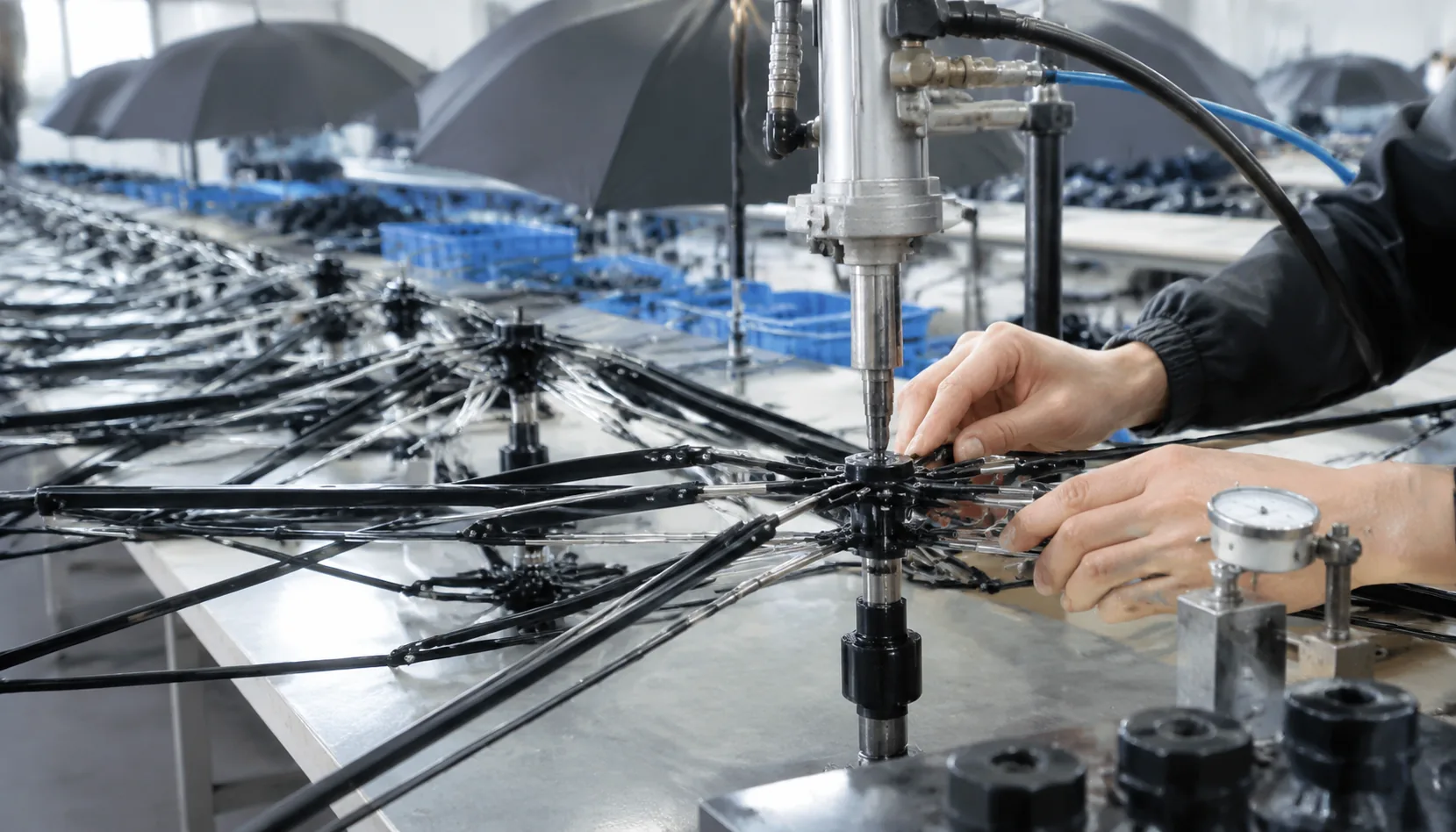
Loose ribs and sticky openings usually start long before final inspection, at the rivet press where small variation in shank length, washer fit, and joint stack height multiplies across a bulk order. On our Songxia factory floor, the umbrella frame riveting process is controlled by frame material, rib thickness, press force, and pull-test feedback, because steel and fiberglass assemblies fail in different ways when the joint is too tight or too free.
Where Riveting Affects Umbrella Performance
The umbrella frame riveting process decides whether a frame feels tight and balanced after 500 openings, not just when it leaves the line. The critical rivet map starts at every rib-to-notch connection, then moves outward to rib-and-stretcher joints, stretcher-to-runner joints, tip plates, and any secondary linkage used in auto-open or auto-open-close models. On a standard 23" 8K stick umbrella, that means at least 16 primary moving rivets before we count runner hardware; on 10K and 16K promotional or golf umbrellas, the count rises fast, and one bad joint can twist the whole canopy. In OEM umbrella frame assembly, we mark these points separately on the inspection sheet because the load is not equal: the rib joint near the notch handles opening shock, while the outer tip joint handles canopy pull and wind reversal.
Loose riveting first shows up as frame wobble, uneven rib spread, and canopy panels that no longer sit cleanly along the seam line. If a 190T or 210T pongee canopy is sewn accurately but the rib angles vary by even 2-3 degrees, the buyer may blame sewing when the real problem is umbrella rib joint quality. Loose stretcher rivets also hurt auto-open action: the runner reaches the notch, but the ribs lag, giving a weak snap or partial lock. In double-canopy vented windproof umbrellas, especially 27" and 30" golf sizes rated for 50+ mph wind-tunnel testing, extra movement at the fiberglass rib riveting points can let the upper canopy breathe unevenly, so one side balloons while the other side stays flat.
Over-compressed rivets are just as dangerous because they create hidden friction and metal fatigue. A crushed steel rivet at the runner joint may pass a quick visual check, but after cycling it can scrape plating, bind the stretcher, or delay the spring in an auto-open-close mechanism. For fiberglass ribs, too much press force can bruise the laminate around the hole; the rib may look fine during AQL 2.5 inspection, then split after a few windy days in the field. Our standard practice at ZheBrella is to check steel umbrella frame QC with opening-force tests, side-shake checks, and sample life-cycle testing before bulk packing, because riveting defects are expensive to catch after FOB or DDP shipment. Good riveting is controlled pressure, clean hole alignment, and repeatable movement—not simply a tight-looking joint.
Rivet Specs for Steel and Fiberglass Frames
Rib count multiplies the risk faster than buyers expect. An 8K frame has fewer moving joints and is faster to rivet, usually 35–55 seconds less assembly time than a comparable 16K promotional umbrella depending on runner design. A 10K frame adds symmetry and canopy tension but also adds more stretcher-to-rib joints, more rivet heads to inspect, and more chances for one tight joint to distort the opening arc. A 16K frame can look premium, especially on 27" and 30" golf umbrellas, but it roughly doubles the joint count versus 8K, so steel umbrella frame QC must include torque feel, rivet height, and open-close cycling instead of only visual inspection. In bulk orders we treat high-rib-count frames as a higher AQL risk point: under AQL 2.5, a single batch with inconsistent rivet length can pass appearance checks yet fail after 200 manual or auto-open cycles. The umbrella frame riveting process is therefore a production-control issue, not just a hardware choice.
Press Settings and Operator Controls
First-piece setup is not a paperwork ritual; it prevents thousands of bad frames from moving into canopy sewing. At ZheBrella, the line leader approves the first 5–10 frames after checking open diameter, rib symmetry, runner travel, joint rotation, and closing force before releasing the operator for mass production. A proper umbrella rib joint quality check includes manual flexing of each rib joint, opening the frame 20–30 cycles, and comparing the crown-to-tip height against the approved sample. Cracked fiberglass usually appears immediately under flex, while over-compressed steel may pass the first open test but show binding after repeated cycles. For bulk orders, inline QC pulls frames every 30–60 minutes and records defects by station: loose rivet, tight rivet, burr, cracked rib, flattened rib, missing washer, or skewed stretcher. If defect rates trend above the agreed AQL 2.5 control target, production stops for die cleaning, air regulator adjustment, or fixture replacement before more frames are assembled.
Inline Tests for Joint Strength
Joint strength has to be checked while the frame is still on the riveting line, not after 5,000 pieces are already packed. In a good umbrella frame riveting process, the first control is manual articulation: every sampled rib joint is opened and folded by hand to feel for binding, over-tight riveting, side play, or a dead hinge. For 8K and 10K promotional umbrellas with steel ribs, a small amount of rotation is normal, but the joint should not rattle or shift laterally more than about 0.5 mm. On fiberglass rib riveting, the inspector must also watch for crushed glass fiber at the rivet hole, because that joint may pass one opening test and then crack after a few wind loads. Our standard practice at ZheBrella is to separate smooth-motion defects from cosmetic marks, because a scratched rivet head is not the same risk as a loose stretcher joint.
Pull and flex checks give a faster read on umbrella rib joint quality than visual inspection alone. For steel umbrella frame QC, we use a hand pull at the stretcher-to-rib and rib-to-runner joints, then flex the rib upward and downward to simulate canopy load; the rivet should hold without popping, elongating the hole, or creating a clicking sound. For fiberglass or mixed fiberglass-steel frames, the flex angle must be controlled because excessive bending during inspection can damage a good frame. On 23 inch auto-open and 27 inch golf frames, we also run opening-cycle tests from the finished frame stage: typically 20 to 30 cycles inline for setup approval, then sampled cycle checks during bulk production. Auto-open-close folding frames need closer attention at the middle joint because the spring force hides weak riveting until repeated cycling exposes it.
Sampling should follow AQL 2.5 for normal bulk inspection, but not every defect belongs in the same bucket. Burrs, sharp rivet tails, cracked rib ends, missing washers, and rivets that can back out are functional or safety risks, so they should be checked at a tighter level than minor plating marks or small color differences on black electrophoretic steel. In OEM umbrella frame assembly, I prefer a line inspector to do 100% visual burr screening on high-risk stations, then use AQL 2.5 for measured joint movement, cycle tests, and random pull checks by carton lot. Critical defects should trigger immediate line stop, segregation of the last completed batch, and recheck from the previous accepted time point. That discipline is what keeps the umbrella frame riveting process from becoming a hidden warranty problem after the canopy is sewn and the goods are already booked FOB Ningbo or Shanghai.
Procurement Specs to Lock Before Production
Lock the frame specification before you discuss artwork, because the umbrella frame riveting process changes completely between a cheap steel 8K stick umbrella and a custom fiberglass 10K or 16K golf frame. Buyers should state frame material by component: steel shaft with steel ribs, aluminum shaft with fiberglass ribs, full fiberglass ribs, or mixed construction with steel stretchers. For umbrellas, “fiberglass” is often only the outer rib, while the runner, stretcher, and top notch remain steel or zinc alloy. That difference matters for umbrella rib joint quality because fiberglass rib riveting needs controlled hole diameter and washer placement; over-crimping will crush the laminate, while under-crimping gives side play after 300–500 open-close cycles. On steel umbrella frame QC, we check rivet head height, joint rotation, rust points after humidity exposure, and whether the rib tip line stays even on 23", 27", or 30" frames.
Specify rivet material and anti-rust finish in writing, not just “standard frame.” Nickel-plated iron rivets are common for budget promotional umbrellas, but stainless steel or brass rivets are better for coastal markets, golf umbrellas, and transparent POE/PVC domes where corrosion is visible. Black electrophoresis, zinc plating, powder-coated shafts, and phosphate pre-treatment should be matched to the canopy and use case; a 190T pongee auto-open corporate umbrella can accept different plating risk than a 210T Teflon-coated double-canopy windproof umbrella rated for 50+ mph. Our standard practice at ZheBrella is to define a cycle-test target before mass production: 300 cycles for low-cost giveaways, 500–800 cycles for retail compact umbrellas, and 1,000+ cycles for OEM umbrella frame assembly using reinforced runners or auto-open-close mechanisms. Put the target in the PO so inspection is not based on opinion.
Custom riveting complexity affects MOQ, unit price, and lead time more than many buyers expect. A manual-open 8K steel frame with existing tooling may run at 1,000–3,000 pcs MOQ and 25–35 days after sample approval, while a 16K fiberglass rib riveting design with special rivets, thicker stretchers, or a modified runner can push MOQ to 5,000–10,000 pcs and add 7–15 days for fixture adjustment and pilot testing. Buyers should also confirm the spare-parts policy: extra runners, ribs, tips, springs, rivets, and shafts packed at 0.5–2% are cheap insurance for distributors serving events or retail warranty claims. For bulk orders, require pre-production samples, golden sample retention, inline pull checks, and final AQL 2.5 inspection covering loose rivets, misaligned ribs, stuck runners, cracked fiberglass, rust marks, and uneven canopy tension after assembly.
Frequently Asked Questions
Why do some umbrella ribs loosen after only a few openings?
Loose ribs often come from incorrect rivet length, poor hole alignment, or press pressure that is too low. Auto-open umbrellas add more dynamic load, so joint checks should be included before final AQL inspection.
Are fiberglass ribs harder to rivet than steel ribs?
Fiberglass ribs need tighter control because excessive pressure can crack or crush the material. Steel ribs are more forgiving mechanically, but still require anti-rust plating and burr control for long-term durability.
What rivet and washer specs are commonly used for umbrella frame bulk production?
For most steel and fiberglass umbrella frames, factories typically control rivet diameter within the approved drawing tolerance and pair it with a washer that fully supports the rib joint without crushing the material. A common production check is to verify rivet head formation, washer seating, and joint play at the first-piece stage before releasing the lot.
How many sample frames should be checked during a bulk riveting run?
A practical B2B QC routine is to inspect the first 5 to 10 frames per line setup, then continue with in-process checks every 30 to 50 pieces depending on order size and defect history. For large OEM lots, many buyers also require AQL sampling at final inspection to catch loose joints and warped assemblies.
Can the same riveting setup be used for steel and fiberglass umbrella frames?
Not usually. Fiberglass ribs need tighter control on clamping force and washer support to avoid cracking or delamination, while steel frames focus more on rivet retention and joint alignment. Factories often use separate parameter sheets for each material to keep opening performance consistent.
Looking to Launch Your Custom Umbrella Line?
ZheBrella is a Zhejiang-based OEM/ODM umbrella manufacturer with 17 years of export experience. Free design, low MOQ from 100 pieces, windproof construction, full-color print.
Get Free Quote Now »People Also Search For
Related Articles
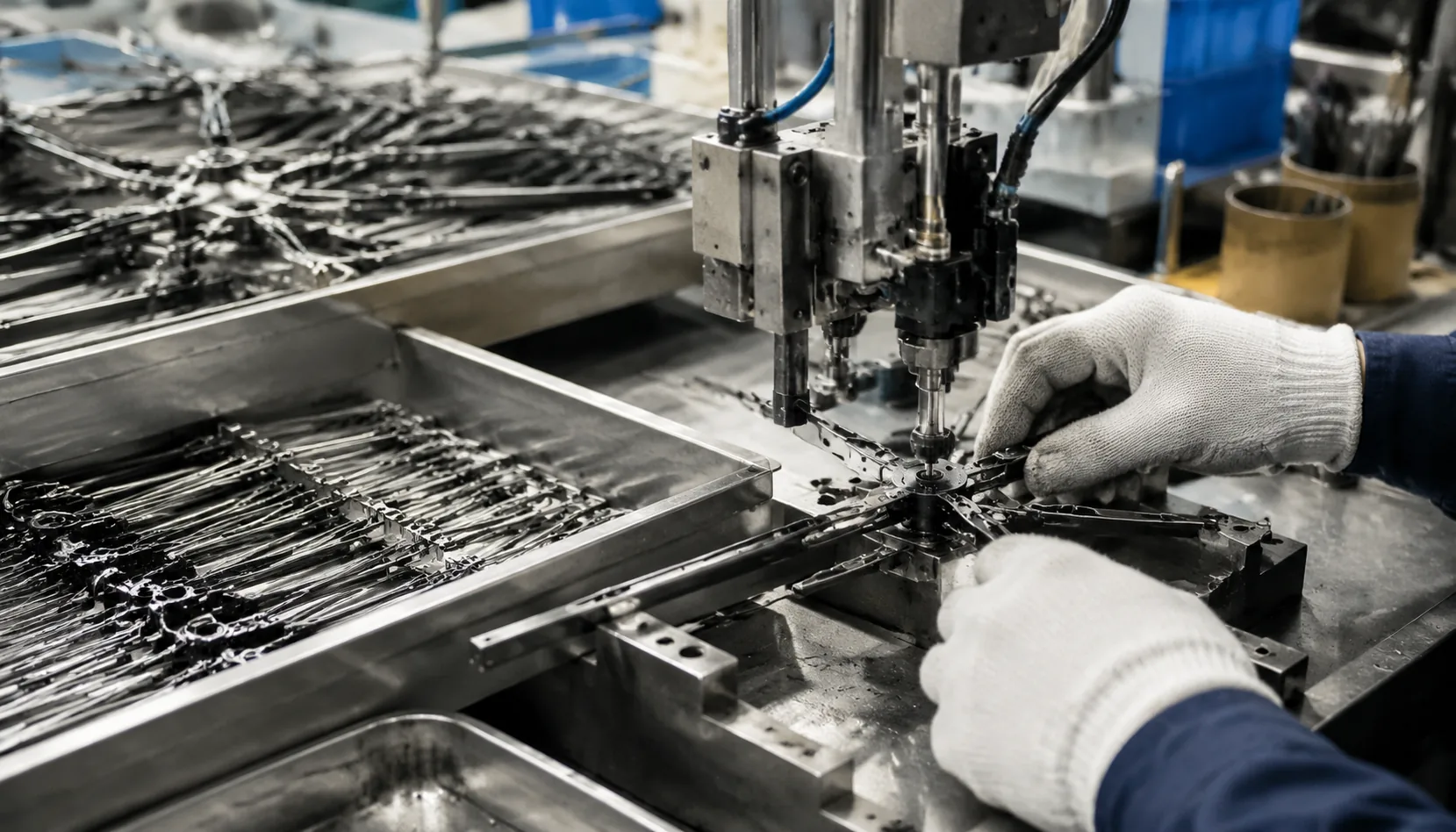
Umbrella Frame Riveting Process Control for Bulk Orders
See how rivet size, hole alignment, and pull-force checks improve umbrella frame durability across fiberglass, steel, 8K...
Read More »
Umbrella Frame Riveting Process for Durable OEM Orders
See how rivet specs, hole tolerance, and pull-force checks keep 8K and 16K umbrella frames consistent before AQL inspect...
Read More »
Umbrella Rib Riveting Process for Stronger OEM Frames
See how rib riveting, hole alignment, and pull-force checks improve frame strength and consistency in OEM umbrella manuf...
Read More »