Umbrella Rib Riveting Process for Stronger OEM Frames
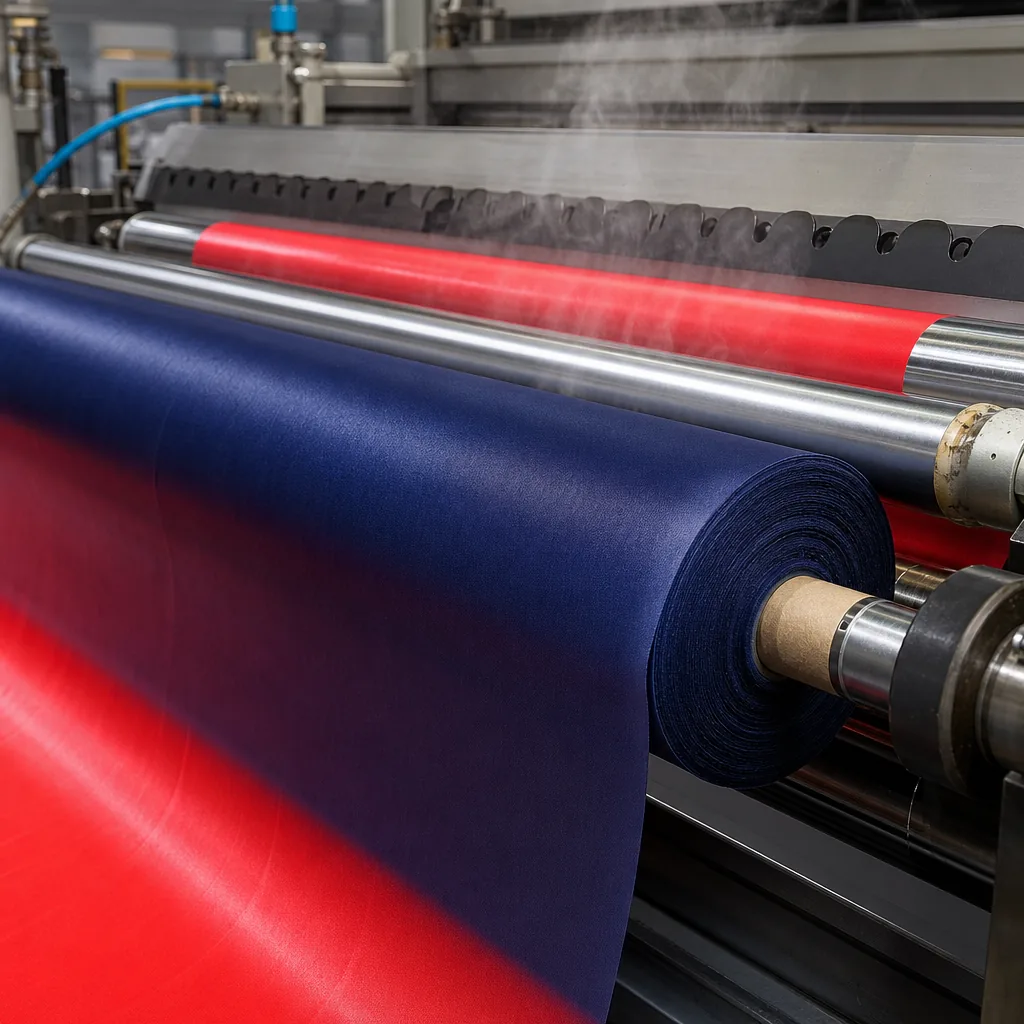
For OEM buyers, a weak frame usually shows up after shipping: loose ribs, uneven opening, or returns after the first windy season. On our Songxia factory floor, the umbrella rib riveting process is controlled at three points—clean hole alignment, stable rivet setting, and pull-force checks—because small variation at the joint becomes big variation in canopy tension and frame life.
Why Riveting Quality Drives Frame Durability
Riveting quality is where an umbrella frame either becomes a tight mechanical system or a noisy bundle of moving parts. In the umbrella rib riveting process, the rivet must lock the rib, stretcher, runner link, and notch joint with just enough compression to remove play while still allowing clean rotation. A loose rivet creates side-to-side wobble, clicking noise, uneven opening force, and visible canopy flutter, especially on 23" and 27" auto-open models. Misalignment is worse: if the hole center is off by even 0.3–0.5 mm, the rib angle changes, the canopy pulls unevenly, and one panel starts carrying more load than the others. That is how a frame that looked acceptable at packing fails after 20 or 30 customer openings.
Over-compressed rivets are just as damaging as loose ones. On steel umbrella ribs, excessive riveting pressure can oval the hole, pinch the joint, scrape plating, and start rust at the contact point after salt-spray or humid warehouse storage. On fiberglass umbrella ribs, the risk is different: too much pressure can crush the sleeve area or create a stress whitening mark that later becomes a split under wind load. For 8K and 10K umbrella frame assembly, one bad joint often causes twisting; for 16K umbrella frames, inconsistent riveting across many ribs creates a bigger problem because the load path depends on all ribs sharing tension evenly. A frame may pass a quick open-close check but still fail in a 50+ mph wind-tunnel cycle if the joints are binding or shifting.
For retail brands and promotional-product distributors, poor riveting becomes a warranty problem because customers do not describe it as a rivet issue; they say the umbrella feels cheap, rattles, opens crooked, or broke in the first storm. Our standard practice at ZheBrella is to check rivet head diameter, rotation resistance, rib symmetry, and opening noise during in-line inspection before final AQL 2.5 sampling, because final inspection alone catches symptoms but not process drift. Buyers should specify frame material, rib count, mechanism type, and windproof requirement before approving pre-production samples. A compact 21" auto-open-close umbrella with steel ribs needs different riveting control than a 30" golf umbrella with fiberglass ribs and a double-canopy vented structure. The umbrella rib riveting process is not a cosmetic step; it is one of the cheapest places to prevent returns before FOB shipment or DDP delivery.
Material Differences: Fiberglass vs Steel Ribs
Fiberglass and steel ribs behave very differently at the riveting bench, and treating them the same is how weak OEM frames get made. Fiberglass umbrella ribs are pultruded composite rods, usually round or flat, with strong longitudinal fibers but limited tolerance for point pressure. During drilling, the bit must be sharp, the feed rate slow, and the rib supported close to the hole so the laminate does not splinter. In the umbrella rib riveting process, we use controlled compression rather than simply hitting the rivet harder; too much squeeze creates hairline cracks that may not show until 500–1,000 open-close cycles. For 23" and 27" straight umbrellas, fiberglass works well with 8K or 10K layouts because it flexes under gusts and rebounds without permanent bend. On 16K umbrella frames, the hole alignment has to be tighter because sixteen ribs multiply even small tolerance errors across the runner and notch.
Steel umbrella ribs are more forgiving under drilling and riveting pressure, but they introduce a different risk: corrosion and permanent deformation. A low-carbon steel rib can take a tighter rivet set than fiberglass, and the hole edge usually stays cleaner under a standard punch or drill operation. That makes steel faster in umbrella frame assembly, especially for price-sensitive manual-open and auto-open promotional models. The problem is that every pierced hole exposes raw metal unless the rib is pre-galvanized, phosphated, powder coated, or treated with black electrophoresis. If the anti-rust finish is thin around the rivet, salt spray, rainwater, and wet storage cartons can start rust bleeding in weeks. Steel also bends instead of springing back when overloaded, so a 50+ mph wind-tunnel claim depends heavily on rib section thickness, stretcher geometry, and whether the frame uses a vented double canopy to reduce inversion load.
Repeated opening cycles reveal the real difference between the two materials. Fiberglass ribs usually fail from localized cracking near the rivet hole or from fiber fatigue where the stretcher pulls at a bad angle; steel ribs usually fail from hole elongation, rust at the joint, or a bent rib that no longer tracks evenly under the canopy. Our standard practice at ZheBrella is to check rivet head height, free rotation, and side play during in-line inspection, then confirm finished frames under AQL 2.5 before packing. For OEM buyers choosing between materials, I recommend fiberglass for golf umbrellas, windproof 27" and 30" models, and premium 190T or 210T pongee canopies with Teflon or UPF 50+ coating. Steel is still practical for budget 21" and 23" umbrellas, PVC/POE clear umbrellas, and large MOQ orders where FOB cost matters more than maximum wind recovery. The umbrella rib riveting process should be specified by material, not copied from one frame to another.
Rivet Hole Positioning and Assembly Jigs
Rivet hole positioning decides whether an umbrella frame opens cleanly or fights itself. In production, we do not let operators “eye-ball” rib holes on 8K or 16K umbrella frames; we use hardened steel positioning jigs with fixed stops for rib length, stretcher angle, and hole center distance. For a 23" straight umbrella, the main rib holes are typically held within ±0.3 mm, and matched rib length after drilling should stay within ±1.0 mm across the full set. That sounds small, but on a 16K frame, one rib drilled 1.5 mm off will show as uneven canopy tension, especially with 190T pongee after sewing. The umbrella rib riveting process starts before the rivet is inserted: if the hole location is wrong, no press setting can save the frame. For fiberglass umbrella ribs, we also control clamp pressure in the jig because crushed glass fiber around the hole becomes a delayed break point under wind load.
Good assembly jigs control symmetry, not just hole spacing. In umbrella frame assembly, the rib, stretcher, notch, and runner must share the same geometry so the canopy pulls evenly from all panels. On 8K frames, a small mismatch may hide until final opening inspection; on 16K umbrella frames, it becomes obvious immediately because twice as many ribs distribute tension in smaller increments. Our standard practice at ZheBrella is to check sample frames against an opening-height gauge and runner travel gauge before mass riveting begins. A common target is runner alignment within ±1.5 mm at full open position, with no rib tip sitting more than 2 mm higher or lower than the neighboring tips. If the runner reaches the lock too early, the canopy feels tight and stresses the seams; if it stops late, the umbrella looks loose and wrinkles around the crown.
Steel umbrella ribs are more forgiving during drilling but less forgiving after riveting because the metal can distort if the punch, anvil, or rivet length is wrong. For powder-coated steel, we normally drill or punch before coating when the order structure allows it, then use assembly jigs to prevent scratch and twist during riveting. Fiberglass ribs need cleaner hole edges and slightly larger process control because splintering around the rivet hole can reduce wind resistance, even if the frame passes a basic open-close test. In AQL 2.5 inspection, I look for balanced canopy tension, smooth runner movement, equal rib spread, and no “scissoring” where one stretcher crosses out of plane. A well-controlled umbrella rib riveting process should let a 27" windproof frame open 300–500 cycles in pre-shipment testing without rivet loosening, rib tip height drift, or canopy panels pulling unevenly at the seams.
Strength and Function Tests After Riveting
A rivet that looks clean can still fail if the pull force is weak, so we test the joint before we trust the frame. After the umbrella rib riveting process, inspectors sample rib-to-stretcher joints, runner links, and top notch connections with a small pull-force gauge, usually checking whether the joint holds steady without gap growth, twisting, or oval-hole deformation. For standard 23" and 27" promotional frames, steel umbrella ribs normally tolerate higher localized clamping pressure, while fiberglass umbrella ribs need a cleaner rivet set because crushing the laminate creates hidden cracks. On 16K umbrella frames, the load is spread across more ribs, but there are also twice as many potential loose points compared with an 8K frame, so the sampling rate must be stricter. Our standard practice at ZheBrella is to reject any lot where a riveted joint can be rotated by hand after pull testing, even if the canopy sewing is already finished.
Opening cycle testing tells us whether the umbrella frame assembly will survive real customer handling, not just the inspection table. We run manual frames through repeated open-close cycles and watch for rib hesitation, runner wobble, uneven stretchers, and rivets that start to polish one side because the hole alignment is off. Auto-open and auto-open-close mechanisms are less forgiving: the spring pushes the runner fast, so every rib must move smoothly or the spring stress concentrates at one tight joint. That is why a frame can pass a static pull-force check but still fail cycle testing after 50, 100, or 300 openings. For double-canopy vented windproof models, we also check whether the upper canopy pressure causes one rib section to lag behind the others during opening, especially on 27" and 30" golf umbrellas with longer leverage.
The shake test is simple, but it catches problems machines do not: open the umbrella, hold the handle firmly, then shake it in several directions while listening for clicking, rattling, or asymmetric rib movement. A good rivet has controlled clearance; a bad rivet either binds or chatters. After the umbrella rib riveting process, visual inspection must cover burrs, sharp rivet tails, cracked plating, scratched black coating, and edges that could cut 190T or 210T pongee during wind flexing. Inspectors should run a cotton glove or cloth over the rib joints because bare fingers miss tiny burrs and create safety issues. For AQL 2.5 final inspection, loose joints, sharp edges, and failed opening action are major defects, not cosmetic complaints, because they lead directly to canopy tearing, customer returns, or mechanism failure in FOB and DDP shipments.
OEM Specifications Buyers Should Confirm
The first specification to lock down is rib material, because riveting settings that work on steel umbrella ribs can crush or loosen fiberglass umbrella ribs. For 23" and 27" promotional frames, we usually see 8K steel ribs at 0.45-0.55 mm wall thickness, while golf umbrellas often use fiberglass ribs with steel stretchers or full fiberglass builds for better rebound. If the buyer wants 16K umbrella frames, confirm whether the extra ribs are for appearance, wind load, or canopy tension, because rivet spacing and runner force change. In the umbrella rib riveting process, the factory should know the rivet head diameter, shank length, washer requirement, and material: nickel-plated iron is common, but stainless steel or brass makes sense for coastal retail programs where corrosion complaints are expensive. Do not write only “strong frame” on the PO; write the rib gauge, rib count, center rod diameter, stretcher material, and acceptable play at the joint after opening and closing.
Frame finish is not cosmetic only; it affects rivet fit, corrosion resistance, and how smoothly the umbrella frame assembly moves after 500-1,000 cycles. Buyers should specify black electrostatic powder coating, chrome plating, zinc plating, or color paint, then require salt-spray or humidity expectations if the umbrella will ship to rainy coastal markets. A thick paint layer inside a rib channel can make the rivet bind, while thin plating on cut edges can rust after one season in a warehouse near the sea. Our standard practice at ZheBrella is to approve a pre-production frame before canopy sewing starts, because a bad rivet setting is much cheaper to correct before 190T pongee, 210T pongee, POE, PVC, or EVA canopies are cut. For auto-open or auto-open-close umbrellas, add spring-force and runner-lock checks; a frame that feels acceptable manually may fail once the mechanism snaps open under higher impact.
Before mass production, buyers should define the cycle test target and inspection level in writing, not after cartons are packed. For basic manual umbrellas, 300-500 open-close cycles may be enough; for retail auto-open-close compact umbrellas, I prefer 800-1,000 cycles with no loose rivets, broken stretchers, or runner deformation. Put AQL 2.5 for major defects on the QC sheet, and classify missing rivets, cracked fiberglass, bent steel ribs, failed locks, rust at rivet points, and uneven canopy tension as major or critical depending on the sales channel. If the product is sold as windproof, the approved sample should pass the agreed wind check before bulk cutting: for example, 40-50+ mph tunnel testing, inversion recovery, or a controlled fan test for double-canopy vented windproof designs. The umbrella rib riveting process should be signed off together with the golden sample, because changing rivet pressure after approval can silently change the whole frame behavior.
Frequently Asked Questions
Are fiberglass ribs harder to rivet than steel ribs?
Fiberglass ribs need more careful pressure control because over-riveting can crush or crack the material. Steel ribs are more forgiving mechanically but need plating or coating to reduce rust risk.
What should buyers check on a pre-production frame sample?
Check that all ribs open evenly, rivets are tight without binding, and no burrs touch the canopy fabric. For auto-open umbrellas, test repeated opening to confirm the runner moves smoothly.
What pull-force target is typically used for umbrella rib riveting QC?
Many OEM factories set a pull-force check at the rib joint after riveting to confirm the connection does not loosen under repeated opening and closing. The exact target depends on rib material, rivet size, and frame style, but buyers should ask for a documented pass/fail standard per frame model.
Why does hole alignment matter in umbrella frame assembly?
If the rivet hole is off-center, the rib can bind, twist, or wear unevenly during use. Proper alignment also helps keep the frame consistent across mass production, which is important for 16K and other multi-rib umbrella builds.
Can fiberglass ribs and steel ribs use the same riveting process?
The basic riveting sequence is similar, but the tooling and inspection points differ because fiberglass and steel respond differently to pressure. Fiberglass ribs usually need tighter control on cracking and crush damage, while steel ribs need stronger fixation and corrosion-resistant rivets.
Looking to Launch Your Custom Umbrella Line?
ZheBrella is a Zhejiang-based OEM/ODM umbrella manufacturer with 17 years of export experience. Free design, low MOQ from 100 pieces, windproof construction, full-color print.
Get Free Quote Now »People Also Search For
Related Articles
Umbrella Frame Riveting Process for Durable OEM Orders
See how rivet specs, hole tolerance, and pull-force checks keep 8K and 16K umbrella frames consistent before AQL inspect...
Read More »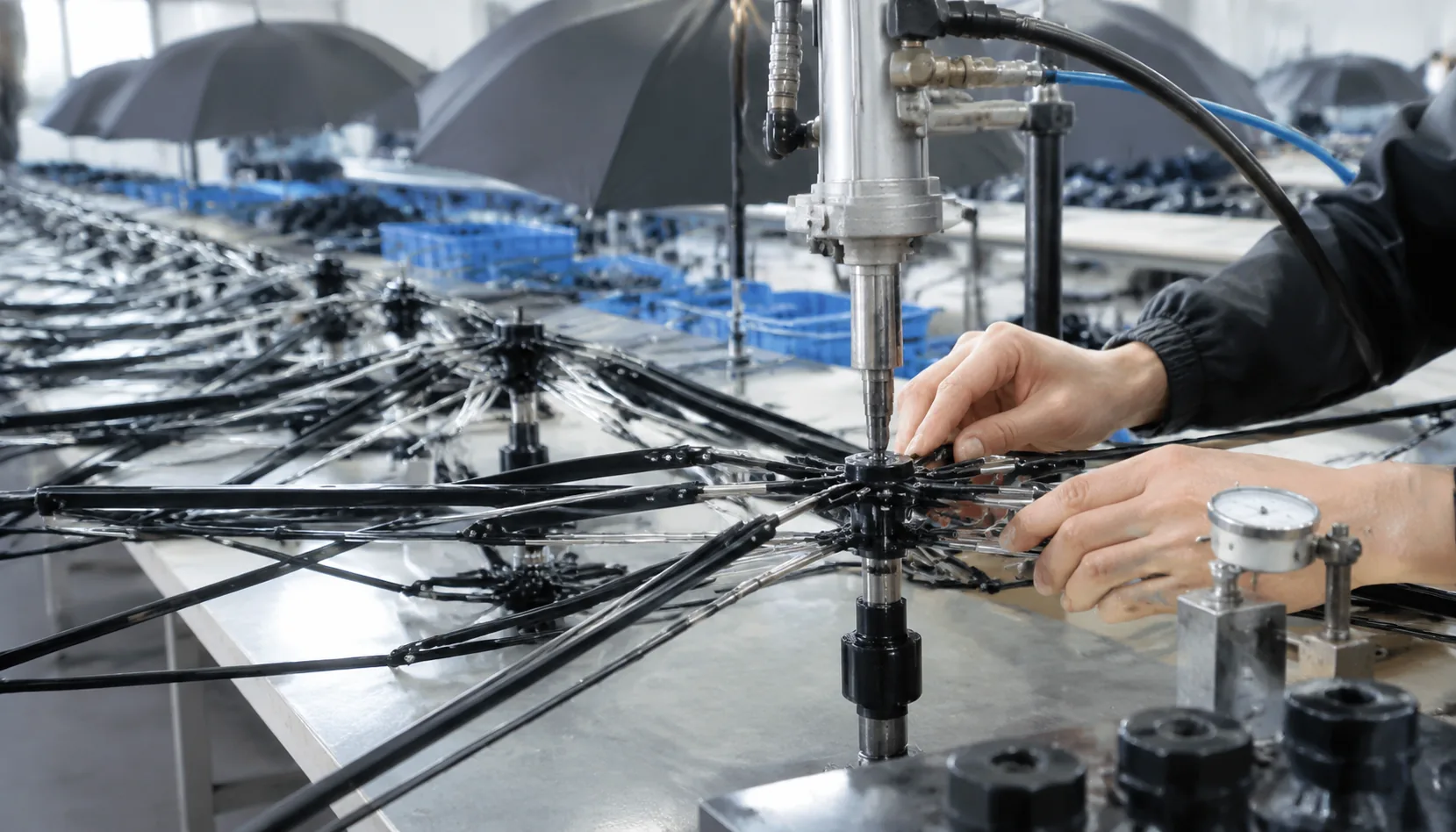
Umbrella Frame Riveting Process Controls for Bulk Orders
Set rivet, washer, and joint specs that reduce loose ribs, warped frames, and opening failures across steel and fibergla...
Read More »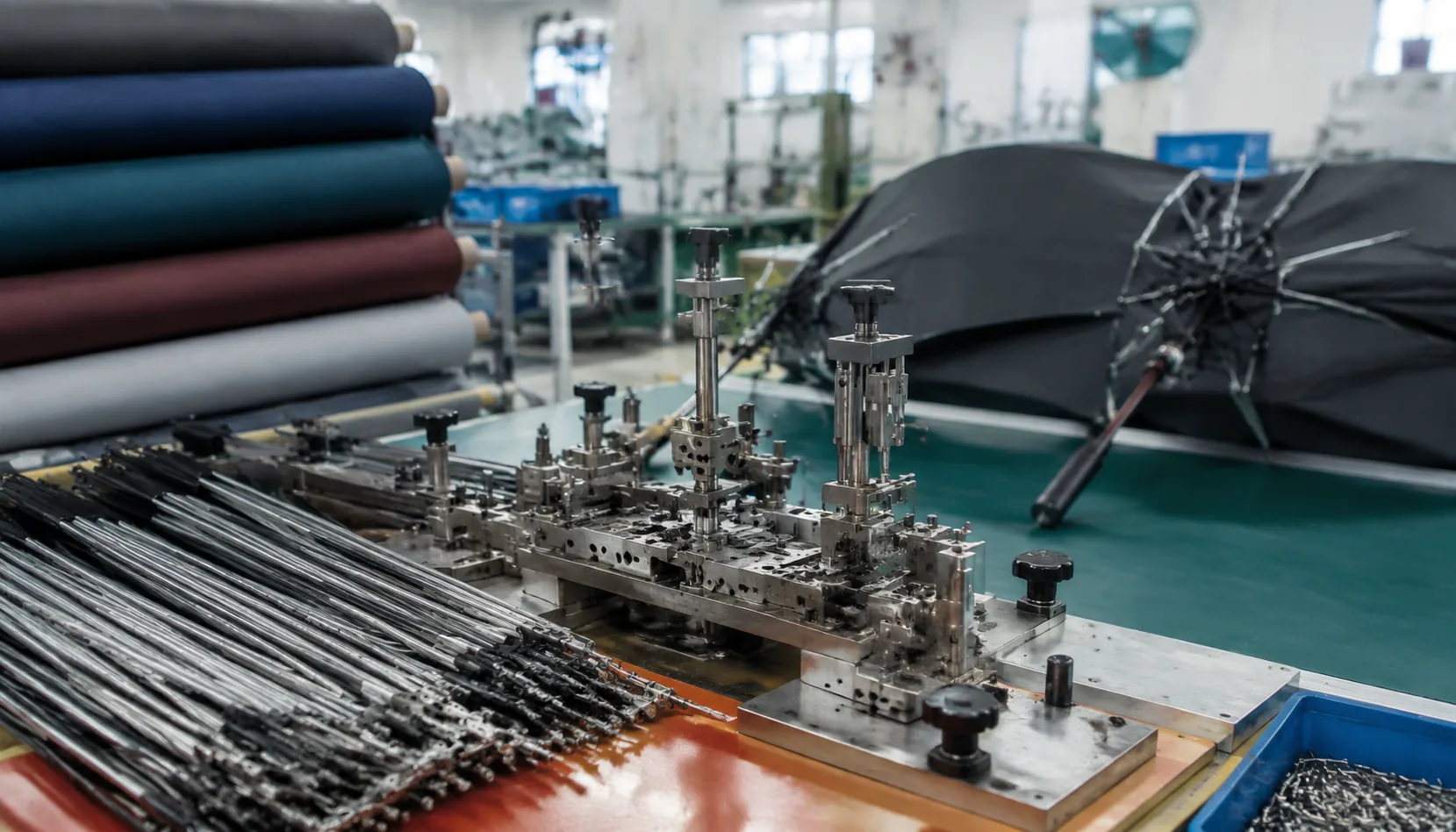
Umbrella Frame Riveting Specs for Stronger OEM Builds
Define rivet material, hole clearance, pull strength, and cycle testing specs that improve umbrella frame durability bef...
Read More »