Umbrella Frame Riveting Process Controls for OEM Durability
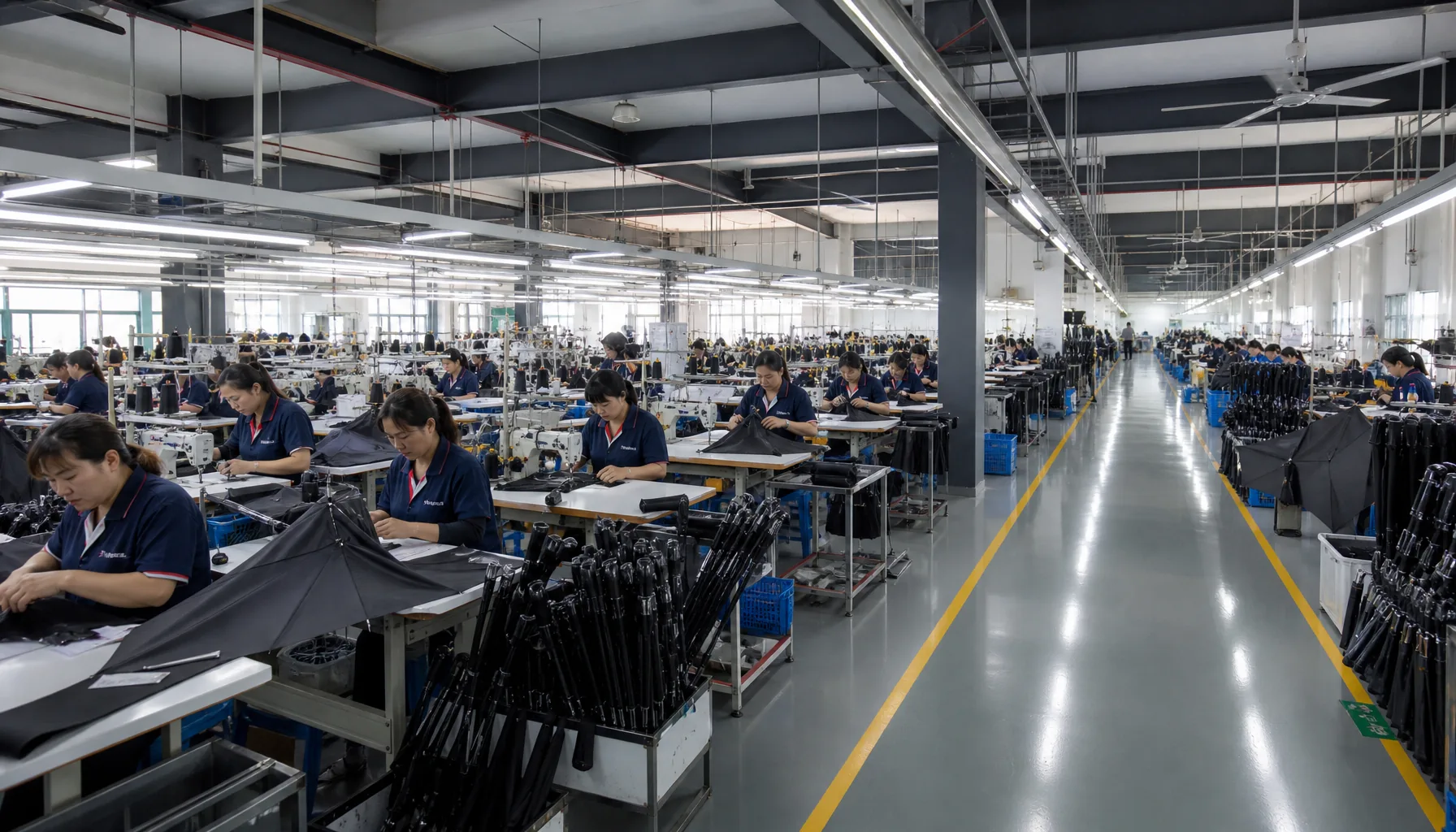
When an OEM order fails on loose ribs or a noisy runner, the problem usually started at the riveting bench, not in final packing. On our Songxia factory floor, the umbrella frame riveting process is controlled by rivet diameter, setting pressure, washer match, and routine pull checks, because a small burr or under-set head can turn into AQL 2.5 rejects across thousands of frames.
Rivet Points That Carry the Most Load
The highest-risk rivets are not spread evenly across the frame; they sit where motion changes direction under load. In umbrella frame assembly, I check runner-to-stretcher pivots first because every opening cycle pushes force from the runner into all stretchers at once. If the rivet is too tight, the stretcher binds and the auto-open spring feels weak; if it is loose, the canopy shudders in a 30–40 mph gust and the hole starts ovalizing. The stretcher-to-rib joint is next because it carries bending load when a 23" or 27" umbrella is flipped by wind. Rib-to-tip rivets look small, but they control canopy tension, especially on 190T pongee where a 3–5 mm sewing mismatch pulls the tip sideways. Notch connections at the top are the quiet failure point: poor alignment there makes the whole 8K frame open unevenly, even when the ribs themselves are straight.
An 8K frame and a 16K frame should not use the same riveting control plan. An 8K steel frame may have fewer pivots, but each rib pair carries more canopy load, so rivet head diameter, washer use, and side play need tighter measurement at the stretcher-to-rib joint. A 16K frame doubles the number of ribs and usually spreads wind pressure better, but it also doubles many failure opportunities; small angular errors accumulate into a wavy canopy edge or one rib that sits 6–8 mm lower than the others. For fiberglass ribs, we avoid over-compression because cracked resin around a rivet hole often passes visual inspection and then fails after 200–300 open-close cycles. In OEM umbrella manufacturing, the practical rule is simple: 16K needs more alignment checks, not just more rivets, because symmetry is the product.
Good rib rivet quality control combines pull feel, rotation clearance, and destructive sampling instead of relying on a shiny rivet head. For the umbrella frame riveting process, our standard practice is to check first-piece alignment on every riveting machine setup, then inspect runner travel, notch seating, and rib-tip line before canopy sewing starts. During mass production, an AQL 2.5 umbrella inspection should include functional open-close testing, rivet looseness checks, and frame shake testing on finished goods, but factory-floor sampling has to be earlier and more frequent: every 30–60 minutes for 8K promotional orders, and closer intervals for 16K windproof frames or auto-open-close models. A double-canopy vented umbrella rated for 50+ mph wind puts repeated shock into the stretcher pivots, so we also cycle-test samples before packing. Catching a loose rivet after printing and sewing is expensive; catching it at frame assembly costs seconds.
Material Pairing: Fiberglass, Steel, and Mixed Frames
Material pairing decides whether a riveted frame feels tight after 5,000 cycles or starts clicking before carton sealing. In the umbrella frame riveting process, fiberglass ribs need a wider bearing area and cleaner hole preparation than steel because the pultruded fibers do not forgive point loading. If the rib end is drilled with a dull bit, the resin chips around the hole; when the semi-tubular rivet is set, that chip becomes a crack starter. For 8K and 10K golf frames using fiberglass outer ribs with steel stretchers, we normally specify a slightly larger washer or formed eyelet at the fiberglass end, then control rivet flare height rather than simply pressing harder. A good joint should rotate smoothly without whitening the fiberglass around the hole. If inspectors see gray-white stress marks, split ends, or loose fiber strands during rib rivet quality control, the setting pressure is already too high or the drilled hole is out of round.
Steel stretchers are tougher under compression, but they create a different failure mode: over-tight joints that bind during opening. In umbrella frame assembly, a steel-to-steel pivot can survive higher riveting force, yet too much squeeze flattens the knuckle and removes the running clearance needed for manual, auto-open, or auto-open-close mechanisms. That shows up as a canopy that opens halfway, then snaps hard because the spring has to overcome frame friction. On 23 inch promotional umbrellas, this often gets missed because the first opening feels “solid,” but after black electrophoretic coating or nickel plating wears at the pivot, the joint starts squeaking and rust dust appears. Our standard practice at ZheBrella is to check rivet head diameter, flare symmetry, and pivot torque on line, not only in final AQL 2.5 umbrella inspection. For OEM umbrella manufacturing, the drawing should define rivet material, shank diameter, head style, and allowable side play, otherwise operators adjust by feel and consistency drifts between shifts.
Mixed frames need extra attention because aluminum or steel shafts behave differently from both fiberglass ribs and stamped steel stretchers. Aluminum center shafts, common in lightweight 21 inch folding umbrellas, deform easily if the runner stop or notch area is riveted with the same pressure used on a 27 inch steel-shaft model. The tube can ovalize, causing runner drag or poor latch engagement. Steel shafts are less likely to crush, but they add weight and can accelerate galvanic corrosion when paired with aluminum rivets or untreated aluminum parts in wet-salt environments. For coastal retail programs, I prefer stainless or properly plated brass rivets at critical mixed-metal contacts, with electrophoretic coating, zinc-nickel plating, or insulating washers where the design allows. The umbrella frame riveting process should also include salt-spray checks, wet opening tests, and post-test pivot inspection, because corrosion usually appears first under the rivet head where water sits after the canopy is folded.
Setting Force, Clearance, and Noise Control
The fastest way to ruin a good frame is to over-hit the rivet. In the umbrella frame riveting process, we set the pneumatic riveter by rivet diameter, material stack thickness, and required head height, not by operator feel. A common 23" straight umbrella with 8K steel ribs may use 2.4–2.8 mm semi-tubular rivets at stretcher joints, while larger 27" or 30" golf umbrellas with fiberglass ribs often need a larger shoulder or washer to spread load without crushing the rib channel. After riveting, the formed head should be round, centered, and low enough to avoid canopy abrasion, but not flattened into the joint. If the head mushrooms too wide, the rib binds during auto-open; if it is too tall, it catches fabric or creates a hard point under 190T/210T pongee.
Clearance is checked by motion, not by eyesight alone. Each rib and stretcher joint must rotate freely through the opening arc, with no side-to-side looseness when the runner is shaken. For umbrella frame assembly, I like a joint that can fall under its own weight when held vertically, but does not click laterally when pushed with a thumb. Washers are useful on soft aluminum, thin steel, and some fiberglass-reinforced rib ends, but they are not a cure for poor punching or oval holes. If the pierced hole is oversized by even 0.15–0.20 mm, the rivet will look acceptable at bench inspection and still rattle after 200 open-close cycles. That is where rib rivet quality control has to include hole gauge checks before riveting, not only finished-frame inspection.
Noise control starts with consistent air pressure and dwell time on the riveting machine. In OEM umbrella manufacturing, we normally lock settings after trialing 20–30 frames: open-close feel, runner force, audible rattle, and joint temperature after repeated cycling are all reviewed before bulk production. Too much pressure gives a stiff umbrella that customers blame on the spring or shaft; too little pressure gives the dry clicking sound buyers hear immediately in a showroom sample. Our standard practice at ZheBrella is to record pressure range, rivet lot, operator station, and first-piece approval before production release. During AQL 2.5 umbrella inspection, inspectors should open each sampled umbrella three times, shake it canopy-down, and reject frames with binding, asymmetric rib travel, missing washers, cracked rivet heads, or loose joints that can be felt without tools.
In-Line Tests Before Canopy Mounting
The last good place to catch frame trouble is before canopy mounting, because once 190T or 210T pongee panels are sewn onto the ribs, every correction becomes slower and more expensive. In our umbrella frame riveting process, operators first do manual articulation on 100% of frames: open, close, half-close, and twist-check the rib set by hand. A good 8K or 10K frame should move evenly without one rib lagging, popping upward, or scraping the stretcher. For 16K golf umbrellas, we pay extra attention to rib symmetry because one tight rivet can distort the entire canopy circle. Runner travel is checked from handle stop to top notch; the runner should slide cleanly without catching on the shaft plating, spring button, or safety notch. If the runner needs a hard push, that frame is pulled before it reaches sewing, not “worked in” later.
Rib pull testing is the practical check that separates acceptable umbrella frame assembly from frames that only look good on a bench. For standard 23 inch and 27 inch steel-rib frames, we apply a controlled hand pull at the rib-stretcher joint and watch for rivet ovaling, loose rotation, or side play. Fiberglass ribs behave differently; they should flex and return without the rivet hole whitening or the stretcher fork cutting into the rib surface. This is rib rivet quality control, not a destructive lab test, so the goal is to expose weak setting pressure, wrong rivet length, cracked eyelets, and misaligned fork stamping before fabric hides the joint. In OEM umbrella manufacturing, we normally define a small in-line pull sample per batch and then escalate to tighter sampling if one station shows repeated looseness.
Auto-open frames need a separate release consistency check because a clean rivet line still fails the buyer if the umbrella hesitates or fires unevenly. We test the button action across multiple cycles: latch engagement, spring release, runner lock, and full rib extension. On compact auto-open-close models, the closing stroke is also checked so the reverse spring does not overload a tight stretcher rivet. Visual burr inspection comes last but matters more than many buyers realize. Burrs around rivet heads, fork slots, and stretcher ends can cut coating, snag POE/PVC/EVA samples, or abrade pongee after only a few wet-dry cycles. At ZheBrella, frames with sharp burrs, tilted rivet heads, cracked plating, or black oil contamination are rejected before canopy sewing begins, and final shipment still follows AQL 2.5 umbrella inspection instead of relying only on operator judgment.
Buyer Specs for Bulk QC and Acceptance
Procurement teams should write rivet requirements into the tech pack, not leave them as “standard factory practice.” For umbrella frame assembly, specify rivet material, head diameter, shaft diameter, clinch height, and acceptable rotation after riveting. A common 23" straight umbrella with 8K steel ribs may use nickel-plated steel rivets, while a windproof 27" golf model with fiberglass ribs often needs a larger flange or washer to prevent pull-through at the stretcher joint. In the umbrella frame riveting process, I like to see tolerance called out in plain numbers: no cracked rivet heads, no sharp burrs over 0.2 mm, no loose rib joints after 20 open-close cycles, and no binding when the runner travels the full shaft. If the buyer requires 50+ mph wind-tunnel performance, that must be tied back to rib rivet quality control because a canopy fabric upgrade from 190T to 210T pongee will not save a weak pivot point.
Pre-production samples should include both appearance approval and destructive frame checks. For OEM umbrella manufacturing, one golden sample is not enough; ask for 3 to 5 frames pulled from actual bulk tooling, especially when MOQ is 1,000 to 3,000 pieces per color or when changing from manual open to auto-open or auto-open-close mechanisms. At ZheBrella, our standard practice is to check rivet tightness before canopy mounting because sewing hides many frame problems until final inspection. Buyers should require photos or video of the riveting fixture, sample pull tests at key joints, and open-close cycle results before releasing bulk production. Tighter rivet specs may add 1 to 3 days to pre-production confirmation, and a custom frame or nonstandard 10K/16K construction can add 7 to 15 days because tooling pins, rivet dies, and assembly jigs need adjustment before stable output is possible.
Final acceptance should translate these specs into an AQL 2.5 umbrella inspection checklist instead of relying only on visual defects. For bulk QC, classify loose rivets, missing rivets, cracked rib ends, jammed stretchers, and sharp burrs as major defects; detached ribs, failed auto-open function, or frame collapse during normal opening should be critical. Inspectors should open and close every sampled umbrella several times, rotate the canopy to feel for uneven rib tension, and check random frames under the canopy near the notch, runner, stretcher, and rib tips. Third-party inspection is worth requesting before FOB shipment when the order uses a new frame supplier, custom fiberglass ribs, vented double-canopy windproof construction, or a retail launch with no time for rework. For DDP shipments, inspect before cargo leaves China; once duties, last-mile delivery, and warehouse intake are involved, replacing bad rivets costs far more than catching them at the packing line.
Frequently Asked Questions
Should buyers specify rivet material in an OEM umbrella order?
Yes. For coastal or resort orders, stainless or anti-rust plated rivets reduce corrosion risk, especially on steel rib assemblies. The spec should also define acceptable burrs, looseness, and rotation feel.
Can poor riveting affect an auto-open umbrella mechanism?
Yes. Misaligned or tight rivets increase frame resistance, which can make the auto-open spring feel weak or inconsistent. Factories should test opening action after frame assembly and again after canopy attachment.
What rivet checks should be included in an OEM umbrella inspection plan?
A practical plan should verify rivet diameter, head formation, washer position, rib alignment, and opening/closing noise during in-line inspection. For shipment inspection, use AQL 2.5 for major frame defects such as loose ribs, missing washers, cracked rivet heads, or joints that fail a pull test.
How often should a factory run pull tests on umbrella rib rivets during production?
For bulk orders, pull tests are commonly done at first-piece approval, after machine adjustment, and then at set intervals such as every 500 to 1,000 pieces per production line. Higher-risk orders with steel frames, large canopies, or windproof designs may require more frequent testing.
What causes noisy or loose umbrella frames after riveting?
Common causes include undersized rivets, insufficient setting force, oversized washer holes, uneven rib thickness, or poor alignment during frame assembly. These issues can create play at the joint and lead to rattling, weak rib movement, or AQL failures in finished-goods inspection.
Looking to Launch Your Custom Umbrella Line?
ZheBrella is a Zhejiang-based OEM/ODM umbrella manufacturer with 17 years of export experience. Free design, low MOQ from 100 pieces, windproof construction, full-color print.
Get Free Quote Now »People Also Search For
Related Articles
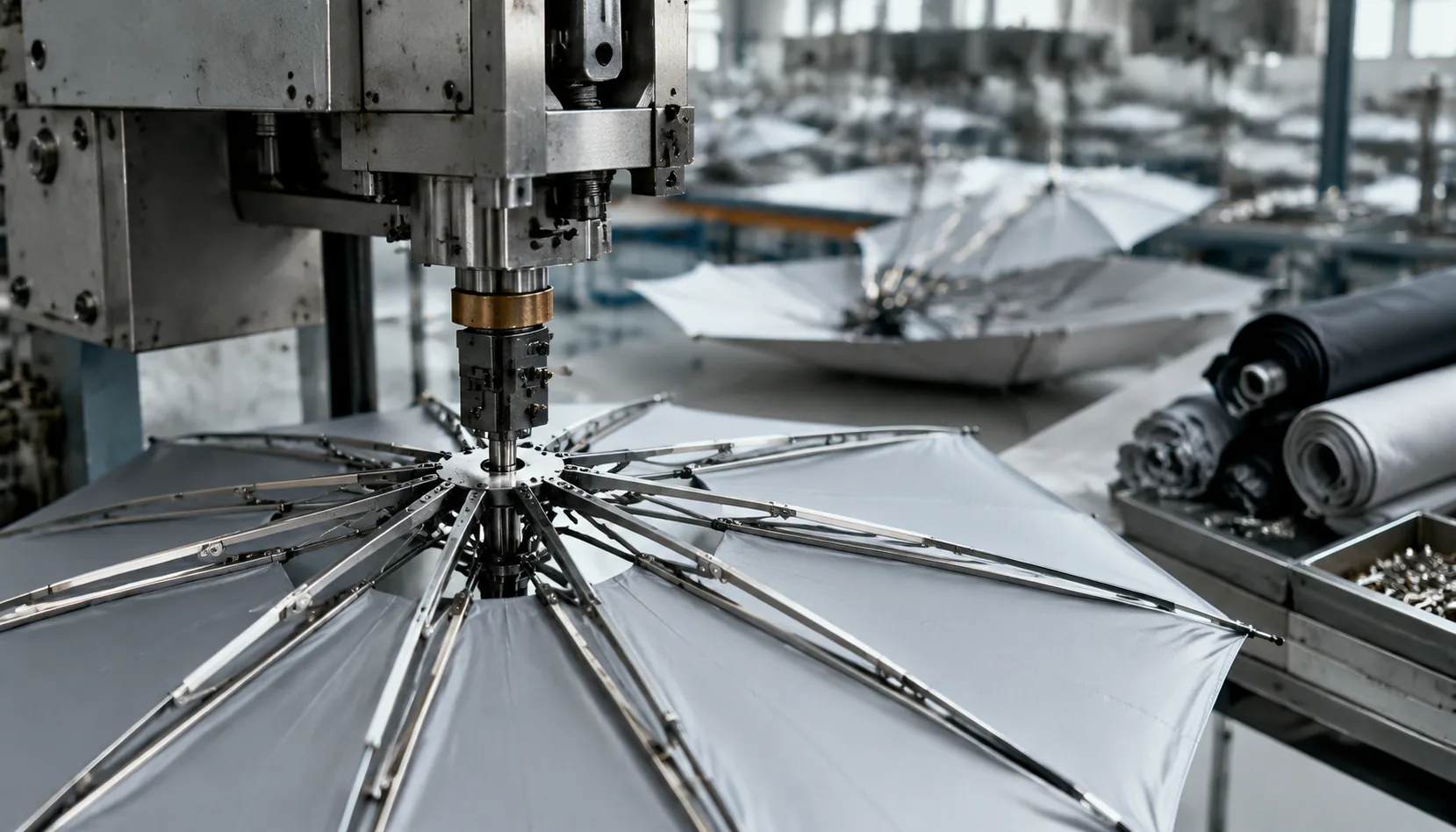
Umbrella Rib Riveting Process Controls for OEM Frame Quality
Control rib riveting quality with specs for joint play, pull force, 8K/16K frames, in-line checks, and AQL 2.5 acceptanc...
Read More »
Umbrella Frame Riveting Process: Tolerances and QC Checks
Specify rivet size, hole tolerance, frame alignment, and inline pull checks to reduce loose ribs, jammed runners, and AQ...
Read More »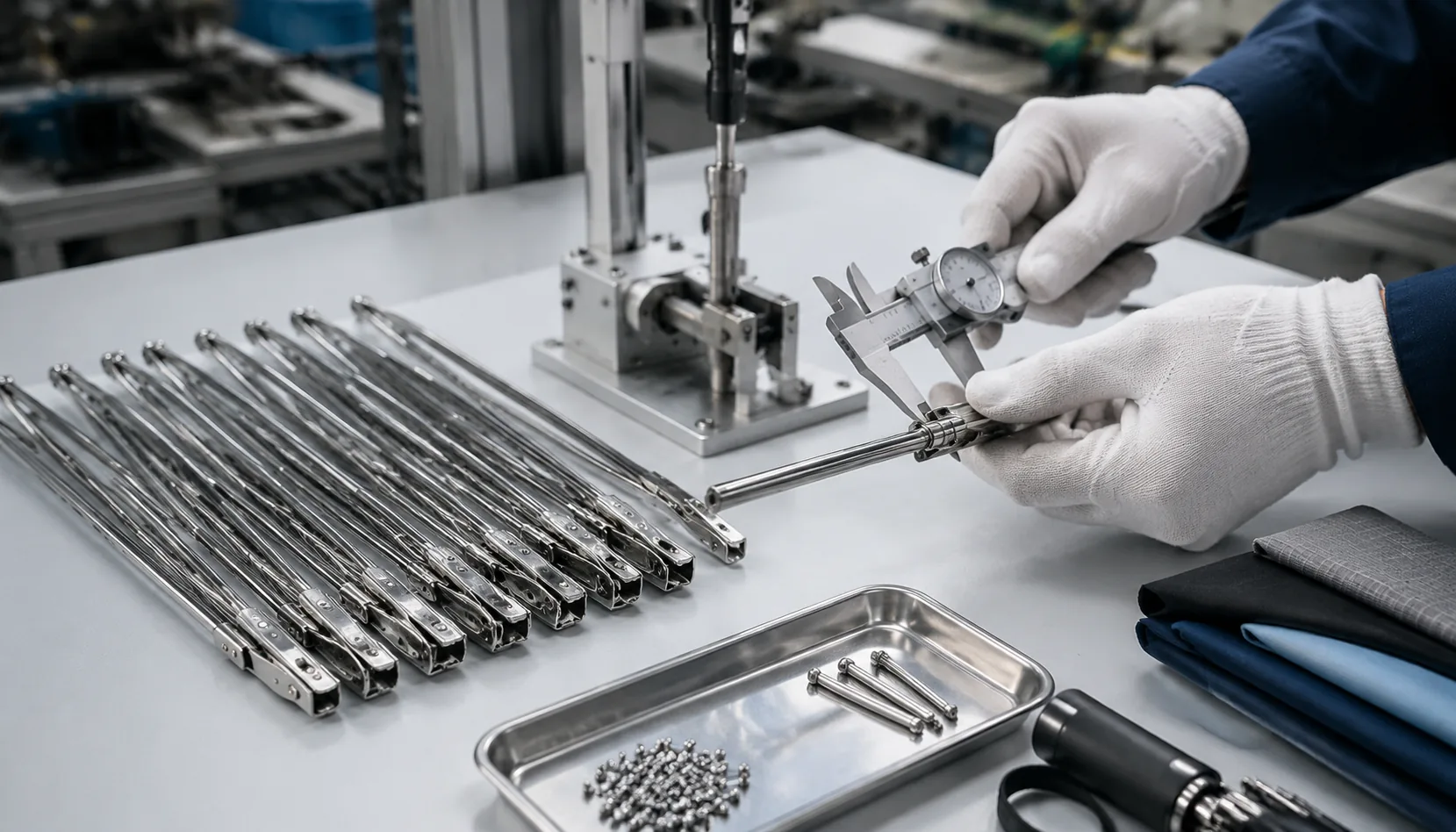
Umbrella Frame Riveting Quality: Tolerances and Pull Tests
Specify rivet fit, pull strength, and in-process checks to reduce loose ribs, canopy sag, and field failures in OEM umbr...
Read More »