Mixed-SKU Umbrella Production Lines for OEM Programs
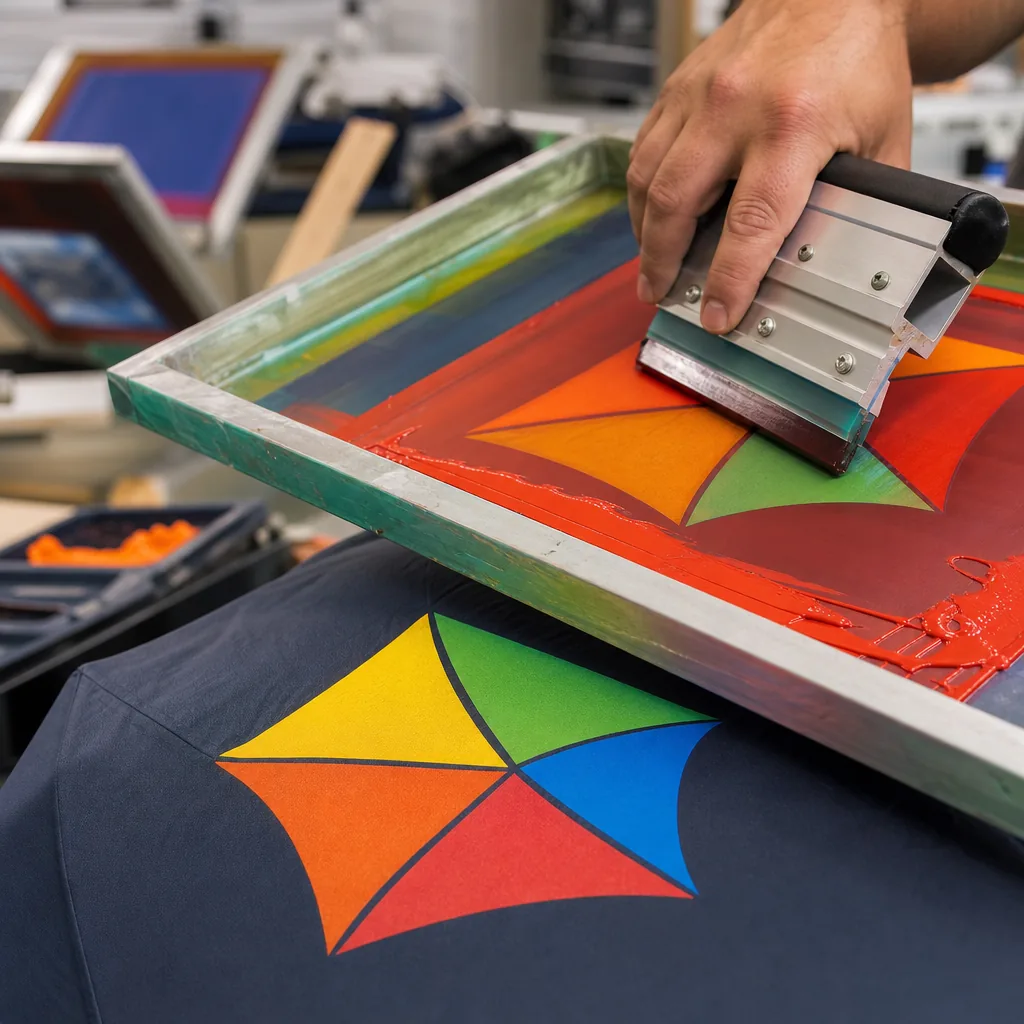
Mixed-SKU umbrella orders look efficient on a PO, but they can choke a line when manual frames, auto-open mechanisms, different canopy fabrics, and small MOQ splits hit sewing, assembly, and inspection at the same time. On OEM umbrella production lines, the real work is sequencing ribs, shafts, panels, printing, and packing so one SKU does not hold the whole shipment before FOB or DDP cutoff.
Why Mixed-SKU Umbrella Orders Are Hard to Schedule
Mixed SKU umbrella orders look efficient on a spreadsheet, but on the factory floor they break the rhythm of a stable line. A 21" compact umbrella with 8K steel ribs does not share much process flow with a 30" golf umbrella using 8K or 16K fiberglass ribs, and a kids’ umbrella with POE panels has different cutting, sewing, and safety checks than a 23" auto-open model in 190T pongee. When one PO combines compact, golf, kids, UPF 50+, and auto-open umbrellas, material staging becomes the first bottleneck. Frames, runners, springs, handles, tips, ferrules, canopy rolls, labels, sleeves, and cartons must be separated by SKU before assembly starts. If the warehouse issues one wrong rib length or runner diameter, the line may not find the mismatch until canopy fitting, which is too late and causes rework.
Changeovers are where OEM umbrella production lines lose hours, not minutes. Switching from manual compact to auto-open means different shafts, springs, notch parts, safety testing, and workers who know how to tension the mechanism without causing slow opening or button failure. Moving from pongee 210T UPF 50+ canopy to transparent POE or PVC changes cutting pressure, sewing speed, needle choice, and edge binding behavior. A double-canopy vented golf umbrella also needs extra panel matching and airflow-gap control, especially if the buyer requires a 50+ mph wind-tunnel claim. Printing adds another layer: screen printing, heat transfer, and sublimation cannot always run in the same sequence because curing temperature, color registration, and fabric shrinkage differ by canopy material.
The more SKUs in one order, the more umbrella factory planning depends on batching rather than simple order quantity. A 5,000-piece PO split into ten SKUs is usually harder than a 10,000-piece PO split into two SKUs, because each small batch still needs first-piece approval, inline checks, carton marks, spare parts, and final AQL 2.5 inspection. This is why umbrella MOQ planning matters: below about 500–1,000 pieces per SKU, setup time starts to dominate sewing and assembly time. Custom umbrella lead times also stretch when accessories are not common across models; fiberglass ribs, UV-coated 210T pongee, EVA handles, and auto-open-close mechanisms often come from different upstream suppliers. For mixed SKU umbrella orders, our standard practice at ZheBrella is to lock the BOM early, group SKUs by frame family, and schedule printing before final assembly so one delayed logo process does not stop every line.
Material Readiness Before Line Start
The painful delays usually happen in mixed-SKU work because one slow component blocks a whole shipment, not just one item. A buyer may approve a 10,000-piece program across 21", 23", and 30" sizes, but if the 30" golf umbrella’s vented double-canopy mesh, longer fiberglass ribs, or oversized carton is late, the factory must decide whether to split shipment, hold the full PO, or resequence the line. That decision changes custom umbrella lead times immediately: a normal 30–40 day schedule can become 45+ days if late components arrive after printing and cutting have already been staged. At ZheBrella, our standard practice is to lock umbrella MOQ planning against component availability before line start, not just finished-unit MOQ, because 500 missing shafts can be more disruptive than 5,000 meters of fabric waiting in the warehouse. Good readiness control protects both FOB loading dates and DDP delivery promises.
Line Balancing for Manual and Auto-Open Models
Manual umbrellas are the easiest to balance on OEM umbrella production lines because the cycle is short and the failure modes are simple. A 21" or 23" manual stick or folding model usually moves through frame build, canopy insertion, top stitch, and final close-out in about 4 to 6 minutes of direct labor when parts are clean and the rib set is consistent. QC is mostly visual and dimensional: ferrule fit, runner stop position, spoke symmetry, canopy tension, print alignment, and open/close force by hand. On mixed SKU umbrella orders, the problem is not the manual model itself but the batching logic, because a line that keeps changing between 8K and 10K frames, steel and fiberglass ribs, or pongee 190T and 210T can lose more time in changeover than in sewing. For umbrella factory planning, manual units are the easiest to slot around higher-complexity items, especially when umbrella MOQ planning forces small lots across several handle or canopy colors.
Auto-open umbrellas add a real mechanical checkpoint because the button, spring, and release hook have to work under repeated load, not just once on the bench. In practice, assembly time rises to roughly 6 to 8 minutes per unit, mainly because the trigger housing, spring preload, and runner travel need extra verification before packing. The critical QC points are button return, latch engagement, partial-open bounce, and whether the runner reaches the same stop point on every cycle; if it binds even slightly, the umbrella feels cheap after a few uses. On OEM umbrella production lines, we also watch the rivet set around the shaft and crown because a weak joint can pass a single open test but fail after transport vibration. For custom umbrella lead times, these models usually need a longer in-line test window than manual umbrellas, and that affects line balancing more than the sewing operation does.
Auto-open-close umbrellas are the slowest and most inspection-heavy because the closing spring, lock release, and slider friction all interact. A good line should budget 8 to 10 minutes of direct assembly time plus a separate functional test station, because the mechanism can feel acceptable at first pull and still fail on the second or third cycle. Extra QC checks should cover spring rebound force, button reset, runner movement through the full stroke, and shaft alignment under load; if the runner drags, the user will feel it immediately. For double-canopy windproof construction, we add checks for vent gap symmetry, inner-canopy stitch security, and rib tip clearance so the two layers do not snag each other when the frame flexes. At ZheBrella, the standard practice is to separate these SKUs into their own test lane during umbrella factory planning, because that is the only practical way to keep mixed SKU umbrella orders moving without blowing up umbrella MOQ planning or missing ship dates.
MOQ, Batch Size, and Changeover Control
MOQ is not an abstract purchasing term on OEM umbrella production lines; it decides whether the line runs cleanly or burns time on micro-changeovers. If a mixed SKU umbrella order is split into 200-piece fragments, printing loses setup efficiency, sewing operators keep resetting thread and panel stacks, and frame assembly gets slowed by parts picking. A sensible umbrella MOQ planning model groups like with like: one fabric print run, one canopy color, one frame family, then a repeatable packing spec. That is how you keep the cost per piece from jumping when the order looks diverse on paper. For custom umbrella lead times, the real issue is not just total quantity, but how many times the line has to stop, clean, relabel, and re-stage materials.
Batch size matters most in print, sewing, and frame assembly because those are the three places where changeover waste compounds. On the print side, switching from a 1-color logo to a full-panel sublimation job means different screens, heat settings, or transfer placement checks. In sewing, moving from 190T pongee to POE or EVA changes needle behavior, seam tension, and cutting efficiency. In frame assembly, an 8K steel frame and a 16K fiberglass vented frame are different enough that the jig, rib count check, and final inspection rhythm all change. Our standard practice on mixed SKU umbrella orders is to batch by fabric color first, then frame type, then rib count, because that sequence usually cuts the dead time between stations more effectively than batching by customer name or ship date.
Packaging style is the last place buyers underestimate changeover loss. A stick umbrella in a polybag with barcode sticker is a different packing rhythm from a folding umbrella in a gift box with insert card and hangtag, and the line will slow down if both are interleaved without a clear schedule. The same logic applies to carton packing: grouping 10-piece inner packs, retail-ready sleeves, and bulk export cartons separately reduces relabeling and avoids carton mix-ups during AQL 2.5 checks. In practice, umbrella factory planning works best when MOQ is set to protect each critical step, not just finished goods count. If the program forces too many small lots, the factory pays for it in labor hours, material loss, and custom umbrella lead times that drift even when the sewing output looks busy.
Shipment Planning and Final Quality Gates
Shipment planning has to start before the last umbrella comes off the line, especially on mixed SKU umbrella orders where carton logic can create more mistakes than sewing. For retail programs, we normally lock the carton matrix at PP approval: model number, canopy color, rib count such as 8K or 10K, size like 21 inch compact or 23 inch straight, inner box quantity, master carton quantity, gross weight, and carton marks. Barcode or retail labeling must match the buyer’s PO line, not just the product description, because one black 190T pongee auto-open umbrella can look identical to another until the EAN, hangtag, or FNSKU is scanned. On OEM umbrella production lines, I prefer one SKU per master carton unless the buyer has approved an assorted carton plan with a printed pack-out map. Mixed cartons save freight sometimes, but they slow packing, raise scan-error risk, and make destination warehouse claims harder to defend.
The final quality gate should be treated as a release decision, not a photo-taking exercise. Our standard practice at ZheBrella is AQL 2.5 for major defects and tighter internal screening on safety or function issues: sharp rib tips, loose runner, weak auto-open spring, crooked logo print, poor heat-transfer adhesion, canopy stains, and failed open-close cycling. For windproof models, we also spot-check frame symmetry, fiberglass rib seating, double-canopy vent alignment, and shaft wobble before carton sealing. Buyers should keep approved PP samples, printed color standards, barcode files, and packing instructions in one controlled approval pack; otherwise the inspection team ends up judging against email screenshots. If rework is needed, simple relabeling may take 1 to 2 days, but canopy replacement, logo reprint, or mixed-carton resorting can easily consume 4 to 7 days and affect the vessel cutoff.
Export timing is where umbrella factory planning often gets too optimistic. A normal FOB Ningbo or Shanghai shipment needs production completion, final inspection, carton sealing, warehouse transfer, booking confirmation, customs documents, and port cutoff alignment; DDP adds consolidation, destination customs, duty handling, and final-mile scheduling. During March to June promotional season and August to October retail replenishment, custom umbrella lead times should include buffer for PP approval and vessel space, not just sewing capacity. For umbrella MOQ planning, I tell buyers to separate production lead time from shipment lead time: for example, 30 to 40 days for approved repeat OEM production, plus 7 to 14 days export buffer for FOB, or 25 to 40 days transit and clearance for DDP depending on destination. Peak-season vessel rolls are real, so a program needed for a launch date should reserve at least one extra week, and two weeks is safer for multi-SKU orders with retail labeling.
Frequently Asked Questions
Can a factory combine several umbrella styles under one MOQ?
Sometimes, but it depends on shared materials, printing setup, frame type, and packaging. A mixed-SKU order using the same 210T pongee color and carton specs is easier to combine than one with different frames, coatings, and retail packs.
How much extra lead time should buyers allow for mixed-SKU orders?
Mixed-SKU programs usually need more planning time than a single-style reorder because sampling, material staging, and line changeovers are more complex. Buyers should confirm lead time after PP sample approval and before choosing FOB or DDP delivery terms.
How should a factory group mixed-SKU umbrella orders to avoid line changeover delays?
The most efficient approach is to group umbrellas by frame type, opening mechanism, and fabric specification before scheduling. For example, keeping auto-open models on one line and manual-open models on another can reduce changeover time by 15-30% on a busy schedule.
What minimum order quantities work best for mixed umbrella programs?
Mixed programs usually run best when each SKU meets a separate MOQ of 300-500 pieces, depending on panel count, handle type, and print method. If the total order is large enough, factories may accept lower per-SKU quantities, but this often adds setup time and increases unit cost.
What should buyers confirm before FOB or DDP shipment of mixed umbrella lots?
Buyers should confirm carton counts by SKU, final sample approval, fabric color consistency, and functional testing for open/close performance. It is also important to verify packing lists and outer carton marks 5-7 days before the vessel or truck cutoff to avoid documentation delays.
Looking to Launch Your Custom Umbrella Line?
ZheBrella is a Zhejiang-based OEM/ODM umbrella manufacturer with 17 years of export experience. Free design, low MOQ from 100 pieces, windproof construction, full-color print.
Get Free Quote Now »People Also Search For
Related Articles
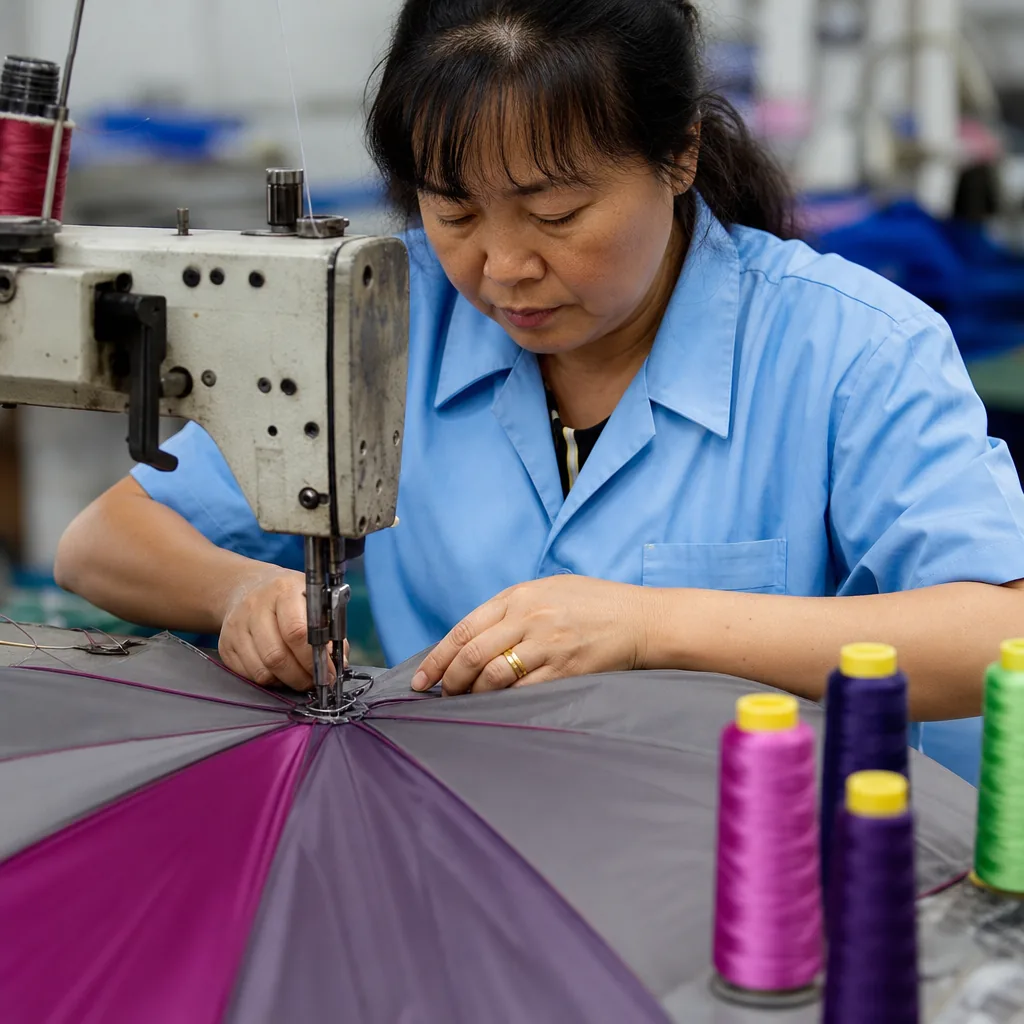
Umbrella Factory Line Setup for Mixed-SKU OEM Production
Plan mixed-SKU umbrella production with better line setup, material staging, QC gates, and realistic lead times for OEM ...
Read More »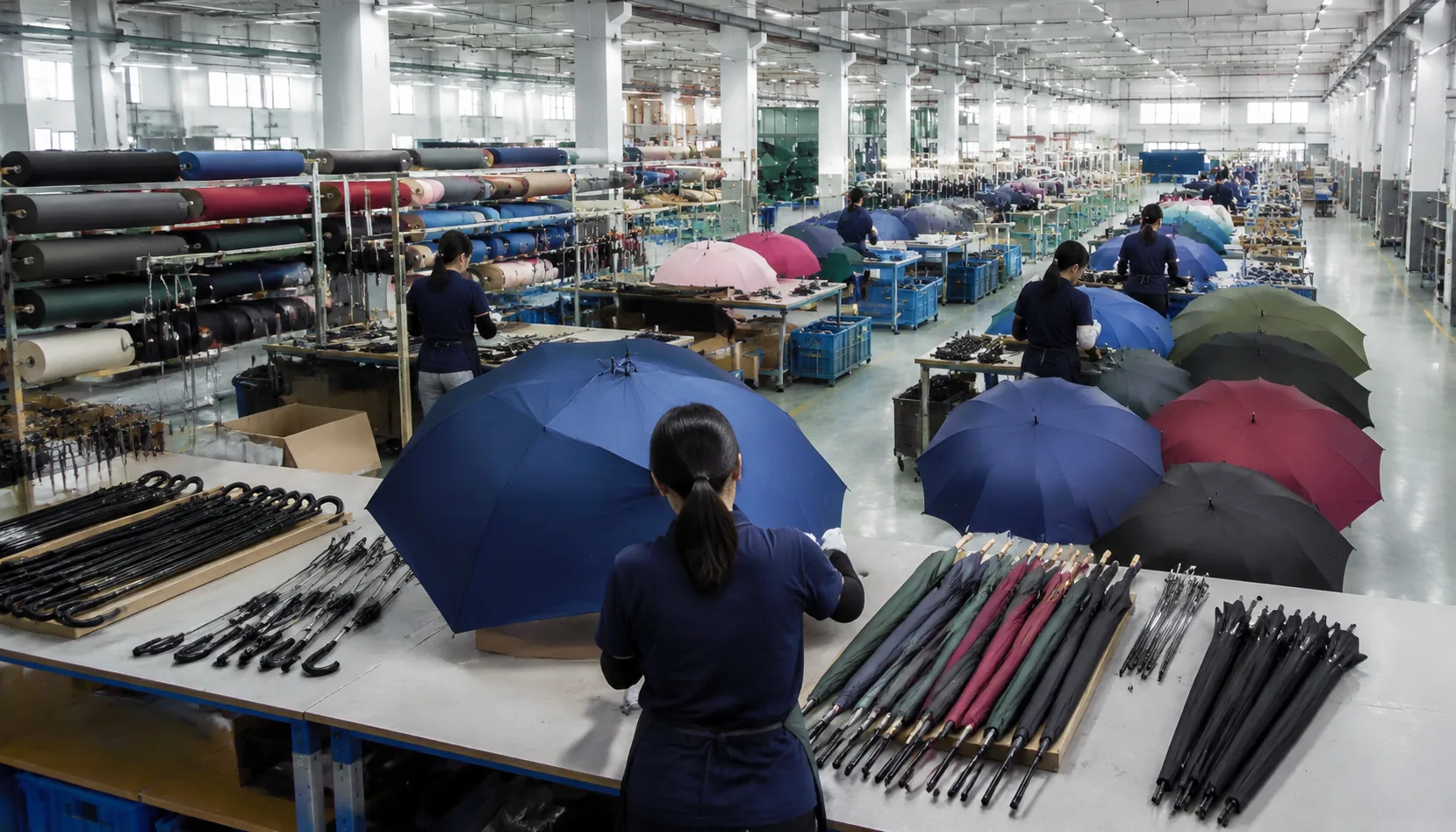
Umbrella Factory Line Setup for Mixed-SKU OEM Orders
See how factories plan mixed-SKU umbrella lines, balance frame assembly, canopy sewing, printing, QC, and packing to red...
Read More »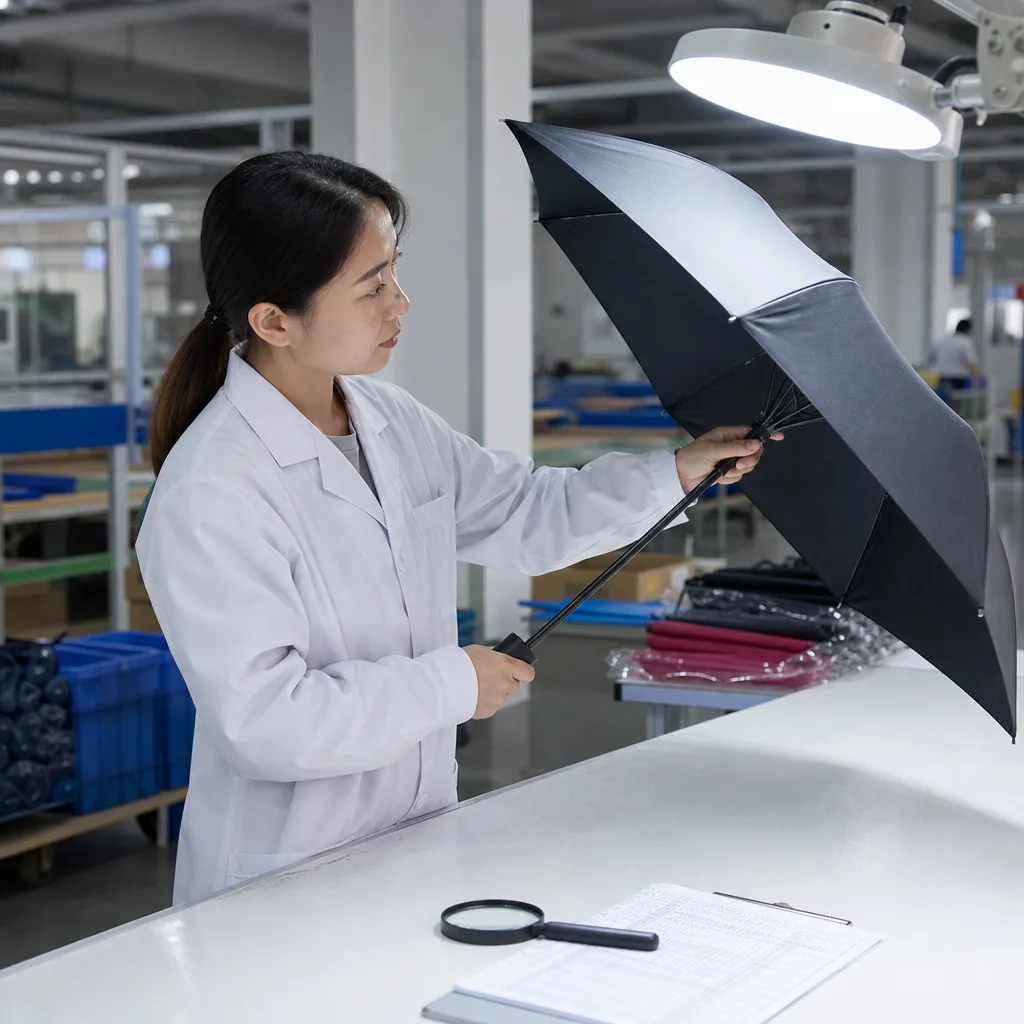
MOQ, Sampling, and Lead Time for Custom Umbrella Orders
Plan custom umbrella orders with realistic MOQ, sample timing, and production lead times so buyers can avoid delays and ...
Read More »