MOQ, Sampling, and Lead Time for Custom Umbrella Orders
Custom umbrella orders usually stall at the same three points: minimum order quantity, sample approval, and production scheduling. Buyers need umbrella MOQ planning that fits real factory capacity, because the wrong assumptions on color count, fabric, or handle mix can turn a simple order into weeks of delay and extra cost. From the production floor, the fastest projects are the ones that lock specs early, sample with purpose, and set lead times against actual material and sewing flow.
How MOQ Is Set for Umbrella Manufacturing
MOQ starts with what is already sitting in the warehouse and what has to be made from scratch. If you stay on stock canopy cloth like 190T or 210T pongee in black, navy, or white, use a standard black or silver frame, and choose a common handle like straight EVA, rubber, or a basic plastic J-handle, the umbrella MOQ planning can stay low, often 100 to 300 pieces per colorway. Once you move to custom dyeing, special frame color, molded handle, or coated materials like POE, PVC, or EVA with a specific finish, the order usually needs 500 pieces or more because each extra step adds setup loss, material waste, and separate packing control. Custom umbrella sampling is usually taken from the same approved components, but if the sample includes a new canopy fabric or handle tool, that part has to be paid for separately and can push the first production lot higher.
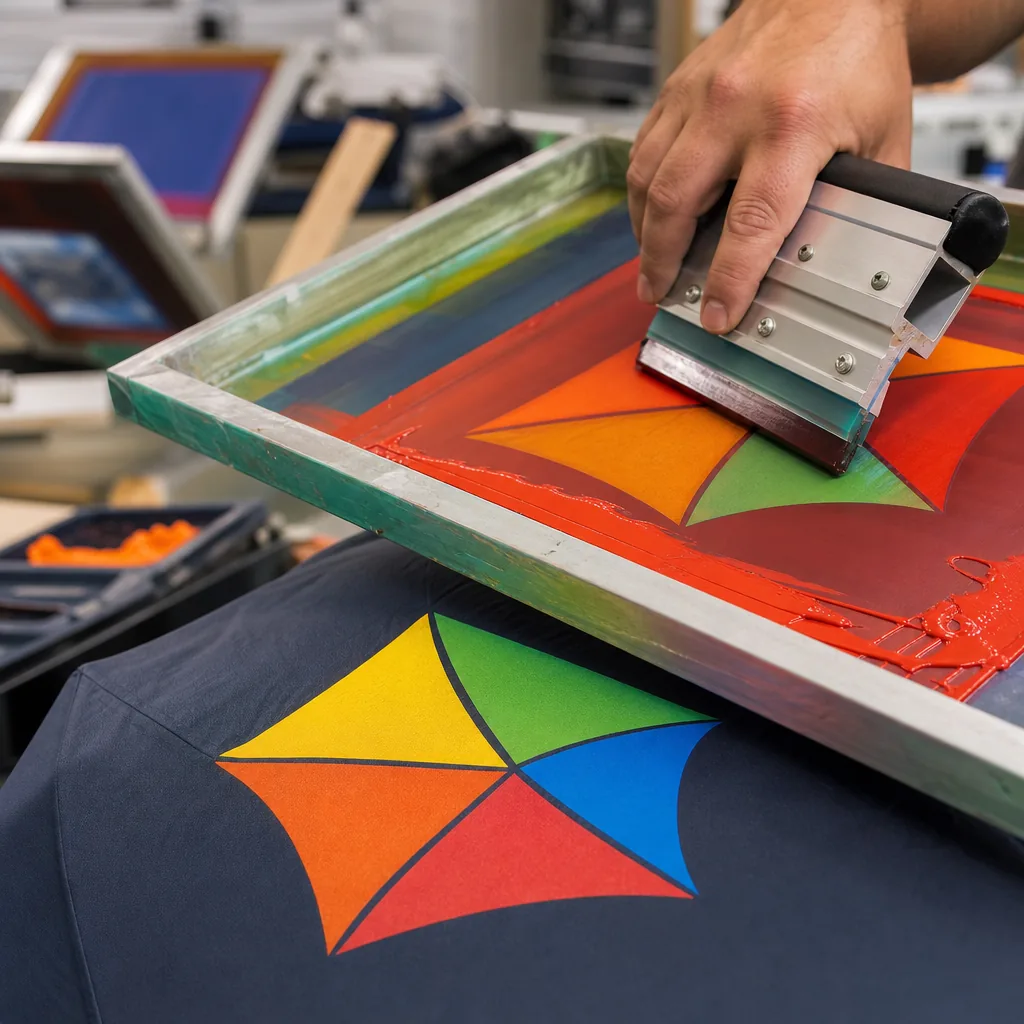
Print method matters as much as the body structure. Simple one-color screen print on a stock panel is the easiest to absorb in a small run, while heat-transfer and sublimation need tighter fabric choice, more color control, and extra sample approval, so OEM umbrella order planning often moves the MOQ up to 300 to 500 pieces. Rib count changes the picture too: 8K builds are the standard low-risk option and can often be produced in smaller quantities, 10K needs more frame parts and assembly time, and 16K usually forces a higher minimum because the ribs, stretchers, and tips are more specialized and the factory production schedule has to be locked earlier. In practice, 8K can stay near 100 to 300 pieces if the components are stock, 10K is more realistic at 300 to 500, and 16K often starts at 500 to 1,000 depending on whether the frame is standard steel, fiberglass, or a custom windproof structure.
Sampling Stages That Add or Save Time
Proto sample is the first gate in umbrella MOQ planning, and it is not a decoration sample. It is built to prove the frame, canopy size, opening action, and basic artwork position before anyone talks about bulk fabric. For a standard custom umbrella sampling cycle, we usually allow 5 to 10 days for the proto, depending on whether the style is a 21" folding model, a 23" stick umbrella, or a larger 27" golf frame with fiberglass ribs. At this stage, the buyer should already know the mechanism, panel count, handle type, and whether the canopy will be pongee 190T, 210T, POE, or PVC. The factory production schedule cannot move cleanly if those basics are still changing. Color direction should be close, but the exact shade can still be adjusted after the first physical review if the buyer is willing to accept a short reset on umbrella lead time.
The pre-production sample is the real freeze point. Once that sample is approved, color approval, logo placement, print scale, and fabric hand-feel need to be locked before bulk cutting starts, because changing any one of those items after the lays are cut creates waste and usually pushes the order back 3 to 7 days. On OEM umbrella order planning, this is where buyers often lose time: they approve the shape but keep revising the Pantone, move the logo 15 mm, or switch from a dry hand to a softer coating like Teflon or a UV-treated finish. That is not a small edit on a canopy made from 8K, 10K, or 16K panels; it affects cutting marks, print screens, and sewing sequence. Our standard practice at ZheBrella is to treat the pre-production sample as the document that tells the sewing line what to build, not as another round of design discussion.
The shipment sample is a control check, not a new sample stage, and it should be used to confirm that the bulk run matches the approved pre-production sample in color, stitch density, logo registration, and opening tension. If the buyer asks for shipment samples from a live lot, it usually means the approval process was not disciplined enough earlier, and that costs more than it saves. For a normal order, bulk production can run 15 to 30 days after pre-production sign-off, while higher-volume or mixed-SKU programs may need longer if the factory is holding multiple fabric lots or doing carton pack changes. Good umbrella lead time management depends on freezing the non-negotiables early: frame spec, canopy material, final artwork, and target carton configuration. If those are stable, the rest is just execution; if not, the schedule slips even when the factory line is ready.
Where Lead Time Really Comes From on the Factory Floor
On a real factory schedule, umbrella lead time starts before the first machine runs. Material sourcing is the first gate: pongee 190T or 210T, POE, PVC, EVA, fiberglass ribs, steel shafts, plastic tips, and handle components all have different stock levels and supplier cycles. If the order uses standard colors and standard components, we can move quickly; if it needs custom dyed canopy fabric, special PU coating, or a custom molded handle, you are no longer just buying assembly time, you are waiting on upstream production. That is where umbrella MOQ planning matters, because low quantities often cannot justify a separate dye batch, handle mold, or carton print run. In OEM umbrella order planning, the fastest projects are the ones built from existing materials with only logo and carton changes. Once the specification changes into a new material mix, the calendar stretches from days to weeks, not because the factory is slow, but because every dependency has its own lead time.
Printing and sewing are usually the next bottlenecks, especially for custom umbrella sampling. A single color logo on a standard panel is straightforward; full-panel sublimation, multiple Pantone matches, or registration-sensitive screen printing takes more setup and more rejects during first-run adjustment. Sewing also affects timing more than buyers expect: a 21-inch compact auto-open-close umbrella with standard eight-panel construction is routine, but vented double-canopy windproof builds, 10K or 16K rib counts, and reinforced stitching around the tips add labor and inspection steps. If the sample needs exact edge binding, special seam taping, or a nonstandard canopy shape, the sample may take longer than the production order because the workshop is proving the process before committing to the full batch. That is why umbrella lead time is not one number; it depends on whether the sample is a decoration test or a true engineering test.
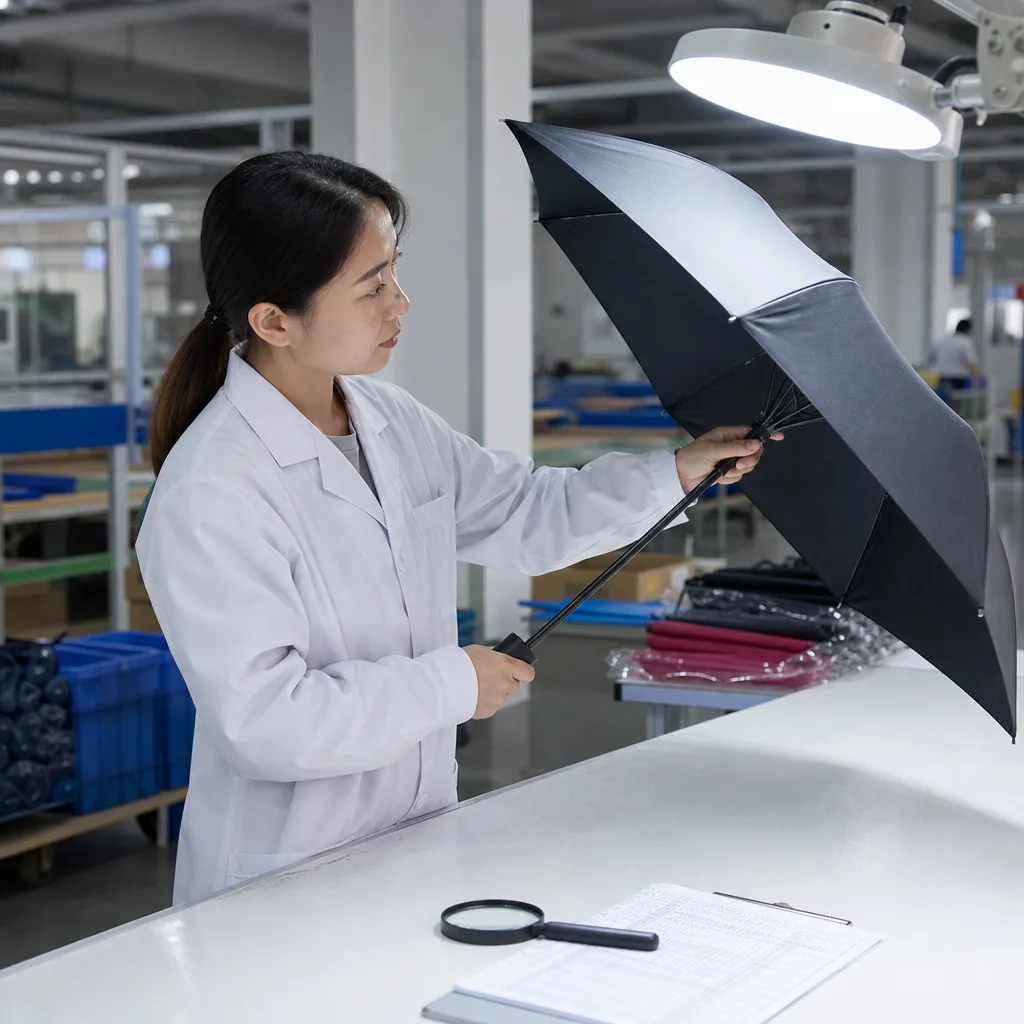
After frame assembly and sewing, final QC and packing still control the ship date. The frame line has to pass opening and closing tests, rib alignment checks, and wind-resistance checks before the umbrellas go to packing; if AQL 2.5 inspection finds loose springs, weak tips, printing defects, or canopy tension issues, the lot goes back for rework. Carton requirements can also add time. Standard export cartons are fast, but nonstandard carton artwork, individual barcode labeling, retail sleeve inserts, or drop-test reinforcement can add another production step and another approval cycle. On larger programs, ZheBrella schedules the factory production schedule around both assembly capacity and packing materials, because a completed umbrella is not shippable until the carton and outer case are ready. For buyers doing umbrella MOQ planning, the practical rule is simple: standard materials and standard packing move fast; custom handle tooling, special coatings, and custom packaging are what turn a 15-day order into a 30-day or longer order.
How Seasonality and Capacity Affect Order Windows
Seasonality drives the schedule more than most buyers expect. Rain programs spike ahead of the wet season in North America and Europe, while sun umbrellas, golf umbrellas, and patio programs load up before spring retail resets, summer promotions, and Q4 outdoor events. That means umbrella MOQ planning is not just about price breaks; it is about whether your order lands in a clean production window or gets pushed behind existing line loading. On a typical factory floor, canopy cutting, frame assembly, printing, and final packing all compete for the same labor pool, so a 5,000-piece order can move faster in a quiet month than a 1,000-piece rush order placed during peak demand. If you need 21" folding umbrellas, 23" compact models, or 30" golf umbrellas with custom printing, book earlier than you think. Otherwise, the factory production schedule will favor repeat SKUs, stocked components, and the jobs already in motion.
Raw-material bottlenecks are usually the hidden delay. Fiberglass ribs, steel shafts, pongee 190T or 210T, POE film, EVA handles, and coated fabrics are all subject to their own lead times, and a late approval on one item can stall the entire batch. Custom umbrella sampling is the first place delays show up: a printed sample can take 5 to 10 days if the canopy is straightforward, longer if you need a new panel shape, spot color matching, or a Teflon and UV UPF 50+ coating confirmation. For OEM umbrella order planning, I tell buyers to treat samples and bulk production as two separate clocks. Once the sample is approved, bulk umbrella lead time is commonly 25 to 45 days, but that number moves if rib components or packaging materials have to be purchased fresh. ZheBrella handles these schedules the same way every season: lock the BOM early, confirm artwork before peak load, and avoid last-minute substitutions.
For retail launches, promotional campaigns, and large event programs, the safe move is to reserve capacity 8 to 12 weeks ahead of ship date, especially if you need auto-open-close mechanisms, double-canopy vented windproof frames, or a mixed size run with 8K, 10K, or 16K rib counts. AQL 2.5 inspection still applies, but inspections and carton booking do not shorten the calendar if the factory is already committed to other orders. The cleanest approach is to stagger approvals: sample first, then packaging proof, then bulk release, so the factory can align sewing, printing, and assembly without rework. If your program has a fixed launch date, build slack for freight too, because FOB and DDP schedules are only realistic when the production slot is secured early. In practice, the buyers who stay on time are the ones who treat umbrella MOQ planning as capacity management, not just a commercial negotiation over unit price.
Planning Buffer for Freight, Rework, and Approval Delays
The mistake in umbrella MOQ planning is treating the quoted umbrella lead time as if it starts at approved artwork. It does not. You need to reserve time for custom umbrella sampling, customer comments, and at least one revision cycle before the factory can lock the cutter, printing files, and frame BOM. For a normal 21" or 23" promotional umbrella, I would budget 5 to 7 working days for the first sample, then another 3 to 5 working days if the canopy color, logo size, or handle finish needs correction. If the order uses special materials like 190T pongee, UV coating, or a double-canopy vented frame, add another 2 to 4 days because those inputs change sewing and assembly timing. A clean approval path still needs slack, because one late PO amendment can push the factory production schedule behind a full batch of shaft tubing, ribs, and canopy panels.
Inspection rework is the second place buyers underestimate time. Even when AQL 2.5 is acceptable on paper, real production issues show up in zipper pulls, print registration, tip gluing, or bent ribs from transit between sewing and assembly. If the first pre-shipment inspection finds a defect pattern, plan 3 to 5 working days for corrective action on a small run and 5 to 8 days on a larger OEM umbrella order planning lot, because the rework has to be reopened, checked, and packed again. That delay is harder to absorb if you are doing FOB, since the booking window at the port can close before the corrected cartons are ready. For DDP, the cushion should be even larger because the exporter also has to manage export docs, consolidation, and the final-mile handoff, not just factory release.
My rule is simple: finish production 15 working days before the customer’s in-hand date for FOB, and 20 to 25 working days before the in-hand date for DDP. That buffer usually covers sample approval lag, one round of rework, and freight booking without forcing the line to rush, which is where canopy mistakes and frame failures multiply. If the order is time-sensitive, build the schedule backward from the delivery promise, then subtract the factory production schedule, inspection window, and transit time separately instead of stacking them into one optimistic date. At ZheBrella, the practical way we protect the shipment is to freeze artwork early, confirm carton marks before mass cutting, and hold one extra day at each gate rather than trying to recover time at the end. That is the only reliable way to protect umbrella MOQ planning when the buyer wants a fixed arrival date.
Frequently Asked Questions
What usually increases umbrella MOQ the most?
The biggest MOQ drivers are custom frame parts, specialty canopy fabrics, and multiple logo or color variants within one order. If the factory has to change tooling or source unique components, the minimum often rises quickly.
How much lead time should buyers reserve for sampling and production?
For straightforward stock-component umbrellas, sampling and bulk production can move faster, but custom OEM programs still need time for approvals and inspection. Buyers should reserve extra time whenever they need special colors, new artwork, or a new frame structure.
What MOQ should a first-time importer expect for a custom umbrella order?
Most factories quote 500-1,000 pieces per style for standard OEM umbrellas. If you want multiple canopy colors, handle types, or packaging versions, the effective MOQ can go higher because each variation needs its own setup.
How long does a pre-production sample usually take?
A normal sample takes 5-10 days after artwork, size, and material specs are confirmed. If the order needs a new frame, custom mold, or special printing, allow 10-15 days.
What lead time should I plan for a 5,000-piece order?
For a confirmed 5,000-piece order, budget 25-35 days for production after sample approval and deposit, plus 3-7 days for packing and export booking. In peak season, add 1-2 extra weeks to avoid delays.
Looking to Launch Your Custom Umbrella Line?
ZheBrella is a Zhejiang-based OEM/ODM umbrella manufacturer with 17 years of export experience. Free design, low MOQ from 100 pieces, windproof construction, full-color print.
Get Free Quote Now »People Also Search For
Related Articles
Mixed-SKU Umbrella Production Lines for OEM Programs
Plan mixed umbrella runs by balancing manual and auto-open assemblies, fabric specs, MOQs, and inspections to reduce del...
Read More »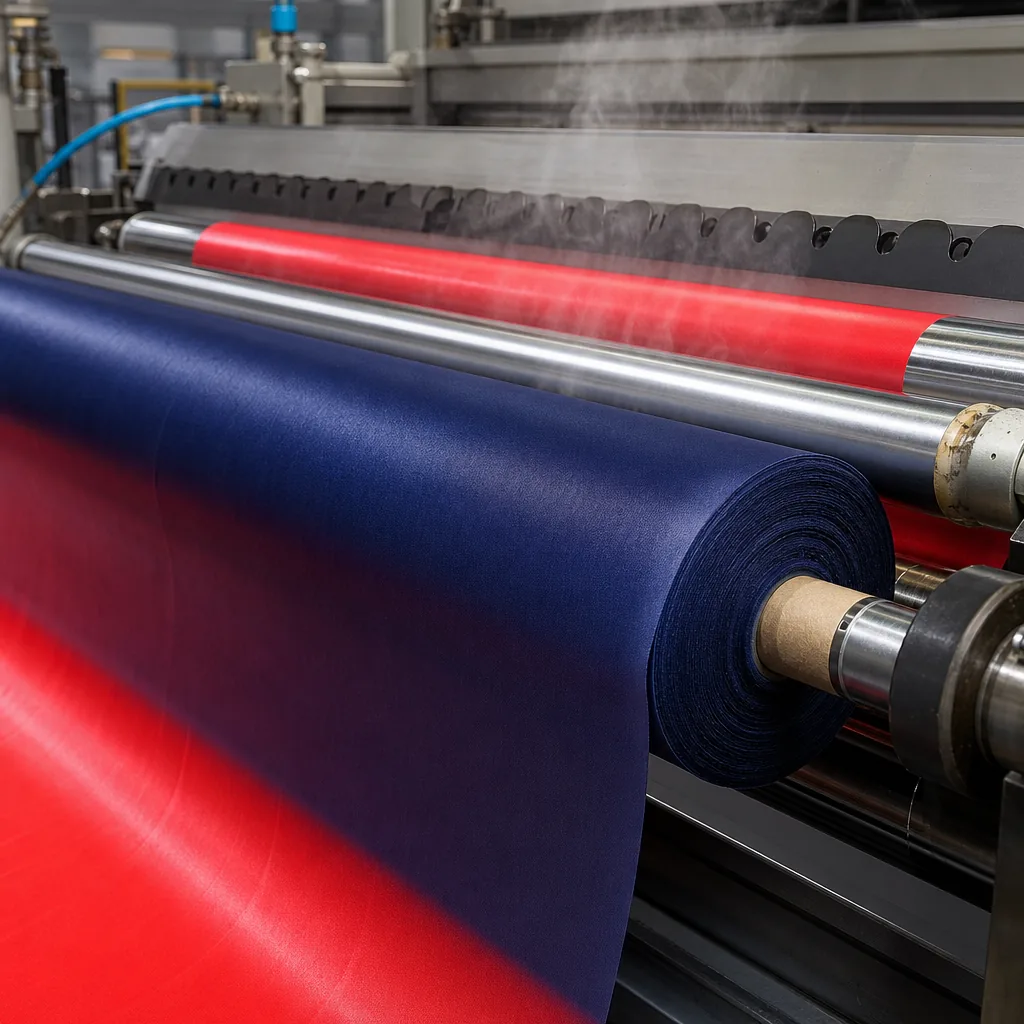
Custom Umbrella Production Lead Times from Sample to Shipment
See how umbrella sampling, material sourcing, sewing, assembly, and freight choices shape lead times, so buyers can plan...
Read More »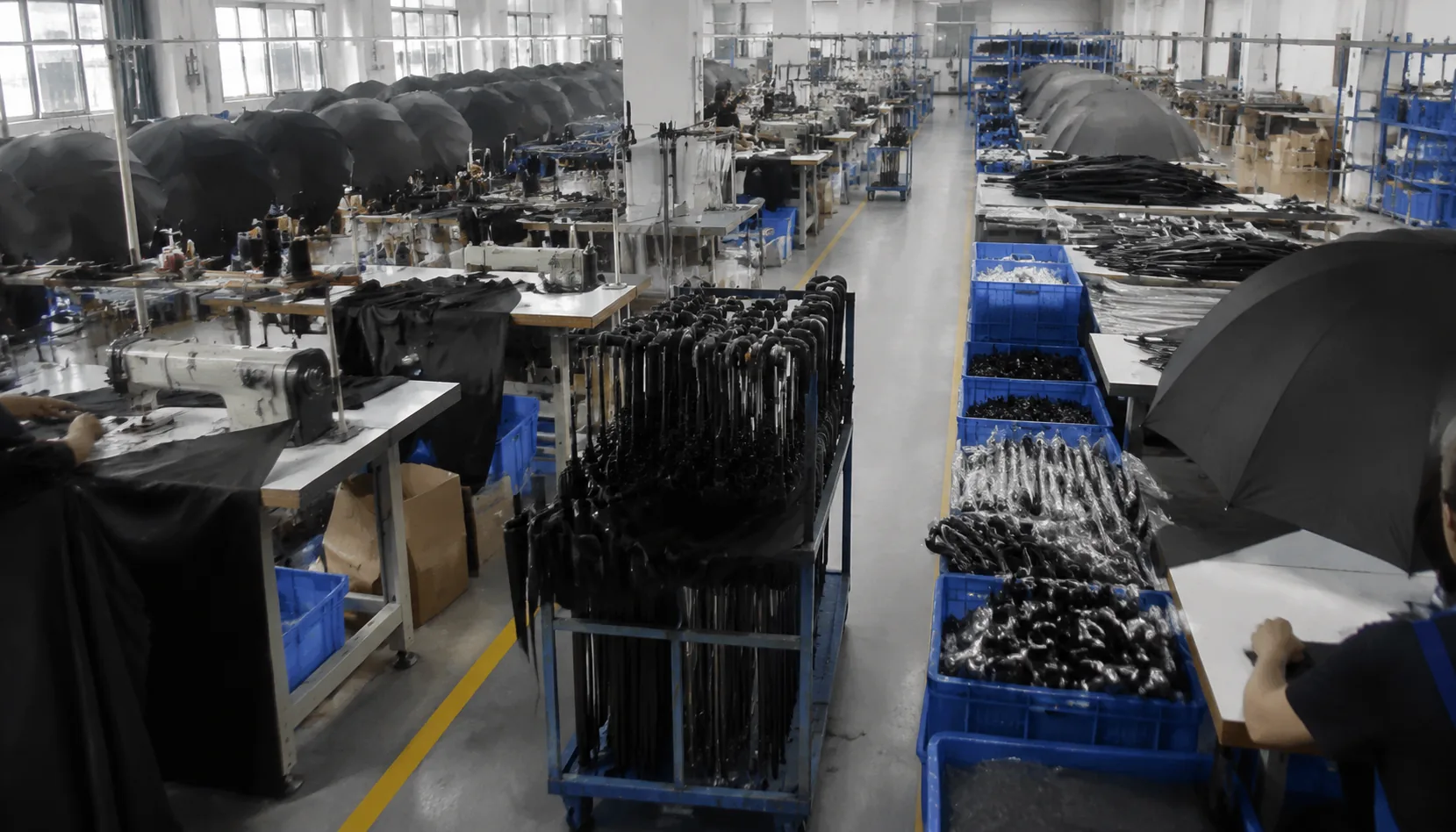
Umbrella Production Line Balancing for Bulk OEM Orders
Understand how balanced cutting, sewing, frame assembly, QC, and packing lines improve umbrella lead times and reduce bo...
Read More »