Umbrella Factory Line Setup for Mixed-SKU OEM Production
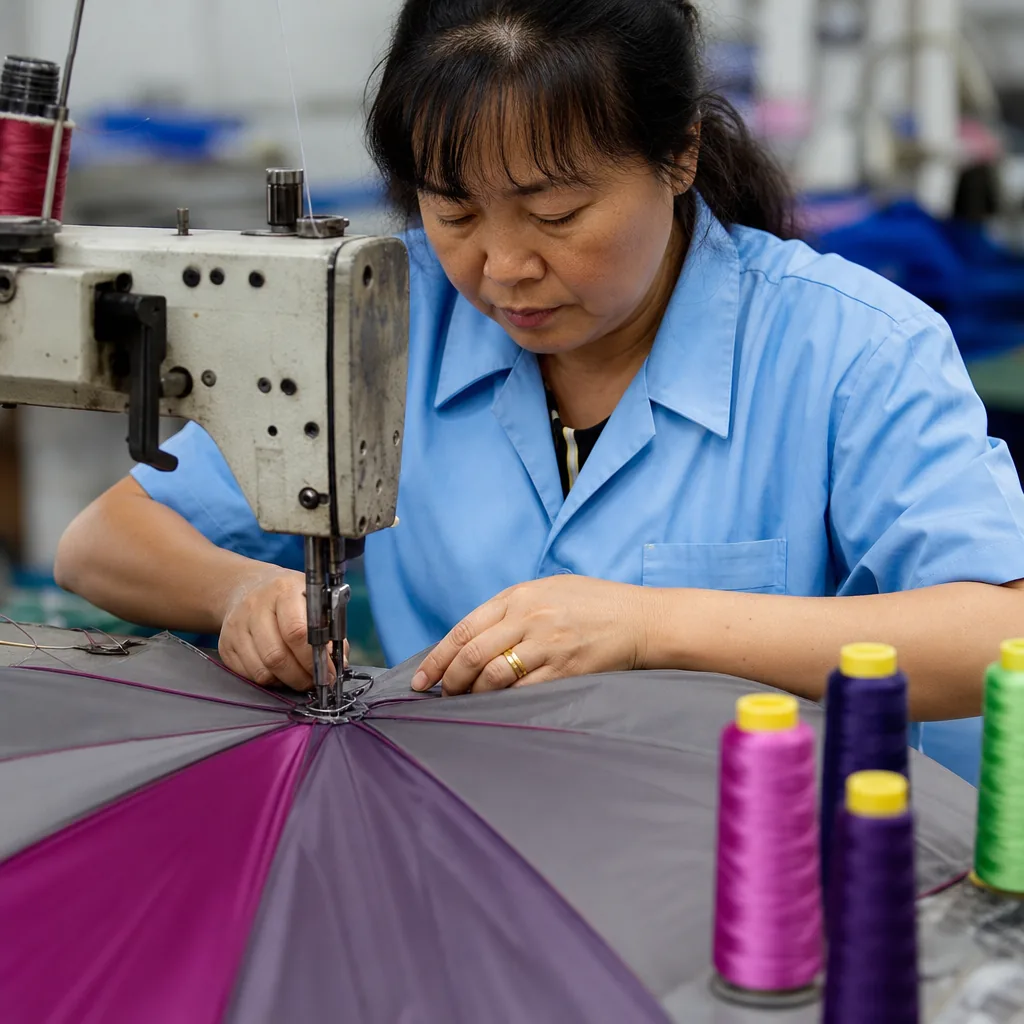
Mixed-SKU OEM orders look simple on a spreadsheet, but on the shop floor every fabric change, logo position, rib length, handle type, and carton mark can slow output or create rework. A well-planned umbrella factory production line has to balance cutting, sewing, frame assembly, finishing, inspection, and packing without letting small promotional batches disrupt larger runs. The key is setting materials, QC gates, and lead-time buffers around the real changeovers operators face each day.
Why Mixed-SKU Orders Need Different Line Planning
Mixed SKU umbrella orders cannot be planned like a single-color, single-size run because the bottleneck moves every time the specification changes. A 10,000-piece solid navy 23-inch auto-open umbrella is straightforward: one fabric roll family, one frame type, one handle, one carton mark, one inspection checklist. But an order that combines 8K manual golf umbrellas, 21-inch auto-open folding umbrellas, and UPF 50+ sun umbrellas forces the umbrella factory production line to stop and reset cutting markers, sewing folders, rib jigs, handle fixtures, printing screens, hangtag sets, and packing tables. Even a color change from black to white can add cleaning time if screen printing is involved, while switching from 190T pongee to silver-coated UV fabric requires different cutting tension and stricter surface handling to avoid coating scratches.
The biggest hidden cost is not labor rate; it is changeover control. An 8K manual golf umbrella with a 27-inch frame may use fiberglass ribs, a straight EVA handle, long sleeve, and 24-piece master carton. A compact auto-open folding model may use 3-fold steel ribs, plastic handle with button alignment, wrist strap, color box, and 60-piece carton. A UPF 50+ sun umbrella may need silver or black glue coating, darker seam thread, anti-light-leak inspection, and separate barcode labels. If these SKUs are pushed through the same umbrella assembly workflow without staging, operators mix runners, tips, ferrules, and packaging inserts. That creates rework that AQL 2.5 inspection will catch too late, after the cartons are already packed.
For OEM umbrella manufacturing, I prefer grouping by frame structure first, then canopy material, then printing and packaging format. In bulk umbrella production planning, this usually means finishing all 8K straight umbrellas before moving to folding auto-open items, even if the buyer’s spreadsheet lists colors in another sequence. At ZheBrella, our standard practice is to issue separate work tickets for each SKU and lock the BOM at line release, including rib count, shaft diameter, fabric code, handle mold, carton size, and shipping mark. A well-planned umbrella factory production line may spend 30–60 minutes on a controlled changeover; an unplanned one can lose half a day sorting mixed components and repacking finished goods.
Material Staging Before Assembly Starts
Hardware staging is where bulk umbrella production planning often fails on custom orders. Black nickel, chrome, matte silver, wood-grain, rubber-coated, and color-sprayed handles may use the same mold but different surface processes, and a small shade mismatch is obvious once umbrellas are packed in retail cartons. Tips, caps, top notches, ferrules, wrist straps, snaps, Velcro closures, and button colors should be checked together with the frame finish, especially on 10K and 16K golf umbrellas where hardware is more exposed. Cartons and inserts are staged last but controlled first in the paperwork: barcode stickers, suffocation warnings, country-of-origin marks, retail inserts, and customer carton marks must match the SKU and destination market. A clean umbrella assembly workflow uses one batch traveler from warehouse release to AQL 2.5 final inspection, so every operator knows whether the line is building 27-inch vented fiberglass golf umbrellas, 30-inch straight umbrellas, or compact auto-open-close units for a different customer.
Assembly Flow and Changeover Control
The cleanest umbrella factory production line starts with frame assembly, not sewing, because the frame dictates every downstream fit issue. Rib sets are built first, then stretchers, tips, and center shafts are riveted or pinned, followed by a quick open-close check before the canopy ever comes near the table. In parallel, the sewing team cuts and stitches the canopy panels, usually by SKU family so 8K, 10K, or 16K versions do not get mixed. After that, the frame-canopy attachment station pulls the cover onto the frame, secures the tips, and checks panel symmetry, seam alignment, and vent placement on double-canopy styles. Handle fitting comes next, whether it is a straight plastic handle, EVA grip, wood hook, or automatic mechanism shell. In mixed SKU umbrella orders, the line only works if each station has a fixed sequence and a clear handoff rule; otherwise operators start guessing, and guessing creates rework.
Function testing and finishing should be treated as separate gates in OEM umbrella manufacturing, not as casual end-of-line checks. Every unit needs an open-close cycle, latch test, shaft alignment check, and a visual review for loose thread, missed stitches, crooked tip insertion, or twisted panels. If the order uses heat-transfer, sublimation, or glue-backed branding, the product has to dry or cure before packing, especially on coated polyester or pongee 190T and 210T canopies. Factories keep bulk umbrella production planning under control with SKU travelers that list canopy color, rib count, handle type, print method, and packing spec; barcode labels prevent the wrong carton from moving forward. Line-side samples and color cards are essential because a black navy sample can look identical under warehouse lighting until it is too late. A good umbrella assembly workflow also uses first-piece approval at every changeover so the operator does not run fifty wrong units before anyone notices.
The real control point is changeover discipline. When a line shifts from 23-inch auto-open stock to 21-inch manual promotional units, the best factories stop, clear the station, and reset tools, not just swap a few parts and hope the rest matches. Color cards, SKU travelers, and barcode-scanned parts bins reduce mixed SKU umbrella orders from becoming mixed mistakes, especially when handle colors, canopy prints, and packaging all change at once. Line-side samples matter because they give the operator a physical reference for rib length, logo placement, and folding direction, which is more reliable than reading a sheet in a hurry. On the floor, we also separate incoming WIP by order number and carton mark, because one wrong bundle can contaminate an entire umbrella factory production line. Good planning is not about pushing speed first; it is about sequencing similar builds together, limiting changeover frequency, and keeping the line predictable enough that AQL 2.5 inspection catches defects instead of discovering them after packing.
QC Gates for Multi-Model Production
QC gates must sit inside the umbrella assembly workflow, not only at the packing table. On a mixed-SKU line, the first gate is after frame loading: inspectors check rib count, rib length, runner travel, ferrule fit, and shaft straightness before any canopy is attached. A 23" 8K steel straight umbrella and a 30" fiberglass golf model may share operators, but they cannot share the same tolerance sheet. Rib symmetry is checked by opening the frame on a flat gauge table; any rib tip outside the allowed circle usually means a bent stretcher, wrong rib batch, or poor riveting pressure. For manual, auto-open, and auto-open-close units, we run repeated open-close cycles at this stage because mechanism defects become expensive once printed canopy panels are sewn on. In our umbrella factory production line, auto-open buttons and spring assemblies get tighter in-line sampling than basic manual frames, especially when the order includes promotional SKUs with low-cost metal shafts.
The second QC gate is after canopy sewing and mounting, where print position, stitch quality, and canopy tension are verified model by model. For OEM umbrella manufacturing, approved artwork is not enough; the inspector needs a printed production standard showing logo distance from seam, panel orientation, Pantone tolerance, and whether the print is screen, heat-transfer, or sublimation. On 190T or 210T pongee, a 3 mm print shift may be acceptable for a small sleeve logo but not for a retail golf umbrella with eight repeated panels. Stitch checks cover skipped stitches, loose thread, seam allowance, cap reinforcement, Velcro alignment, and tip binding. Canopy tension is checked after full opening: wrinkles near the rib tips usually show uneven panel cutting or incorrect notch positioning. Double-canopy vented windproof models need additional inspection at the vent overlap, inner canopy attachment, and pressure release gap because poor sewing there can ruin a model that otherwise passes a 50+ mph wind-tunnel claim.
Final inspection should follow AQL 2.5 for major defects, with critical defects at zero tolerance: unsafe sharp rib ends, failed opening function, broken shaft, wrong logo, or mixed carton contents. For bulk umbrella production planning, final QC must be organized by SKU, not by total order quantity, because mixed SKU umbrella orders often hide small runs of 21", 23", 27", and 30" models inside the same PO. Inspectors open samples fully, check rib symmetry again, confirm canopy coating notes such as Teflon or UPF 50+, verify sleeve and hangtag, and compare carton markings against the packing list. Pack-out checks include polybag warning text, inner quantity, master carton size, gross weight, barcode, shipping mark, and FOB or DDP label requirements. Auto-open-close and double-canopy windproof umbrellas deserve stricter sampling or 100% functional testing when the buyer’s return risk is high, because one weak spring or mis-sewn vent creates a defect customers notice immediately.
Lead Time, MOQ, and Shipping Implications
Buyers should align MOQ by SKU, not only by total PO value, because bulk umbrella production planning depends on minimum runs for frames, fabric dye lots, printing screens, and packaging. For common 23-inch straight umbrellas, 500 to 1,000 pieces per SKU may be workable; for custom golf umbrellas with 10K fiberglass frames, vented double canopies, or molded handles, 1,000 to 3,000 pieces per SKU is more realistic. Confirm whether the quoted MOQ includes mixed canopy colors under one logo or requires separate minimums for each colorway. Shipping terms should be locked early as well. FOB Ningbo or Shanghai gives the buyer more control over vessel booking, while DDP to the U.S. or Europe needs a wider shipment window because customs, duties, trucking, and peak-season container space are built into the schedule. A disciplined umbrella assembly workflow can protect delivery dates, but only when sample approval, deposit, SKU breakdown, packing method, and FOB or DDP shipment window are confirmed before materials are released.
Frequently Asked Questions
Does a mixed-SKU umbrella order always cost more to produce?
Not always, but it can increase labor, staging, inspection, and carton management costs. The impact is larger when each SKU has different frames, mechanisms, packaging, or print methods.
How can buyers reduce mistakes in mixed-SKU production?
Provide a clear SKU matrix with model, size, rib count, fabric, print, handle, sleeve, carton mark, and quantity. Approving one golden sample per SKU helps the factory control production and inspection.
What order mix creates the most line disruption in umbrella production?
The highest disruption usually comes from combining different opening systems, frame sizes, and handle fittings in one run. For example, mixing 21-inch auto-open straight umbrellas with 23-inch golf umbrellas and compact 3-fold models typically requires separate jigs, packing specs, and operator training, so many factories split them into staged sub-runs.
Can mixed-SKU OEM umbrella orders ship under one production schedule?
Yes, but only if shared materials are locked early and SKU differences are limited to print, handle color, or minor trim changes. In practice, buyers should expect one master schedule with 2-4 internal production waves to keep sewing, frame assembly, and packing aligned.
How much extra lead time should buyers allow for mixed-SKU umbrella orders versus a single SKU?
A mixed-SKU order often needs an additional 5-10 working days, depending on tooling changes, carton assortment, and print approvals. If the order includes multiple frame constructions or custom packaging by SKU, the extension can be longer than two weeks during peak season.
Looking to Launch Your Custom Umbrella Line?
ZheBrella is a Zhejiang-based OEM/ODM umbrella manufacturer with 17 years of export experience. Free design, low MOQ from 100 pieces, windproof construction, full-color print.
Get Free Quote Now »People Also Search For
Related Articles
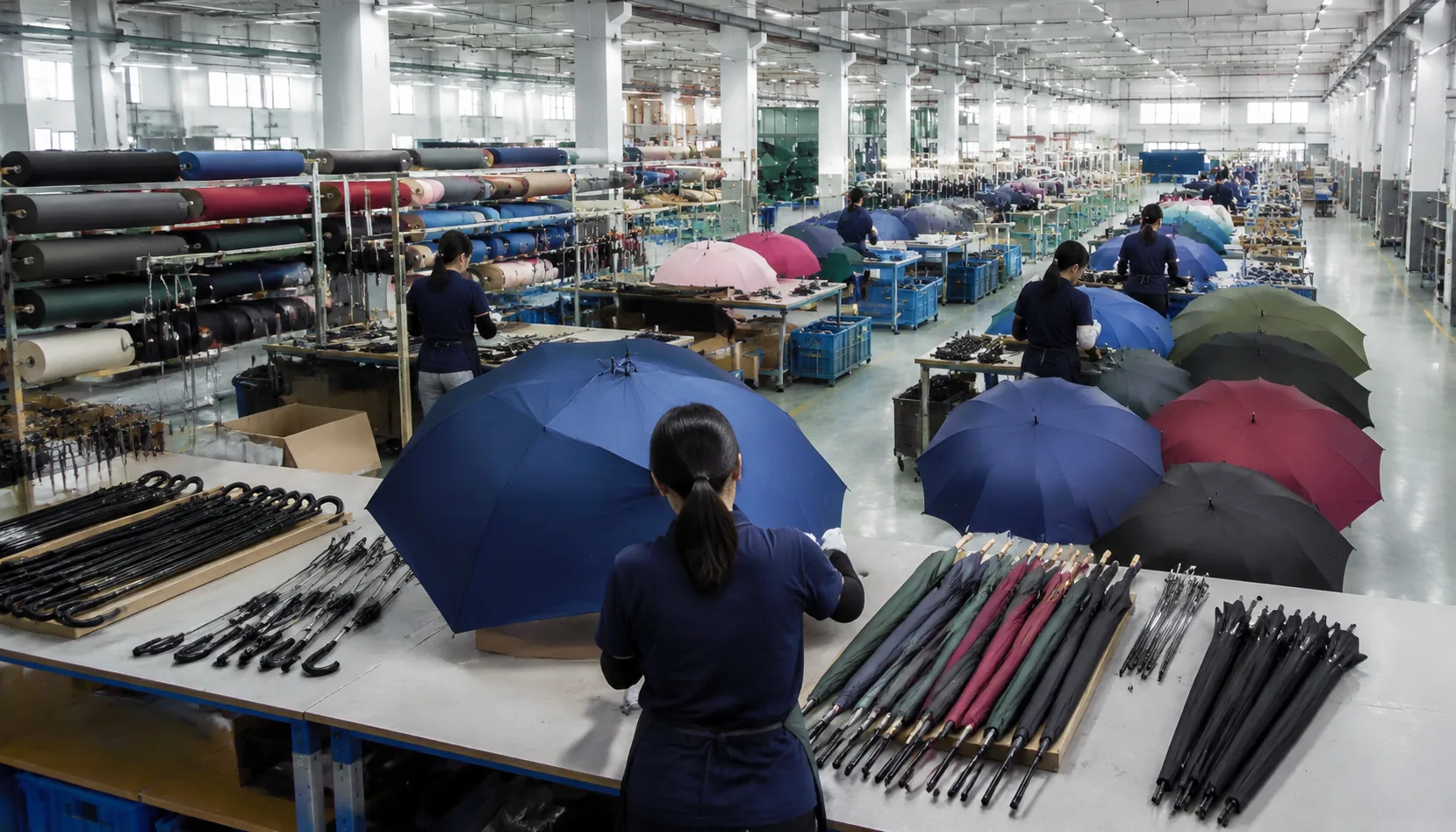
Umbrella Factory Line Setup for Mixed-SKU OEM Orders
See how factories plan mixed-SKU umbrella lines, balance frame assembly, canopy sewing, printing, QC, and packing to red...
Read More »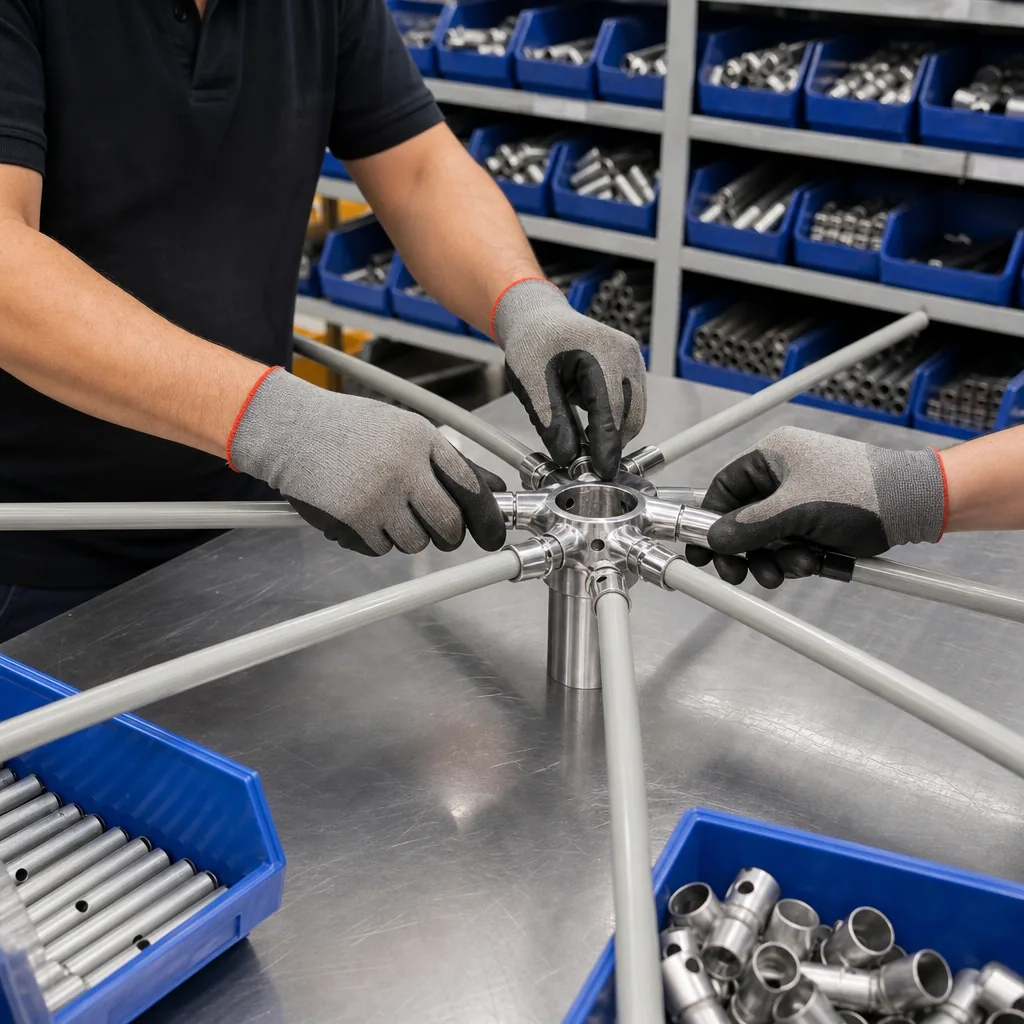
Umbrella Final Assembly Line Setup for Bulk OEM Production
Plan final assembly flow for bulk OEM umbrellas with balanced stations, inline QC, carton checks, and realistic lead tim...
Read More »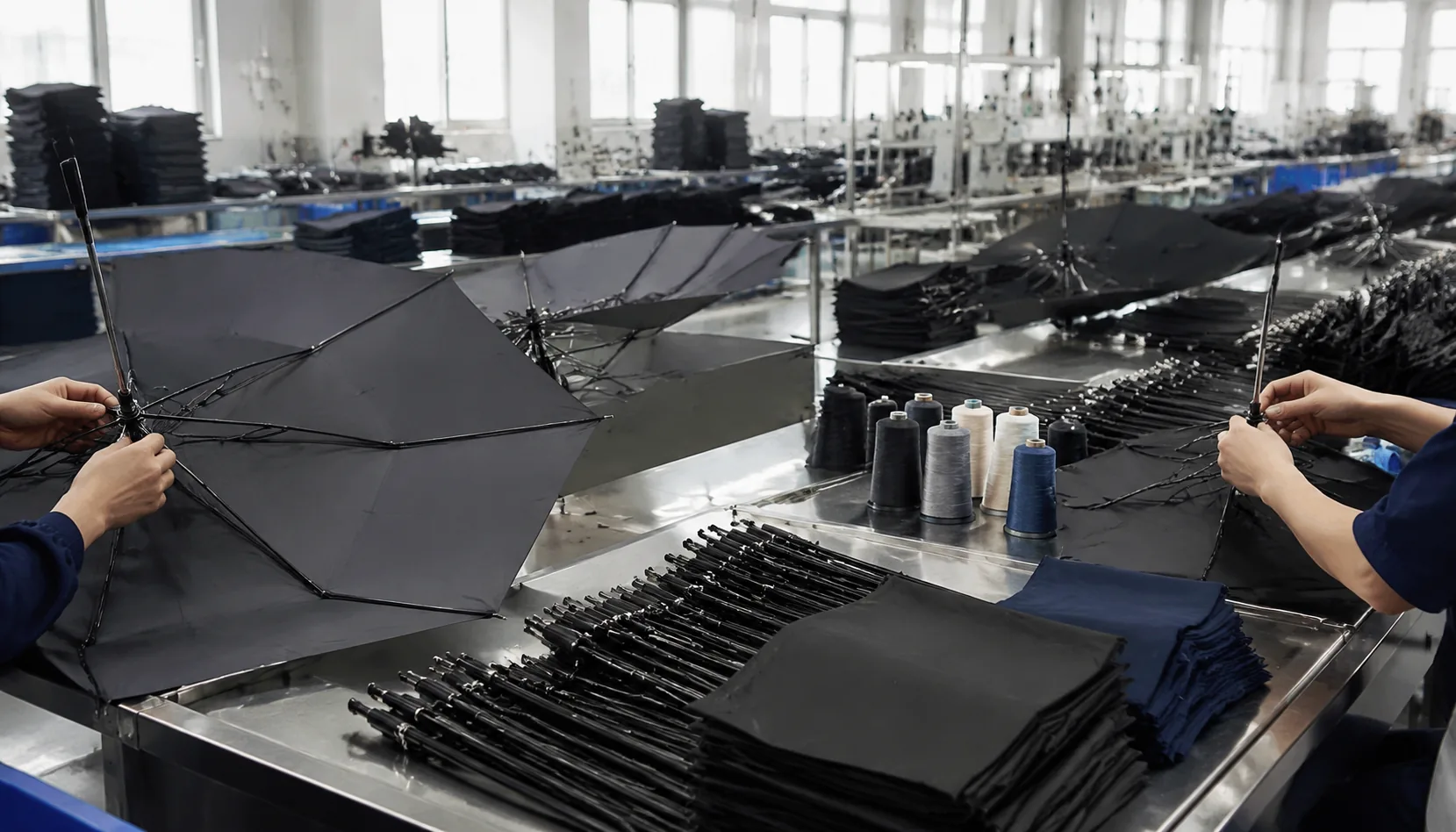
Umbrella Assembly Line Balancing for OEM Production
Plan umbrella assembly stations, labor allocation, and QC gates to keep bulk OEM orders on schedule without sacrificing ...
Read More »