Mixed-SKU Umbrella Orders: MOQ, Cartons, and Delivery
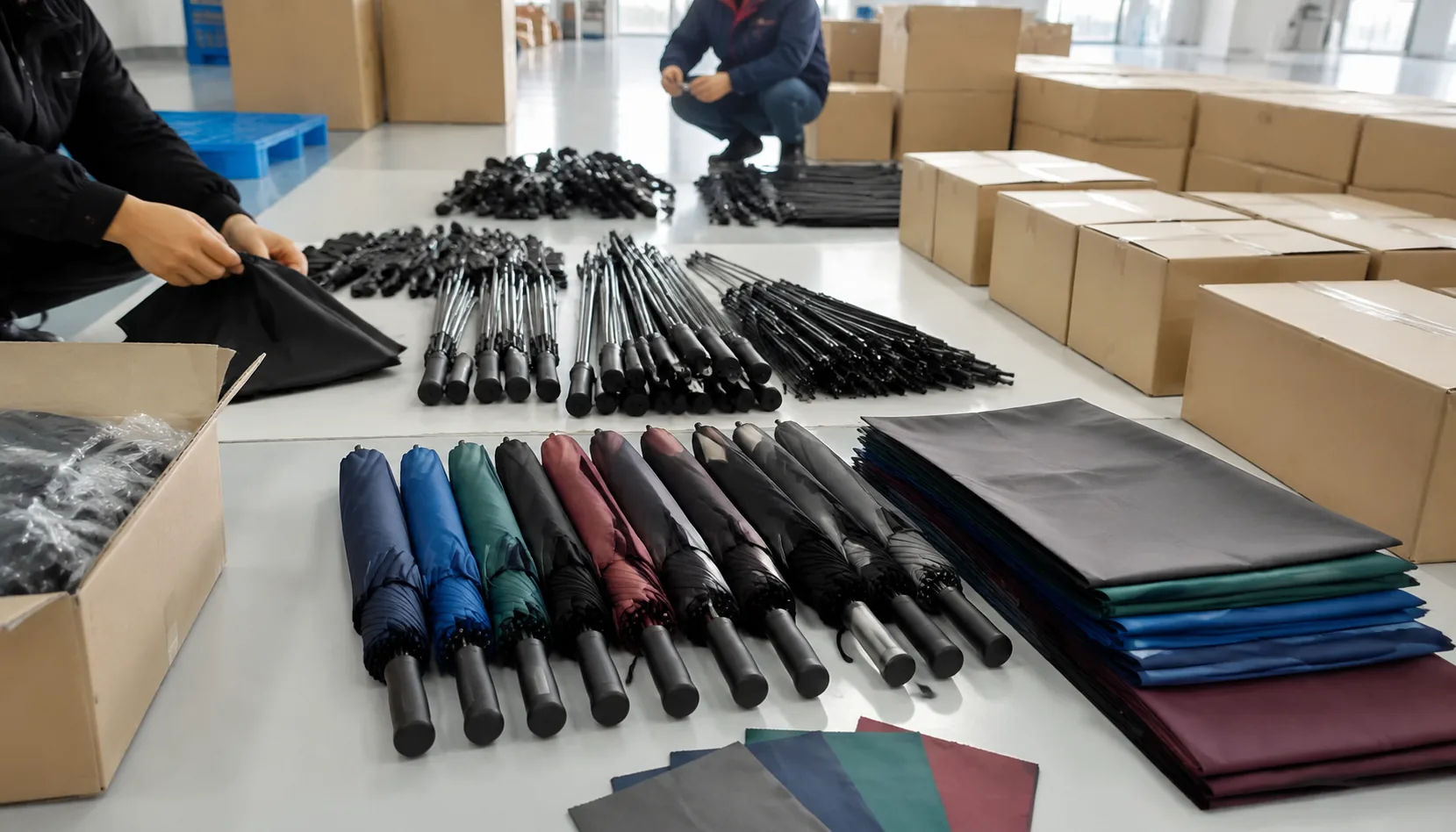
For buyers, mixed SKU umbrella orders look simple on a spreadsheet but get complicated once colors, canopy sizes, ribs, handles, and carton marks hit the production line. In our Songxia factory, the real cost control comes from grouping materials early, locking carton logic before packing, and planning inspections around finished lots rather than wishful ETDs. If those details are missed, MOQ savings can disappear into repacking, delays, and messy delivery terms.
Why Mixed-SKU Orders Get Complicated Fast
Mixed SKU umbrella orders get messy because the factory does not build by spreadsheet line item; it builds by material, tooling, process route, and packing instruction. A 23" auto-open umbrella in navy 190T pongee with a black EVA handle is one workflow, while the same canopy color on a manual-open steel frame with a wood-look plastic crook handle is another. Add assorted color umbrellas across red, royal blue, white, and black, and the cutting room must separate fabric rolls, dye-lot shade bands, panel bundles, and sewing tickets before one rib is assembled. If the order mixes 8K steel ribs, 10K fiberglass ribs, and double-canopy vented windproof frames, the frame shop also has separate jigs, runner checks, spring tension tests, and finished-length inspections. That is why umbrella MOQ planning should start from shared components, not from the buyer’s ideal assortment ratio.
Packaging changes create another layer of production lots. A retail sleeve with barcode, a polybag with suffocation warning, a printed fabric pouch, and a kraft gift box all move through different packing stations and QC checkpoints. If one SKU needs UPF 50+ hangtags, another needs Teflon-coated canopy stickers, and a third needs an event label stitched into the seam, the line leader cannot simply keep umbrellas flowing in one batch. Carton marks are just as important: distributor PO number, color code, size, destination, and inner-pack count must match the packing list exactly, especially for FBA, club retail, or DDP umbrella shipping where relabeling after customs clearance is expensive. Our standard practice at ZheBrella is to lock carton mark templates before mass packing, because one wrong destination code can turn a clean FOB shipment into a warehouse sorting problem.
The fastest way to lose control is letting one umbrella program become twelve small production lots without noticing. For example, a 5,000-piece order split across five canopy colors, two handle styles, two mechanisms, and two carton configurations is not one 5,000-piece run in factory terms; it may behave like 20 mini-runs, each with its own material issue, first-piece approval, in-line inspection, and final AQL 2.5 sampling exposure. Small lots increase changeover time, raise the risk of shade mixing, and make shortages harder to solve because leftover 210T pongee in black does not help a shortage in white POE panels. Good umbrella carton planning reduces this risk by standardizing frame type, handle, sleeve, master carton quantity, and carton mark logic before deposit. Buyers can still get mixed SKU umbrella orders, but the smart version limits variation where customers cannot see it and reserves customization for color, logo, and retail presentation.
MOQ Rules by Frame, Fabric, and Color
MOQ should be calculated from the component that forces the factory to stop and change settings, not from the finished umbrella name on your PO. For mixed SKU umbrella orders, the easiest way to keep MOQ reasonable is to share the same frame: one 23" auto-open straight umbrella with the same shaft, runner, tips, handle, and 8K fiberglass ribs can usually support several canopy colors or logo versions inside one production run. Once you move from 8K to 16K, or from steel ribs to fiberglass ribs, you are no longer just changing appearance; you are changing rib assembly, frame inventory, and QC points. In our standard umbrella MOQ planning, a shared stock frame may start around 500–1,000 pcs per order, while a new custom frame color, special handle mold, or nonstandard 16K construction can push practical MOQ to 1,500–3,000 pcs because plating, injection, and frame assembly all need stable batch quantities.
Fabric color is where many buyers underestimate MOQ. Stock 190T pongee colors are flexible because mills and umbrella factories keep black, navy, red, royal blue, white, and a few seasonal colors moving every week. Custom-dyed pongee is different: the dye lot often needs 600–1,200 meters per color, depending on width and coating, which can translate into roughly 700–1,500 umbrellas before cutting waste. 210T pongee feels denser and prints cleaner than 190T, but it also costs more and may have fewer ready colors in inventory. If a buyer wants assorted color umbrellas, I usually advise using one fabric specification, one coating standard such as water-repellent Teflon or UPF 50+, and stock color cards wherever possible. Mixing 190T and 210T in the same order may look harmless on a spreadsheet, but on the cutting table it creates separate fabric inspection, spreading, shrinkage control, and carton labeling work.
Printed panels create another MOQ layer because screens, heat-transfer films, or sublimation paper are prepared by artwork and panel position. A one-panel logo on the same 8-panel canopy is much easier to combine than six different all-over prints across different colors. For mixed SKU umbrella orders, buyers can reduce MOQ by keeping panel layout common: same 23" 8K frame, same 190T pongee, same handle, same carton size, then vary only canopy color and logo file. That also improves umbrella carton planning because each SKU can share the same master carton, usually 24 or 36 pcs per carton depending on folded length, handle shape, and gross weight. When the carton cube stays consistent, FOB loading and DDP umbrella shipping estimates are more reliable, especially for Amazon FBA or event deliveries where carton marks, barcode labels, and SKU separation matter as much as the umbrella itself. The rule is simple: customize what the customer sees, standardize what the factory must build.
Carton Planning for Assorted Colors and Destinations
Carton structure decides whether mixed SKU umbrella orders move cleanly through inspection, warehouse receiving, and final delivery. For a standard 23" auto-open straight umbrella, we usually pack 12 pieces per inner carton and 48 pieces per master carton; compact 21" folding umbrellas often run 12 or 24 pieces per inner carton and 60 to 120 pieces per master, depending on handle thickness and sleeve type. I do not like master cartons above 18 to 22 kg gross weight because they get crushed in LCL handling and create complaints at Amazon, retail DCs, or hotel project sites. For long golf umbrellas, 27" and 30" sizes may need 24 pieces per master carton, with reinforced 5-ply corrugated board and edge protection if the shaft tips are close to the carton wall. Umbrella carton planning should be fixed before mass packing, not after production, because color ratio, POE/PVC sleeve thickness, and gift-box requests can change CBM by 10% to 25%.
Assorted color umbrellas can be packed two ways, and buyers should choose based on how the goods will be received. If the distributor wants easy stock control, we separate master cartons by color: for example, black 190T pongee in cartons 1–20, navy in cartons 21–35, and red in cartons 36–45, each with SKU label, color name, PO number, quantity, gross/net weight, carton size, and scannable barcode sticker on two sides. If the customer needs store-ready assortments, we pre-mix the inner cartons, such as 4 black, 4 navy, 2 red, and 2 white per 12-piece inner carton, then repeat that assortment across every master carton. This reduces repacking labor at destination but requires tighter line control; one wrong color inserted at sewing or final packing can create a full carton discrepancy during AQL 2.5 inspection.
For multiple destinations, carton marks must follow the shipping plan, not just the production order. A common DDP umbrella shipping mistake is mixing cartons for California, Texas, and New Jersey in one pallet stack without destination labels; the forwarder then has to open, sort, and relabel, which adds cost and delays. Our standard practice at ZheBrella is to build the packing list by destination, SKU, color, and carton number before cartons are sealed, then match pallet labels to the final delivery address or FBA shipment ID. Pallet height is normally kept around 1.6 to 1.8 m, with stretch film, corner boards, and no overhang; for export, we also check whether the buyer needs fumigation-free plywood pallets or loose cartons to save CBM. Good umbrella MOQ planning connects directly to this: a 300-piece color split may look fine on paper, but if it leaves half-empty master cartons across four destinations, freight cost per unit rises quickly.
Inspection Strategy for Multiple SKUs
AQL 2.5 only works for mixed SKU umbrella orders if the sampling plan is split by major SKU, not averaged across the full PO. If a 10,000-piece order contains 4,000 black 23" auto-open umbrellas, 3,000 navy 21" manual umbrellas, and 3,000 assorted color umbrellas, I do not accept one combined sample pulled from the easiest cartons. Each major construction, size, print method, and color group needs its own pull because defects cluster by setup: one heat-transfer logo jig can be 8 mm off-center on only the red canopy, or one rib assembly line can install steel ribs where the approved sample specified fiberglass. For umbrella MOQ planning, this is where small split SKUs create real risk; a 300-piece color may not justify a full inspection lot statistically, but it still needs targeted verification against the approved pre-production sample.
The inspection checklist should be physical and SKU-specific. Canopy color is checked against the confirmed Pantone or fabric swatch under consistent light, especially for 190T/210T pongee where navy, royal blue, and black can look similar in a warehouse. Logo placement should be measured from panel seam and bottom edge, not judged by eye; screen print, heat transfer, and sublimation all shift differently after curing or pressing. Auto-open and auto-open-close mechanisms need repeated function testing, including button response, runner lock, shaft wobble, and closing force. Rib material must match the spec sheet: fiberglass ribs flex and recover, while steel ribs bend and retain deformation. On 8K and 10K frames, we also check rib count, tip stitching, ferrule alignment, and whether the sleeve matches the umbrella color, logo, barcode, and SKU label.
Carton inspection is where many mixed SKU umbrella orders fail before the product itself fails. Umbrella carton planning should require carton marks that separate SKU, color, size, PO number, quantity, gross weight, net weight, and destination code; otherwise the forwarder or Amazon/retail DC receives a puzzle instead of shipment-ready goods. We open cartons from different pallet positions, not just the top layer, and confirm inner polybags, sleeves, hangtags, master carton quantity, and assortment ratio. For DDP umbrella shipping, wrong carton marks can create customs questions, warehouse relabeling fees, or split-delivery mistakes even when the umbrellas are acceptable. Our standard practice at ZheBrella is to photograph representative defects and carton labels by SKU, then classify critical, major, and minor issues under AQL 2.5 so the buyer can decide rework, sorting, or release with evidence.
FOB, DDP, and Lead-Time Impacts
FOB consolidation is usually the cleaner choice when a distributor already has a China forwarder or is combining umbrellas with other promotional products from Ningbo, Shanghai, or Yiwu. For mixed SKU umbrella orders, we normally pack each SKU in its own inner carton or clearly separated master carton: for example, 23" auto-open 190T pongee in assorted color umbrellas, 30" golf umbrellas with fiberglass ribs, and compact 21" auto-open-close models should not be randomly blended unless the buyer accepts slower receiving at destination. FOB Ningbo or Shanghai lets the buyer control sailing schedule, insurance, and container utilization, but it also means the purchase order must lock carton dimensions early. Umbrella carton planning is not cosmetic; a 23" straight umbrella may pack 36 pcs/carton, while a 30" golf umbrella often packs 24 pcs/carton, changing CBM, pallet count, and LCL cost quickly.
DDP umbrella shipping is better for retail programs, event deadlines, and distributors without import staff, because the factory or trading partner manages export declaration, ocean or air freight, customs clearance, duty, and final truck delivery. The tradeoff is less flexibility after production starts: carton marks, HS code classification, product description, and consignee details must be correct before booking. For the U.S. and EU, I usually add 7–12 days as a customs and delivery buffer for ocean DDP, more during pre-holiday congestion or if the shipment includes many SKU lines with different umbrella sizes, coatings, or packaging. Air DDP can save time for a launch, but dimensional weight hurts umbrellas because cartons are long and light. A 27" double-canopy windproof umbrella with EVA handle can cost more by volume than by actual kilograms, so splitting urgent samples from bulk goods is often smarter.
Lead time must be built backward from the delivery date, not guessed from production days alone. Umbrella MOQ planning for mixed SKU umbrella orders should allow 3–7 days for fabric and frame purchasing, especially if the order combines 190T pongee, POE clear canopies, UPF 50+ coating, or custom PMS handles. Pre-production samples normally take 5–10 days after artwork confirmation, and buyers should reserve 2–4 days for approval instead of answering overnight under pressure. Bulk production for common 8K or 10K steel/fiberglass frames is often 20–35 days after deposit and sample approval; 16K windproof frames, Teflon coating, or sublimation panels can push longer. Our standard practice at ZheBrella is to schedule AQL 2.5 inspection after final packing, then release FOB goods in 2–3 days or DDP goods after booking confirmation and export paperwork are complete.
Frequently Asked Questions
Can different umbrella models share one MOQ?
Usually only when they share the same frame, fabric, handle, and packaging structure. A 3-fold auto-open umbrella and a 27 inch golf umbrella normally require separate MOQ calculations.
What is the safest way to pack mixed-color umbrella orders?
For retail allocation, store-ready assorted inner cartons reduce warehouse handling. For wholesale distributors, color-separated cartons with clear SKU labels often make inventory control and reorders easier.
Can different umbrella colors count toward one MOQ?
Usually yes if the fabric, frame, handle, and logo process stay the same. A practical factory split is often 300-500 pieces per color within a total MOQ of 1,000-3,000 pieces, depending on material availability.
How should mixed-SKU umbrellas be packed for carton control?
Keep one SKU per inner pack or clearly separate colors with carton marks, barcode labels, and a packing list by color and size. For easier inspection and warehouse receiving, avoid mixing more than 2-3 SKUs in the same master carton unless the shipment is a retail display assortment.
Does DDP shipping work for assorted umbrella orders?
Yes, but the factory or forwarder needs final carton count, gross weight, destination address, and customs product details before quoting. DDP rates may change if mixed SKUs create extra cartons or oversized packaging, so confirm carton dimensions before mass production.
Looking to Launch Your Custom Umbrella Line?
ZheBrella is a Zhejiang-based OEM/ODM umbrella manufacturer with 17 years of export experience. Free design, low MOQ from 100 pieces, windproof construction, full-color print.
Get Free Quote Now »People Also Search For
Related Articles
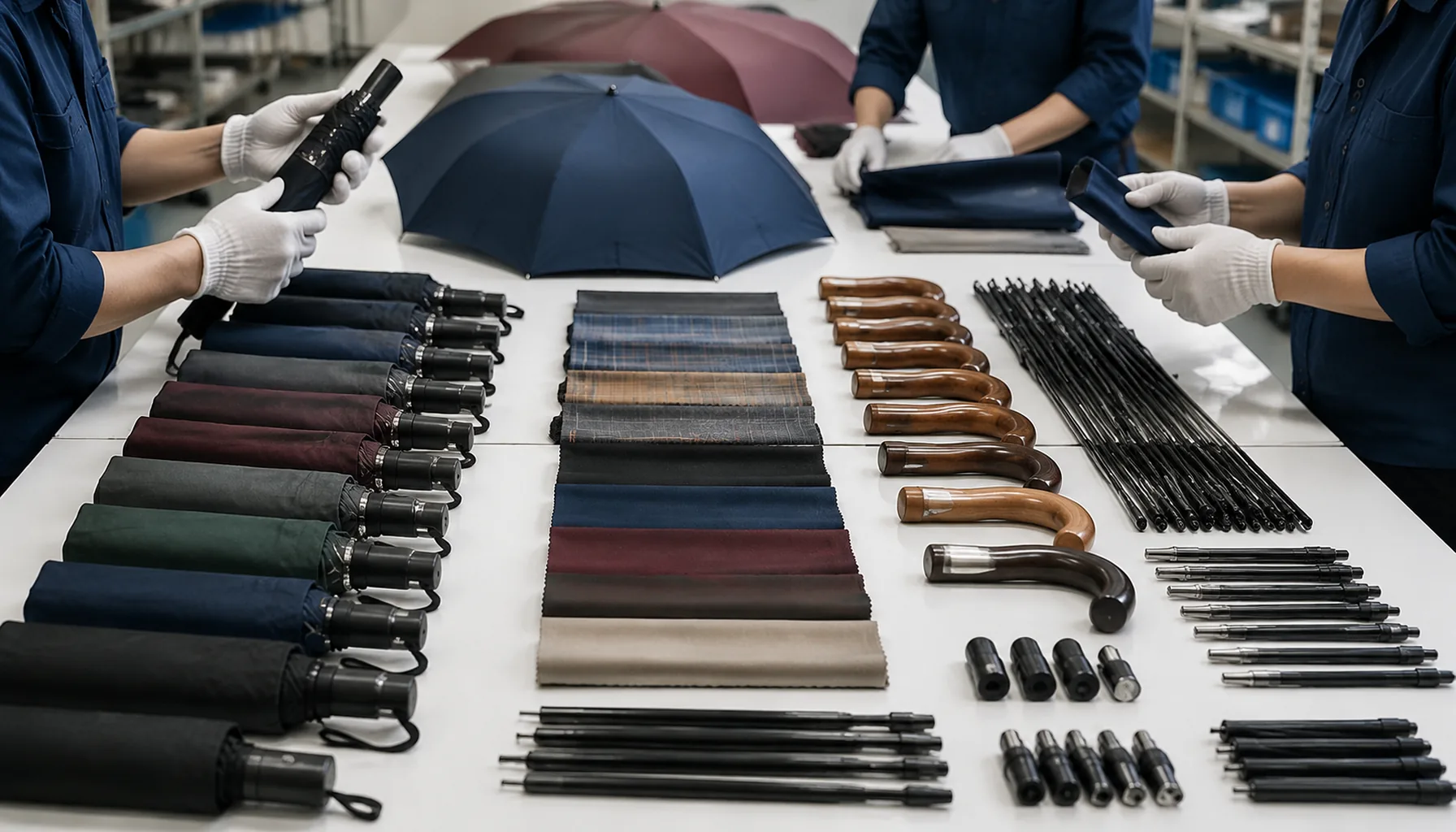
Mixed-SKU Umbrella Orders: Controlling MOQ and QC Risk
Learn how to combine umbrella models, colors, and logos in one factory order while keeping MOQ, lead time, carton labels...
Read More »
Umbrella Carton Packing Specs to Lower Landed Cost
Plan umbrella carton size, unit packing, pallet loads, and FOB/DDP choices to cut freight waste, damage risk, and surpri...
Read More »Umbrella Carton Packing: CBM, Pallets, and Load Planning
Reduce landed cost surprises with carton specs, CBM math, pallet choices, loading plans, and QC checks for FOB or DDP bu...
Read More »