Mixed-SKU Umbrella Orders: Controlling MOQ and QC Risk
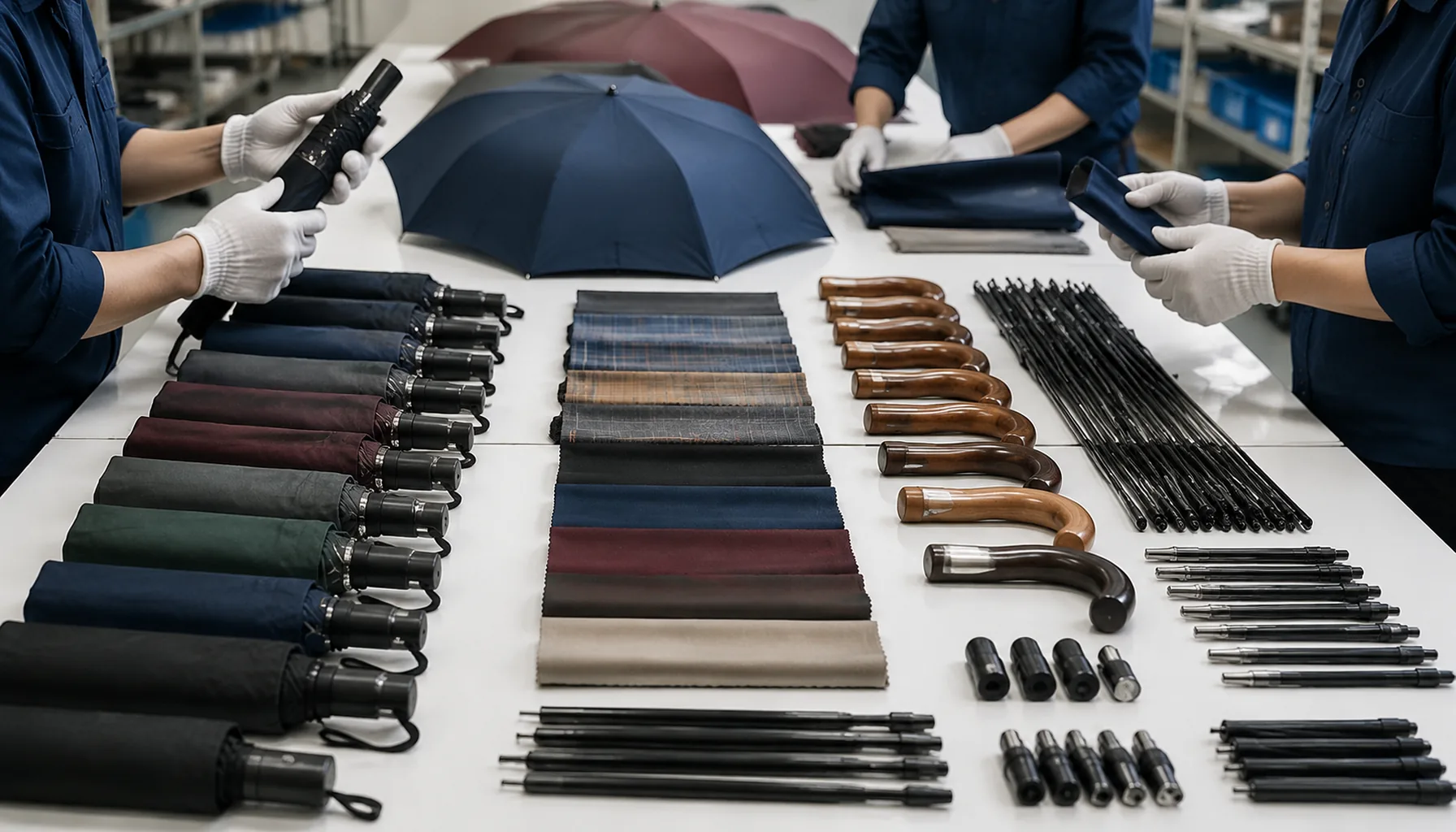
Combining models, colors, and logo versions in one PO looks efficient until the line has to sort ribs, fabrics, print films, hangtags, and carton marks without mixing anything. On our Songxia factory floor, mixed SKU umbrella orders only stay under control when MOQ is planned by shared components, QC checkpoints are tied to each variant, and packing labels are locked before production starts.
Separate What Can and Cannot Be Combined
The first rule in mixed SKU umbrella orders is to separate logistics consolidation from production consolidation. A factory can often combine final inspection, export cartons, customs documents, and one FOB Ningbo or Shanghai shipment across 3-fold, straight, golf, and reverse umbrellas. That does not mean the same MOQ applies across all models. A 21" 3-fold auto-open-close umbrella uses different runners, springs, shaft sections, and rib tooling than a 23" straight umbrella or a 30" golf umbrella with 8K fiberglass ribs. Even if all are black 190T pongee, the frame workshops schedule them as separate production lots. For umbrella MOQ planning, I usually treat each frame platform as its own MOQ bucket: 3-fold compact, stick umbrella, golf umbrella, and reverse umbrella. You can consolidate the container and the AQL 2.5 inspection booking, but you cannot pretend four different frame systems are one continuous assembly run.
Fabric and color are the second hard divider. If a buyer orders 500 navy 3-fold umbrellas, 500 red straight umbrellas, and 500 white golf umbrellas, those are three fabric lots even when all use 210T pongee with Teflon coating. Dye-lot control matters because shade variation becomes obvious when retail cartons sit side by side. POE, PVC, and EVA clear canopies also cannot be merged with pongee cutting because cutting tables, sewing tension, and storage handling are different. Reverse umbrellas are even more sensitive because the double-layer canopy requires matched inner and outer panels, usually with more waste during cutting. In multi model umbrella sourcing, shared fabric only helps if the material, coating, width, color, and panel shape are compatible. A black 190T pongee order across 23" straight and 27" golf umbrellas may reduce fabric purchasing risk, but panel dimensions still create separate cutting markers and separate sewing QC checkpoints.
Printing and packaging are where small mixed orders usually get expensive. Screen printing has setup cost per logo color and per panel position; heat-transfer and sublimation have different films, temperatures, and rejection risks. A 3-fold umbrella with a one-color logo on one panel, a straight umbrella with full-panel sublimation, and a golf umbrella with two opposite-panel prints are three print setups, not one. Packaging also splits MOQ: EVA pouch, fabric sleeve, color box, hangtag, barcode label, and retail master carton all create separate purchasing and packing instructions. At ZheBrella, our standard practice is to build a matrix showing which items can share inspection, export paperwork, cartons, fabric, printing screens, and accessories before confirming MOQ. Good umbrella production QC depends on this separation. Umbrella factory consolidation should reduce freight and management cost, not hide incompatible production lots until defects appear at final inspection.
Use Shared Components to Reduce MOQ Pressure
The fastest way to make mixed SKU umbrella orders workable is to design the range around shared parts before arguing about price. If three models use the same 190T pongee stock colors, the same black EVA or straight plastic handle, the same 8K fiberglass rib set, and an existing 23 inch auto-open frame, the factory is not resetting every station for every SKU. Cutting can group navy, black, red, and white panels by fabric roll; rib assembly can pull from one bin; sewing lines can keep the same seam allowance and cap size. That is real umbrella MOQ planning, not spreadsheet optimism. In our factory, a buyer asking for 500 pieces each across four related models is much safer than 2,000 pieces split across four unrelated constructions, because component inventory, tooling, and inspection points stay under control.
Custom parts are where MOQ pressure comes back hard. A new handle mold may need 3,000 to 5,000 handles before the injection supplier takes it seriously, and a special sleeve with a zipper, piping, or woven label can carry its own fabric and sewing minimum. Moving from an 8K fiberglass frame to a 16K frame is not just “more ribs”; it changes runner parts, rib tips, notches, spring force, closing feel, and carton cube. Special UPF 50+ coatings, Teflon water-repellent treatment, reflective printing, or POE/PVC/EVA clear canopies also need separate material purchasing and sometimes separate cutting tables. For multi model umbrella sourcing, I push buyers to customize visible areas first: canopy print, logo patch, hangtag, belly band, and carton mark. Those changes create brand difference without forcing every SKU into a separate production lane.
Shared components also make umbrella production QC more predictable. If all SKUs use the same auto-open shaft and runner, inspectors can test opening speed, lock engagement, tip alignment, and closing force against one standard instead of writing a fresh checklist for each model. AQL 2.5 final inspection still samples by SKU, but defect patterns are easier to trace when the failure point is common. For mixed SKU umbrella orders, I like one pre-production sample set, one approved color card for pongee lots, and one wind test target, such as 50+ mph for a double-canopy vented model or basic inversion recovery for a standard 8K umbrella. This is where umbrella factory consolidation helps: fewer subcontracted parts, fewer shade differences, and fewer excuses when a 21 inch folding umbrella and a 27 inch golf umbrella must ship together under the same FOB or DDP deadline.
Build a Clear SKU Matrix for the Factory
A SKU matrix is the control document for mixed SKU umbrella orders, not a clerical spreadsheet filled in after sampling. For every line item, I want to see model number, canopy size, rib count, rib material, fabric, Pantone color, logo method, packaging, carton mark, and destination port or warehouse. A 21" compact auto-open-close with 8K fiberglass ribs and 190T pongee should never sit on the same vague line as a 30" golf umbrella with a 16K fiberglass frame, double-canopy vent, and 210T pongee. If the buyer only writes “black umbrella with logo,” the factory has to guess, and guessing turns into wrong fabric booking, wrong cutting layers, and mixed cartons at final packing.
Lock the matrix before sampling, because version-control errors are one of the most common ways umbrella MOQ planning goes sideways. If Pantone 186C changes to 200C after the first strike-off, or screen print changes to heat transfer after panels are cut, the factory may need to restart fabric purchasing or remake canopies. In multi model umbrella sourcing, I separate common components from SKU-specific parts: shared black EVA handles, same sleeve material, same master carton size, but different canopy diameters, logo positions, and carton marks. This lets procurement consolidate volume without pretending every model has the same MOQ risk.
For umbrella production QC, the same matrix should follow the order from sample room to cutting table, sewing line, assembly bench, and AQL 2.5 inspection. Our standard practice at ZheBrella is to print the approved matrix with sample photos and keep it beside the packing line, especially when one PO ships to several destinations under DDP or FOB terms. Carton marks must show SKU, quantity, destination, PO number, and any retailer code; otherwise a mixed order for Los Angeles, Hamburg, and Sydney can pass product inspection but fail logistics. Good umbrella factory consolidation depends less on negotiation and more on making every SKU unambiguous before bulk materials are released.
Plan Sampling and Production in Batches
Batch planning is where mixed SKU umbrella orders either become manageable or turn into a QC mess. I separate samples by model family first: compact 21" auto-open-close, 23" straight manual, 27" golf umbrella, 30" double-canopy vented, kids POE dome, and so on. Each family needs its own proto sample because frame balance, rib count, runner travel, handle fit, and canopy tension are different. A 190T pongee compact with 8K fiberglass ribs does not sew or close like a 210T pongee golf umbrella with 16K ribs. Proto samples normally take 7–10 days if we use existing frame tooling and stock fabric; custom molded handles, special PVC/POE/EVA panels, or new sublimation artwork can push that to 12–15 days. For umbrella MOQ planning, I advise buyers not to approve a mixed order from photos alone. Open-close action, rib recovery, print position, and packed length must be checked physically before bulk cutting starts.
Pre-production samples should be made after artwork, Pantone references, canopy material, coating, and packaging are locked. This is not the same as a proto. The PP sample must represent the actual bulk process: screen print versus heat transfer versus sublimation, Teflon or UV UPF 50+ coating, sleeve label, carton mark, hangtag, and barcode. For multi model umbrella sourcing, I group similar processes into production batches: all screen-printed 23" straight umbrellas together, all sublimated golf umbrellas together, all transparent POE dome umbrellas together. That reduces line changeovers and keeps inspectors focused on one defect profile at a time. Separate printing, sewing, and assembly lines are often required when SKUs differ by canopy fabric, rib structure, or mechanism. Bulk lead time for this kind of mixed production is usually 30–50 days after PP approval, not after deposit, because factory capacity only becomes real once every SKU is technically confirmed.
Golden samples are the control pieces that protect both buyer and factory during umbrella production QC. I keep one approved golden sample per model family at the sewing line and one at final inspection, with signed tags showing fabric spec, rib count, mechanism type, print method, and packing standard. During AQL 2.5 inspection, we compare bulk goods against that sample for canopy symmetry, stitch density, logo position tolerance, water repellency, open diameter, shaft straightness, and carton assortment. In mixed SKU umbrella orders, the biggest risk is not one bad umbrella; it is cross-contamination between SKUs, such as a 23" sleeve packed with a 21" compact or a fiberglass rib spec mixed with painted steel ribs. Umbrella factory consolidation helps because one production team can schedule staggered batches, hold shared materials under one warehouse system, and run consistent inline QC before FOB or DDP shipment.
Control QC and Shipping by SKU
The biggest QC mistake in mixed SKU umbrella orders is letting the inspection company pool everything into one comfortable pass report. I prefer AQL 2.5 for major defects, but the defect tally must be separated by SKU: 23" auto-open golf umbrella, 21" auto-open-close folding umbrella, 27" straight umbrella, POE dome umbrella, and so on. A broken runner on a steel 8K promotional umbrella should not be averaged away by clean cartons of fiberglass 10K windproof models. For umbrella production QC, each SKU needs its own sample pull, its own functional test record, and its own defect photos. We check frame opening force, rib alignment, tip stitching, canopy tension, print position, color shade, handle fit, and closure strap length by model. If one SKU fails while the rest pass, the buyer can hold only that lot instead of delaying the whole shipment.
Barcode and carton discipline matter as much as stitching quality when one PO contains several models. Every inner polybag, hangtag, master carton, and shipping mark should match the approved SKU code, color code, size, mechanism, and print version. I have seen good umbrellas become chargebacks because black 190T pongee auto-open units were packed under navy labels, or a 30" event umbrella was mixed with a 27" retail carton. For umbrella MOQ planning, carton segregation should be confirmed before final inspection: one SKU per master carton unless the packing instruction clearly requires assortments. Photo records should include open umbrella front and back, close-up logo, barcode scan screen, carton mark, carton count, and stacked pallet or loose-carton layout. Our standard practice at ZheBrella is to keep these photos tied to the production lot number, not only the purchase order number.
Shipping control starts before the container arrives, especially under FOB/DDP terms where wrong cube, mixed cartons, or missing labels create expensive corrections. For multi model umbrella sourcing, build the loading plan by SKU, carton dimensions, gross weight, and delivery priority; do not let the warehouse load only by whatever is closest to the door. High-volume SKUs should be blocked together, fragile POE/PVC/EVA dome umbrellas should not be crushed under heavy 16K golf umbrellas, and retail cartons need clean faces for destination scanning. Before container loading, require dated photos of segregated carton rows, container number, seal number, partial loading layers, and final closed-door seal. This is where umbrella factory consolidation helps: one factory or one export coordinator can reconcile packing lists, HS codes, DDP documents, and carton counts before the truck leaves Shangyu, instead of discovering SKU variance at the overseas warehouse.
Frequently Asked Questions
Can one purchase order include compact, golf, and straight umbrellas?
Yes, one PO can include multiple umbrella types if the factory can produce or coordinate all models. Each model may still carry its own MOQ, sample approval, carton label, and inspection checklist.
How do mixed-SKU orders affect DDP shipping costs?
DDP costs depend on carton volume, weight, destination, duties, and delivery split. Mixed SKUs can reduce admin work, but bulky golf umbrellas may dominate freight cost even if compact umbrellas make up most of the unit count.
Can different umbrella models share one MOQ in a factory order?
Usually no. MOQ is often calculated by model, frame size, fabric color, and logo method because each combination requires separate material planning and production setup. However, a factory may consolidate purchasing and shipment if the models use the same fabric, handle, ribs, or carton specifications.
What QC risks increase when mixing many SKUs in one umbrella order?
The main risks are wrong logo placement, mixed colors, incorrect carton labels, missing accessories, and uneven workmanship across models. A buyer should require a SKU matrix, approved pre-production samples, and carton-level inspection using AQL before shipment.
How should carton labels be managed for mixed-SKU umbrella shipments?
Each carton should show model number, color, logo version, quantity, carton number, gross/net weight, and destination if the order ships to multiple warehouses. For mixed cartons, require a packing list by inner box or polybag count to avoid receiving disputes.
Looking to Launch Your Custom Umbrella Line?
ZheBrella is a Zhejiang-based OEM/ODM umbrella manufacturer with 17 years of export experience. Free design, low MOQ from 100 pieces, windproof construction, full-color print.
Get Free Quote Now »People Also Search For
Related Articles
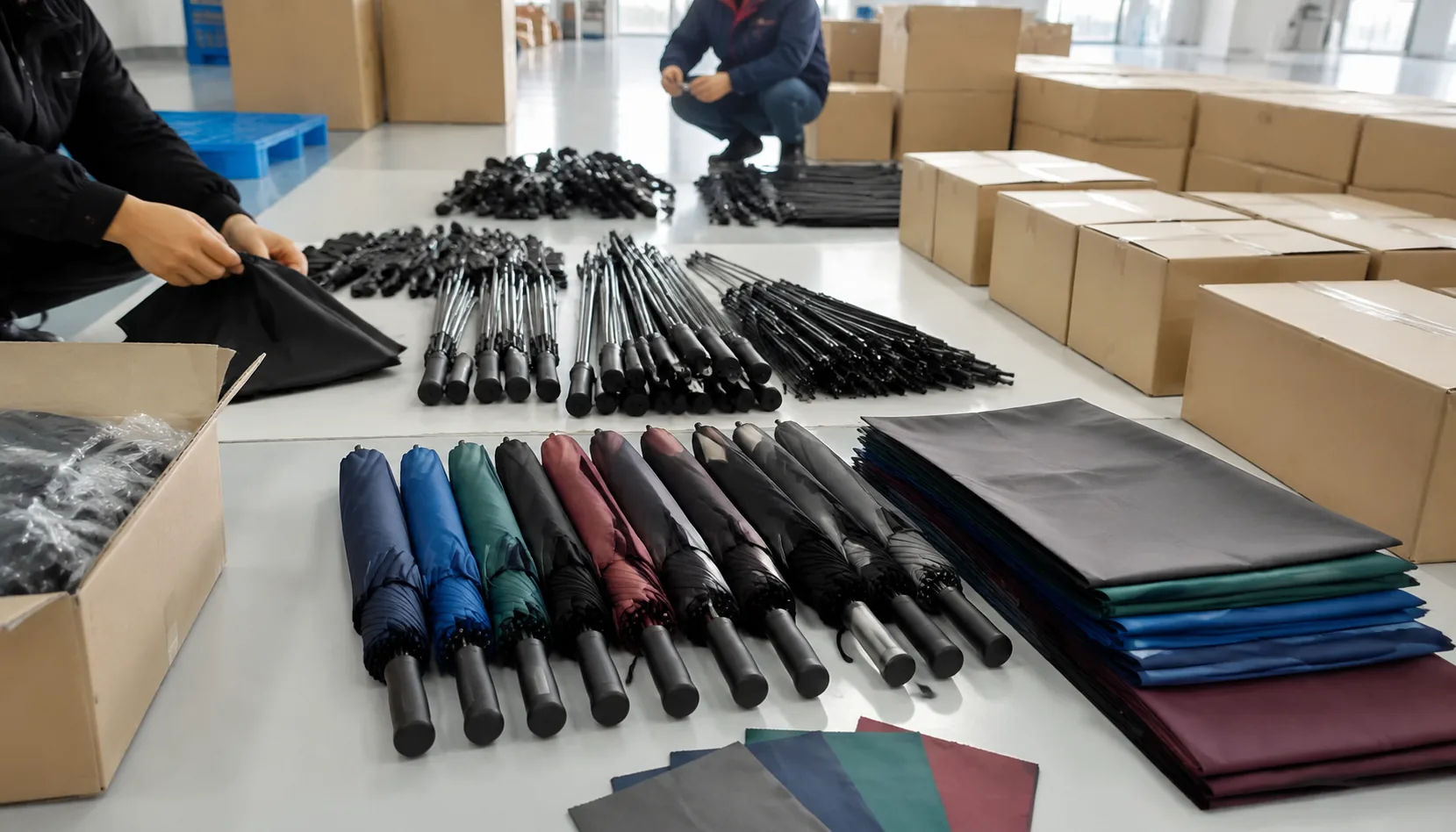
Mixed-SKU Umbrella Orders: MOQ, Cartons, and Delivery
Learn how to plan mixed-SKU umbrella orders across colors, sizes, frames, cartons, inspections, and FOB or DDP delivery ...
Read More »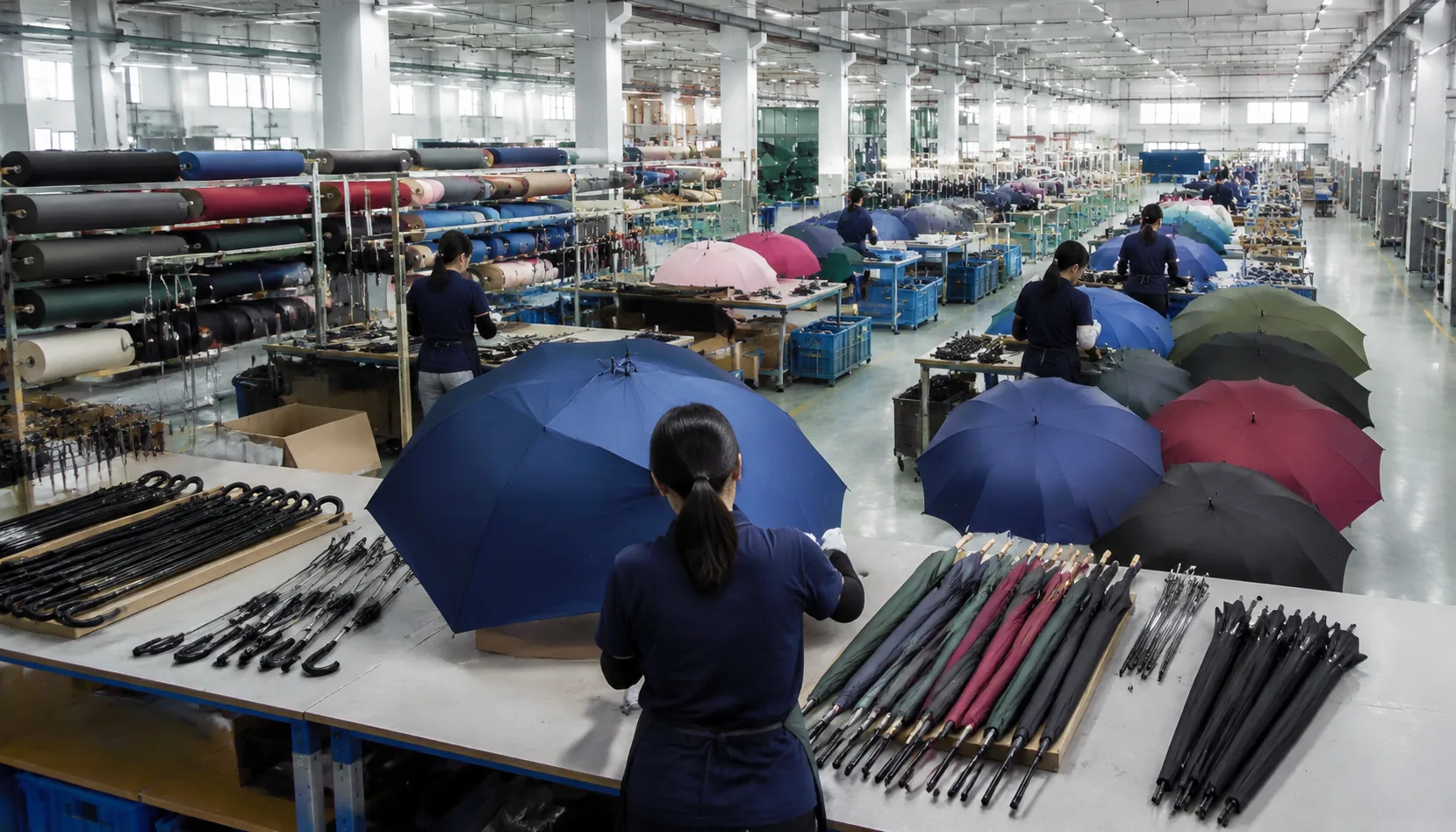
Umbrella Factory Line Setup for Mixed-SKU OEM Orders
See how factories plan mixed-SKU umbrella lines, balance frame assembly, canopy sewing, printing, QC, and packing to red...
Read More »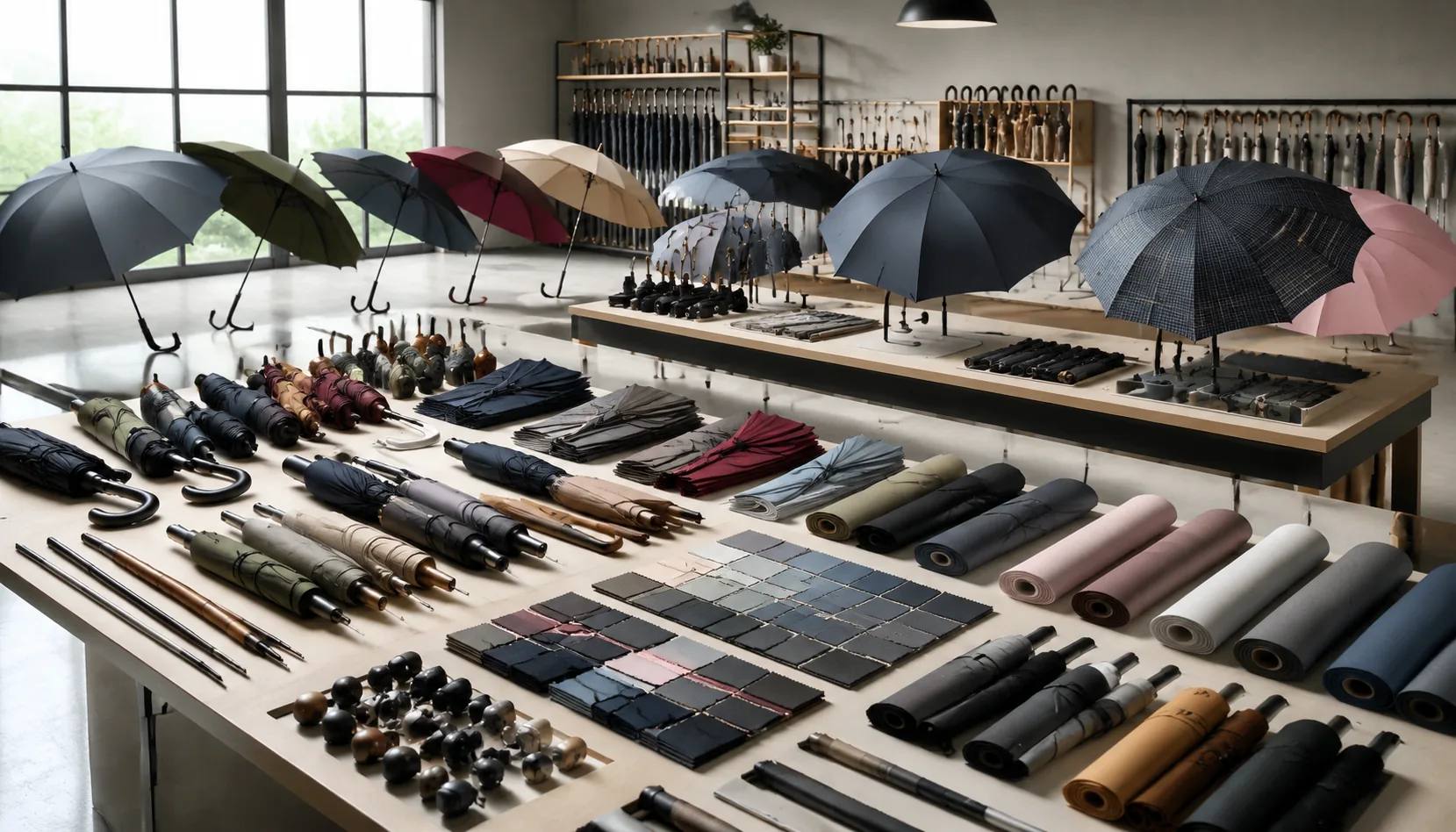
Private Label Umbrella Assortment Planning for Retail Buyers
Build a balanced private label umbrella range with clear SKUs, fabric specs, MOQ planning, AQL targets, and retail-ready...
Read More »