Umbrella Factory Line Setup for Mixed-SKU OEM Orders
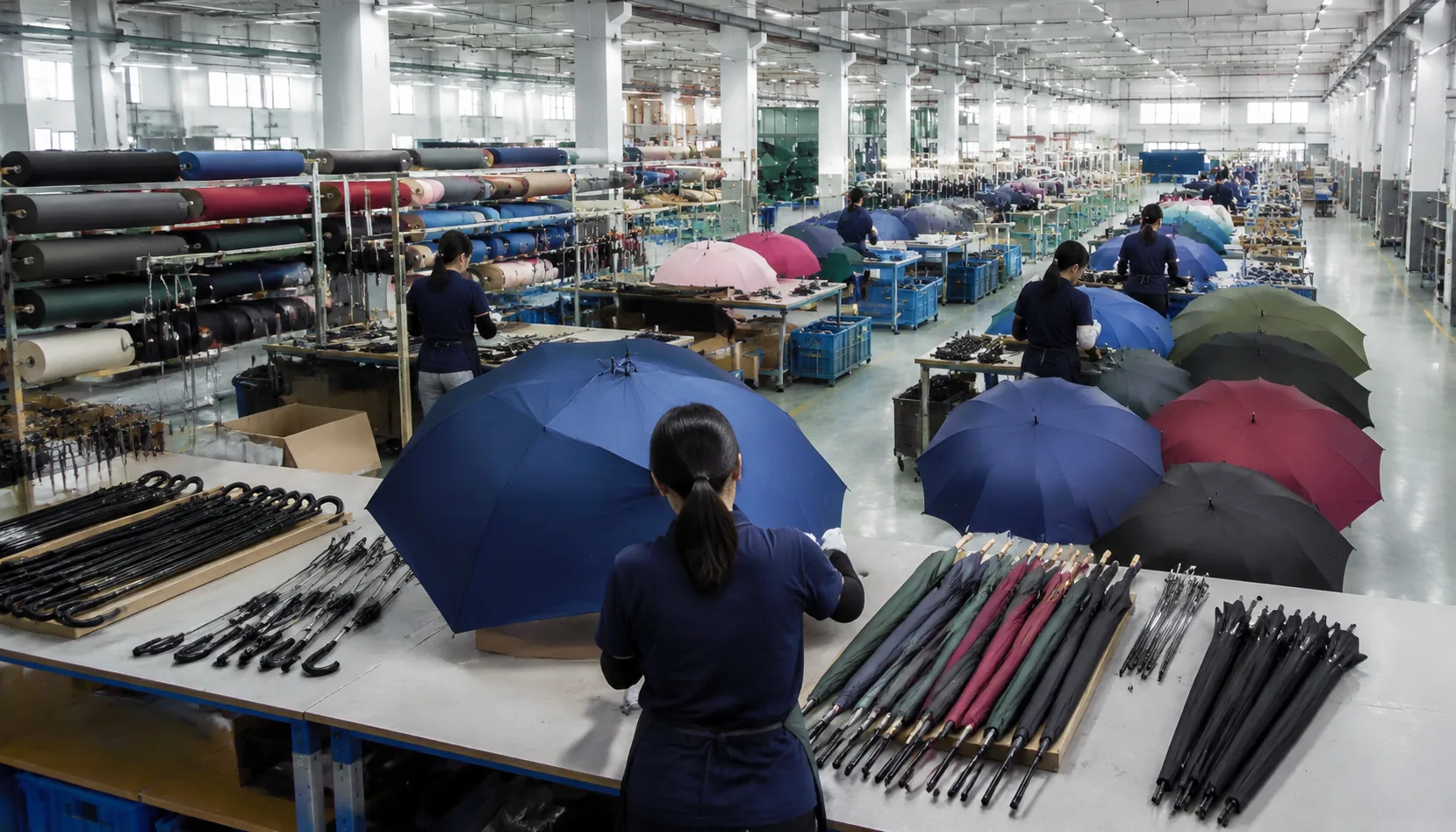
Mixed-SKU umbrella orders look simple on a purchase order, but on the floor they can jam quickly when frame sizes, canopy fabrics, print methods, and packing requirements change every few hundred pieces. In our Songxia workshop, an OEM umbrella production line is set up around the slowest constraint first—often sewing, printing cure time, or final QC—then balanced backward so assembly tables do not flood packing or sit waiting for parts.
Mapping the Main Umbrella Production Stages
A workable OEM umbrella production line starts before any sewing machine runs: incoming fabric, ribs, shafts, handles, tips, runners, springs, and cartons have to be checked against the approved sample and BOM. For mixed SKU umbrella orders, we separate 190T/210T pongee, POE/PVC/EVA panels, and coated fabrics such as Teflon water-repellent or UPF 50+ by color, width, and shrinkage behavior, because one wrong roll can contaminate the whole cutting plan. Metal parts are checked for plating, straightness, and rust risk; fiberglass ribs are flex-tested so 8K, 10K, or 16K frames do not get mixed. Printing comes next: screen printing for solid logos, heat transfer for full-color marks, and sublimation when the artwork covers large canopy areas. Printing must finish and cure before cutting, otherwise panels shift in color or size and the sewing line loses rhythm.
After printed fabric is released, cutting and sewing define the real umbrella manufacturing workflow. Cutting tables are nested by panel shape and SKU, so a 21-inch compact auto-open-close order should not be mixed physically with 23-inch straight manual umbrellas or 27-inch golf umbrellas. Each canopy panel is bundled with a traveler card showing PO number, SKU, fabric lot, logo version, and quantity. Sewing covers panel joining, seam reinforcement, tie straps, labels, pockets, vent layers for double-canopy windproof models, and edge binding where required. In parallel, umbrella factory assembly prepares frames: steel ribs for lower-cost programs, fiberglass ribs for wind-rated models, aluminum shafts for lighter builds, and auto-open or auto-open-close mechanisms when specified. A delay in either sewing or frame preparation creates a mismatch, because finished canopies cannot be mounted until the correct rib count, shaft length, handle type, and runner system are available.
Canopy mounting is where bulk production planning either holds together or breaks down. Operators align the canopy top with the shaft, secure tips to rib ends, tack key points, fit caps or ferrules, and then check opening force, closing smoothness, rib symmetry, and logo position. Finishing includes loose-thread trimming, cleaning, hangtag application, polybagging, instruction inserts, barcode labels, and master carton packing by SKU ratio. Our standard practice at ZheBrella is inline inspection plus final AQL 2.5 checks for critical items such as failed open/close mechanisms, sharp rib ends, cracked handles, wrong artwork, and carton count errors. FOB schedules are hit when printing, coating, or frame subcontract parts slip by even two or three days, because vessel cutoff dates are fixed. DDP schedules are even less forgiving: upstream delays compress booking, customs documents, container loading, and last-mile delivery windows, especially before Canton Fair season or Q4 promotional deadlines.
Separating Standard, Auto-Open, and Windproof SKUs
Manual, auto-open, and double-canopy windproof umbrellas look similar on a buyer’s spec sheet, but they should not automatically share the same OEM umbrella production line. A basic 23" manual 8K steel-frame umbrella is mostly about repeatable rib riveting, runner travel, canopy positioning, and final tension. Operators can be trained quickly because there is no spring release timing to adjust. Auto-open and auto-open-close models add compression springs, button locks, safety notches, plastic sliders, and shaft alignment checks; if the spring preload is wrong by even a small margin, the umbrella either opens weakly or fires too aggressively and fails cycle testing. Mixing these with manual SKUs slows the line because every station needs different jigs, different defect criteria, and different handling habits. In umbrella bulk production planning, I usually separate manual steel-shaft items from spring-mechanism items unless the order quantity is very small and the delivery window is forgiving.
Windproof SKUs need another setup because fiberglass ribs and vented canopies change both assembly and sewing flow. A 10K or 16K fiberglass frame does not behave like an 8K steel rib frame; fiberglass bends back under load, so rib tips, stretchers, and joints need cleaner alignment or the canopy pulls unevenly after the first wind test. Double-canopy umbrellas also need a vent gap that stays open without exposing ugly stitching or causing water to blow through the wrong seam. On a 27" or 30" golf umbrella, the upper canopy, lower canopy, binding tape, and tie points must be matched carefully, especially when using 190T or 210T pongee with Teflon or UPF 50+ coating. If the same sewer jumps between single-canopy promotional umbrellas and vented windproof umbrellas all day, skipped stitches and crooked vent overlaps increase quickly.
Our standard practice at ZheBrella is to group mixed SKU umbrella orders by mechanism and frame behavior before assigning workers, not only by canopy color or logo method. A practical umbrella manufacturing workflow may run manual 21" and 23" SKUs on one line, auto-open straight umbrellas on a second line with spring-function inspection after handle fitting, and windproof double-canopy models on a smaller line with stronger sewing operators and a frame-tension checkpoint before packing. This keeps umbrella factory assembly predictable and protects AQL 2.5 inspection results because defects are caught at the right station instead of at final QC. For FOB orders with tight lead times, this separation often saves more days than it costs, even when it looks inefficient on paper. The exception is a low-MOQ trial order, where one flexible cell can handle several SKUs if changeover samples, approved pre-production units, and inline inspection sheets are locked before bulk starts.
Balancing Sewing, Frame, and Final Assembly Capacity
The first capacity mistake in mixed SKU umbrella orders is assuming frame assembly and sewing move at the same rhythm. They do not. In a real OEM umbrella production line, sewing panels usually sets the early bottleneck because every canopy needs accurate panel joining before the rest of the umbrella factory assembly can catch up. A 23" 8K straight umbrella with 190T pongee may run smoothly at 450–600 pieces per sewing line per day, but add contrast piping, double-canopy venting, or alternating logo panels and that output can drop 25–40%. Cutting can be fast with stacked layers and die patterns, but sewing cannot be rushed without causing uneven arc shape, twisted seams, or water leakage along the top stitch. For umbrella bulk production planning, I normally separate simple single-color canopies from printed or vented canopies, then feed them to final assembly in controlled batches rather than dumping all SKUs into one line.
Frame work has its own choke points: attaching tips, setting rivets, checking runner movement, and matching shaft length to canopy size. An 8K frame has fewer rib joints and fewer tip attachments, so the worker can keep a steady rhythm with less handling. A 16K frame looks premium, but it nearly doubles the number of rib-end operations and adds more places for misalignment, loose rivets, and uneven canopy tension. On steel ribs, rivet pressure must be controlled so the joint is tight but still opens smoothly; on fiberglass ribs, over-crimping can create hidden stress that fails during a wind test. For 27" and 30" golf umbrellas, the difference is even bigger because long ribs are harder to square during assembly. Our standard practice at ZheBrella is to build the first 50–100 pieces of each SKU as a line trial before locking the takt time.
Final assembly becomes the true bottleneck when auto-open or auto-open-close mechanisms are mixed with manual-open SKUs on the same schedule. Manual 21" or 23" umbrellas mainly need canopy fixing, top cap setting, handle installation, visual inspection, and open-close checks. Auto-open models require spring force testing, button response checks, runner lock confirmation, and repeated cycling; for export orders we usually test the mechanism several times before packing, then apply AQL 2.5 inspection on finished cartons. In an umbrella manufacturing workflow with 8K, 10K, and 16K variants, QC checkpoints should increase with rib count because each added rib introduces another seam alignment point, tip connection, and tension balance issue. The cleanest OEM umbrella production line layout keeps sewing, frame, and final assembly buffers visible, uses SKU cards by size and rib count, and protects the slowest process instead of pretending every umbrella style has the same labor minutes.
Controlling Color, Logo, and Packaging Variations
Mixed-color runs fail when the line treats red, navy, and black as “same product, different shade.” On a real OEM umbrella production line, each colorway needs its own line-clearance checkpoint: approved fabric swatch, panel bundle tag, rib/frame bin label, handle color, runner color, sleeve fabric, and logo placement sheet. For 190T pongee golf umbrellas and 210T compact umbrellas, we separate cut panels by color-coded WIP cards and do not let operators stage more than one canopy color at the sewing station unless the order uses shared black binding and identical thread. Before changing from one SKU to another, the team removes leftover hangtags, printed sleeves, barcode stickers, PE polybags, silica gel packets, and carton labels from the workstation. One wrong retail hangtag can create a chargeback even if the umbrella itself passes AQL 2.5 inspection. For mixed SKU umbrella orders, I prefer batch sizes of at least 300–500 pieces per color per logo version; below that, setup loss becomes more expensive than sewing time.
Logo and barcode control should sit before packing, not after cartons are sealed. In umbrella factory assembly, we normally check screen print, heat-transfer, or sublimation artwork against a signed production sheet showing Pantone color, print size in mm, panel position, and orientation from the handle side. A handheld barcode scanner must read the EAN, UPC, Amazon FNSKU, or retailer SKU from the hangtag and master carton label, then match it against the packing list. If one 23-inch auto-open umbrella and one 21-inch auto-open-close compact share similar retail packaging, the barcode is the safest separator. Our standard practice at ZheBrella is to put a first-article packed sample on the line table: umbrella folded, strap closed, sleeve inserted, hangtag tied, polybag warning text visible, and inner box marked if required. That sample becomes the reference for operators and QC, because written specs alone do not stop mixed packaging errors during peak season.
Packing specifications directly change MOQ, carton CBM, freight cost, and export documents, so they belong in umbrella bulk production planning, not the final shipping week. A 30-inch 8K golf umbrella may pack 12 pieces per carton at roughly 0.08–0.10 CBM, while a 21-inch 8K compact may pack 50 or 60 pieces per carton under 0.06 CBM depending on sleeve and gift box. Add individual kraft boxes, retail hooks, or thick EVA zipper cases and the same order may need 20–35% more cartons, which affects DDP quotes, warehouse receiving appointments, and container loading plans. Carton marks must match the commercial invoice and packing list: PO number, item number, color, quantity, gross/net weight, carton number, made-in-China mark, and any retailer routing label. A clean umbrella manufacturing workflow locks the packing matrix before mass production, because changing from bulk polybag to color box after frames are assembled can push lead time by 5–10 days and may force a higher MOQ for printed packaging.
Scheduling QC Gates Without Slowing Shipment
QC gates should sit inside the production rhythm, not after it, especially on mixed SKU umbrella orders where one PO may combine 21" folding umbrellas, 23" auto-open stick umbrellas, and 27" golf umbrellas with different canopies and print layouts. On an OEM umbrella production line, I schedule the first gate at incoming materials: rib sets, shafts, runners, handles, tips, pongee 190T/210T, POE/PVC/EVA panels, cartons, and printed labels are checked before cutting or assembly starts. For fabric, we inspect color against the approved PP sample, coating side, UPF 50+ or Teflon treatment if specified, roll width, and stains under cutting-room light. For frames, we open cartons and test manual, auto-open, or auto-open-close action before they enter umbrella factory assembly. Catching a weak spring or mismatched handle here saves days; finding it after sewing usually means reopening packed cartons and losing the vessel cutoff.
Inline QC should be placed at the process points where defects become expensive if missed: after canopy cutting, after panel printing, after sewing, after frame mounting, and after water testing. For printed promotional umbrellas, I hold the first 20–30 panels from screen print, heat transfer, or sublimation for buyer-approved logo position and color before the team runs the full batch. During sewing, inspectors check stitch density, seam slippage, panel symmetry, vent alignment on double-canopy windproof styles, and whether 8K/10K/16K rib counts match the work order. After mounting, every operator should open and close several pieces from each bundle, while QC samples for rib tension, runner lock, ferrule alignment, and canopy twist. Our standard practice at ZheBrella is to log these results by SKU and color, because mixed cartons create confusion fast if the umbrella manufacturing workflow relies only on verbal instructions.
The final inspection should not be scheduled on the loading day; for AQL 2.5, I want packed goods ready at least 48 hours before container loading, and 72 hours is safer for retail orders with barcode labels and inner-box requirements. A realistic umbrella bulk production planning timeline is 3–5 days for PP sample making, 2–4 days for buyer approval if artwork is settled, 7–15 days for material arrival depending on custom fabric and frame color, then 10–25 days for bulk production based on order size and printing complexity. I normally reserve 2–3 days before shipment for rework, carton relabeling, short-count correction, or replacement of failed pieces. Final AQL checks must include function testing, open diameter, panel count, print registration, water repellency, carton drop condition, assortment ratio, and shipping marks. That buffer is not waste; it is what keeps a QC failure from becoming an air-freight penalty.
Frequently Asked Questions
Can multiple umbrella SKUs run on the same production line?
Yes, if frame type, canopy size, packaging, and logo process are similar. Very different SKUs, such as compact auto-open umbrellas and 16K golf umbrellas, usually need separate line planning.
What information helps a factory schedule mixed-SKU orders faster?
Provide the PO breakdown by SKU, approved PP samples, print files, packaging specs, carton requirements, inspection standard, and target Incoterm such as FOB or DDP before materials are purchased.
How do factories keep mixed-SKU umbrella orders moving without creating bottlenecks?
Most factories split the line into frame assembly, canopy sewing, printing, QC, and packing cells, then schedule each SKU in small batches. A common approach is to keep 1-2 days of components buffered so sewing and printing do not stall assembly.
What MOQ is practical for a mixed-SKU OEM umbrella order?
Many factories can support mixed SKUs starting around 300-500 pieces per design or colorway, but the total order usually needs to justify line setup and packing changes. The exact MOQ depends on frame type, printing method, and whether packaging is shared across SKUs.
How long does mixed-SKU umbrella production usually take?
For standard OEM umbrellas, lead time is often 25-40 days after sample approval, with mixed SKU orders leaning toward the longer end because of scheduling and QC changes. If printing or special packaging is involved, add extra days for pre-production approval and final packing.
Looking to Launch Your Custom Umbrella Line?
ZheBrella is a Zhejiang-based OEM/ODM umbrella manufacturer with 17 years of export experience. Free design, low MOQ from 100 pieces, windproof construction, full-color print.
Get Free Quote Now »People Also Search For
Related Articles
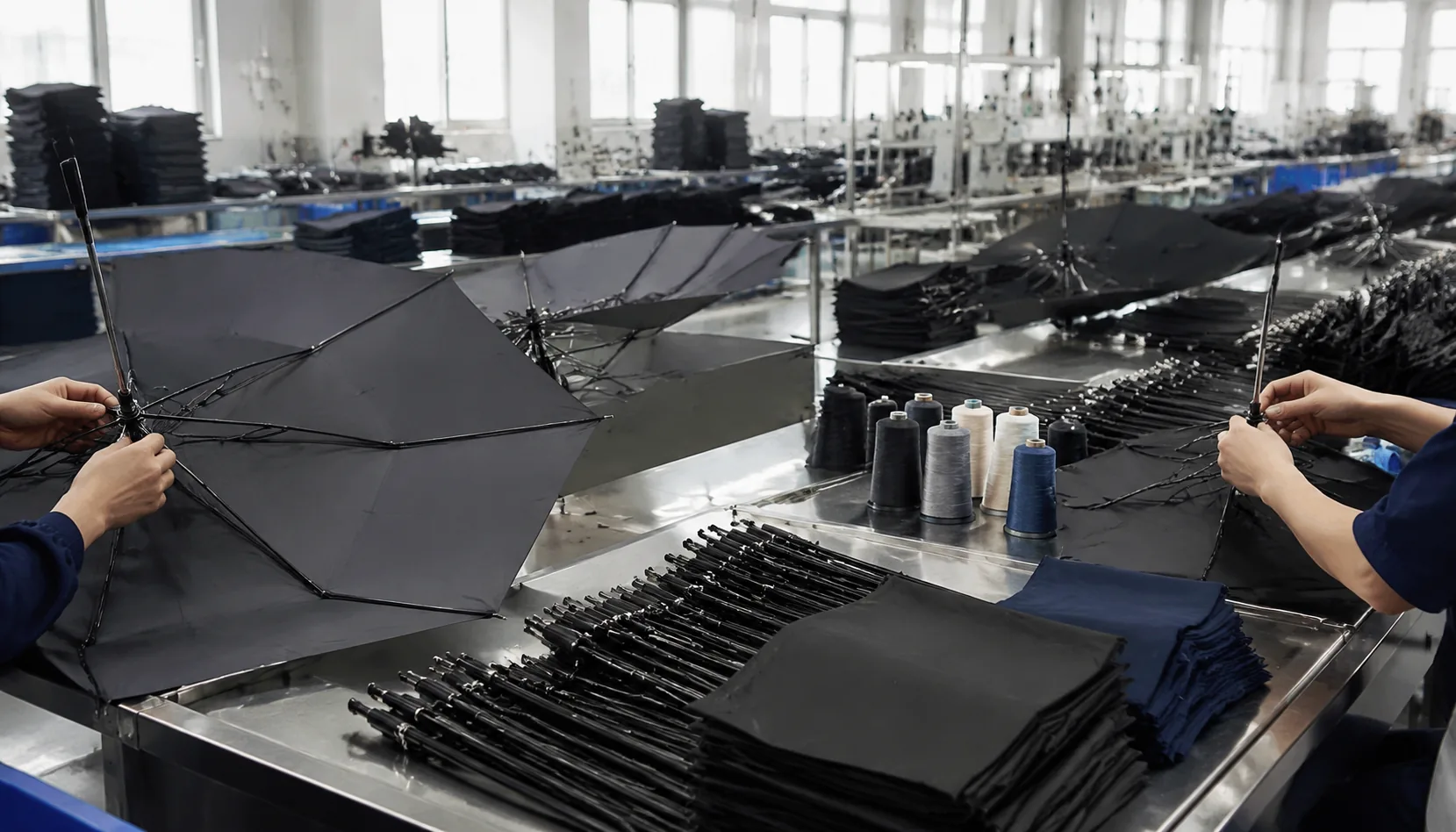
Umbrella Assembly Line Balancing for OEM Production
Plan umbrella assembly stations, labor allocation, and QC gates to keep bulk OEM orders on schedule without sacrificing ...
Read More »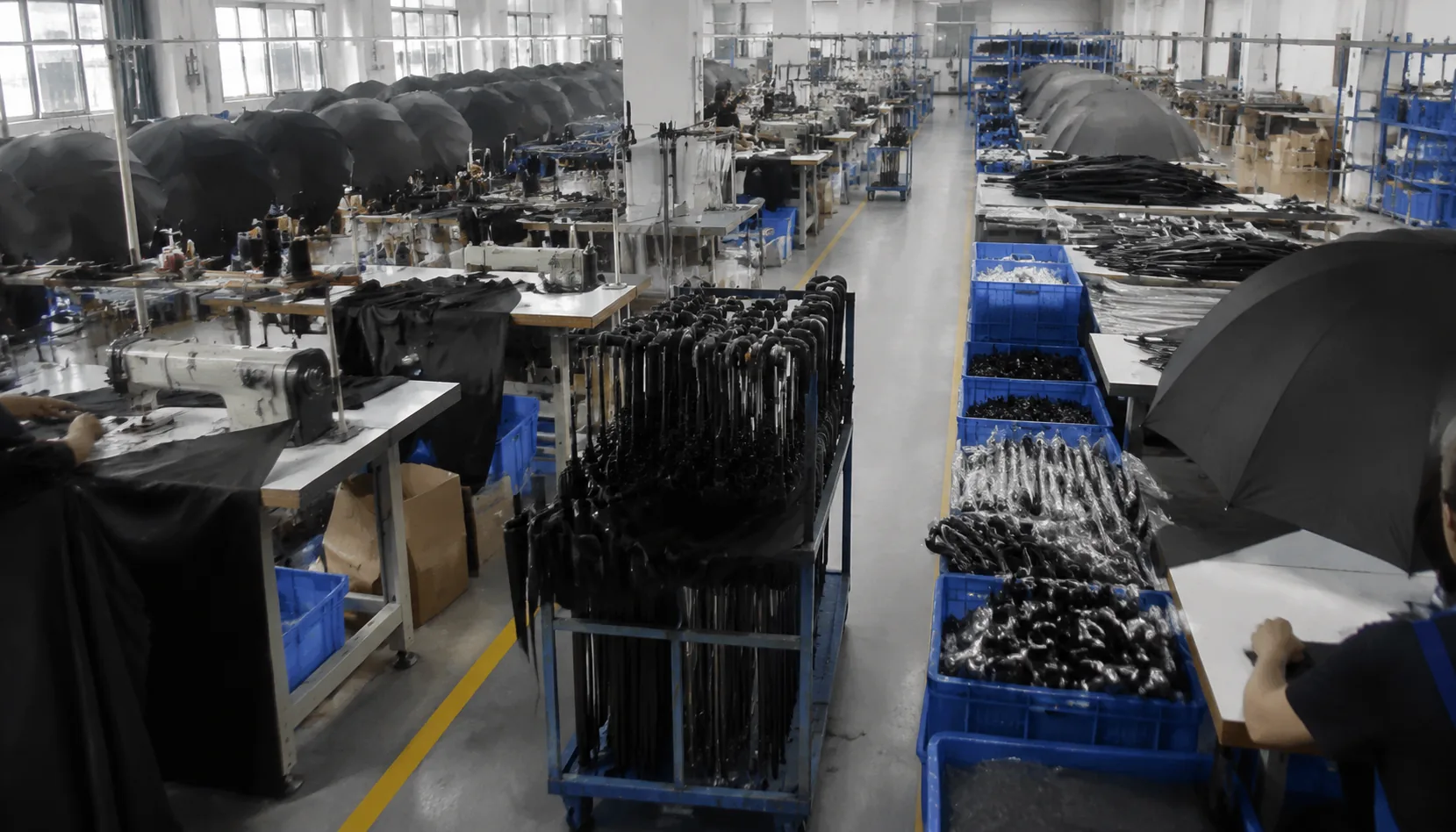
Umbrella Production Line Balancing for Bulk OEM Orders
Understand how balanced cutting, sewing, frame assembly, QC, and packing lines improve umbrella lead times and reduce bo...
Read More »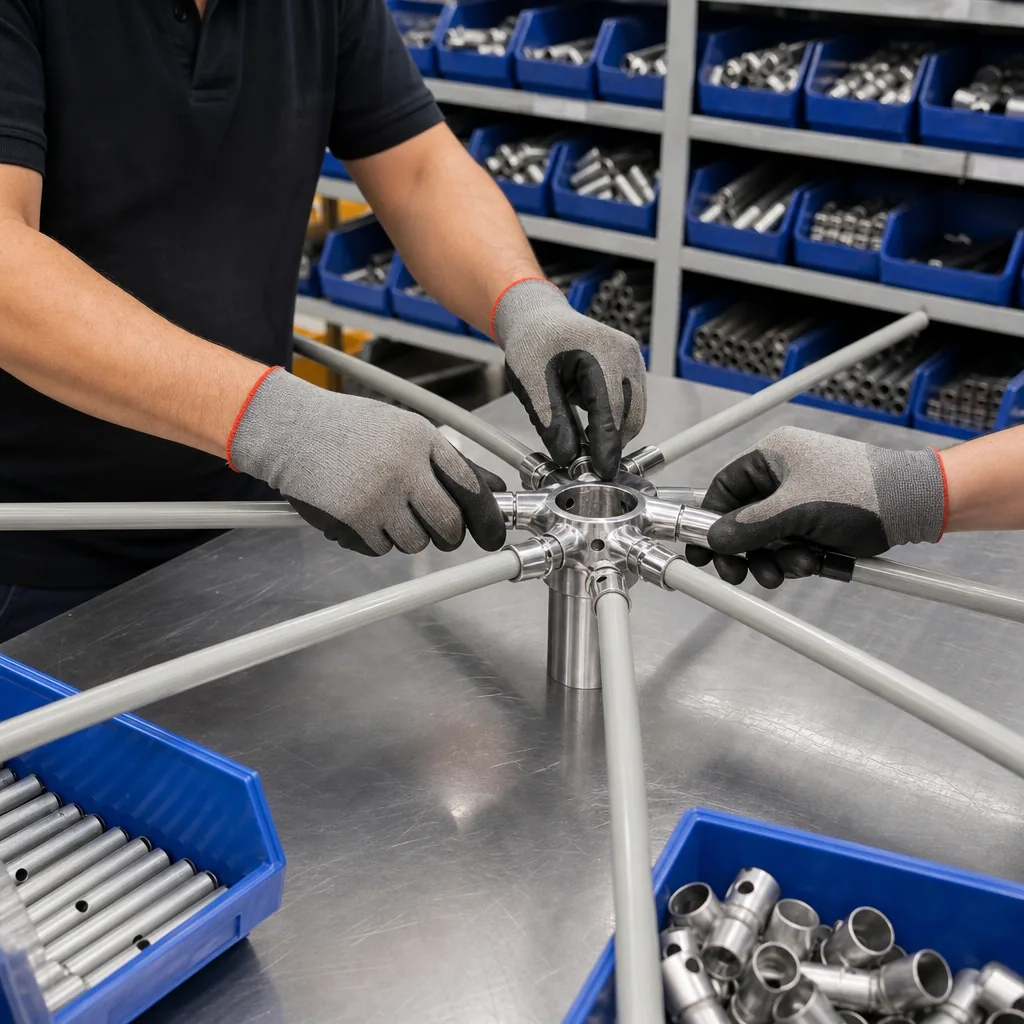
Umbrella Final Assembly Line Setup for Bulk OEM Orders
Plan a reliable umbrella assembly line with station controls, in-line QC gates, and output targets for consistent bulk O...
Read More »