Umbrella Final Assembly Line Balancing for OEM Production
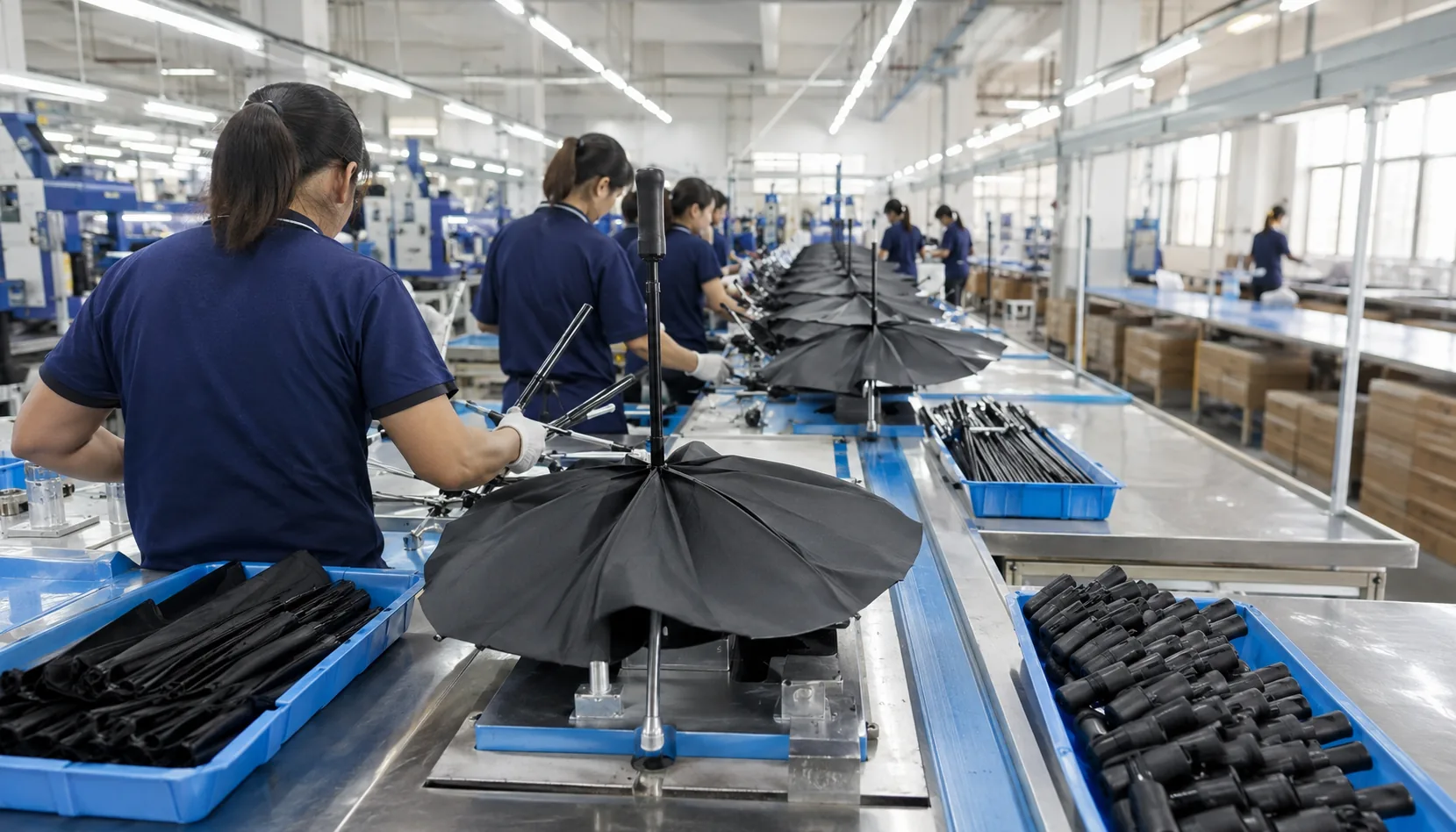
For OEM buyers, the risk is rarely one slow operator; it is an uneven umbrella assembly line process that hides defects until packing and turns a stable order plan into missed vessel dates. On our Songxia factory floor, line balance starts with takt time, but it only holds when frame fitting, canopy tension, labeling, and carton pack-out each have clear QC gates tied to AQL 2.5 expectations.
From Components to Assembly Flow
A balanced OEM umbrella production line starts before the operator touches a finished canopy. Frame preparation is usually the pacing station: checking shaft straightness, runner travel, rib symmetry, spring tension, and notch seating before canopy mounting. On a standard 23" 8K manual stick umbrella, one trained worker can prepare roughly 180-220 frames per hour if the ribs arrive pre-assembled; a 10K fiberglass golf frame drops that because every rib has more play to inspect. The umbrella assembly line process then moves to canopy mounting, where the sewer’s work from the sewing line is tested in real life: center cap alignment, top notch position, rib pocket tension, and panel-to-rib matching. If the canopy is 190T pongee with Teflon coating, the fabric slides cleanly; PVC or POE clear umbrellas need slower handling because scratches and stress whitening show immediately under inspection lights.
Tip fixing is where many factories lose takt time because it looks simple but causes rework when rushed. Each rib end must sit fully into the plastic or metal tip, with thread or bar tack tension tight enough to stop twisting but not so tight that the canopy puckers. Handle fitting follows: manual umbrellas need lower force and faster cycle time, while auto-open models require correct spring compression, button clearance, and shaft-lock engagement. Auto-open-close compact umbrellas are the slowest; the worker must control nested shafts, stronger springs, safety runners, and reset force, so umbrella takt time planning should not copy numbers from a manual 21" 8K folding model. In our standard practice at ZheBrella, we separate auto-open-close fitting from manual handle fitting instead of mixing both on one bench, because mixed mechanisms create uneven WIP and make defect tracing messy.
After fitting, every umbrella should pass open-close testing before cleaning, not after packing. For basic manual models, we usually require 2-3 full cycles; for auto-open and auto-open-close orders, 5 cycles is safer, especially on 23" and 27" models with fiberglass ribs or double-canopy vented windproof frames rated around 50+ mph. Umbrella inline quality control at this point checks button response, runner lock, rib flipping, canopy skew, loose tips, handle pull strength, and visible stains against AQL 2.5 sampling rules for finished cartons. Cleaning and sleeve insertion should be treated as inspection stations, not cosmetic afterthoughts, because oil marks on white 210T pongee or misprinted sleeves are common retail complaints. Carton packing then locks the custom umbrella lead time: wrong inner counts, weak export cartons, or missing color separation can delay FOB release or DDP delivery more than the assembly work itself.
Takt Time and Capacity Planning
Takt time is not a slogan on the wall; it is the number that tells us whether the umbrella assembly line process can actually ship on the promised date. We start with net working time, usually 8 hours minus morning meeting, needle change, material feeding, and two short breaks, so a practical line often has 430 to 450 usable minutes per shift. If the order calls for 6,000 pieces per day, takt time must sit around 4.3 to 4.5 seconds per umbrella at final output, but no single operator is building a whole umbrella that fast. The line is split into rib/frame fitting, runner and spring check, canopy attachment, top cap and tip alignment, handle fixing, opening test, trimming, bagging, and carton packing. A 23-inch manual 8K promotional umbrella with steel ribs and 190T pongee may need 55 to 75 total labor seconds. With 18 to 22 operators, that is realistic if material feeding is stable and rework stays under 3%.
Model complexity changes capacity more than buyers expect. A 16K windproof umbrella has twice the rib stations of an 8K unit, more tip sewing points, tighter canopy tension control, and longer opening/closing verification. If it uses fiberglass ribs, a metal shaft, auto-open mechanism, and a double-canopy vented construction, the total labor content can climb to 130 to 180 seconds per piece before packing. Double-canopy umbrellas are especially slow because the inner and outer panels must be aligned at the vent gap; a 3 mm skew around the crown can cause flutter noise or poor wind release. In an OEM umbrella production line, we normally separate these models from low-cost promotional jobs instead of forcing them through the same takt. Mixing 8K manual umbrellas and 16K auto-open windproof umbrellas on one line creates hidden waiting time, especially at canopy fixing and function testing.
Capacity planning must include rework, not just the theoretical cycle time from a sample room. Umbrella inline quality control usually checks frame symmetry, rib rivet looseness, runner lock, spring response, canopy stains, print position, seam skipped stitches, handle pull strength, and open-close function before final packing. If first-pass yield is 97%, a 10,000-piece order generates roughly 300 pieces needing correction; if yield drops to 92%, the same order throws 800 pieces back into the line and can consume half a day of repair capacity. For umbrella takt time planning, I add a 5% buffer for standard 8K promotional umbrellas and 8% to 12% for 16K, double-canopy, UV-coated, or printed retail models. That buffer directly affects custom umbrella lead time: a simple 21-inch or 23-inch job may clear assembly in 3 to 5 days after materials arrive, while a 27-inch or 30-inch windproof OEM order often needs 7 to 10 assembly days plus AQL 2.5 inspection time.
Inline QC Gates That Catch Defects Early
The first QC gate belongs before the umbrella is fully closed and packed, because canopy alignment and rib symmetry are easiest to correct while the product is still open on the assembly table. In a disciplined umbrella assembly line process, the operator opens each unit after canopy sewing and frame mounting, checks that the top notch sits centered, verifies every panel seam lands on the rib line, and confirms the rib tips are seated evenly in the pockets or caps. On 8K and 10K stick umbrellas, a 3–5 mm seam drift may still pass functionally but will look crooked under retail lighting; on 16K golf umbrellas, the same drift often creates visible twisting. We use a simple go/no-go visual board for 21", 23", 27", and 30" models, plus a flat table rotation check to catch ribs that sit high, low, or out of pitch before the next station adds labels, sleeves, and handles.
The second gate should test runner movement, opening force, and shaft engagement, not just appearance. A manual umbrella should open smoothly without scraping or hesitation; an auto-open spring should lock the runner firmly without bounce-back; an auto-open-close compact needs both the open and close strokes checked because weak springs usually show up before final packing. For umbrella takt time planning, this gate must be short: 8–12 seconds per unit is realistic if the fixture is ready and the inspector knows the defect list. We normally set opening force expectations by model type: lighter 190T pongee promotional umbrellas feel different from 210T vented windproof golf umbrellas with fiberglass ribs and double-canopy construction. In an OEM umbrella production line, this is also where umbrella inline quality control catches bent steel ribs, loose stretchers, mis-crimped rivets, and runner burrs that would otherwise create complaints after only a few uses.
The final inline gate should sit after branding and handle fixing, because print position and handle adhesion are buyer-facing defects that final AQL 2.5 inspection may catch too late. Screen print, heat-transfer, and sublimation logos need a position tolerance agreed before mass production; for most promotional orders we hold logo placement within ±3 mm on straight panels and check color against the approved Pantone target under consistent light. Handles are pull-tested after adhesive curing or screw tightening, especially for EVA foam, plastic J-handle, wooden shaft, and rubberized straight-handle builds. Catching a loose handle inline takes seconds; finding it at final inspection can mean opening cartons, reworking thousands of pieces, and losing two or three days from the custom umbrella lead time. Final AQL 2.5 still matters for shipment release, but it should confirm a stable process, not become the first serious inspection point.
Rework Loops and Bottleneck Control
The slowest station in the umbrella assembly line process is usually not frame riveting or handle fitting; it is the rework loop created by uneven canopy tension. On a 23" stick umbrella with 8K steel ribs, a slightly short panel or aggressive seam allowance can twist the runner, pull tips off-center, and make the open canopy look like a potato chip. For 27" golf umbrellas with fiberglass ribs and double-canopy vents, the problem is worse because the upper vent layer can hide a bad lower-panel stretch until final open-close testing. In a disciplined OEM umbrella production line, we isolate this work instead of letting operators “fix it at the table.” Suspect pieces go to a tension-adjust bench where the worker checks rib-tip alignment, center cap position, stitch pull at each pocket, and canopy slope before the unit returns to flow. If too many pieces loop back, line speed is reduced before WIP piles up and damages the custom umbrella lead time.
Auto-open mechanism tuning is the second bottleneck because it mixes parts tolerance, spring force, and operator feel. A 21" auto-open-close folding umbrella can pass visual inspection but still fail after 20 cycles if the runner button, shaft notch, and spring travel are not matched. On manual and auto-open stick umbrellas, the common defects are weak launch, violent launch, sticky runner, loose safety catch, and handle-button misalignment. In umbrella takt time planning, I do not assign the same seconds to manual and auto-open units; a manual 23" model may run at 35–45 seconds per unit after canopy mounting, while an auto-open-close compact may need 60–75 seconds including cycle testing. Our standard practice at ZheBrella is to put mechanism failures into separate defect codes, not a vague “function NG” bucket, because spring preload, rivet burrs, and plastic button flashing require different corrective actions at incoming parts inspection.
Carton pack-out verification looks simple, but it can stop a shipment faster than a sewing defect. Retail and promotional orders often mix sleeve printing, hangtags, barcode labels, inner cartons, master carton marks, and assorted colors, so the pack-out station needs a checklist tied to the PO, not memory. For AQL 2.5 inspection, carton errors such as wrong SKU ratio, missing polybag warning, incorrect DDP shipping mark, or mixed 190T pongee and POE styles in one carton are treated as serious because they create receiving disputes overseas. Good umbrella inline quality control uses defect-code boards or tablet entries by station: canopy tension, tip stitching, runner function, print alignment, sleeve mismatch, carton quantity, and label error. Every two hours, the line leader reviews the top three codes and traces them backward to cutting, sewing, frame assembly, or packing. That is how the umbrella assembly line process prevents the same defect from repeating across 5,000 or 50,000 pieces.
Buyer Inputs That Improve Production Stability
The fastest way to stabilize an OEM umbrella production line is to freeze the PP sample, BOM, and packaging layout before frames enter final assembly. The PP sample should confirm canopy size such as 21", 23", 27", or 30", rib count such as 8K, 10K, or 16K, frame material such as fiberglass ribs with steel shaft or full steel ribs, fabric such as 190T/210T pongee, and any Teflon, UV UPF 50+, POE, PVC, or EVA canopy requirement. The BOM must match every approved component: runner, tips, ferrule, handle, spring, sleeve, hangtag, care label, and retail barcode. If a buyer changes from manual open to auto-open-close after the PP sample, the umbrella assembly line process loses rhythm because shaft length, spring force, handle cavity, and carton quantity may all change. That is not a paperwork issue; it stops operators, reworks WIP, and breaks umbrella takt time planning.
Packaging is another area where buyers often underestimate the impact on custom umbrella lead time. A gift box, belly band, OPP sleeve, color insert, master carton mark, Amazon FBA label, or retail PDQ tray changes the packing station workload and carton cube. Buyers should approve the packaging layout at the same time as the PP sample, not after canopy sewing is complete. If a carton drop-test is needed, say so before mass assembly; a 1A or retailer-specific drop sequence may force stronger K=A cartons, inner dividers, or a lower carton quantity to protect long 27" and 30" golf umbrellas. Our standard practice at ZheBrella is to treat drop-test approval, carton markings, pallet plan, and FOB or DDP terms as production inputs, because DDP shipments need earlier carton dimension confirmation for freight booking, duty code checking, and last-mile label compliance.
The inspection checklist should be locked before inline QC starts, not rewritten at final AQL 2.5 inspection. For umbrella inline quality control, buyers should define critical points: print position tolerance, color standard, stitch density, canopy tension, open-close function, rib alignment, ferrule tightness, windproof double-canopy vent sewing, and any wind-tunnel claim such as surviving 50+ mph. MOQ split also matters. A 5,000-piece order split into five canopy colors, three logos, and mixed manual / auto-open mechanisms is not the same workload as one clean SKU; it creates more material staging, label control, and line changeovers. The shipping deadline then needs to match the real mix, FOB Ningbo/Shanghai cutoff, or DDP delivery appointment. When buyers approve these inputs early, the umbrella assembly line process runs with fewer stoppages, less rework, and a lead time we can actually defend in days rather than explain after the vessel is missed.
Frequently Asked Questions
How does umbrella complexity affect assembly lead time?
A basic manual 8K umbrella moves faster through assembly than a 16K double-canopy windproof model or an auto-open-close umbrella. More ribs, more fabric layers, and more mechanism checks increase takt time and rework risk.
Should buyers request inline QC or only final inspection?
Inline QC is recommended for OEM orders because it catches canopy fit, frame movement, and handle defects before packing. Final AQL 2.5 inspection is still important, but it should confirm quality rather than discover preventable line defects.
What takt time should buyers expect for OEM umbrella final assembly?
Takt time depends on umbrella type and order mix, but a balanced final assembly cell often targets 20–45 seconds per unit for standard straight or folding umbrellas after panels and frames are prepared. More complex items such as windproof, automatic, or printed golf umbrellas usually require longer station times.
Where should inline QC gates be placed in an umbrella assembly line?
Common QC gates are placed after frame fitting, canopy attachment, opening/closing function testing, handle or cap installation, and final pack-out. These checks help catch rib alignment, stitch tension, fabric stains, printing defects, and barcode/carton errors before AQL inspection.
Can line balancing reduce custom umbrella lead time for bulk orders?
Yes. For repeat OEM styles, pre-approved materials, and stable artwork, balanced assembly cells can reduce bottlenecks and keep mass production within typical 25–45 day lead times after sample approval. Mixed SKUs, late packaging changes, or delayed fabric printing can extend the schedule.
Looking to Launch Your Custom Umbrella Line?
ZheBrella is a Zhejiang-based OEM/ODM umbrella manufacturer with 17 years of export experience. Free design, low MOQ from 100 pieces, windproof construction, full-color print.
Get Free Quote Now »People Also Search For
Related Articles
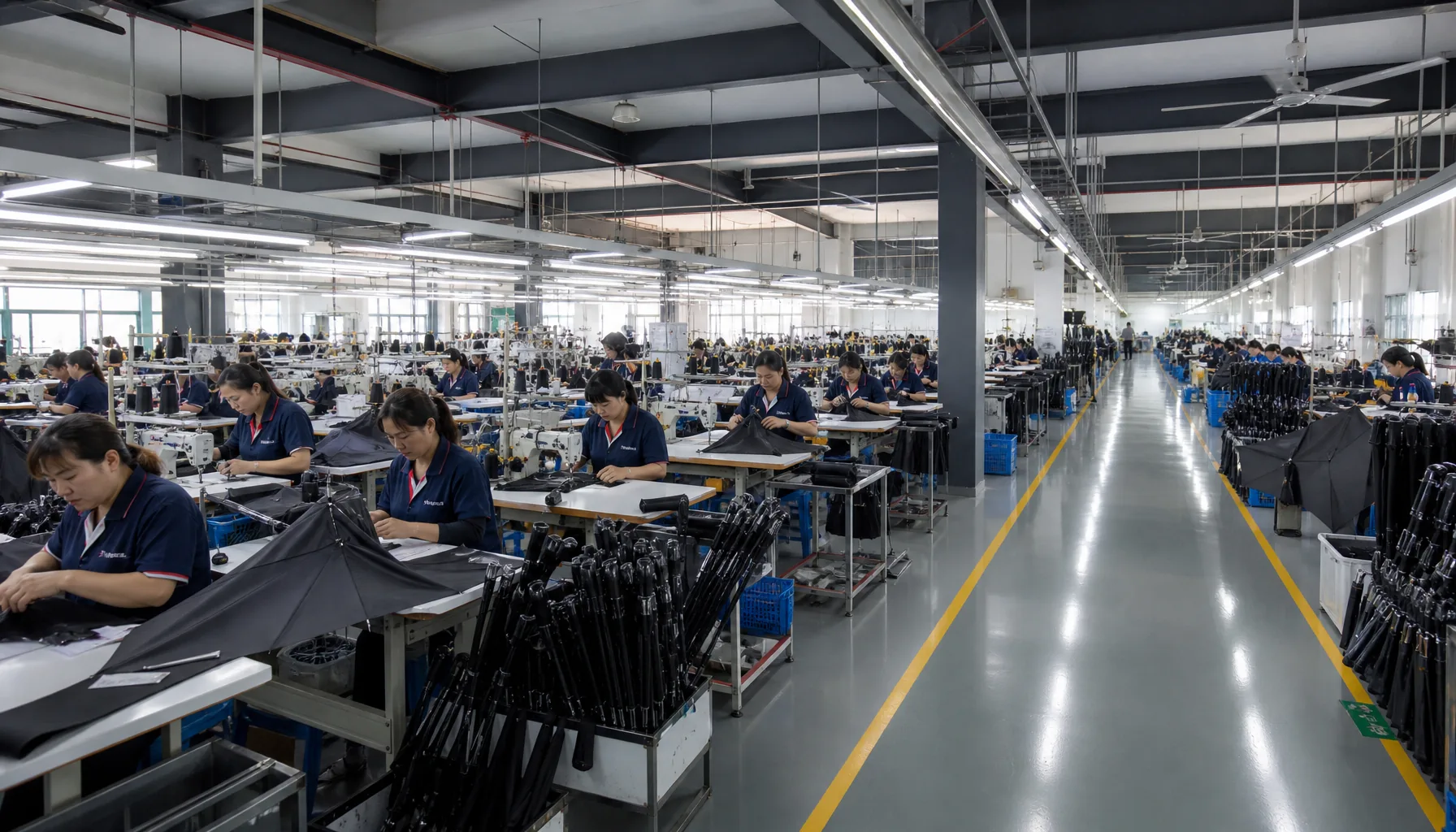
Umbrella Assembly Line Balancing for Reliable Bulk Output
Learn how balanced umbrella assembly lines reduce bottlenecks, stabilize lead times, and protect quality for high-volume...
Read More »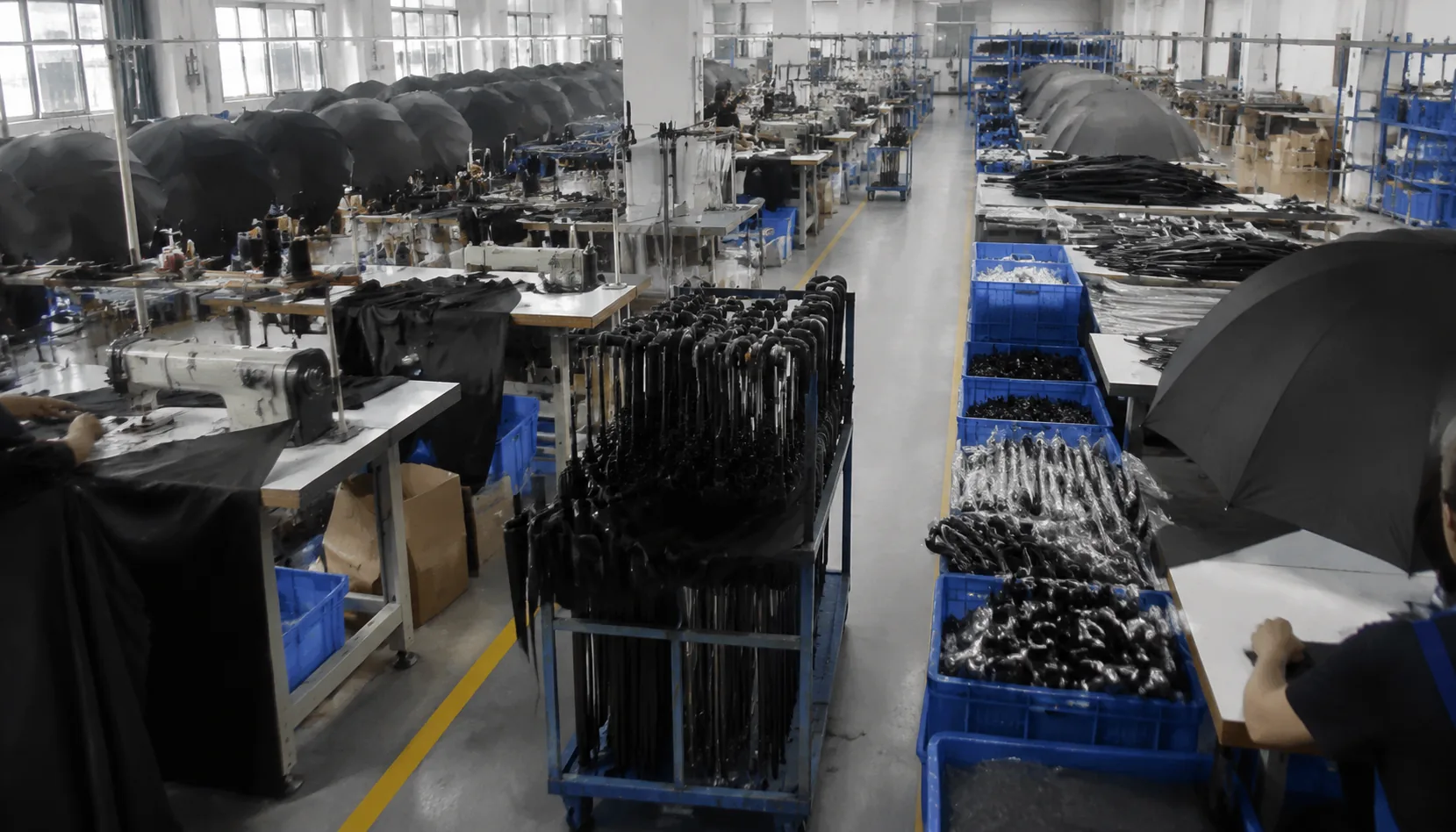
Umbrella Production Line Balancing for Bulk OEM Orders
Understand how balanced cutting, sewing, frame assembly, QC, and packing lines improve umbrella lead times and reduce bo...
Read More »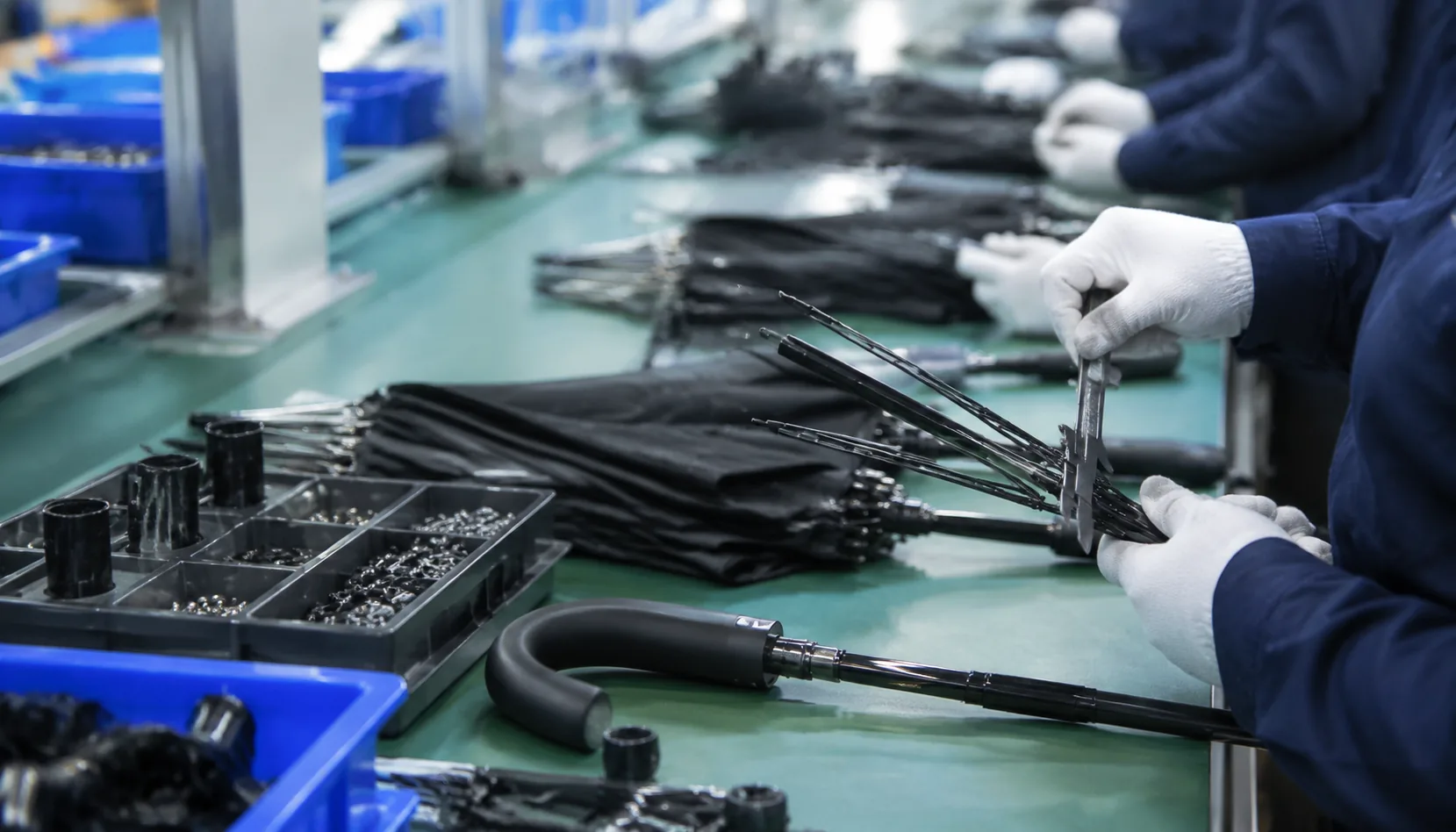
Inline Umbrella Assembly QC Gates Before Final Inspection
Map practical in-line QC gates for frames, canopies, auto-open mechanisms, and export packing so defects are caught befo...
Read More »